
Choose from a wide range of NEWCV resume templates and customize your NEWCV design with a single click.

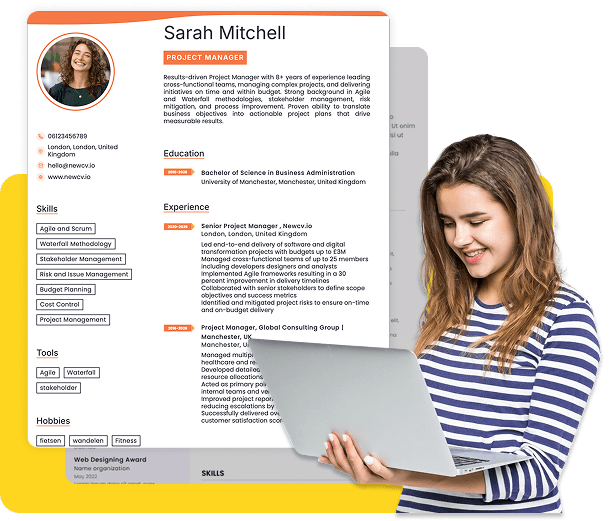
Use ATS-optimised Resume and resume templates that pass applicant tracking systems. Our Resume builder helps recruiters read, scan, and shortlist your Resume faster.

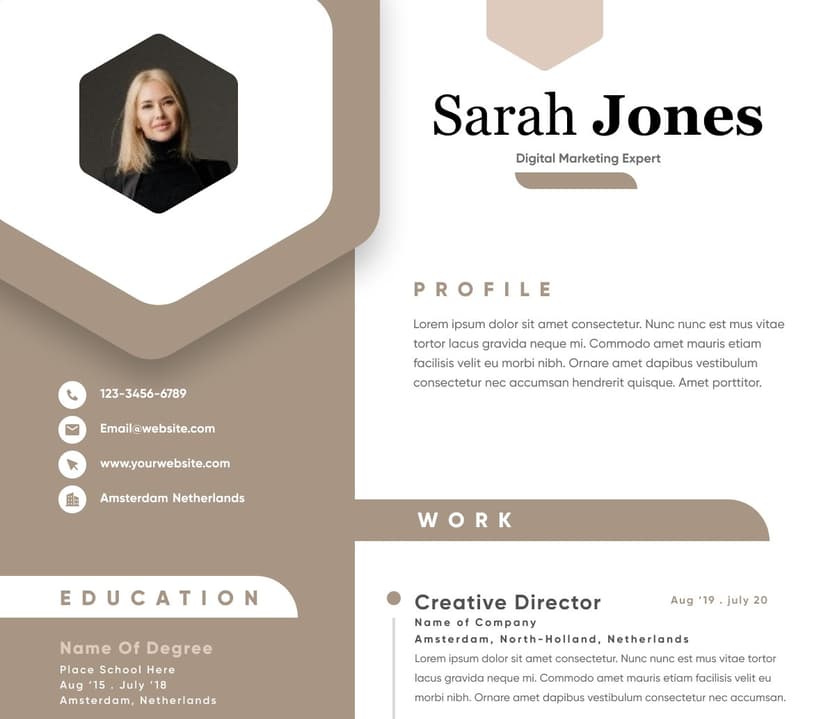
Use professional field-tested resume templates that follow the exact Resume rules employers look for.
Create Resume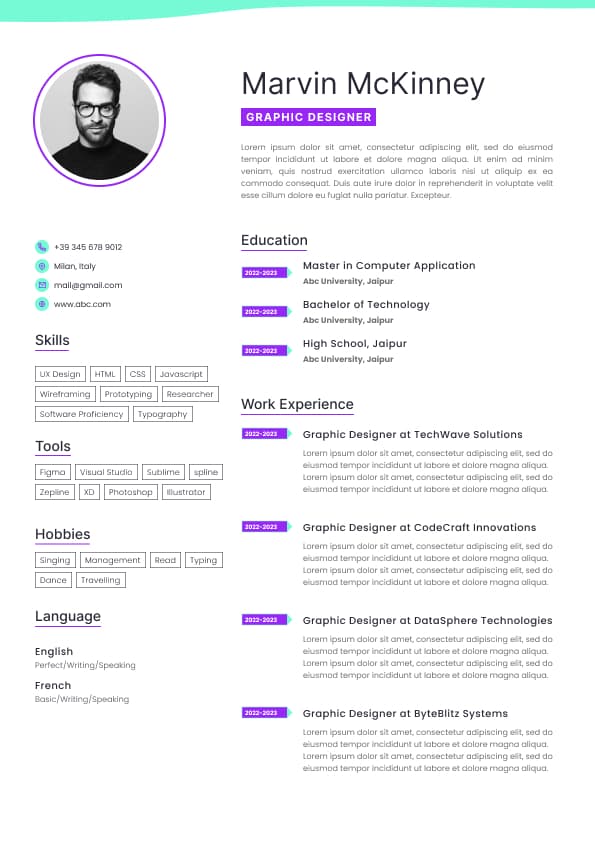
Use professional field-tested resume templates that follow the exact Resume rules employers look for.
Create ResumeA combination resume in Australia blends a skills-focused resume with a traditional reverse chronological work history. It is designed to highlight transferable skills, technical expertise, or career achievements before employment history while still showing recruiters a clear career timeline.
For the right candidate, this format can significantly improve interview chances. For the wrong candidate, it can immediately trigger recruiter scepticism.
In the Australian job market, hiring managers generally prefer straightforward, chronological resumes because they are faster to assess. A combination resume only works when there is a strategic reason behind it, such as career changes, contract-heavy careers, leadership progression, technical specialisation, or returning to work after a gap.
The biggest mistake candidates make is treating a combination resume like a way to “hide” weaknesses. Recruiters can spot that instantly. The format only works when it improves clarity and strengthens positioning.
A combination resume combines two formats:
A skills or competencies section near the top
A reverse chronological employment history underneath
Unlike a purely functional resume, a combination resume still gives recruiters what they need most:
Career progression
Dates of employment
Company names
Seniority growth
Industry experience
A combination resume is highly effective when the recruiter needs to understand your value quickly before analysing your employment timeline.
This is one of the strongest use cases.
If your previous job titles do not perfectly align with the role you are targeting, a skills-first structure helps reposition your experience.
For example:
A retail operations manager moving into supply chain coordination may lead with:
Stakeholder management
Inventory control
Workforce planning
Vendor management
Process improvement
This helps recruiters connect capability before judging titles.
Without this structure, many recruiters may incorrectly categorise the candidate too narrowly based on previous job titles.
Stability indicators
The difference is that your strongest capabilities are positioned before your work history rather than buried underneath it.
This format is commonly used in Australia for:
Career changers
Project managers
IT professionals
Consultants
Senior executives
Contractors
Candidates with diverse experience
Professionals returning after a career gap
Candidates with strong transferable skills
Combination resumes often perform well in:
IT
Cybersecurity
Engineering
Data analytics
Digital transformation
Project delivery
SaaS sales
Operations leadership
These industries frequently hire based on capability depth rather than linear job titles.
Recruiters in these sectors often scan for:
Platforms
Systems
Technical environments
Methodologies
Certifications
Transformation experience
A well-structured combination resume surfaces this information faster.
Some professionals have highly valuable but non-linear careers.
Examples include:
Contractors
Consultants
Freelancers
Startup professionals
Portfolio career professionals
A chronological-only format can make these careers appear fragmented even when the candidate is highly experienced.
A combination format creates narrative structure.
Australian recruiters are generally more understanding of career gaps than candidates assume, especially after COVID-era workforce disruptions.
However, unexplained gaps still create uncertainty.
A combination resume helps by shifting immediate focus toward capability and recent relevance rather than chronology alone.
This works particularly well for:
Parents returning to work
Professionals after redundancy
Candidates after relocation
Professionals returning from overseas experience
This is where many online articles become dangerously misleading.
Combination resumes are not “better” than chronological resumes. In Australia, they are actually riskier if poorly executed.
Recruiters immediately notice when candidates:
Avoid dates
Minimise employers
Overuse generic skill categories
Create vague achievement sections
Use buzzword-heavy summaries
This creates distrust.
Australian hiring managers generally value transparency and straightforward communication. Over-engineered resumes often backfire.
Most graduates and junior candidates should avoid combination resumes.
Why?
Because recruiters primarily assess:
Education
Internships
Work history
Early career progression
Stability
Practical exposure
A skills-heavy resume without strong experience can feel inflated.
For junior candidates, chronological structure is usually safer and more credible.
Some industries strongly prefer conventional resume formats.
Examples include:
Government
Administration
Accounting
Legal
Education
Healthcare administration
These sectors often value:
Compliance
Stability
Structure
Clarity
Linear progression
A complicated hybrid format may reduce readability rather than improve positioning.
Most candidates misunderstand how resumes are screened.
Recruiters do not read resumes top to bottom initially.
They scan for risk.
A recruiter’s first review often focuses on:
Current role relevance
Employment stability
Seniority alignment
Industry alignment
Clear achievements
ATS keyword relevance
Communication clarity
A combination resume succeeds only if it improves speed and clarity during this scan.
If recruiters need to “work out” your story, the format is failing.
The strongest combination resumes are strategically simple.
Your opening summary should immediately position you for the target role.
Focus on:
Years of experience
Industry expertise
Core specialisation
Leadership scope
Commercial impact
Avoid generic claims like:
Weak Example
“Hardworking professional with strong communication skills.”
This says nothing meaningful.
Good Example
“Operations Manager with 10+ years’ experience leading multi-site retail and supply chain operations across Australia, specialising in workforce optimisation, inventory control, and process improvement initiatives that reduce operational costs.”
Specificity creates credibility.
This section should support the target role directly.
Do not overload it with soft skills.
Focus on commercially relevant capabilities.
Good Example
Stakeholder Management
Change Management
Workforce Planning
Contract Negotiation
Budget Management
Agile Project Delivery
CRM Optimisation
Data Reporting and Analysis
Avoid generic filler like:
Team Player
Hard Worker
Fast Learner
These have almost zero recruiter value in modern Australian hiring.
This is where strong combination resumes outperform standard resumes.
Highlight measurable business outcomes.
Reduced procurement costs by 18% through supplier renegotiation and inventory forecasting improvements
Delivered national CRM migration project three weeks ahead of schedule across 120+ users
Increased branch operational efficiency by 24% through workforce scheduling optimisation
Managed $4.2M annual operational budget across multiple business units
Australian recruiters strongly favour measurable impact over responsibility-heavy descriptions.
This section still matters heavily.
Even with a combination resume, recruiters will closely evaluate:
Employer credibility
Career progression
Tenure
Promotions
Industry relevance
Do not minimise this section.
Each role should still include:
Clear job title
Employer
Dates
Key achievements
Scope
A major issue with poorly designed combination resumes is ATS compatibility.
Many candidates accidentally create resumes that are difficult for applicant tracking systems to parse.
Standard headings
Clear employment dates
Consistent formatting
Simple layout
Keyword relevance
Reverse chronological work history
Graphics
Tables
Icons
Text boxes
Keyword stuffing
Overly creative formatting
Australian recruiters increasingly use ATS platforms including:
PageUp
Workday
SAP SuccessFactors
Greenhouse
SmartRecruiters
A clean resume almost always performs better than a visually “impressive” one.
Anyone can list skills.
Recruiters care about proof.
This fails:
Leadership
Communication
Teamwork
Problem-solving
This works:
Led cross-functional team of 18 staff during national systems rollout
Managed stakeholder engagement across three business divisions
Reduced customer complaint escalation rates by 31%
Evidence creates trust.
Many combination resumes look templated.
Recruiters reject resumes that feel mass-produced because they signal low application effort.
Strong resumes are tailored.
They reflect:
Industry language
Target role priorities
Relevant achievements
Business context
This is one of the fastest ways to lose recruiter trust.
Australian recruiters expect transparency.
Trying to conceal gaps usually raises more concern than the actual gap itself.
For most experienced professionals:
2 to 4 pages is acceptable
Senior leadership resumes may extend further when justified
Early-career professionals should stay closer to 2 pages
Australian recruiters are generally less rigid about resume length than US employers.
However, relevance still matters.
Long resumes filled with low-value information reduce impact.
Best for:
Career transitions
Technical specialists
Diverse backgrounds
Consultants
Senior professionals
Candidates with strong transferable skills
Best for:
Stable linear careers
Traditional industries
Graduates
Administrative roles
Candidates with highly aligned experience
In Australia, chronological resumes remain the default preference across most industries.
A combination resume should be a strategic choice, not a trend-based choice.
Hiring managers are usually less focused on resume format than recruiters.
They care about:
Capability
Commercial value
Industry understanding
Results
Leadership
Problem-solving
However, if the resume is difficult to scan, they disengage quickly.
Most hiring managers spend surprisingly little time on first review.
A strong combination resume improves clarity.
A weak one increases cognitive load.
That difference determines interview outcomes.
The best candidates tailor positioning, not just keywords.
Review the job advertisement carefully.
Identify:
Core deliverables
Priority capabilities
Technical requirements
Leadership expectations
Industry terminology
Then align:
Professional summary
Core skills
Achievement examples
Keywords
Career narrative
The goal is not keyword stuffing.
The goal is recruiter relevance.
Australian employers often prefer straightforward language over inflated corporate jargon.
Avoid phrases like:
Dynamic thought leader
Synergy-driven professional
Results-oriented visionary
These feel artificial.
Use practical business language instead.
“Project Manager with 12 years’ experience delivering infrastructure and digital transformation projects across construction and utilities sectors in Australia. Strong background in stakeholder engagement, budget management, contractor coordination, and risk mitigation across multi-million-dollar programs.”
Project Delivery
Budget Management
Contractor Coordination
Risk Management
Stakeholder Engagement
Agile Methodologies
Procurement
Compliance Management
Delivered $8M infrastructure upgrade project ahead of schedule with 9% cost savings
Managed cross-functional delivery teams across five operational sites
Reduced project delays by implementing revised contractor reporting framework
Senior Project Manager
ABC Infrastructure | Sydney
2020 – Present
Led delivery of major infrastructure programs across NSW
Managed external contractors and internal delivery teams
Oversaw project budgets exceeding $15M
A combination resume is not automatically more strategic or more modern.
Its effectiveness depends entirely on whether it improves recruiter understanding.
The strongest combination resumes do three things exceptionally well:
Position the candidate clearly
Prove commercial value quickly
Maintain transparent career history
The weakest combination resumes try to disguise weaknesses through formatting.
Australian recruiters generally prefer clarity over creativity.
If your career path already strongly aligns with your target role, a chronological resume will usually outperform a combination resume.
But if your value is broader than your job titles alone, a well-executed combination resume can significantly strengthen your positioning.


 Upload Resume
 Import from Linkedin