
Choose from a wide range of NEWCV resume templates and customize your NEWCV design with a single click.

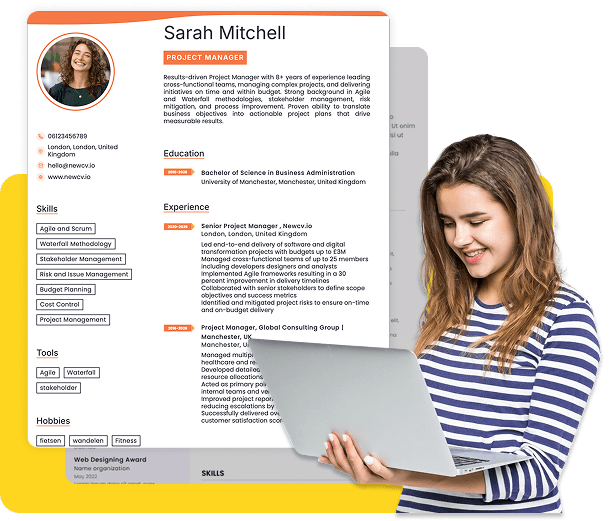
Use ATS-optimised Resume and resume templates that pass applicant tracking systems. Our Resume builder helps recruiters read, scan, and shortlist your Resume faster.

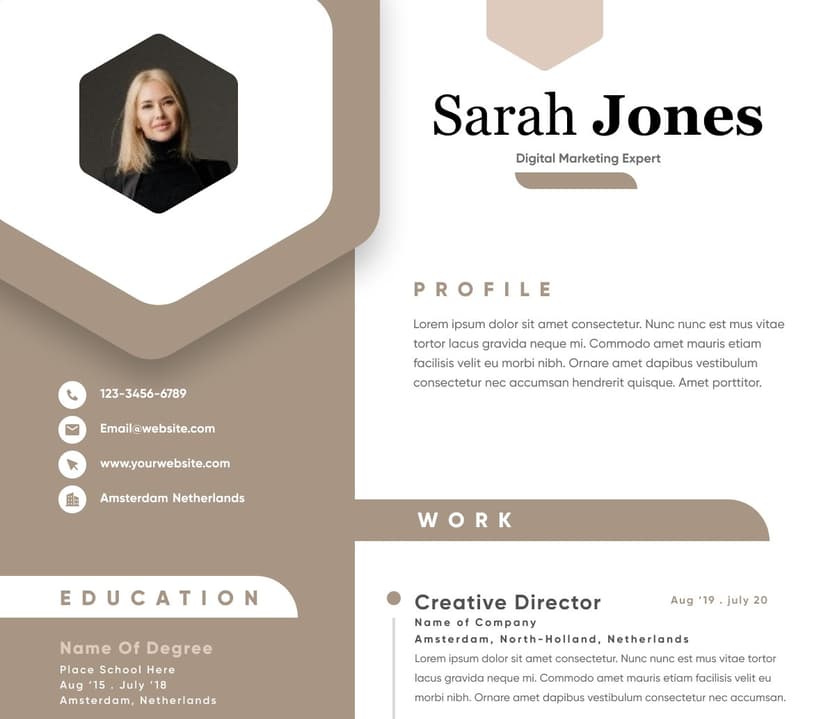
Use professional field-tested resume templates that follow the exact Resume rules employers look for.
Create Resume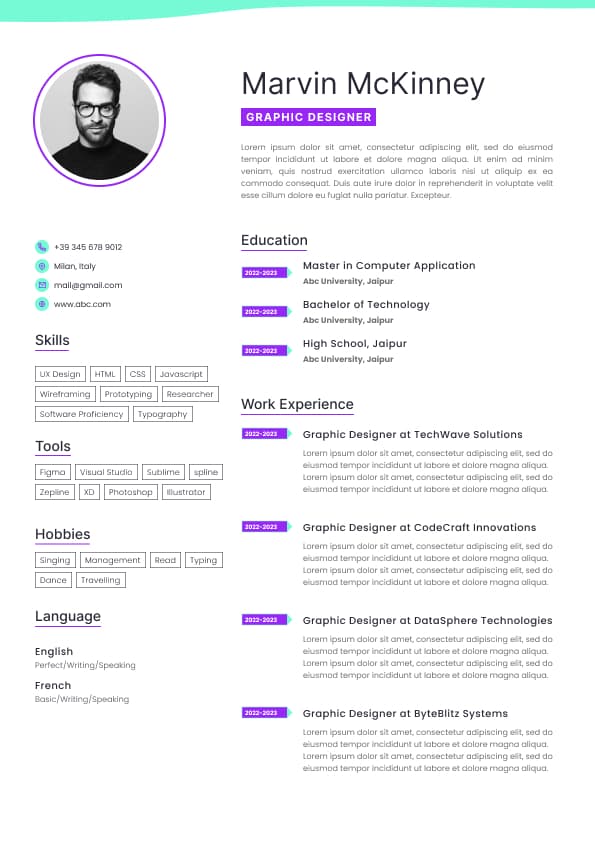
Use professional field-tested resume templates that follow the exact Resume rules employers look for.
Create ResumeAn effective Australian CV template is built around how recruiters and hiring managers actually assess candidates.
Most employers in Australia want fast evidence of three things:
Relevant experience
Capability level
Fit for the role and industry
That means your template must make information easy to scan quickly.
A strong Australian CV template typically includes:
Contact details
Professional summary
Core skills
Professional experience
The reverse-chronological format remains the standard across Australia.
This means your most recent role appears first.
It works because recruiters care most about:
Your current capability
Your recent achievements
Your latest level of responsibility
Industry relevance
Functional resumes rarely perform well in the Australian market unless there is a very specific reason, such as complex career transitions.
Hybrid resumes can work for senior professionals, project-based specialists, consultants, or candidates with highly technical backgrounds.
For most job seekers, reverse chronological is still the safest and strongest option.
Education
Certifications or licences if relevant
Technical skills if relevant
Optional extras like projects, awards, publications, or memberships
The order matters because recruiters usually scan resumes top-down while looking for evidence that matches the job brief.
Keep this section simple and professional.
Include:
Full name
Mobile number
Professional email address
LinkedIn profile
Location (suburb/city only)
Do not include:
Date of birth
Marital status
Photo
Nationality unless relevant
Full street address
Photos are uncommon in Australian resumes outside specific industries.
This section is one of the most misunderstood parts of Australian resumes.
Recruiters do not want vague personality statements.
They want immediate positioning.
Your summary should quickly answer:
What you do
Your level
Your industry expertise
Your strongest value proposition
“Hardworking professional with strong communication skills seeking new opportunities.”
This says almost nothing.
“Project Coordinator with 6+ years’ experience delivering commercial construction projects across Sydney valued up to $18M. Strong background in stakeholder management, scheduling, contractor coordination, and budget tracking within Tier 2 environments.”
This instantly establishes relevance and capability.
Australian recruiters often scan the skills section before reading experience.
This section helps both ATS systems and human reviewers.
Include:
Technical skills
Industry tools
Methodologies
Relevant soft skills only when meaningful
Avoid generic filler like:
Team player
Hard worker
Fast learner
Instead, use skills tied to hiring outcomes.
Stakeholder engagement
Financial reporting
Salesforce CRM
WHS compliance
Contract negotiation
Tender preparation
Agile project delivery
Workforce planning
This is the most important section of the resume.
Most candidates fail here because they write task lists instead of evidence.
Recruiters want outcomes, not job descriptions.
Each role should include:
Job title
Company name
Location
Employment dates
Short context statement if needed
Achievement-focused bullet points
Sarah Mitchell
Sydney, NSW
0412 000 000
sarah.mitchell@email.com
linkedin.com/in/sarahmitchell
Results-driven Marketing Manager with 8+ years’ experience leading digital campaigns across retail and eCommerce sectors in Australia. Strong track record increasing online revenue growth, improving customer acquisition performance, and managing multi-channel campaign strategy across national brands.
Digital marketing strategy
Google Ads
SEO and SEM
Campaign analytics
Stakeholder management
Budget management
CRM marketing
Team leadership
Marketing Manager
Bright Retail Group
Sydney, NSW
January 2021 – Present
Increased online sales revenue by 37% within 12 months through integrated digital campaign strategy
Reduced customer acquisition costs by 24% through improved targeting and campaign optimisation
Managed annual marketing budget exceeding $1.2M across paid media, email, and SEO campaigns
Led a team of five marketing specialists across content, CRM, and performance marketing
Digital Marketing Specialist
Urban Commerce Co
Melbourne, VIC
June 2018 – December 2020
Delivered SEO strategy that increased organic traffic by 68% year-on-year
Improved email marketing conversion rates by 31% through audience segmentation initiatives
Managed paid social campaigns across Meta and LinkedIn platforms with ROAS consistently above target
Bachelor of Marketing
University of Technology Sydney
Most candidates assume recruiters carefully read every line.
They do not.
Initial resume screening is usually pattern recognition.
Recruiters look for signals such as:
Relevant industry background
Stable career progression
Matching keywords
Seniority alignment
Achievement evidence
Communication quality
Commercial impact
They also look for risk.
Common risk signals include:
Unexplained employment gaps
Overly generic resumes
Poor formatting
No measurable achievements
Job hopping without context
Confusing career direction
Your template should reduce friction during screening.
Many Australian employers use Applicant Tracking Systems.
ATS software scans resumes for relevance before recruiters even review them.
An ATS-friendly CV template should:
Use standard headings
Avoid tables and graphics
Use readable fonts
Keep formatting simple
Include keywords naturally
Use Word or PDF format unless instructed otherwise
Do not use:
Icons
Text boxes
Complex columns
Skill bars
Graphic ratings
These often break ATS parsing.
Formatting directly affects readability and recruiter engagement.
Best practice includes:
Font size between 10 and 12
Clear spacing
Consistent formatting
Professional fonts like Calibri, Arial, or Aptos
Margins that avoid overcrowding
Your resume should feel easy to scan.
Dense walls of text reduce interview conversion rates significantly.
There is no universal rule, but practical expectations matter.
General guideline:
Early career: 1 to 2 pages
Mid-level professionals: 2 to 3 pages
Senior executives: 3 to 4 pages if justified
Australian recruiters generally prefer concise resumes.
Long resumes only work when every section adds value.
One of the biggest mistakes candidates make is using the same resume everywhere.
Australian hiring managers expect tailoring.
This does not mean rewriting the entire document every time.
It means adjusting:
Professional summary
Core skills
Keywords
Achievement emphasis
Industry language
For example, a resume for a government role may prioritise:
Compliance
Stakeholder management
Governance
Policy alignment
A private-sector resume may prioritise:
Revenue impact
Commercial outcomes
Efficiency improvements
Growth metrics
Same candidate. Different positioning.
This instantly weakens positioning.
Recruiters see thousands of resumes with vague claims.
Specificity wins.
Hiring managers already know what your role generally involves.
They care about:
Performance
Results
Scale
Impact
Messy layouts reduce credibility.
Your resume represents your communication skills.
ATS optimisation should still sound human.
Overloading keywords damages readability.
Highly graphic templates often perform worse in real hiring environments.
Clean and professional almost always wins in Australia.
Free templates can work if the structure is strong.
The problem is not whether the template is free.
The problem is whether it supports recruiter decision-making.
Many free templates fail because they prioritise design over hiring outcomes.
A good template should:
Support ATS readability
Highlight achievements clearly
Make scanning easier
Create strong positioning fast
The best-performing resumes are usually simpler than candidates expect.
In Australia, “resume” is the more common term across most industries.
“CV” is still used in:
Academia
Research
Medicine
Government sectors in some cases
For most corporate and private-sector roles, resume is the preferred terminology.
However, many Australians still search “CV template Australia”, which is why both terms naturally appear across hiring discussions.
Hiring managers often review resumes differently from recruiters.
Recruiters screen for fit.
Hiring managers screen for capability and business value.
The first things they usually notice are:
Job titles
Employer relevance
Career progression
Commercial achievements
Leadership scope
Industry alignment
This is why strategic positioning matters more than fancy design.
A clean resume with strong evidence consistently outperforms visually impressive resumes with weak content.
Strong candidates do not just describe experience.
They position themselves strategically.
That means aligning resume content with:
The employer’s likely pain points
Team requirements
Seniority expectations
Commercial priorities
For example:
A finance manager applying to a scaling company should emphasise:
Process improvement
Forecasting
Commercial partnering
Growth support
The same finance manager applying to a mature enterprise environment may need to emphasise:
Governance
Compliance
Audit readiness
Risk management
Resume strategy changes based on hiring context.
This is where most candidates lose competitiveness.
Unless instructed otherwise:
PDF is usually safest for formatting consistency
Word documents may be preferred when ATS parsing is important
Always follow the application instructions exactly.
Failing to follow submission instructions can immediately reduce shortlist chances.
The highest-performing resumes in Australia are usually:
Clear
Focused
Achievement-driven
Tailored
Commercially relevant
Easy to scan
The goal of a CV template is not to look impressive.
The goal is to get interviews.
That requires strategic positioning, recruiter readability, ATS compatibility, and evidence of impact.
A clean, recruiter-focused resume consistently outperforms complicated templates that prioritise visuals over substance.


 Upload Resume
 Import from Linkedin