
Choose from a wide range of NEWCV resume templates and customize your NEWCV design with a single click.

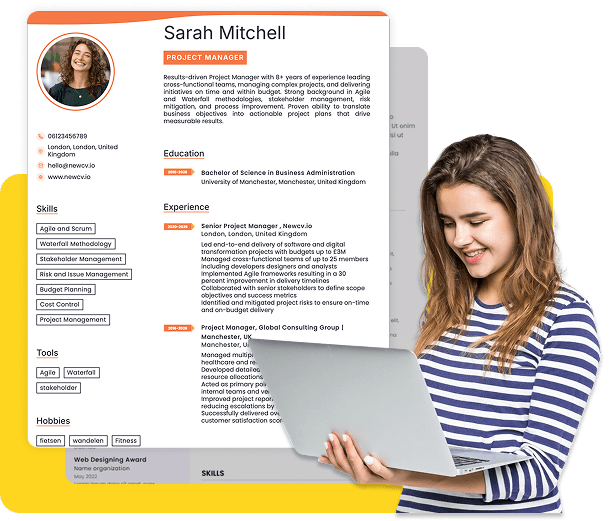
Use ATS-optimised Resume and resume templates that pass applicant tracking systems. Our Resume builder helps recruiters read, scan, and shortlist your Resume faster.

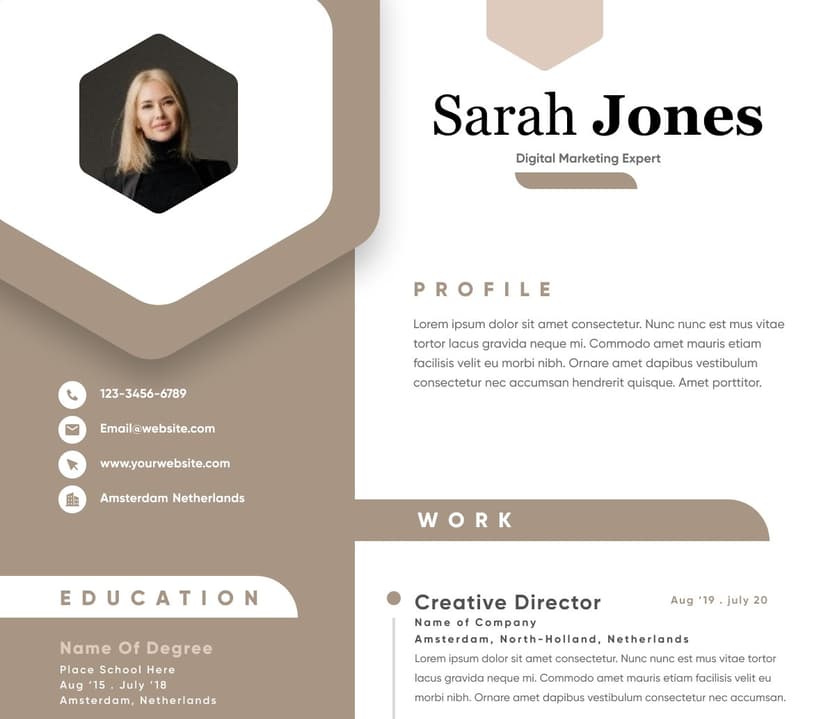
Use professional field-tested resume templates that follow the exact Resume rules employers look for.
Create Resume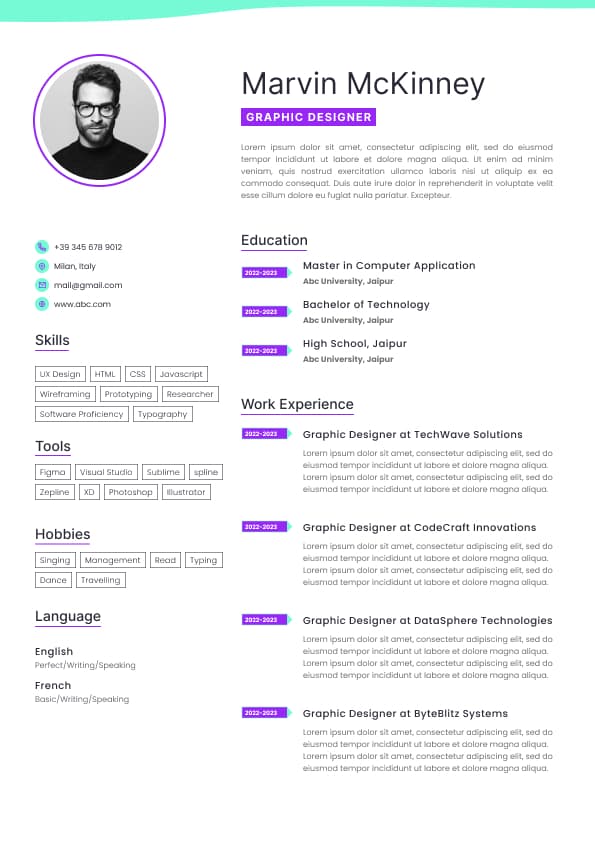
Use professional field-tested resume templates that follow the exact Resume rules employers look for.
Create ResumeIn the Australian job market, a two page resume is completely acceptable for most experienced professionals. In fact, for mid level, senior, technical, leadership, government, and specialist roles, recruiters often expect it. The problem is not resume length itself. The problem is whether both pages earn their place.
Australian recruiters typically spend less than 30 seconds on an initial resume scan. If page two contains repetitive duties, outdated experience, generic soft skills, or unnecessary detail, it weakens your application. But if the second page adds evidence of impact, progression, achievements, technical expertise, leadership, or industry relevance, it can significantly improve your chances of progressing to interview.
The key question is not “Should my resume be two pages?”
The real question is: “Does the second page help a recruiter shortlist me faster?”
That distinction matters enormously in modern Australian hiring.
Yes. For most professionals with more than five years of relevant experience, a two page resume is considered standard in Australia.
Unlike some overseas markets where strict one page resumes are preferred, Australian recruiters and hiring managers prioritise relevance and clarity over arbitrary page limits.
Here is how resume length is generally viewed across the Australian market:
Graduate or entry level candidates: usually 1 page
Professionals with 5 to 15 years of experience: typically 2 pages
Senior leadership, government, consulting, engineering, academic, or technical specialists: sometimes 3 pages if justified
Executive CVs: can extend beyond 3 pages when required
A strong two page resume is often expected in industries such as:
Mining
Construction
Healthcare
Government
Technology
Engineering
Finance
Project management
Operations
Sales leadership
HR and recruitment
Australian hiring managers generally care more about commercial relevance than strict formatting rules.
A second page helps when it adds meaningful hiring evidence.
Recruiters shortlist candidates based on risk reduction. The more clearly your resume proves capability, the easier it becomes to justify moving you forward.
A second page is valuable when it allows you to demonstrate:
Career progression
Scope of responsibility
Measurable achievements
Leadership capability
Technical expertise
Industry specific experience
Stakeholder management
Complex project delivery
Revenue or operational impact
Team management
Compliance or regulatory knowledge
A project manager applying for Australian infrastructure roles may need space to show:
Project values
Contract types
Delivery methodologies
Team sizes
Government stakeholder exposure
Safety and compliance outcomes
Budget accountability
Major infrastructure projects
Trying to compress that into one page often damages credibility.
The second page becomes strategically useful because it supports hiring decisions.
Many resumes become weaker the moment they spill onto page two.
This happens because candidates add information instead of adding value.
Recruiters frequently reject two page resumes because the second page contains:
Generic job descriptions
Repeated responsibilities
Outdated experience
Irrelevant early career history
Paragraph-heavy writing
Generic soft skills
Long personal summaries
Excessive education detail
Unnecessary referees section
Low value certifications
Empty buzzwords
A hiring manager does not care that you were “responsible for customer service”.
They care whether you:
Increased retention
Improved NPS
Reduced complaints
Managed escalations
Hit KPIs
Improved operational efficiency
The second page must strengthen your positioning, not dilute it.
Australian recruiters screen resumes differently depending on role type, seniority, and industry, but several patterns are consistent across most sectors.
Most recruiters scan for:
Job title relevance
Industry alignment
Career stability
Recent experience
Keywords matching the role
Achievements and outcomes
Seniority alignment
Technical fit
Location and work rights
If page one fails to establish relevance quickly, many recruiters never reach page two.
This is why resume structure matters more than resume length.
Your first page should immediately communicate:
Who you are professionally
What level you operate at
What industries you fit
What results you deliver
Why you match the role
Page two should deepen confidence, not introduce confusion.
A high performing Australian two page resume is usually structured strategically rather than chronologically overloaded.
Include:
Full name
Mobile number
Professional email
LinkedIn profile
Location
Avoid:
Full address
Date of birth
Photo
Marital status
Nationality unless relevant
Keep this concise and commercially focused.
Strong summaries explain:
Years of experience
Industry expertise
Core specialisations
Leadership level
Commercial strengths
Key outcomes
Focus on role aligned competencies.
For example:
Stakeholder management
Financial reporting
Contract negotiation
WHS compliance
Talent acquisition
SAP
Salesforce
Agile delivery
Forecasting
Procurement
This section should dominate page one.
Recruiters care most about:
Your last 5 to 10 years
Current role relevance
Recent achievements
Scope and complexity
Page two should expand strategically.
This is where you include:
Earlier relevant roles
Additional achievements
Technical expertise
Certifications
Education
Industry tools
Project highlights
Avoid turning page two into a dumping ground.
The best two page resumes share several characteristics.
They clearly position the candidate for a specific level and type of role.
They prioritise outcomes instead of responsibilities.
Strong resumes avoid dense paragraphs.
Modern Australian hiring relies heavily on ATS systems.
Avoid:
Graphics
Tables
Columns
Icons
Complex formatting
The resume reflects the expectations of the specific Australian industry.
Government resumes differ from startup resumes. Mining resumes differ from agency resumes.
Context matters.
Recruiters often ignore entire sections that candidates spend too much time building.
These include:
Career objectives
Generic personal profiles
References available on request
Long hobbies sections
Generic soft skills
Old unrelated jobs
Overexplained education history
Every section must justify its existence.
This depends on relevance and recency.
These deserve the most detail.
Include:
Scope
Team size
KPIs
Achievements
Systems
Stakeholders
Commercial outcomes
Older positions should become shorter over time.
A role from 12 years ago usually does not need six bullet points unless it is highly relevant.
Recruiters weigh recent experience more heavily because:
It reflects current capability
It aligns with current systems and practices
It reduces hiring risk
This is why resume real estate should favour recent experience.
The biggest mistake is confusing detail with strength.
Longer resumes do not automatically appear more impressive.
In fact, weak detail creates more rejection points.
“Responsible for managing customer relationships and handling enquiries.”
This says almost nothing.
“Managed a portfolio of 120 enterprise clients across NSW and VIC, achieving 96% retention and exceeding quarterly revenue targets by 18%.”
The second example creates measurable hiring confidence.
That is what recruiters respond to.
Sometimes yes.
A one page resume may outperform a two page resume when:
You are a graduate
You are changing careers
Your experience is limited
Your older experience is irrelevant
Your achievements are weakly articulated
Your content is repetitive
A concise one page resume often performs better than a bloated two page version.
Applicant Tracking Systems do not reject resumes simply because they are two pages.
That is a common myth.
ATS systems primarily scan for:
Keywords
Job titles
Skills
Experience
Formatting readability
However, badly formatted two page resumes can create parsing issues.
Use:
Standard headings
Clean formatting
Consistent spacing
Word or PDF formats when requested
Clear bullet points
Avoid:
Text boxes
Images
Headers overloaded with information
Multi column designs
Australian hiring culture generally values:
Clarity
Practicality
Results
Direct communication
Commercial relevance
Overly polished corporate jargon often performs poorly.
Australian recruiters tend to prefer resumes that feel:
Clear
Honest
Specific
Achievement driven
Easy to scan
A resume should sound credible, not inflated.
Hiring managers rarely reject a candidate purely because the resume is two pages.
They reject candidates because:
The resume lacks relevance
The experience feels vague
Achievements are missing
The structure is poor
The role fit is unclear
A strong two page resume feels efficient despite its length.
A weak two page resume feels exhausting within 15 seconds.
That difference determines shortlist outcomes.
Usually 1 page.
Focus on:
Education
Internships
Projects
Transferable skills
Part time work
Usually 2 pages.
Focus on:
Achievements
Industry depth
Career progression
Technical expertise
Can extend beyond 2 pages if justified.
Focus on:
Strategic impact
Commercial leadership
Transformation
Revenue accountability
Team leadership
The strongest Australian resumes are not judged by length.
They are judged by relevance, clarity, and evidence.
If every section strengthens your positioning, two pages is completely acceptable.
If page two contains filler, it becomes a liability.
Before submitting your resume, ask yourself:
Does every bullet prove value?
Does page two strengthen my case?
Would a recruiter learn something useful from each section?
Am I showing outcomes or just responsibilities?
Is this resume built for the role I actually want?
That mindset produces significantly better hiring outcomes than obsessing over page count alone.


 Upload Resume
 Import from Linkedin