STILL APPLYING. STILL HEARING NOTHING?BUILD YOUR RESUME

STILL APPLYING. STILL HEARING NOTHING?BUILD YOUR RESUME
Choose from a wide range of NEWCV resume templates and customize your NEWCV design with a single click.
FAQ

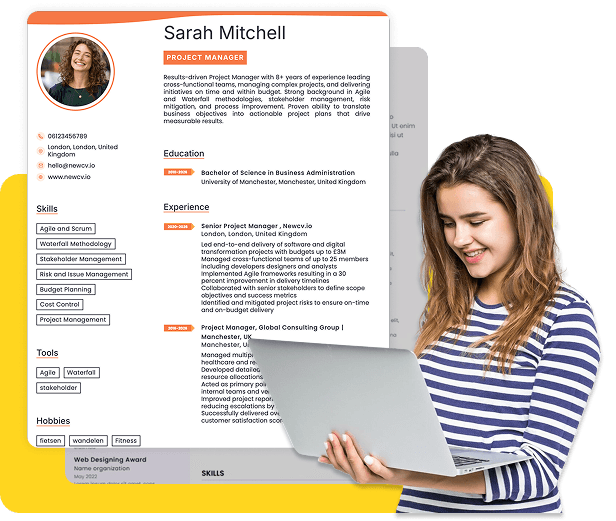
Most Android developer resumes fail because they describe responsibilities instead of measurable impact. Hiring managers do not shortlist candidates for “developed Android applications” or “worked with Kotlin.” They shortlist candidates who improved app performance, reduced crashes, accelerated releases, increased user engagement, or shipped features at scale.
The strongest Android developer resume achievements combine three elements:
What you improved
How you improved it
The measurable business or technical outcome
For example, this:
Weak Example:
“Worked on Android app performance improvements.”
Will almost always lose against this:
Good Example:
“Improved app startup time by 38% through baseline profiles, lazy initialization, and dependency optimization.”
The second version demonstrates technical depth, ownership, measurable impact, and modern Android expertise. That is what recruiters and engineering managers look for during resume screening.
This guide breaks down exactly how to write Android developer resume achievements that pass ATS filters, impress hiring teams, and position you as a high-impact mobile engineer.
Recruiters screening Android resumes are evaluating much more than coding ability. They are trying to quickly identify whether you can contribute to product stability, app scalability, release velocity, and user experience.
Strong Android resume achievements signal:
Technical ownership
Product impact
Performance optimization skills
Scale and reliability experience
Modern Android development expertise
Collaboration across engineering teams
Production problem-solving ability
Business contribution beyond implementation
Most resumes fail because the bullets are task-oriented instead of outcome-oriented.
Weak bullets often:
List technologies without impact
Sound generic and interchangeable
Lack numbers or measurable outcomes
Focus only on duties
Ignore production scale
Fail to show engineering decision-making
Weak Example:
“Used Kotlin and Jetpack Compose to develop mobile applications.”
This says almost nothing about the candidate’s actual effectiveness.
Strong bullets show measurable technical outcomes.
Good Example:
“Built 40+ reusable Compose components adopted across multiple mobile product teams, improving UI consistency and reducing duplicated implementation work.”
This communicates:
Scale
Technical initiative
Team impact
Modern Android tooling
Long-term engineering value
That is dramatically more compelling during hiring evaluation.
The strongest Android resume achievements usually include at least one measurable metric.
Recruiters are especially drawn to candidates who quantify improvements tied to:
Performance
Reliability
Scalability
User adoption
Release velocity
Automation
Testing
Engineering efficiency
Product delivery
Codebase modernization
These immediately signal engineering maturity.
Examples:
Improved app startup time by 38%
Reduced screen rendering latency by 35%
Reduced APK size by 24%
Decreased memory consumption by 18%
Improved frame rendering stability to maintain 60 FPS
Performance metrics are especially valuable for senior Android roles.
Hiring managers care deeply about production reliability.
Examples:
Reduced production crashes by 42%
Maintained 99.8% crash-free sessions
Reduced ANRs by 45%
Resolved 250+ production bugs
Improved exception handling across critical user flows
These metrics signal operational ownership, not just feature development.
Scale instantly increases resume credibility.
Examples:
Built Android features used by 750,000+ monthly active users
Supported Android applications processing 2M+ daily transactions
Integrated APIs serving millions of mobile events per day
Optimized mobile infrastructure supporting high-volume customer traffic
Even mid-level engineers become more competitive when they demonstrate production scale exposure.
These show business impact and engineering efficiency.
Examples:
Increased release frequency from monthly to biweekly
Reduced release build time from 50 minutes to 18 minutes
Delivered 20+ Android features across 8 Agile release cycles
Reduced QA regression time by 36% through test automation
These bullets communicate execution speed and operational effectiveness.
Engineering organizations increasingly prioritize testing maturity.
Examples:
Increased unit test coverage from 48% to 82%
Automated UI testing across core Android workflows
Reduced escaped production defects by 31%
Improved CI validation coverage for release builds
This is especially valuable for senior-level and platform engineering roles.
Performance optimization is one of the most valuable Android engineering skill areas because it directly affects user retention, Play Store ratings, and app engagement.
Improved app startup time by 38% through baseline profiles, lazy initialization, and dependency optimization
Reduced APK size by 24% through resource optimization, dependency cleanup, and R8 configuration
Improved screen rendering performance by 35% through Compose recomposition optimization and layout profiling
Reduced ANRs by 45% by moving blocking operations off the main thread and optimizing WorkManager scheduling
Optimized network request batching and caching, reducing mobile API latency by 27%
Improved battery efficiency by reducing unnecessary background processing and optimizing sync intervals
These bullets are effective because they:
Mention modern Android technologies
Show engineering reasoning
Include measurable outcomes
Demonstrate production optimization experience
Reflect business-relevant improvements
Many companies prioritize reliability engineering because mobile instability directly impacts retention and reviews.
Reduced production crashes by 42% through expanded unit testing, exception handling improvements, and Firebase Crashlytics monitoring
Maintained 99.8% crash-free sessions for customer-facing Android applications
Resolved 250+ production bugs and stability issues across Android product releases
Improved application resiliency by implementing retry handling, offline support, and network state management
Reduced customer-reported bugs by 25% after redesigning validation flows and error-state handling
Reliability-focused bullets are especially powerful because they demonstrate:
Ownership mentality
Production accountability
Attention to user experience
Real-world engineering maturity
Many developers can build features. Far fewer can stabilize large production applications.
Jetpack Compose experience has become a major differentiator in modern Android hiring.
But many candidates list Compose without proving meaningful expertise.
Built 40+ reusable Jetpack Compose UI components adopted across multiple Android teams
Migrated legacy XML screens to Jetpack Compose, improving maintainability and reducing UI implementation complexity
Improved rendering performance by optimizing Compose recomposition behavior and state management
Developed scalable Android design system components using Compose and Material 3
Reduced duplicated UI implementation work by standardizing reusable Compose modules
These bullets suggest:
Modern Android architecture knowledge
Scalable UI engineering experience
Cross-team collaboration
Long-term maintainability thinking
That is far more valuable than simply stating “Used Jetpack Compose.”
CI/CD improvements are highly valuable because they directly affect engineering velocity.
This category is frequently underrepresented on Android resumes.
Automated Android CI/CD workflows, reducing release build time from 50 minutes to 18 minutes
Increased mobile release frequency from monthly to biweekly through deployment pipeline optimization
Integrated automated testing into Android CI pipelines, improving release confidence and reducing manual QA effort
Streamlined Gradle build configuration, reducing local development setup time by 30%
Improved deployment reliability through automated rollback validation and release monitoring
Most Android resumes focus only on feature work.
Candidates who demonstrate release engineering experience often appear more senior because they understand operational scalability.
Architecture and modernization achievements are extremely valuable for senior Android hiring.
Refactored 30,000+ lines of legacy Android code to improve maintainability and modularity
Migrated legacy Java features to Kotlin, improving developer productivity and reducing null-related crashes
Redesigned Android app architecture using MVVM, dependency injection, and repository patterns
Modularized Android codebase to improve build performance and enable parallel feature development
Improved onboarding efficiency by documenting Android architecture standards and development workflows
Architecture bullets demonstrate:
Long-term engineering thinking
Scalability planning
Technical leadership
Maintainability focus
These are major signals for senior and staff-level roles.
If you struggle writing strong bullets, use this proven formula:
Action + Technical Method + Measurable Result
Example:
“Reduced production crashes by 42% through expanded unit testing and improved exception handling.”
This works because it answers:
What changed?
How was it achieved?
What measurable impact occurred?
Example:
“Built Android features used by 750,000+ monthly active users across customer-facing mobile applications.”
This communicates:
Scale
Production ownership
User impact
This is the single most common issue.
Weak Example:
“Responsible for Android app development.”
This tells recruiters nothing about effectiveness.
Avoid bullets like:
Worked with Kotlin
Used Android Studio
Participated in Agile meetings
Developed mobile features
These are assumed baseline expectations.
Resumes without metrics often feel junior even when the candidate is experienced.
Numbers create credibility.
Technology lists without outcomes weaken resumes.
Recruiters care more about impact than tool inventories.
Exaggerated metrics damage credibility.
Experienced engineering recruiters can usually detect inflated claims quickly.
Senior Android resumes should emphasize:
System-level impact
Technical leadership
Architecture decisions
Cross-team influence
Scalability
Mentorship
Reliability ownership
Led Android modernization initiative migrating legacy XML architecture to Jetpack Compose across multiple product teams
Improved engineering delivery velocity by standardizing reusable Android infrastructure and CI workflows
Mentored junior Android developers on Kotlin best practices, testing strategies, and scalable mobile architecture
Collaborated with backend, product, and QA teams to deliver high-scale Android features supporting millions of daily transactions
They are evaluating whether you can:
Improve engineering systems
Influence architecture
Reduce operational risk
Lead technical initiatives
Scale mobile development practices
Not just implement tickets.
Metrics alone are not enough.
Your achievements must also align with ATS keyword matching.
Kotlin
Java
Jetpack Compose
MVVM
Coroutines
Android SDK
Firebase
Retrofit
Room
CI/CD
Gradle
WorkManager
Android architecture
Unit testing
UI testing
Dependency injection
REST APIs
Performance optimization
But avoid keyword stuffing.
The strongest resumes integrate keywords naturally inside measurable accomplishments.
A strong Android resume usually includes measurable impact in at least 60% to 80% of bullets.
You do not need numbers in every line.
But your resume should consistently demonstrate:
Performance impact
Product outcomes
Engineering scale
Delivery effectiveness
Technical ownership
If your entire resume reads like a task list, interview conversion rates usually drop significantly.
The strongest placement areas include:
Professional experience
Project highlights
Technical leadership initiatives
Performance optimization work
Architecture modernization efforts
Avoid isolating achievements into a separate “accomplishments” section unless you are highly senior.
Integrated impact statements usually perform better during recruiter screening.
Developed Android UI components using Kotlin and Jetpack Compose for customer-facing mobile applications
Improved unit test coverage across Android modules from 48% to 70%
Fixed 80+ Android bugs and UI issues across multiple release cycles
Assisted with Firebase integration for analytics and crash monitoring
Recruiters are evaluating:
Growth potential
Technical fundamentals
Contribution consistency
Ability to work in production environments
You are not expected to own large-scale architecture yet.
Delivered 20+ Android product features across 8 Agile release cycles
Reduced crash rates by 32% through improved lifecycle handling and testing coverage
Integrated 12+ third-party SDKs for payments, messaging, analytics, and authentication
Improved Android app responsiveness through threading and rendering optimization
Hiring managers expect:
Independent execution
Production ownership
Feature delivery capability
Problem-solving maturity
Led Android architecture modernization initiative impacting multiple product teams
Reduced mobile release failures by implementing automated CI/CD validation workflows
Designed scalable Android infrastructure supporting millions of daily API transactions
Improved engineering onboarding efficiency through standardized tooling and Android documentation
They are evaluating:
Leadership
Scalability thinking
Technical influence
Long-term engineering decision-making
Use ATS-optimised Resume and resume templates that pass applicant tracking systems. Our Resume builder helps recruiters read, scan, and shortlist your Resume faster.

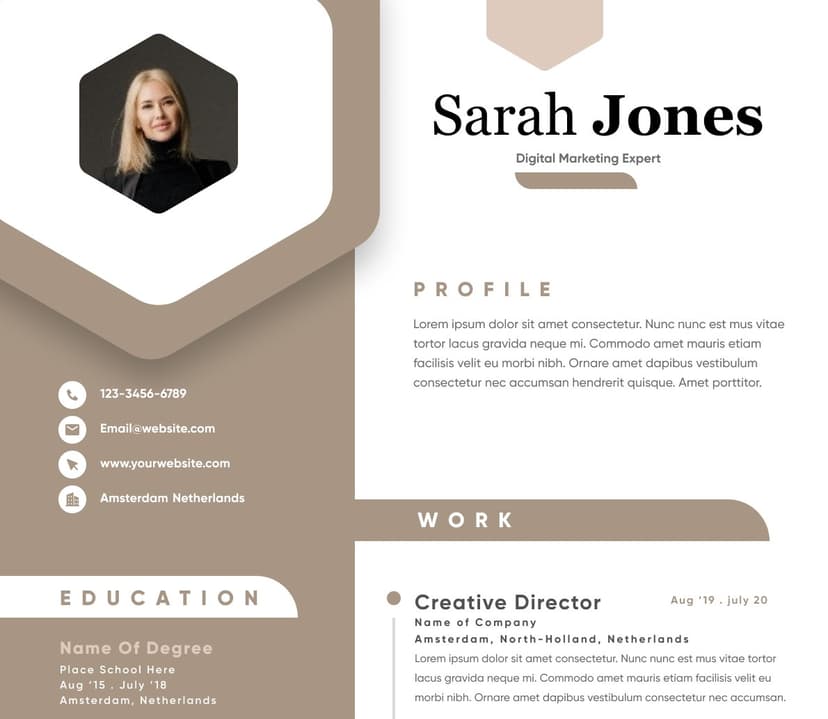
Use professional field-tested resume templates that follow the exact Resume rules employers look for.
Create Resume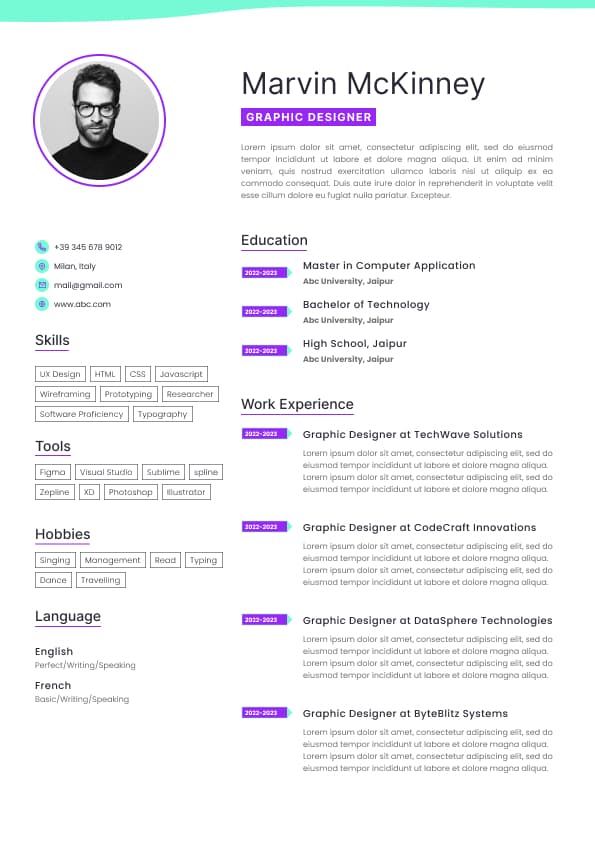
Use professional field-tested resume templates that follow the exact Resume rules employers look for.
Create Resume


 Upload Resume
 Import from Linkedin