STILL APPLYING. STILL HEARING NOTHING?BUILD YOUR RESUME

STILL APPLYING. STILL HEARING NOTHING?BUILD YOUR RESUME
Choose from a wide range of NEWCV resume templates and customize your NEWCV design with a single click.
FAQ

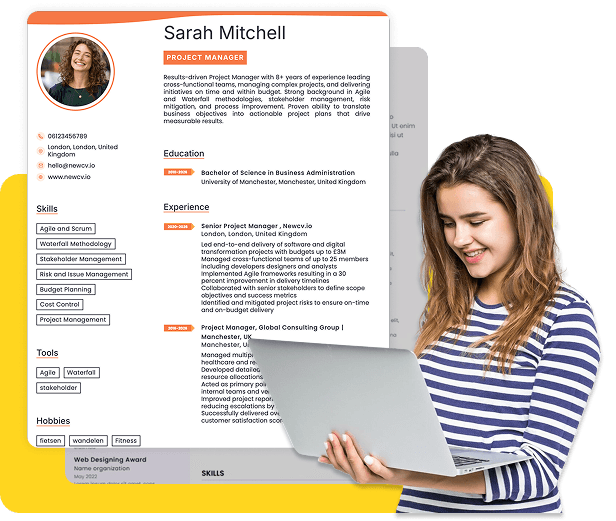
An effective Android developer resume does three things fast: proves technical depth, demonstrates shipped product impact, and shows recruiters you can contribute to a production mobile team with minimal ramp-up time. Most Android developer resumes fail because they read like technology inventories instead of business-impact documents.
Hiring managers are not looking for someone who “knows Kotlin.” They want evidence that you improved app performance, reduced crashes, scaled architecture, increased app ratings, accelerated release cycles, or contributed to revenue-driving mobile features.
The strongest Android developer resumes combine:
Modern Android stack expertise
Measurable engineering outcomes
Clean ATS-friendly formatting
Production-level project credibility
Strong mobile architecture understanding
Clear alignment with the target role level
This guide breaks down exactly how recruiters evaluate Android developer resumes, what top-performing resumes include, which mistakes instantly weaken candidates, and how to structure a resume that competes in today’s US mobile engineering market.
Most recruiters review an Android developer resume in under 15 seconds during the first screening pass.
Your resume is not being read line by line initially. It is scanned for hiring signals.
Recruiters and hiring managers typically look for:
Kotlin expertise
Modern Android frameworks
Published app experience
Architecture knowledge
API integration experience
Mobile performance optimization
CI/CD familiarity
Team collaboration experience
Product impact metrics
Stability and scalability achievements
For mid-level and senior Android developers, hiring managers also evaluate:
Ownership of mobile features
Architectural decision-making
Mentorship experience
Cross-functional collaboration
Scalability thinking
Release management experience
Mobile security awareness
Play Store production support
A resume that only lists technologies without business outcomes usually performs poorly, even if the candidate is technically strong.
For nearly all Android developers in the US market, the best format is:
This format works best because it aligns with how engineering recruiters review candidates.
It emphasizes:
Recent technical experience
Career progression
Current Android stack knowledge
Production engineering exposure
Avoid:
Functional resume formats
Graphic-heavy templates
Multi-column layouts
Skill bars or rating systems
These often create ATS parsing issues and reduce recruiter readability.
A high-performing Android developer resume should include:
Resume header
Professional summary
Technical skills
Professional experience
Projects
Education
Certifications if relevant
For experienced Android engineers, projects may be optional if production experience is strong enough.
For junior developers or career changers, projects become critical.
Your summary should position you strategically within 3 to 5 lines.
It should communicate:
Experience level
Android specialization
Core technical strengths
Business impact
Product environment exposure
“Android Developer with 5+ years of experience building scalable Kotlin-based mobile applications for fintech and e-commerce platforms. Specialized in Jetpack Compose, MVVM architecture, REST API integration, and mobile performance optimization. Improved app startup speed by 38% and contributed to applications serving more than 2 million active users.”
“Hardworking Android developer skilled in Java, Kotlin, Android Studio, and teamwork.”
The weak version fails because:
No measurable impact
No production context
No specialization
No differentiation
Many Android developers overload their resumes with every framework they have touched.
Recruiters care more about relevance and depth than quantity.
Kotlin
Java
Jetpack Compose
Android SDK
Jetpack libraries
XML layouts
MVVM
MVI
Clean Architecture
Retrofit
REST APIs
GraphQL
Hilt
Dagger
Room
SQLite
Coroutines
Flow
RxJava
JUnit
Espresso
Mockito
Git
Firebase
CI/CD pipelines
Google Play Console
Listing outdated technologies too prominently can weaken your positioning.
For example:
Eclipse ADT
AsyncTask
Java-only Android stacks
Legacy XML-only positioning
These can unintentionally signal outdated experience if not balanced with modern Android development tools.
This is where most resumes fail.
Weak bullet points describe responsibilities.
Strong bullet points demonstrate engineering outcomes.
Use this structure:
Action + Technical Context + Business/Engineering Result
“Worked on Android app development.”
“Developed and launched Kotlin-based Android features using Jetpack Compose, reducing UI rendering latency by 27% and improving Play Store ratings from 3.9 to 4.5.”
Architected MVVM-based Android modules that reduced crash incidents by 42% across production releases
Integrated Firebase Analytics and remote configuration tools, enabling product teams to optimize user engagement campaigns
Refactored legacy Java codebase into Kotlin, reducing technical debt and accelerating feature deployment cycles
Built offline-first mobile functionality using Room database and coroutine-based synchronization logic
Collaborated with backend engineers to optimize REST API payload handling, reducing app response times by 31%
Improved Android app startup performance through lazy loading and dependency optimization strategies
Implemented automated UI testing using Espresso, increasing regression test coverage by 45%
Strong bullets signal:
Ownership
Engineering maturity
Product awareness
Performance optimization capability
Scalability thinking
Real production exposure
Michael Carter
Android Developer with 6+ years of experience building scalable mobile applications using Kotlin, Jetpack Compose, and Clean Architecture principles. Experienced in fintech and SaaS environments with strong expertise in mobile performance optimization, API integration, and scalable Android application development. Proven track record improving app stability, reducing crash rates, and accelerating release delivery.
Languages: Kotlin, Java
Frameworks: Android SDK, Jetpack Compose, Jetpack Libraries
Architecture: MVVM, Clean Architecture, Repository Pattern
Networking: Retrofit, REST APIs, GraphQL
Databases: Room, SQLite
Tools: Android Studio, Git, Firebase, Jira, Postman
Testing: JUnit, Espresso, Mockito
DevOps: CI/CD, GitHub Actions, Firebase App Distribution
2022 – Present
Led Android feature development for a fintech platform serving over 1.8 million active users
Rebuilt legacy XML interfaces using Jetpack Compose, reducing UI maintenance complexity by 35%
Improved application crash-free sessions from 96.1% to 99.2% through performance optimization and memory leak remediation
Collaborated with product managers and backend engineers to launch mobile payment features that increased transaction completion rates by 18%
Designed scalable modular architecture improving development velocity across cross-functional engineering teams
2019 – 2022
Developed Android e-commerce features using Kotlin and MVVM architecture
Integrated Stripe payment APIs and Firebase Analytics to improve mobile conversion tracking
Reduced app startup time by 41% through dependency optimization and asynchronous loading strategies
Built reusable UI components that accelerated feature deployment timelines across multiple releases
Built personal finance Android application using Kotlin, Room, Retrofit, and Jetpack Compose
Implemented offline synchronization and secure authentication workflows
Achieved 50,000+ downloads on Google Play with a 4.6-star user rating
Bachelor of Science in Computer Science
University of Texas at Dallas
Keyword optimization matters because ATS systems filter resumes before recruiters review them.
However, keyword stuffing hurts readability and weakens credibility.
Use keywords naturally within:
Skills
Experience bullets
Summary
Project descriptions
Android Developer
Kotlin
Java
Jetpack Compose
Android SDK
MVVM
REST APIs
Firebase
Coroutines
Room Database
Clean Architecture
Mobile Application Development
Google Play Console
Android Studio
CI/CD
Retrofit
Agile Development
ATS systems do not “score” resumes the way many people think.
Most ATS filters work primarily through:
Keyword matching
Role relevance
Experience alignment
Job title similarity
That means your resume should mirror the language used in the target Android job posting when accurate and truthful.
A long skills section without evidence creates skepticism.
Hiring managers trust demonstrated usage more than keyword inventories.
Engineering resumes without measurable outcomes feel weaker immediately.
Metrics create credibility.
Examples:
Performance improvements
Crash reduction
User growth
App ratings
Release velocity
Revenue impact
If your resume heavily emphasizes:
Java-only Android development
Legacy Android APIs
Deprecated frameworks
Without modern Android tooling, recruiters may assume your knowledge is outdated.
Junior Android developers often include tutorial-level projects.
Hiring managers can spot these immediately.
Weak projects:
Basic to-do apps
Weather apps copied from tutorials
Generic CRUD apps with no complexity
Strong projects demonstrate:
Real architecture
API integration
Scalability
Performance optimization
Security awareness
Production deployment
Entry-level Android developers often assume they are rejected because of limited experience.
Usually, the bigger issue is weak positioning.
Projects should demonstrate:
Architecture understanding
API integration
Real-world functionality
Clean UI implementation
State management
Recruiters sometimes review repositories for junior candidates.
Strong GitHub signals:
Clean documentation
Structured commits
Organized architecture
Active development
Even personal projects should reflect production thinking.
Examples:
Error handling
Offline support
Testing
Performance optimization
Secure authentication
If you lack experience:
Reduce summary fluff
Expand projects strategically
Focus on measurable technical complexity
Highlight internship impact
Demonstrate modern Android stack usage
Senior-level hiring changes dramatically.
At this level, companies evaluate:
Ownership
Leadership
Architectural thinking
Scalability decisions
Product collaboration
Large-scale app architecture
Team leadership
Mentorship
Release strategy
Mobile infrastructure improvements
Performance optimization at scale
Collaboration with product and backend teams
Senior candidates often fail by sounding too operational.
Example:
“Responsible for Android development.”
This sounds mid-level.
Senior engineers should position themselves as decision-makers.
“Led migration to modular Android architecture supporting parallel feature development across 4 engineering squads.”
That signals organizational impact.
Results-driven Android Developer with X years of experience building scalable mobile applications using Kotlin, Android SDK, and modern Android architecture patterns. Experienced in performance optimization, API integration, and delivering high-quality mobile experiences in agile product environments.
Languages:
Kotlin, Java
Frameworks and Libraries:
Android SDK, Jetpack Compose, Retrofit, Firebase
Architecture:
MVVM, Clean Architecture
Tools:
Android Studio, Git, Jira, CI/CD
Dates
Built and maintained Android applications using Kotlin and modern Android frameworks
Improved app performance by X%
Integrated REST APIs and backend services
Collaborated with product and engineering stakeholders to deliver mobile features
Built Android application using Kotlin and Jetpack Compose
Implemented authentication, API integration, and local persistence
Achieved measurable technical or user outcomes
Certifications are secondary in Android hiring.
Real production experience matters more.
However, certifications can help:
Junior developers
Career changers
Candidates with limited production work
Relevant certifications include:
Google Associate Android Developer
Kotlin certifications
Firebase certifications
Do not place certifications above technical experience.
Best for:
Junior developers
Early-career engineers
Candidates with under 5 years of experience
Acceptable for:
Senior Android engineers
Staff-level candidates
Candidates with extensive project impact
Never compress valuable achievements just to force one page.
But avoid unnecessary filler.
The best Android developer resumes do not try to look impressive superficially.
They communicate engineering impact clearly.
Strong resumes show:
Modern Android expertise
Real production outcomes
Architecture understanding
Scalability thinking
Business impact
Weak resumes focus too heavily on:
Tool lists
Responsibilities
Buzzwords
Generic claims
If you want more interviews, your resume must answer one core hiring question immediately:
“Can this developer contribute effectively to a production Android team right now?”
Every section of your resume should reinforce that answer.
Use ATS-optimised Resume and resume templates that pass applicant tracking systems. Our Resume builder helps recruiters read, scan, and shortlist your Resume faster.

Use professional field-tested resume templates that follow the exact Resume rules employers look for.
Create Resume
Use professional field-tested resume templates that follow the exact Resume rules employers look for.
Create Resume


 Upload Resume
 Import from Linkedin