STILL APPLYING. STILL HEARING NOTHING?BUILD YOUR RESUME

STILL APPLYING. STILL HEARING NOTHING?BUILD YOUR RESUME
Choose from a wide range of NEWCV resume templates and customize your NEWCV design with a single click.
FAQ
Most Android developer resumes fail for the same reasons: vague app experience, missing Kotlin and Jetpack keywords, weak impact metrics, ATS-breaking layouts, and generic bullet points that do not explain technical ownership. Recruiters reviewing Android resumes are looking for evidence that you can build, ship, maintain, optimize, and scale mobile applications in a real production environment.
If your resume says things like “worked on Android apps” or lists tools without explaining how you used them, you are likely getting filtered out before interviews. Modern Android hiring teams expect measurable app impact, current Android stack knowledge, collaboration experience, and clean ATS-readable formatting.
The strongest Android developer resumes clearly show:
What apps you built
Which Android technologies you used
What business or performance impact you created
How you improved app quality, stability, testing, or release processes
Whether you understand modern Android development practices
This guide breaks down the biggest Android developer resume mistakes recruiters see every day and how to fix them strategically.
Android development is one of the most keyword-sensitive technical hiring categories. Recruiters, ATS systems, engineering managers, and technical interviewers all evaluate resumes differently.
A recruiter may initially screen for:
Kotlin
Jetpack Compose
MVVM
Retrofit
Firebase
REST APIs
Android SDK
Coroutines
One of the fastest ways to lose recruiter attention is using generic descriptions that explain nothing.
Weak Example
Worked on Android applications
Developed mobile apps using Kotlin
Helped improve app performance
Collaborated with team members
These bullets are almost meaningless during screening because they do not explain:
What you built
How complex the work was
A massive mistake is creating a giant Android skills section without proving actual usage.
Recruiters know many candidates copy Android keyword lists from job descriptions.
Weak Example
Kotlin, Java, Android SDK, MVVM, Retrofit, Firebase, Jetpack Compose, Room, Dagger, APIs, Git, Agile, Jira
This creates two problems:
No proof of depth
High interview risk
Technical interviewers immediately test listed technologies. If you cannot discuss implementation details confidently, credibility collapses fast.
Hiring teams want contextual evidence.
Instead of only listing technologies, connect them directly to outcomes.
Good Example
Built scalable Android payment flows using Kotlin, MVVM, Retrofit, and Coroutines for real-time transaction processing
Android resumes without metrics often feel junior, even when the developer is technically strong.
Mobile engineering is highly performance-driven. Teams care about:
Crash reduction
ANR reduction
App speed
Retention
User growth
Ratings
Release velocity
Stability
Many Android developer resumes never reach a human reviewer because the ATS cannot properly parse them.
This happens frequently with:
Graphic-heavy templates
Multi-column layouts
Icons replacing section labels
Text embedded in images
Over-designed Canva resumes
Skill bars and visual charts
ATS systems prioritize readability, not aesthetics.
Your Android resume should include:
Android hiring is heavily keyword-driven because recruiters often are not engineers themselves.
If a job description requires:
Kotlin
Jetpack Compose
Coroutines
MVVM
REST APIs
Room
Hilt
Firebase
And your resume only says “Android development,” your match score drops significantly.
Recruiters spend seconds scanning resumes initially.
Dense paragraphs kill readability.
Weak Example
Responsible for developing Android applications for customers using Kotlin and Java while collaborating with backend developers and product teams to improve user experience and deliver app features according to business requirements.
This is exhausting to scan.
Good Example
Developed Android features using Kotlin, Coroutines, and MVVM architecture
Collaborated with backend engineers to integrate REST APIs for real-time financial transactions
Improved app responsiveness by optimizing RecyclerView rendering and API caching
Partnered with product and UX teams to launch customer-facing onboarding features
This is a major hidden rejection factor.
Some Android resumes still focus heavily on:
Eclipse
AsyncTask
Java-only stacks
Legacy support libraries
Older XML-only approaches
Modern Android teams increasingly expect:
Kotlin-first development
Jetpack Compose
This especially hurts:
Entry-level Android developers
Career switchers
Bootcamp graduates
Self-taught developers
Candidates with limited production experience
Android hiring teams strongly value proof of execution.
Strong supplemental proof includes:
GitHub repositories
Many developers explain technical tasks but never explain why the work mattered.
Hiring managers care deeply about impact.
Weak Example
That sounds tactical and low-level.
Good Example
Now the work sounds strategic and valuable.
Good Android impact statements explain:
User impact
Engineering efficiency
Many Android resumes focus only on feature development.
That is a mistake.
Experienced Android teams value engineers who can:
Debug production issues
Maintain app stability
Write tests
Handle releases
Monitor crashes
Improve reliability
Include experience with:
A strong Android developer resume creates confidence quickly.
Recruiters want evidence of:
Modern Android stack experience
Production ownership
Technical depth
Measurable impact
Collaboration ability
Scalable engineering practices
Hiring managers want to believe:
You can contribute quickly
One of the most effective frameworks is:
Example:
This structure works because it combines:
Technical clarity
Context
Business value
Engineering impact
Most weak Android resumes are missing at least two of those elements.
Recruiters prioritize these sections in order:
This is the highest-value section.
Focus on:
Technical execution
Ownership
Results
Architecture
Collaboration
Keep this organized.
Example categories:
Languages
Before applying, verify your resume includes:
Kotlin and modern Android stack keywords
Measurable mobile impact
ATS-friendly formatting
Specific Android technologies tied to outcomes
Modern architecture references
Testing and debugging experience
Production-scale ownership
Clear bullet formatting

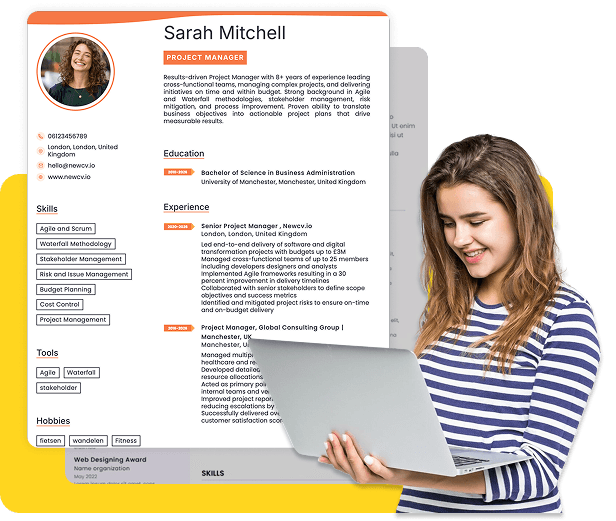
Use ATS-optimised Resume and resume templates that pass applicant tracking systems. Our Resume builder helps recruiters read, scan, and shortlist your Resume faster.

Use professional field-tested resume templates that follow the exact Resume rules employers look for.
Create Resume
Use professional field-tested resume templates that follow the exact Resume rules employers look for.
Create ResumeCI/CD
Git
A hiring manager evaluates:
App architecture decisions
Production ownership
Performance optimization
Collaboration with product/design/backend teams
Debugging ability
Mobile scalability experience
An ATS system scans for:
Exact keyword relevance
Clean formatting
Structured sections
Standard resume hierarchy
Readable text parsing
Many Android resumes fail because they try to impress with tool lists instead of proving technical execution and production impact.
Which Android technologies were involved
What measurable impact you created
Whether you owned features or just supported tasks
Good Example
Developed and launched 12+ Android features using Kotlin, Jetpack Compose, MVVM, and Retrofit for a fintech app serving 1.8M monthly active users
Reduced app startup time by 32% through lazy loading optimization and coroutine-based background processing
Improved crash-free sessions from 96.4% to 99.1% using Firebase Crashlytics monitoring and memory leak debugging
Built reusable Compose UI components that reduced feature delivery time by 25% across the Android team
Strong Android bullets combine:
Action
Technical implementation
Scope
Measurable results
Business or engineering impact
That combination dramatically improves recruiter confidence.
Migrated legacy XML UI screens to Jetpack Compose, reducing UI rendering complexity and improving development speed
Integrated Firebase Analytics and Crashlytics to monitor user behavior and production stability across 500K+ installs
This proves:
Technical ownership
Real implementation experience
Production-level exposure
Battery optimization
Scalability
Strong Android resume metrics include:
Crash-free rate improvements
Play Store rating increases
App download growth
API latency reductions
Faster build or release cycles
Reduced ANRs
Improved test coverage
Reduced memory consumption
Faster startup time
User engagement increases
Weak Example
Good Example
Weak Example
Good Example
Specificity signals engineering maturity.
Summary
Technical Skills
Professional Experience
Projects
Education
Certifications if relevant
Use:
Standard section titles
Simple formatting
Single-column layout
Clean fonts
Clear bullet structure
Avoid:
Tables for core content
Logos
Graphics
Fancy timelines
Complex headers
An ATS-friendly resume does not mean boring. It means readable.
High-performing candidates adjust keyword alignment for:
Fintech Android roles
Healthcare mobile apps
Enterprise Android systems
Consumer mobile products
E-commerce apps
SaaS mobile platforms
Different Android jobs prioritize different stacks.
A fintech Android resume should emphasize:
Security
Authentication
Payment systems
Encryption
Transaction performance
Reliability
Scalability
A consumer product Android resume should emphasize:
User engagement
Performance optimization
UI/UX collaboration
Play Store ratings
A/B testing
Analytics
Tailoring matters because recruiters screen for relevance, not general Android knowledge.
Bullet formatting improves:
Readability
ATS parsing
Recruiter scanning speed
Technical clarity
Coroutines
Flow
Hilt/Dagger
Modern Android Architecture Components
CI/CD familiarity
Modularization awareness
If your resume looks outdated, recruiters assume:
Your Android knowledge is stale
Your ramp-up time will be slow
You may struggle with modern codebases
That does not mean older technologies should disappear entirely. But modern Android skills must dominate the narrative.
Good Example
Migrated legacy Java Android modules to Kotlin, reducing code complexity and improving maintainability
Built modern UI components using Jetpack Compose and state-driven architecture patterns
Implemented coroutine-based asynchronous processing to replace deprecated AsyncTask workflows
This shows adaptability and current-market relevance.
Published Play Store apps
Side projects
Open-source contributions
Technical Android demos
API integrations
Mobile architecture examples
Even junior candidates become significantly more competitive with visible Android projects.
Good Android portfolio projects demonstrate:
Real app functionality
Modern Android stack usage
API integration
Authentication
Offline storage
Testing
Clean architecture
Weak projects include:
Simple calculator apps
Tutorial clones with no customization
Incomplete repositories
Broken GitHub links
Quality matters more than quantity.
Revenue impact
Stability improvement
Performance gains
Product outcomes
This separates strong engineers from task executors.
Espresso
JUnit
Mockito
UI testing
Firebase Crashlytics
CI/CD pipelines
Play Store release management
Feature flags
Monitoring tools
Good Example
Good Example
This signals production-level engineering maturity.
You understand modern mobile development
You can work inside production systems
You can communicate effectively with teams
The best Android resumes make those conclusions obvious within seconds.
Frameworks
Architecture
Testing
Tools
Especially important for:
Junior developers
Career changers
Freelancers
Keep it short and specific.
Avoid generic statements like:
Passionate Android developer
Team player
Hardworking engineer
Instead:
Good Example
Android Developer with 4+ years of experience building Kotlin-based fintech and healthcare applications using Jetpack Compose, MVVM, Coroutines, and Firebase. Proven success improving crash-free rates, app performance, and release efficiency across high-scale mobile products.
Tailored keywords from job descriptions
GitHub or project links when relevant
App performance improvements
Release and collaboration experience
If your Android resume still feels generic after this checklist, it probably is.
Strong Android resumes feel concrete, measurable, and production-oriented.


 Upload Resume
 Import from Linkedin