STILL APPLYING. STILL HEARING NOTHING?BUILD YOUR RESUME

STILL APPLYING. STILL HEARING NOTHING?BUILD YOUR RESUME
Choose from a wide range of NEWCV resume templates and customize your NEWCV design with a single click.
FAQ

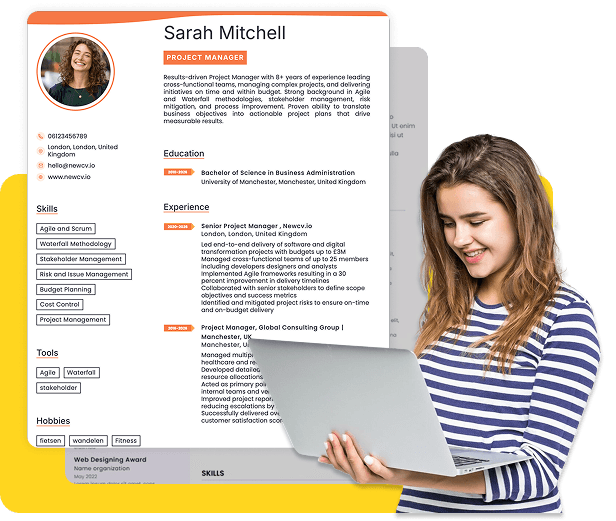
An Android developer resume that gets interviews in today’s US job market is not just a list of apps and technologies. Hiring managers want immediate proof that you can build, maintain, scale, and optimize production Android applications using modern Android stacks. That means your resume must clearly align with the company’s architecture, frameworks, testing practices, and app performance expectations.
Most Android resumes fail because they stay too generic. Recruiters see “Android Developer with Kotlin and Java experience” hundreds of times per week. What gets attention is stack-specific positioning: Jetpack Compose migration work, MVVM architecture ownership, Firebase integrations, Play Store optimization, app startup improvements, crash reduction, testing automation, and measurable mobile performance impact.
If your resume does not clearly reflect the exact Android stack used by the employer, you will lose interviews even if you are technically qualified. Modern Android hiring is heavily keyword-driven, architecture-driven, and outcome-driven.
Most Android hiring teams screen resumes in three stages:
ATS keyword matching
Technical recruiter validation
Senior engineer or hiring manager review
Each stage evaluates different signals.
Applicant Tracking Systems scan for exact Android ecosystem terminology, including:
Kotlin
Jetpack Compose
Android SDK
MVVM
Retrofit
Room
Firebase
Coroutines
REST APIs
GraphQL
Espresso
JUnit
Clean Architecture
If the job description says “Jetpack Compose” and your resume only says “Android UI development,” you may fail keyword matching despite having the experience.
Modern Android recruiting heavily favors exact framework naming.
Weak resumes say things like:
Weak Example
“Developed Android applications for users.”
That tells recruiters almost nothing.
Good Example
“Built and maintained Kotlin-based Android applications using Jetpack Compose, MVVM architecture, Retrofit, Room, and Firebase Analytics for 500K+ monthly active users.”
The second version communicates:
Modern Android stack
Architecture knowledge
Production experience
Scale
Technical depth
Many Android developers dump keywords into a skills section without proving usage.
Hiring managers care about implementation, not keyword stuffing.
Instead of this:
Kotlin
Firebase
Retrofit
Room
Show business and technical outcomes:
Android hiring managers strongly value measurable mobile impact.
Top Android resumes include metrics such as:
App startup time improvements
ANR reduction
Crash reduction
Play Store rating increases
App size optimization
User retention improvements
Download growth
Test coverage increases
Mobile performance metrics separate senior-level candidates from generic applicants.
An effective Android resume is usually structured like this:
Your summary should immediately position your Android stack specialization.
Organize skills by Android ecosystem category.
This is the most important section.
Critical for junior and mid-level Android developers.
Keep concise unless you are entry-level.
Only include relevant mobile or cloud certifications.
The best Android resumes organize technologies logically instead of creating one giant keyword dump.
Languages: Kotlin, Java
Android Frameworks: Android SDK, Jetpack Compose, XML Layouts, Material Design
Architecture: MVVM, MVI, Clean Architecture, Repository Pattern, Modularization
Networking: Retrofit, OkHttp, REST APIs, GraphQL
Databases: Room, SQLite, Firestore, DataStore
Cloud & Services: Firebase, AWS, Google Cloud Platform, Push Notifications
Testing: JUnit, Espresso, Mockito, Robolectric, Compose Testing
CI/CD & Tools: GitHub Actions, Jenkins, Gradle, Fastlane
This structure improves:
ATS readability
Recruiter scanning speed
Technical credibility
Stack clarity
Kotlin is now the default expectation for most modern Android hiring.
If your resume still emphasizes Java more heavily than Kotlin, you may look outdated unless the role specifically targets legacy Android systems.
Hiring teams look for evidence of:
Coroutines
Flow
Jetpack Compose
Kotlin-first architecture
Null safety practices
Clean architecture implementation
Functional programming patterns
Developed scalable Android features in Kotlin using Coroutines and Flow, improving asynchronous data handling performance across core application modules
Migrated legacy Java Android modules to Kotlin, reducing code complexity and improving developer productivity during feature releases
Built reusable Jetpack Compose UI components that reduced duplicate UI code by 42% across Android product teams
Java Android roles still exist, especially in:
Enterprise systems
Legacy Android apps
Large-scale migration environments
Fintech
Healthcare
However, Java-focused resumes should still demonstrate modern Android capabilities.
Strong Java Android resumes show:
Migration readiness
Hybrid Java/Kotlin environments
Performance optimization
Legacy system modernization
Maintained and optimized large-scale Java Android applications supporting 2M+ users while contributing to Kotlin migration initiatives
Improved Android app memory efficiency through optimized Java object lifecycle management, reducing crash frequency by 21%
Jetpack Compose has become one of the strongest Android hiring filters.
Many employers now specifically search for:
Compose adoption
Compose migration
Compose testing
State management expertise
They want proof that you used Compose in production environments.
Not tutorials. Not side projects alone.
Led migration from XML layouts to Jetpack Compose, reducing UI development time by 35% and improving design consistency across Android screens
Implemented Compose state management using ViewModel and StateFlow to improve UI responsiveness and maintainability
Developed reusable Compose design system components aligned with Material Design guidelines
MVVM is one of the most searched Android architecture keywords in recruiting systems.
But many candidates mention MVVM without demonstrating actual architecture ownership.
Recruiters want evidence of:
Separation of concerns
Repository layer implementation
Reactive data handling
Lifecycle awareness
Testability improvements
Designed Android application architecture using MVVM and Repository Pattern, improving feature scalability and reducing UI logic duplication
Implemented ViewModel-driven state management with LiveData and Kotlin Flow to improve lifecycle-safe data handling
Refactored tightly coupled Android modules into modular MVVM architecture, improving release stability and test coverage
Firebase is one of the most commercially valuable Android ecosystem tools.
Companies often specifically search for candidates with:
Firebase Authentication
Firestore
Crashlytics
Analytics
Cloud Messaging
Hiring teams want operational Firebase experience, not basic integrations.
Integrated Firebase Cloud Messaging to support real-time push notification delivery for 1M+ Android users
Implemented Firebase Analytics dashboards to improve mobile user behavior tracking and feature adoption analysis
Reduced Android production crash rates by 34% through Firebase Crashlytics monitoring and issue prioritization workflows
Senior Android hiring managers heavily prioritize performance optimization experience.
This includes:
App startup optimization
Memory optimization
Battery efficiency
Network performance
ANR reduction
Rendering optimization
Reduced Android app startup time by 41% through lazy loading optimization and dependency initialization improvements
Optimized Retrofit API request handling and local Room caching strategy, decreasing mobile API latency by 28%
Improved Play Store app rating from 3.8 to 4.5 by addressing crash stability and performance bottlenecks
Projects matter most for:
Junior Android developers
Career switchers
Self-taught developers
Freelancers
But Android projects only help if they resemble production-quality work.
Most candidates build simple CRUD demo apps.
Recruiters rarely care.
Strong projects demonstrate:
Real architecture
Production tooling
Performance optimization
Testing
CI/CD workflows
Scalable structure
Include:
Tech stack
Architecture pattern
App purpose
Metrics if available
GitHub or Play Store links
Personal Finance Android App
Kotlin, Jetpack Compose, MVVM, Room, Firebase
Built Android budgeting application using MVVM architecture and Jetpack Compose UI components
Integrated Firebase Authentication and Firestore for secure cloud-based financial data synchronization
Implemented offline-first Room database caching to improve usability during low-network conditions
Added unit and UI testing using JUnit and Espresso, increasing feature reliability before production releases
Android resumes often fail ATS systems because developers use overly broad wording.
If the job description includes:
Retrofit
Compose
Kotlin Flow
Room
Your resume should include those exact terms if you have the experience.
If the employer uses:
Clean Architecture
MVVM
Modularization
Use their terminology naturally in your experience bullets.
Bad:
Good:
These keywords commonly appear in Android recruiter searches:
Kotlin Android Developer
Android SDK
Jetpack Compose
MVVM
Retrofit
Firebase
Android Architect
Mobile Engineer
Android Platform Engineer
Clean Architecture
REST APIs
Coroutines
Room Database
Espresso Testing
Play Store Optimization
But keyword presence alone is not enough.
Keywords must appear inside credible technical context.
Senior Android resumes are evaluated differently.
Recruiters expect evidence of:
System design ownership
Technical leadership
Architecture decisions
Mentorship
Release management
Scalability improvements
Many developers assume hiring is purely technical.
It is not.
Android hiring managers evaluate:
Production Android engineering is usually maintenance-heavy, not greenfield-heavy.
Shipping stability matters more than flashy technologies.
Android developers work closely with:
Backend engineers
Product managers
Designers
QA engineers
Performance and usability are major evaluation criteria.
Android Developer with 5+ years of experience building scalable Kotlin-based mobile applications using Jetpack Compose, MVVM architecture, Retrofit, Room, and Firebase. Proven track record improving app performance, reducing crash rates, and delivering production Android features used by millions of users.
Senior Android Engineer specializing in scalable mobile architecture, Kotlin development, and Android performance optimization. Experienced leading modularization initiatives, mentoring engineers, and delivering high-impact Android applications with strong Play Store performance metrics.
Hiring managers care more about outcomes than task lists.
If your resume only mentions:
Eclipse
Java-only Android
Legacy support libraries
You may appear outdated.
Modern Android hiring strongly values architecture literacy.
Android teams increasingly expect testing awareness.
Even basic testing exposure helps.
Before submitting your Android resume, verify that it includes:
Exact Android stack keywords
Kotlin or Java specialization clarity
Architecture patterns used
Measurable app impact
Performance optimization examples
Firebase or cloud integrations
Testing frameworks
Production-scale experience
Play Store metrics where possible
Modern Android terminology
Your resume should make it obvious within 15 seconds:
What Android stack you use
What level you operate at
What mobile business impact you create
That is what gets interviews.
Use ATS-optimised Resume and resume templates that pass applicant tracking systems. Our Resume builder helps recruiters read, scan, and shortlist your Resume faster.

Use professional field-tested resume templates that follow the exact Resume rules employers look for.
Create Resume
Use professional field-tested resume templates that follow the exact Resume rules employers look for.
Create Resume


 Upload Resume
 Import from Linkedin