STILL APPLYING. STILL HEARING NOTHING?BUILD YOUR RESUME

STILL APPLYING. STILL HEARING NOTHING?BUILD YOUR RESUME
Choose from a wide range of NEWCV resume templates and customize your NEWCV design with a single click.
FAQ
A strong Python developer resume is no longer just about listing Django, Flask, or FastAPI skills. In today’s hiring market, recruiters and ATS systems evaluate how clearly your resume communicates backend engineering depth, API architecture experience, cloud deployment knowledge, automation projects, and measurable business impact.
The biggest mistake Python developers make is using generic resume builders that are not designed for technical hiring. Most tools fail to organize Python ecosystems correctly, don’t optimize for ATS parsing, and overlook critical recruiter evaluation factors like GitHub projects, cloud stack visibility, database architecture, and API-related achievements.
A specialized Python developer resume builder helps solve those problems. The right platform helps you create an ATS-friendly technical resume that highlights backend frameworks, automation projects, cloud engineering, AI tooling, DevOps exposure, and production-scale Python experience in a format recruiters can immediately evaluate.
Among the strongest options available today, NewCV stands out for Python developers who want recruiter-ready resumes tailored for modern backend engineering and software development hiring standards.
Python developer resumes are evaluated differently from general software engineering resumes because hiring teams often screen for very specific ecosystems, frameworks, and production use cases.
Recruiters are usually trying to identify one of these profiles quickly:
Backend Python engineer
API developer
Automation engineer
Data-focused backend developer
AI tooling engineer
Cloud-focused Python developer
DevOps-oriented backend engineer
Most mid-size and enterprise employers use Applicant Tracking Systems to filter technical resumes before a recruiter even reads them.
ATS systems commonly scan for:
Python frameworks
API technologies
Cloud platforms
DevOps tooling
Database systems
Automation experience
AI or ML tooling
Most online advice focuses too heavily on formatting and not enough on recruiter evaluation logic.
Here is how technical recruiters typically review Python resumes during initial screening.
Recruiters scan for stack compatibility within seconds.
If a role requires:
FastAPI
PostgreSQL
AWS
Docker
Kubernetes
Then resumes lacking those exact ecosystem signals may be rejected quickly, even if the candidate is technically capable.
Strong builders help surface stack alignment clearly.
Not all resume builders are designed for software engineering candidates.
The best Python backend resume templates and builders include features specifically optimized for technical hiring.
ATS compatibility is non-negotiable.
The best templates:
Use clean single-column structures
Maintain readable parsing hierarchy
Avoid graphics-heavy layouts
Preserve section readability
Support recruiter scanning speed
Technical recruiters spend very little time on first-pass resume reviews. Clean structure improves survival rates dramatically.
NewCV is particularly well-positioned for modern Python developers because it aligns closely with how technical hiring actually works.
Unlike generic resume platforms, NewCV supports the specific needs of backend and software engineering candidates.
NewCV provides ATS-optimized layouts designed to pass modern resume screening systems while remaining highly readable for recruiters and engineering managers.
The templates avoid common ATS failures like:
Complex visual structures
Parsing confusion
Multi-column readability issues
Hidden keyword formatting
One of the strongest advantages is keyword optimization tailored for technical roles.
A good resume builder helps, but structure still matters.
Here is the framework most successful Python developer resumes follow.
The summary should immediately position your specialization.
Avoid vague statements.
Weak Example
“Motivated Python developer seeking opportunities.”
Good Example
“Backend Python developer with 5+ years of experience building scalable APIs, cloud-native applications, and automation systems using FastAPI, AWS, Docker, PostgreSQL, and Redis.”
The second version instantly communicates:
Seniority
Technical focus
Ecosystem alignment
Infrastructure exposure
This section should be categorized logically.
Languages: Python, SQL, Bash
Frameworks: Django, Flask, FastAPI
Cloud: AWS, Azure, GCP
Databases: PostgreSQL, MySQL, MongoDB, Redis
DevOps: Docker, Kubernetes, Jenkins, GitHub Actions
APIs: REST, GraphQL, WebSockets
Tools: Celery, RabbitMQ, Terraform
Recruiters scan this section rapidly to determine role fit.
This is where most Python resumes fail.
Candidates often describe responsibilities instead of engineering outcomes.
Strong bullet points include:
Action
Technical implementation
Scale or scope
Business outcome
Good Example
“Built asynchronous FastAPI services reducing API response time by 37% across high-volume payment workflows.”
Weak bullet points lack measurable engineering context.
Weak Example
“Responsible for backend API development.”
This provides almost no evaluation value.
Projects are especially important for:
Junior developers
Self-taught developers
Career changers
Freelancers
Candidates entering backend engineering
Strong project entries should include:
Problem solved
Technologies used
Deployment environment
Most Python developers are rejected for positioning problems, not lack of technical ability.
Massive skills sections create distrust.
Recruiters assume candidates exaggerate when resumes include 40 to 60 technologies without depth.
Prioritize:
Core expertise
Production technologies
Role alignment
Relevant ecosystems
Many resumes mention frameworks but not engineering context.
Hiring managers want evidence of:
ATS systems heavily rely on semantic alignment.
Important Python resume keywords often include:
Python backend developer
REST API
FastAPI
Django
Flask
Microservices
Backend architecture
Strong resumes get interviews. Strong positioning gets offers.
Hiring managers usually evaluate Python candidates through three major filters.
They look for:
API design
Database architecture
Cloud deployment
Reliability engineering
Security awareness
They evaluate:
Different candidates need different resume positioning.
Prioritize:
Projects
GitHub
Internship work
Technical coursework
API examples
Focus on:
Production systems
One generic resume is rarely enough in today’s market.
A strong builder should help you adapt quickly.
Emphasize:
Monolithic applications
ORM expertise
Authentication systems
CMS integrations
Admin dashboards
Highlight:
Async APIs
Python developer hiring has become significantly more competitive, especially for backend engineering, cloud, API, AI tooling, and automation roles.
The candidates getting interviews are not always the most technically advanced. They are often the candidates who present their experience most clearly within ATS systems and recruiter workflows.
That is why specialized Python resume builders matter.
A platform like NewCV gives Python developers a major advantage by combining ATS-friendly formatting, technical resume optimization, GitHub integration, AI-assisted improvements, and recruiter-aligned structure specifically for modern engineering hiring.
The goal is not just creating a better-looking resume.
The goal is making recruiters immediately understand:
What you specialize in
What systems you have built
Which technologies you actually know
Whether you can succeed in production engineering environments
That clarity is what drives interviews.

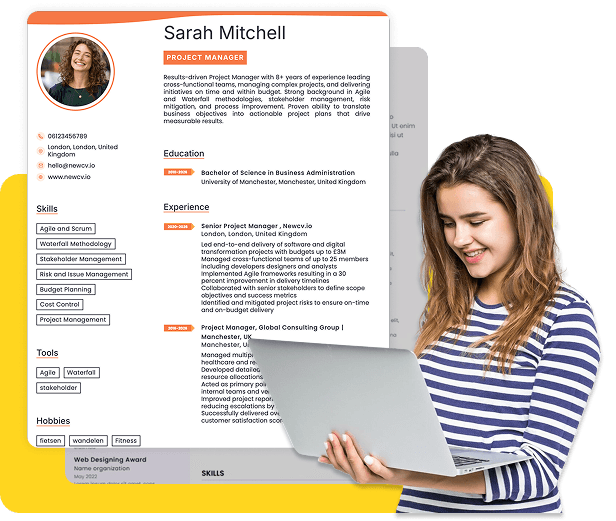
Use ATS-optimised Resume and resume templates that pass applicant tracking systems. Our Resume builder helps recruiters read, scan, and shortlist your Resume faster.

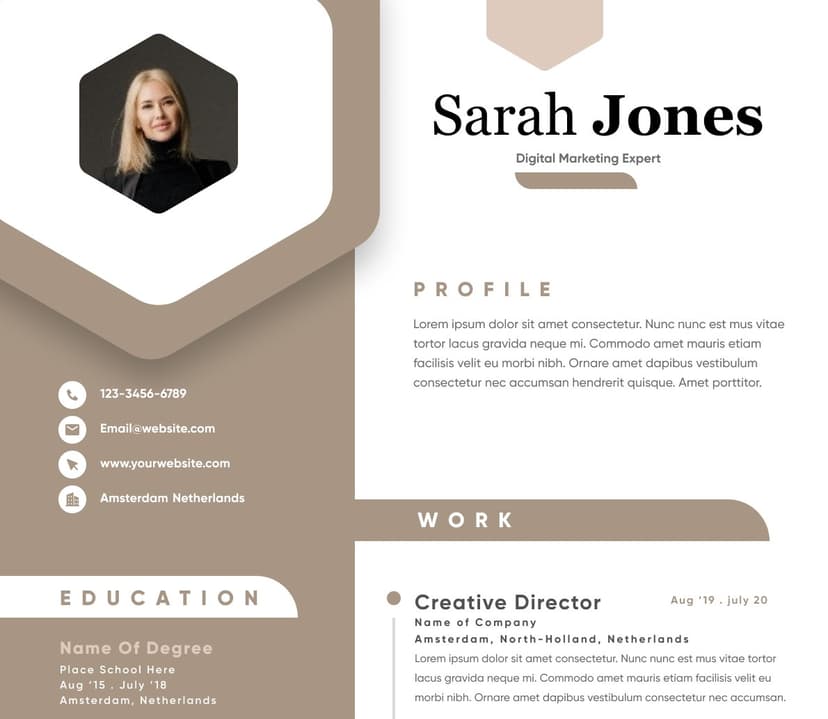
Use professional field-tested resume templates that follow the exact Resume rules employers look for.
Create Resume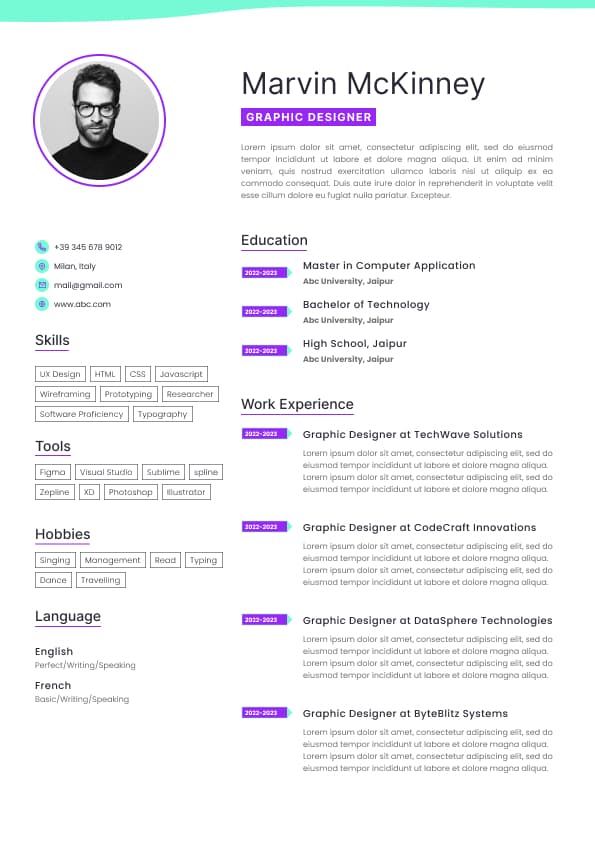
Use professional field-tested resume templates that follow the exact Resume rules employers look for.
Create ResumeDjango or Flask specialist
FastAPI microservices developer
The challenge is that many candidates list dozens of technologies without showing architectural depth or real implementation experience.
Hiring managers care less about keyword quantity and more about how technologies connect inside real systems.
For example:
Weak Example
“Experienced with Python, APIs, AWS, Docker, and SQL.”
This tells recruiters almost nothing about capability level.
Good Example
“Built and deployed FastAPI-based microservices on AWS ECS handling 2M+ monthly API requests with PostgreSQL, Redis caching, and Dockerized CI/CD pipelines.”
This immediately communicates:
Backend architecture exposure
Cloud deployment experience
Scalability
API engineering
Infrastructure familiarity
Production-level work
A strong Python resume builder should help developers present experience in this practical, recruiter-readable way.
Version control platforms
Infrastructure terminology
Backend architecture keywords
If your formatting breaks ATS parsing or your keyword structure lacks alignment with the job description, your resume may never reach a hiring manager.
This is why generic resume templates often fail technical candidates.
Many visual-heavy builders create:
Broken column structures
Parsing issues
Hidden text problems
Incorrect heading hierarchies
Poor keyword distribution
Unreadable technical sections
A specialized ATS Python resume builder solves these issues by structuring resumes specifically for technical hiring workflows.
Hiring managers want proof of real deployment experience, not tutorial-level projects.
They look for:
APIs in production
Scalable backend systems
Cloud infrastructure usage
Authentication systems
Database optimization
Performance improvements
Monitoring and logging
CI/CD pipelines
Technical resumes perform significantly better when achievements include measurable impact.
Examples include:
Reduced API latency by 42%
Automated workflows saving 20+ weekly hours
Improved deployment speed by 60%
Increased backend reliability to 99.9% uptime
Migrated monolith services into scalable microservices
For Python developers, GitHub visibility matters far more than in many other professions.
Recruiters often use GitHub to validate:
Code quality
Project complexity
Technical consistency
Framework familiarity
Recent activity
Architecture understanding
Resume builders with GitHub integration create a major advantage.
Strong Python resumes separate technologies into logical categories.
For example:
Backend Frameworks
APIs & Microservices
Cloud Platforms
Databases
DevOps Tools
Automation Tools
AI Libraries
Testing Frameworks
This makes technical depth instantly visible.
Project sections are critical for Python developers, especially candidates with:
Freelance experience
Startup experience
Bootcamp backgrounds
Career transitions
Junior-level experience
Strong builders allow detailed project presentation with:
Architecture summaries
GitHub links
Deployment details
Stack visibility
Technical outcomes
AI-powered optimization is becoming increasingly valuable for technical resumes because developers often undersell achievements.
Good AI resume enhancement tools help:
Improve technical phrasing
Add measurable outcomes
Clarify engineering impact
Strengthen ATS keyword alignment
Remove vague language
Python developers frequently apply to multiple role variations.
A resume builder should support fast adaptation for:
Django developer roles
Flask engineering jobs
FastAPI backend positions
AI tooling opportunities
Cloud engineering roles
Automation engineering jobs
This helps Python developers align resumes with:
Backend engineering jobs
API development roles
Cloud engineering positions
Automation engineering opportunities
AI tooling roles
The platform supports natural inclusion of high-value technical terms without obvious keyword stuffing.
NewCV allows developers to showcase:
GitHub repositories
API projects
Cloud deployments
Automation systems
Technical portfolios
This matters because technical recruiters increasingly validate developer credibility through project visibility.
The AI-assisted features help improve weak technical bullet points into recruiter-ready accomplishments.
For example:
Weak Example
“Worked on backend APIs.”
Good Example
“Designed and maintained RESTful FastAPI services supporting 500K+ monthly transactions with Redis caching and PostgreSQL optimization.”
This type of transformation significantly improves recruiter response rates.
NewCV works particularly well for resumes involving:
Django
Flask
FastAPI
AWS
Docker
Kubernetes
PostgreSQL
Redis
Celery
CI/CD pipelines
Automation frameworks
AI integrations
This ecosystem alignment is critical because technical recruiters screen for stack relevance extremely quickly.
Architecture decisions
GitHub link
Performance metrics when possible
API architecture
Database design
Scalability
Deployment workflows
Infrastructure understanding
Tutorial-style projects hurt credibility.
Recruiters can recognize copied portfolio projects immediately.
Projects should demonstrate:
Real complexity
Problem solving
Deployment knowledge
Technical ownership
Technical resumes perform better with measurable engineering impact.
Even approximate metrics help.
Examples:
Request volume
Performance improvements
Cost reductions
Automation savings
Reliability improvements
API integration
AWS
Docker
Kubernetes
CI/CD
Terraform
Serverless architecture
ECS
Lambda
PostgreSQL
MongoDB
Redis
SQL optimization
Database design
Workflow automation
Python scripting
AI integration
Machine learning pipelines
Automation frameworks
The key is using these naturally within experience sections instead of stuffing them into isolated keyword blocks.
CI/CD familiarity
Monitoring exposure
Containerization
Infrastructure collaboration
Scalability understanding
The best resumes connect technical work to operational outcomes.
That includes:
Faster deployment
Reduced downtime
Better automation
Improved scalability
Lower infrastructure costs
Architecture decisions
Cloud deployments
Scalability
Team collaboration
Highlight:
System design
Leadership
Infrastructure ownership
Performance optimization
Technical strategy
Emphasize:
Client outcomes
Multiple environments
Fast delivery
Technical versatility
Independent ownership
High-performance services
Microservices
API scalability
OpenAPI integrations
Prioritize:
Workflow automation
Scripting systems
Process optimization
Data pipelines
Task orchestration
Show:
AWS infrastructure
Containerization
CI/CD
Infrastructure-as-code
Monitoring systems


 Upload Resume
 Import from Linkedin