
Choose from a wide range of NEWCV resume templates and customize your NEWCV design with a single click.

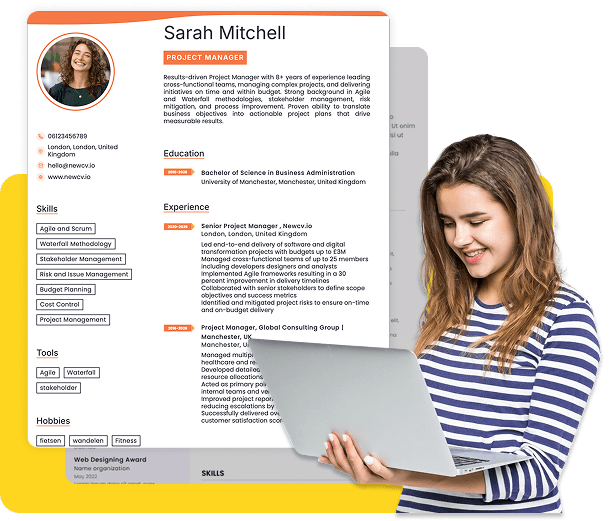
Use ATS-optimised Resume and resume templates that pass applicant tracking systems. Our Resume builder helps recruiters read, scan, and shortlist your Resume faster.

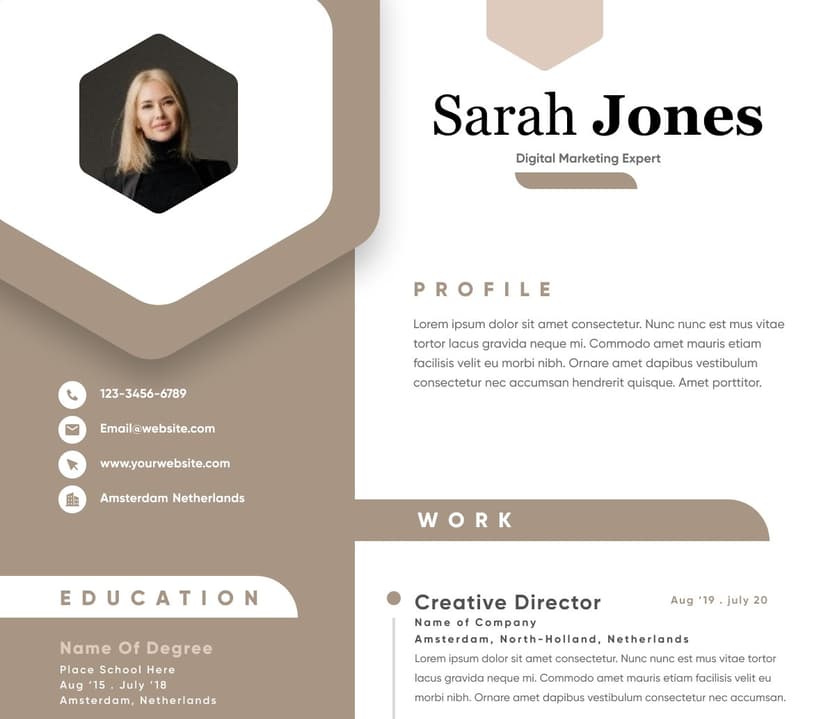
Use professional field-tested resume templates that follow the exact Resume rules employers look for.
Create Resume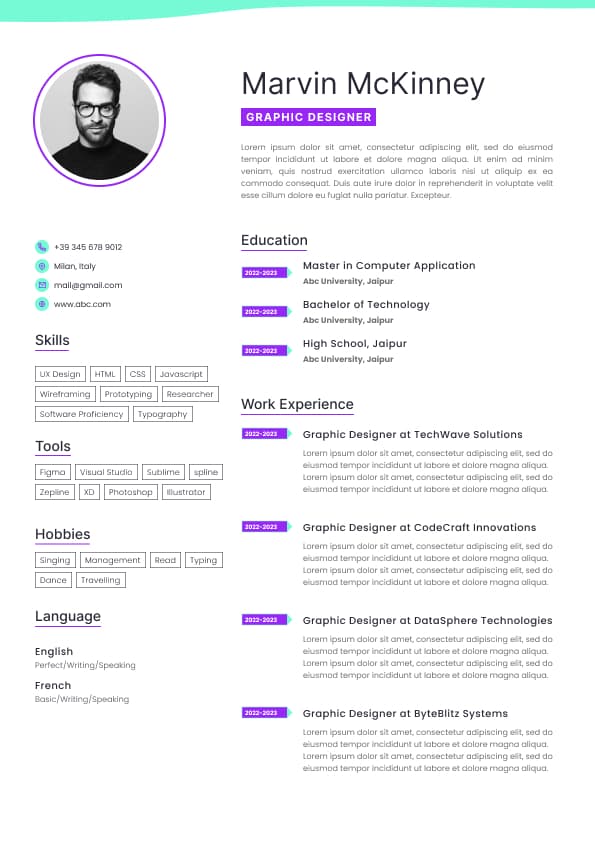
Use professional field-tested resume templates that follow the exact Resume rules employers look for.
Create ResumeAn executive resume in Australia is not just a longer version of a standard resume. At senior leadership level, your resume is judged on commercial impact, leadership credibility, strategic decision-making, and your ability to influence business outcomes. Australian recruiters and hiring managers are not looking for task-heavy resumes filled with corporate jargon. They want clear evidence that you can lead teams, drive transformation, manage stakeholders, improve profitability, and operate at executive level within Australian business culture.
Most executive resumes fail because they read like career histories instead of strategic positioning documents. The strongest executive resumes immediately communicate leadership scope, commercial outcomes, industry relevance, and executive presence within the first page.
If you are targeting roles such as CEO, COO, CFO, CIO, General Manager, Executive Director, Head of Operations, or Senior Executive positions in Australia, your resume needs to demonstrate board-level value, not operational detail.
Executive hiring in Australia operates differently from mid-level recruitment.
At executive level, recruiters and hiring managers assess:
Commercial impact
Leadership scale
Strategic influence
Industry positioning
Stakeholder management
Change leadership
Risk management capability
Executive communication
Board and governance exposure
Cultural fit at leadership level
A standard professional resume often focuses on responsibilities. An executive resume must focus on business outcomes and leadership influence.
Australian executive recruitment also places strong emphasis on credibility and practical leadership. Overly polished American-style resumes packed with buzzwords often perform poorly locally because they can appear inflated or disconnected from real outcomes.
Australian executive hiring managers generally prefer:
Direct communication
Commercial realism
Clear metrics
Strong leadership narrative
Strategic clarity without excessive jargon
Evidence-backed achievements
Concise executive positioning
Your executive resume has one core objective:
To convince decision-makers that you are capable of solving high-level business problems.
At executive level, employers are not buying skills alone. They are buying reduced risk.
Your resume must answer questions such as:
Can this person lead through complexity?
Can they manage senior stakeholders?
Have they delivered measurable commercial results?
Can they scale operations or revenue?
Have they led transformation successfully?
Will they fit our leadership culture?
Can they represent the organisation externally?
Can they influence boards, investors, or executive teams?
Every section of your resume should support those answers.
Most high-performing executive resumes in Australia follow this structure:
Executive Profile
Core Leadership Expertise
Key Career Achievements
Professional Experience
Board Experience or Governance Experience
Education and Executive Qualifications
Professional Memberships
Optional Publications, Speaking, or Advisory Roles
The structure matters because executive recruiters skim differently from standard recruiters.
Executive search firms often spend the first 15 to 30 seconds assessing:
Seniority alignment
Industry relevance
Scale of leadership
Commercial outcomes
Brand positioning
Career consistency
If these are not immediately obvious, your resume may be rejected before deeper review.
For executive-level roles in Australia:
3 to 5 pages is standard
2 pages is often too short for genuine executive scope
More than 5 pages usually becomes inefficient unless highly specialised
The idea that every resume must be two pages does not apply strongly at executive level.
Senior hiring decision-makers expect enough depth to evaluate:
Leadership history
Commercial achievements
Transformation capability
Stakeholder influence
Organisational complexity
However, length alone does not create quality.
A weak 5-page resume filled with responsibilities performs worse than a sharp 3-page commercially focused resume.
Executive recruiters in Australia typically scan resumes in this order:
Your opening profile should immediately establish:
Executive level
Industry alignment
Leadership capability
Commercial strengths
Strategic focus
A weak opening destroys momentum quickly.
Weak Example
“Experienced professional with strong leadership and communication skills seeking executive opportunities.”
This says almost nothing.
Good Example
“Commercially focused operations executive with 18+ years leading multi-site logistics, supply chain, and transformation programs across Australia and APAC. Proven track record delivering operational turnaround, EBITDA growth, workforce optimisation, and large-scale change initiatives within complex environments.”
This immediately establishes:
Seniority
Industry relevance
Commercial focus
Geographic scope
Leadership capability
Australian executive recruiters are highly outcome-focused.
Strong executive resumes quantify:
Revenue growth
Profit improvement
Cost reduction
Operational efficiencies
Transformation outcomes
Market expansion
Workforce scale
P&L responsibility
Budget ownership
Hiring managers assess the scale of your leadership.
That includes:
Team size
Geographic responsibility
Business units
Operational complexity
Revenue accountability
Strategic influence
Without leadership scale, candidates often appear more senior manager than executive.
ATS systems still matter at executive level, particularly in corporate and enterprise environments.
However, keyword stuffing is a major mistake.
Instead, strong executive resumes naturally integrate commercially relevant terminology such as:
Strategic leadership
Business transformation
Operational excellence
Change management
Stakeholder engagement
P&L management
Governance
Risk management
Organisational growth
Digital transformation
Workforce strategy
Commercial strategy
Mergers and acquisitions
Enterprise leadership
Customer experience strategy
Regulatory compliance
The key is contextual relevance, not repetition.
This is the most common failure.
Executives are hired for outcomes, not activities.
Weak Example
“Responsible for managing operations across multiple business units.”
Good Example
“Led national operational restructure across six business units, reducing overheads by 18% while improving service delivery KPIs and workforce retention.”
The second version demonstrates:
Leadership
Scope
Strategy
Commercial impact
Measurable outcomes
Phrases like:
Dynamic leader
Results-driven professional
Strategic thinker
Innovative executive
have become largely meaningless unless supported by evidence.
Australian executive recruiters are highly sceptical of inflated language without measurable proof.
Executives who come from technical backgrounds often include excessive operational detail.
At executive level, decision-makers care more about:
Strategic outcomes
Leadership capability
Business impact
Commercial thinking
not daily operational tasks.
Executive recruiters look closely at career trajectory.
Your resume should clearly demonstrate progression in:
Leadership responsibility
Commercial accountability
Organisational complexity
Strategic influence
Flat career presentation can reduce perceived executive readiness.
The strongest executive resumes frame achievements strategically.
A useful framework is:
Challenge → Action → Commercial Result
“Led post-acquisition integration across three business divisions during a period of operational instability, consolidating systems, restructuring leadership teams, and delivering $4.2M in annual operational savings within 14 months.”
This works because it demonstrates:
Complexity
Leadership
Strategy
Commercial outcome
Transformation capability
Your executive summary is one of the highest-impact sections.
It should position you strategically, not describe your personality.
A strong executive summary typically includes:
Executive identity
Years of experience
Industry focus
Leadership strengths
Commercial expertise
High-level outcomes
Strategic positioning
“Senior finance executive with 20+ years’ experience leading commercial finance, business transformation, and strategic growth initiatives across ASX-listed and multinational organisations. Extensive expertise in financial leadership, M&A integration, governance, and operational optimisation, with a proven record delivering profitability improvement, cost transformation, and executive stakeholder alignment.”
In Australia, executive resumes commonly cover:
The last 10 to 15 years in detail
Earlier roles in shortened format if still relevant
Executive recruiters prioritise recent leadership relevance.
Older experience should only remain detailed if it supports:
Industry credibility
Executive progression
Specialist positioning
Otherwise, excessive historical detail weakens focus.
Generally, no.
Photos are uncommon in Australian executive resumes and can create unnecessary bias concerns.
Exceptions may exist in:
Certain international markets
Some consulting or advisory contexts
Personal brand-driven executive sectors
But for mainstream Australian executive recruitment, photos are typically unnecessary.
At executive level, your resume and LinkedIn profile are heavily connected.
Recruiters routinely compare both.
Misalignment between them creates credibility concerns.
Your LinkedIn should reinforce:
Executive positioning
Leadership scope
Commercial outcomes
Industry authority
Thought leadership where relevant
Many executive recruiters in Australia search LinkedIn before contacting candidates directly.
A weak LinkedIn profile can reduce inbound executive opportunities significantly.
Australian executive resumes should look:
Professional
Clean
Modern
Easy to scan
ATS-compatible
Avoid:
Heavy graphics
Overdesigned templates
Multi-column layouts
Icons everywhere
Excessive colours
Visual clutter
Executive recruiters care far more about clarity and strategic positioning than visual decoration.
A highly designed resume cannot compensate for weak executive content.
One of the biggest executive-level mistakes is using the exact same resume for every leadership role.
A CEO resume differs from a COO resume.
A CFO resume differs from a CIO resume.
Even when leadership capability overlaps, hiring priorities change.
CEO resumes should emphasise:
Organisational leadership
Growth strategy
Market expansion
Investor confidence
Board engagement
Enterprise vision
Commercial performance
COO resumes should emphasise:
Operational leadership
Transformation
Delivery capability
Process optimisation
Workforce leadership
Multi-site operations
CFO resumes should emphasise:
Financial strategy
Governance
Risk management
Commercial analysis
Capital management
Compliance
Executive recruiters immediately notice when resumes are not aligned to the target leadership function.
Executive search firms in Australia assess more than resume content.
They evaluate:
Executive maturity
Leadership consistency
Market credibility
Communication quality
Strategic thinking
Industry alignment
Board readiness
Executive presence
That is why tone matters heavily.
Overly self-promotional resumes can weaken credibility.
Under-selling commercial impact can also hurt positioning.
Strong executive resumes communicate authority confidently without exaggeration.
Many executives assume ATS systems do not matter.
That is incorrect.
Large Australian employers still use ATS filtering, especially for:
Enterprise leadership roles
Government executive positions
ASX-listed organisations
Large infrastructure and corporate sectors
However, executive ATS screening usually works differently from high-volume recruitment.
Recruiters often search manually using keyword logic.
That means your resume should contain:
Relevant executive titles
Industry terminology
Leadership functions
Transformation language
Commercial keywords
but naturally.
Over-optimised keyword stuffing reduces readability and damages credibility.
In Australia, “resume” is the dominant term in corporate hiring.
However, “CV” is still commonly used in:
Academia
Government
Research
Healthcare
Some executive public sector roles
The difference is usually:
Resume = concise strategic career document
CV = more detailed professional history
For most executive corporate roles in Australia, a resume is the preferred format.
Many highly qualified executives struggle because their resumes fail to communicate value clearly.
Common hidden problems include:
Lack of measurable outcomes
Poor executive positioning
Weak opening summary
No leadership narrative
Too much operational detail
Generic language
Unclear commercial impact
Missing strategic achievements
Career history without context
Executives often assume their seniority alone will carry them.
In reality, executive resumes are marketing documents.
If your value is not obvious quickly, recruiters move on.
The strongest executive resumes in Australia usually demonstrate five things clearly:
Can you influence long-term organisational direction?
Have you improved profitability, growth, efficiency, or market performance?
Can you lead transformation and complexity?
Can you manage boards, executives, investors, regulators, or enterprise stakeholders?
Do you appear trusted, stable, commercially mature, and executive-ready?
If your resume communicates these effectively, your interview conversion rate improves significantly.


 Upload Resume
 Import from Linkedin