STILL APPLYING. STILL HEARING NOTHING?BUILD YOUR RESUME

STILL APPLYING. STILL HEARING NOTHING?BUILD YOUR RESUME
Choose from a wide range of NEWCV resume templates and customize your NEWCV design with a single click.
FAQ

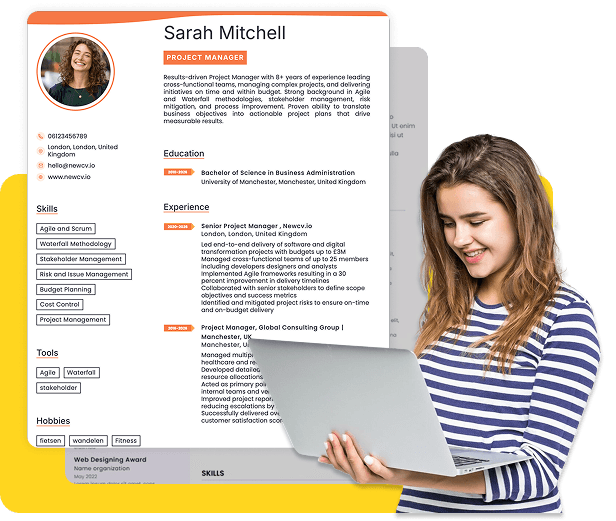
A Python developer resume that fails ATS screening usually has one problem: it does not match how employers search for technical talent. Most companies use applicant tracking systems to filter resumes before a recruiter ever reads them. If your resume lacks the right Python frameworks, backend engineering keywords, cloud technologies, API terminology, testing tools, or infrastructure skills, your application may never reach a hiring manager.
The highest-performing Python resumes are not overloaded with buzzwords. They are strategically aligned with real job descriptions, modern backend engineering stacks, and recruiter search behavior. That means using the correct Python role titles, including production-level technologies, matching framework-specific keywords like Django or FastAPI, and demonstrating measurable engineering impact.
This guide explains exactly how ATS systems evaluate Python developer resumes, which keywords improve ranking, what recruiters actually look for, and how to optimize your resume for backend, API, cloud, AI, FinTech, SaaS, and automation-focused Python roles.
Most ATS platforms do not “understand” resumes the way humans do. They parse structured data, identify relevant technical terms, compare them against job descriptions, and rank candidates based on keyword alignment and relevance.
For Python developer roles, ATS systems typically evaluate:
Job title alignment
Python frameworks and libraries
Backend architecture experience
API development keywords
Cloud and DevOps tools
Database technologies
Testing frameworks
CI/CD workflows
Security and infrastructure terms
Industry-specific terminology
Years of experience with certain technologies
A recruiter searching inside an ATS may use filters such as:
“Python AND FastAPI AND AWS”
“Django REST Framework”
“Python backend engineer Kubernetes”
“Python microservices PostgreSQL Docker”
“Python API developer fintech”
If your resume does not contain those exact or closely related terms, your profile may never appear in recruiter search results.
The strongest Python developer resumes combine core engineering keywords with role-specific technologies and infrastructure terms.
These keywords appear consistently across backend, API, automation, SaaS, cloud, and platform engineering roles:
Python development
Backend development
REST APIs
API development
Object-oriented programming
Microservices
Async programming
Automation scripting
Cloud-native applications
CI/CD pipelines
Unit testing
Agile development
Software engineering
Backend architecture
Production systems
Scalable systems
Distributed systems
Performance optimization
Code review
Git version control
Technical documentation
These are foundational ATS terms. Omitting too many of them weakens resume relevance scores.
Framework-specific searches are extremely common in technical recruiting.
A recruiter rarely searches only for “Python Developer.” They search for stack alignment.
For Django-focused backend roles, include:
Django
Django REST Framework
DRF
Django ORM
RESTful services
Authentication systems
Admin dashboards
Middleware
Celery
PostgreSQL
Redis
JWT authentication
API integrations
Scalable backend systems
FastAPI hiring has grown rapidly because companies increasingly prioritize high-performance APIs and async architecture.
Important FastAPI keywords include:
FastAPI
AsyncIO
asyncio
Pydantic
ASGI
Async programming
API performance optimization
High-performance APIs
OpenAPI
Swagger documentation
For Flask-oriented backend roles:
Flask
Flask RESTful
SQLAlchemy
Blueprint architecture
API routing
Lightweight backend services
Session management
WSGI
Gunicorn
Nginx deployment
Backend-focused Python resumes should demonstrate architecture depth, scalability, infrastructure awareness, and production engineering capabilities.
Strong backend keywords include:
Backend Python Engineer
Python backend development
API gateway
Service-oriented architecture
Microservices architecture
Message queues
Celery
RabbitMQ
Kafka
Event streaming
Load balancing
Caching strategies
Redis caching
Database optimization
API rate limiting
Authentication systems
OAuth 2.0
JWT authentication
Secure backend systems
Recruiters hiring backend engineers often reject resumes that appear too “script-focused” or junior-level. Your resume should communicate production engineering experience, not just Python familiarity.
Database expertise is heavily weighted in backend Python hiring.
Modern Python developers are expected to understand relational and non-relational systems.
PostgreSQL
MySQL
MongoDB
Redis
Elasticsearch
DynamoDB
Cassandra
SQLite
Database schema design
Query optimization
SQLAlchemy ORM
ORM optimization
Data modeling
Indexing
Transaction management
Database migrations
Recruiters are not impressed by generic database mentions alone.
This is weak:
Weak Example:
“Worked with databases using Python.”
This is stronger:
Good Example:
“Optimized PostgreSQL query performance for high-volume API workloads, reducing response latency by 38%.”
The second example demonstrates production impact, scalability awareness, and backend engineering maturity.
Cloud and infrastructure experience significantly increase ATS visibility for mid-level and senior Python developers.
Today’s backend roles frequently combine software engineering with DevOps collaboration.
AWS
Amazon Web Services
EC2
ECS
EKS
Lambda
RDS
CloudWatch
S3
Azure
Google Cloud Platform
GCP
Docker
Kubernetes
Terraform
Infrastructure as Code
Linux
Nginx
Jenkins
GitHub Actions
GitLab CI/CD
Many ATS systems prioritize resumes matching the company’s deployment environment.
For example:
A SaaS startup may prioritize Kubernetes and Docker
A FinTech company may prioritize AWS and Terraform
An enterprise company may prioritize CI/CD and infrastructure automation
If these terms are missing, recruiters may assume you lack production deployment experience.
Testing keywords are often overlooked by applicants, but hiring managers care deeply about engineering quality.
Strong testing terminology signals mature development practices.
PyTest
Unit testing
Integration testing
API testing
TDD
Test-driven development
Mocking
Regression testing
Selenium
Postman
Static analysis
Black
Flake8
Mypy
Code quality enforcement
Coverage testing
Candidates who omit testing experience often appear less production-ready.
AI-related Python jobs now require far more than generic machine learning terminology.
Recruiters specifically search for modern AI stack keywords.
LLM integration
LangChain
Vector databases
RAG systems
Machine learning pipelines
PyTorch
TensorFlow
NLP
Embedding models
AI inference systems
Prompt engineering
AI APIs
Data pipelines
Model deployment
GPU optimization
Many candidates simply write:
“Worked on AI projects.”
That is too vague for ATS ranking and recruiter evaluation.
Instead:
Good Example:
“Built RAG-based AI workflows using LangChain, vector embeddings, and FastAPI for internal knowledge retrieval systems.”
That communicates stack alignment, architecture understanding, and modern AI implementation experience.
FinTech hiring teams prioritize reliability, security, transaction handling, and compliance awareness.
Payment APIs
PCI DSS awareness
Transaction processing
Fraud detection
Secure backend systems
Financial data processing
API encryption
Authentication systems
Audit logging
High-availability systems
Banking integrations
Financial compliance
FinTech recruiters frequently reject resumes that appear “startup-generalist” without evidence of secure engineering or transactional systems experience.
Even mentioning compliance awareness can improve ATS relevance significantly.
Healthcare employers prioritize security, compliance, data protection, and interoperability.
HIPAA compliance
EHR integrations
Healthcare APIs
Patient data security
Protected health information
Healthcare interoperability
Secure API development
Clinical systems integration
Healthcare recruiters often search specifically for compliance-related terminology, even for backend engineering roles.
Cybersecurity-oriented Python roles increasingly focus on secure development practices.
Secure coding
OWASP Top 10
Authentication systems
Encryption
Vulnerability remediation
Threat detection
Secure APIs
Access control
Security automation
Penetration testing support
Security-related keywords can also strengthen resumes for general backend engineering jobs because employers increasingly value security awareness across engineering teams.
ATS optimization fails when candidates blindly dump keywords into a skills section.
Modern ATS systems increasingly evaluate keyword context, relevance, and semantic relationships.
Integrating keywords into accomplishments
Matching terminology used in target job descriptions
Using framework-specific context
Demonstrating measurable technical impact
Showing production engineering outcomes
Massive keyword blocks
Invisible white text keyword stuffing
Repeating “Python” excessively
Listing tools without context
Adding technologies you cannot discuss in interviews
Recruiters immediately notice resumes overloaded with disconnected keywords.
If your resume lists Kubernetes, Terraform, Kafka, Redis, AWS, and FastAPI but your experience section does not support those technologies, your credibility drops fast during screening interviews.
ATS-friendly resumes use predictable section structures.
Avoid creative headings that confuse resume parsers.
Summary
Technical Skills
Professional Experience
Projects
Certifications
Education
A strong skills section groups technologies logically.
Good Example:
Languages: Python, SQL, Bash
Frameworks: Django, FastAPI, Flask
Cloud & DevOps: AWS, Docker, Kubernetes, Terraform
Databases: PostgreSQL, MongoDB, Redis
Testing: PyTest, Postman, Selenium
CI/CD: Jenkins, GitHub Actions, GitLab CI/CD
This structure improves ATS parsing accuracy while making recruiter review easier.
If your resume only says “Software Engineer,” you may miss Python-specific recruiter searches.
Include targeted titles when accurate:
Python Developer
Backend Python Developer
Django Developer
FastAPI Developer
Python Backend Engineer
ATS ranking improves significantly when your wording matches employer terminology.
If the job description says “REST APIs” but your resume only says “web services,” alignment weakens.
Complex resume layouts often break ATS parsing.
Avoid:
Multi-column layouts
Graphic-heavy templates
Skill bars
Icons
Tables with critical content
Simple formatting consistently performs better.
Recruiters prefer depth over random breadth.
A backend engineer resume overloaded with unrelated frontend libraries or outdated technologies appears unfocused.
Most candidates misunderstand recruiter behavior inside ATS systems and LinkedIn Recruiter.
Recruiters rarely search broad terms alone.
Instead, they combine:
Job titles
Frameworks
Infrastructure tools
Industry terminology
Seniority indicators
“Python AND Django AND AWS”
“FastAPI Kubernetes PostgreSQL”
“Backend Python Engineer microservices”
“Python API developer Redis Docker”
“Python FinTech payment APIs”
This is why contextual keyword alignment matters far more than generic resume writing advice.
Senior-level resumes should emphasize architecture ownership, scalability, leadership, and operational impact.
System architecture
Distributed systems
Scalability optimization
Engineering leadership
Technical mentoring
Service reliability
Infrastructure automation
High-availability systems
Performance tuning
Cross-functional collaboration
Senior resumes that look overly task-oriented often underperform because they fail to communicate strategic engineering impact.
One generic Python resume is rarely competitive across multiple job types.
You should tailor keywords based on role focus.
Prioritize:
FastAPI
REST APIs
PostgreSQL
Docker
Microservices
Kubernetes
Prioritize:
Automation scripting
Python automation
Selenium
API integrations
Workflow automation
Linux scripting
Prioritize:
LangChain
PyTorch
Vector databases
Machine learning pipelines
RAG systems
Prioritize:
AWS
Terraform
CI/CD
Kubernetes
Infrastructure automation
Tailoring improves ATS relevance dramatically because recruiters search based on stack specialization.
The strongest ATS strategy combines:
Accurate role titles
Stack-specific framework keywords
Infrastructure and cloud terminology
Contextual accomplishments
Measurable technical outcomes
Industry-specific language
Modern engineering practices
Your goal is not to “beat” ATS systems with tricks.
Your goal is to make your resume clearly match how employers define the role.
That alignment improves:
ATS ranking
Recruiter search visibility
Interview conversion rates
Hiring manager confidence
Use ATS-optimised Resume and resume templates that pass applicant tracking systems. Our Resume builder helps recruiters read, scan, and shortlist your Resume faster.

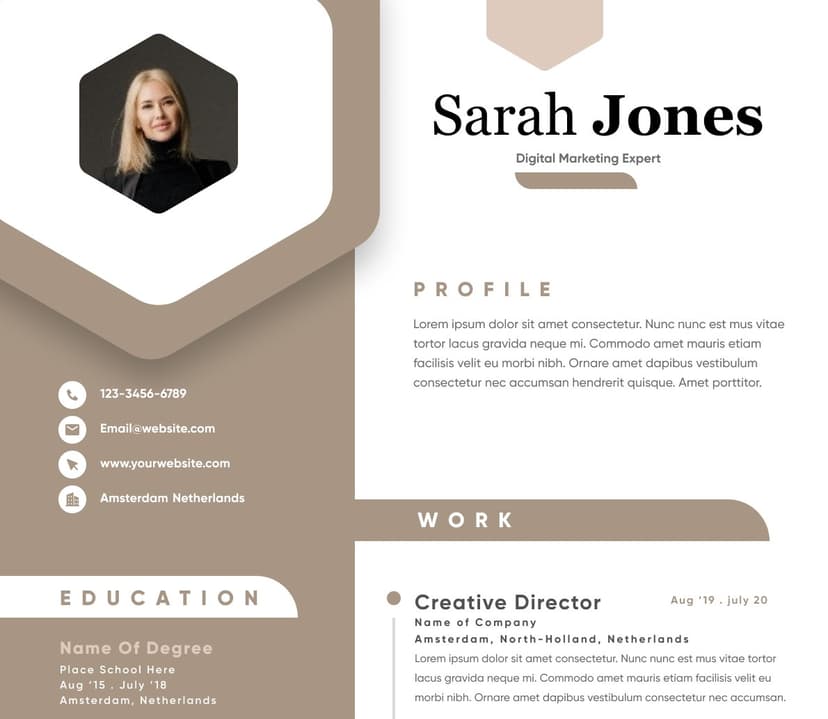
Use professional field-tested resume templates that follow the exact Resume rules employers look for.
Create Resume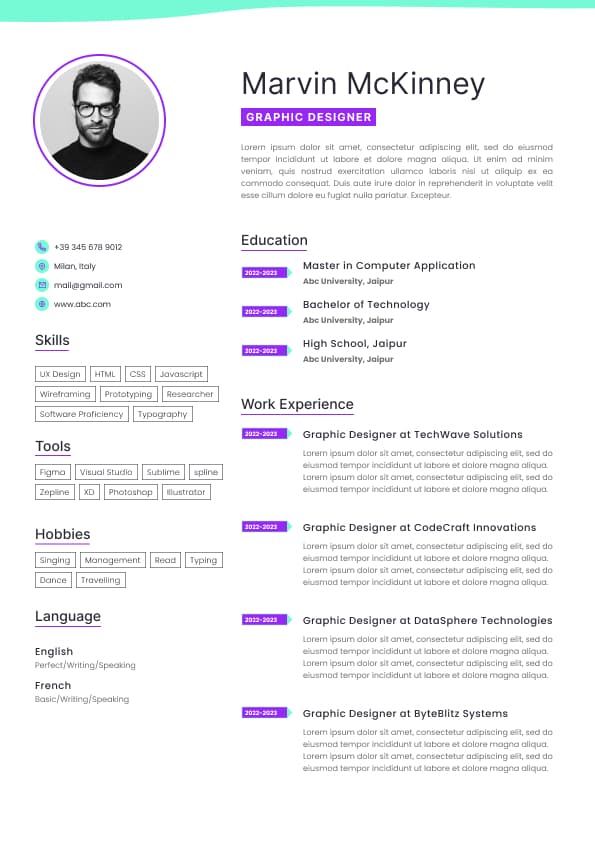
Use professional field-tested resume templates that follow the exact Resume rules employers look for.
Create ResumePython microservices
Event-driven architecture


 Upload Resume
 Import from Linkedin