
Choose from a wide range of NEWCV resume templates and customize your NEWCV design with a single click.

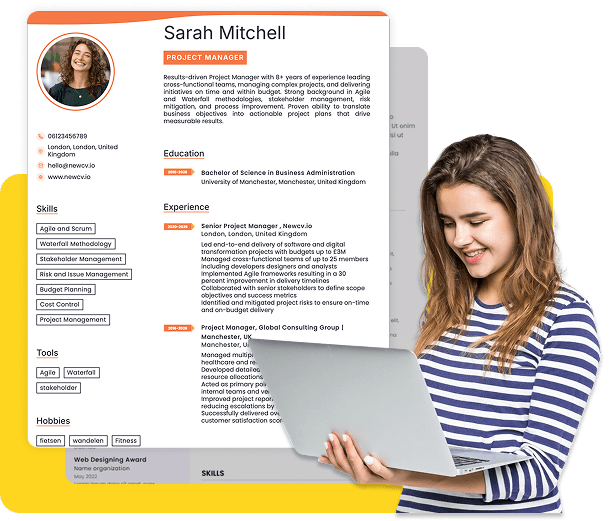
Use ATS-optimised Resume and resume templates that pass applicant tracking systems. Our Resume builder helps recruiters read, scan, and shortlist your Resume faster.

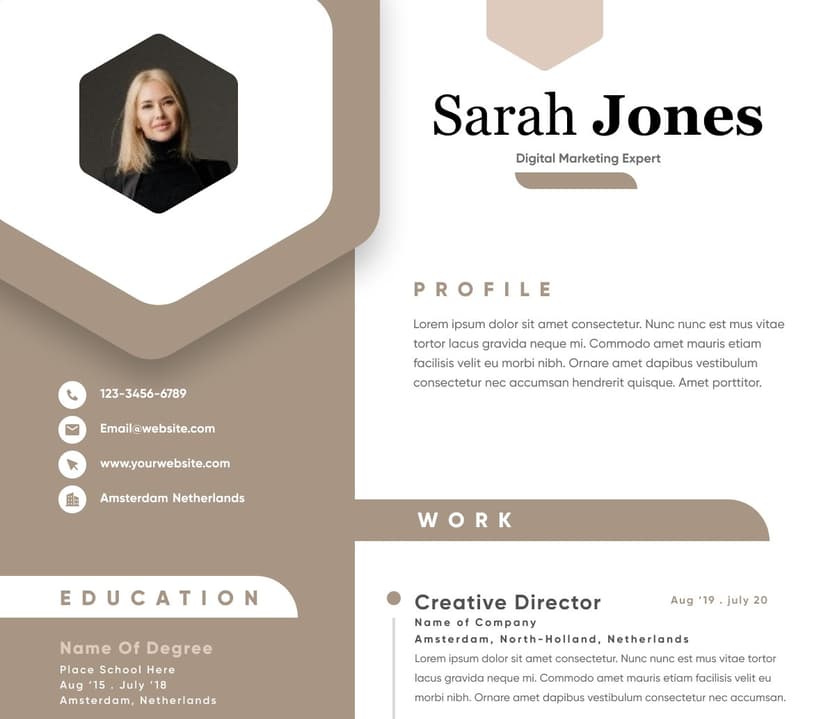
Use professional field-tested resume templates that follow the exact Resume rules employers look for.
Create Resume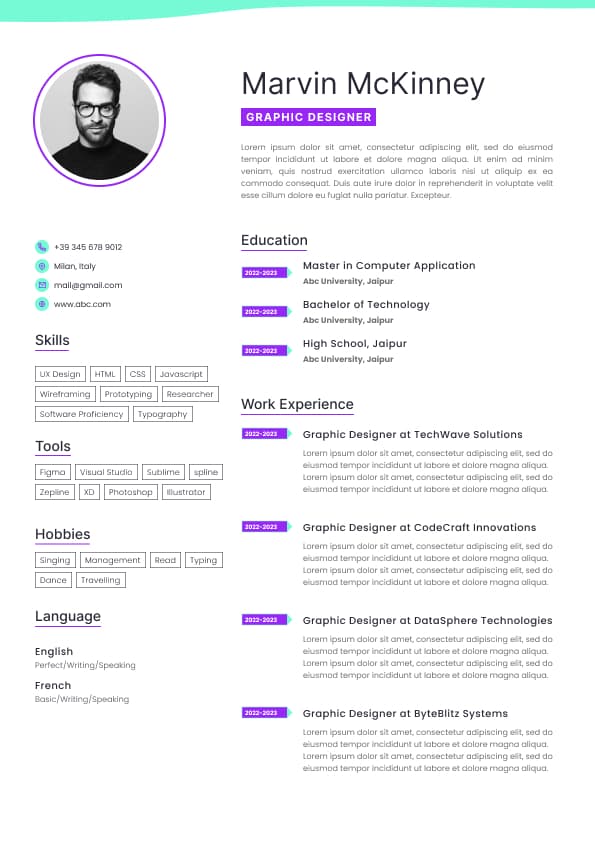
Use professional field-tested resume templates that follow the exact Resume rules employers look for.
Create ResumeAn executive CV in Australia is not a longer version of a standard resume. It is a strategic positioning document designed to prove leadership capability, commercial impact, governance credibility, and organisational influence at the highest level.
Most executive CVs fail because they read like career histories instead of business cases. Hiring managers, recruiters, boards, and executive search firms are not looking for task lists. They are assessing whether you can lead transformation, manage risk, drive revenue, influence stakeholders, and operate at executive level within Australian business culture.
A strong executive CV immediately demonstrates:
Executive presence
Commercial outcomes
Strategic leadership capability
Scale of responsibility
Executive recruitment operates differently from mid-level hiring.
At executive level, employers are not simply filling a vacancy. They are reducing organisational risk.
That changes how your CV is evaluated.
Australian recruiters and executive search firms typically assess executive CVs through five core lenses:
Strategic capability
Commercial impact
Leadership maturity
Industry relevance
Stakeholder management credibility
A standard professional resume focuses on responsibilities and achievements.
An executive CV must communicate:
Business leadership
Executive recruiters in Australia scan differently from standard recruiters.
They are assessing:
Scale
Complexity
Leadership impact
Risk management
Cultural alignment
Executive communication capability
The strongest executive CVs quickly answer these questions:
Recruiters look for indicators such as:
Stakeholder influence
Industry credibility
Governance and board exposure
Measurable organisational impact
In the Australian market, executive hiring is highly competitive, relationship-driven, and heavily influenced by reputation, positioning, and clarity of value. Your CV must communicate executive readiness within seconds.
Enterprise-level thinking
Decision-making authority
Organisational transformation
Influence over people, budgets, growth, and risk
This is why many highly experienced leaders still struggle to secure interviews. Their experience may be strong, but their positioning is weak.
Revenue responsibility
Team size
National or international leadership
P&L ownership
Multi-site operations
Transformation programs
Enterprise-wide initiatives
Executives are hired to solve problems.
Strong CVs clearly show:
Revenue growth
Cost reduction
Operational improvement
Market expansion
Turnaround success
Mergers and acquisitions
Digital transformation
Workforce strategy outcomes
Executive roles require influence across:
Boards
Investors
Government
Regulators
Executive leadership teams
Unions
Enterprise clients
Your CV must demonstrate executive-level communication and stakeholder engagement capability.
Executive hiring in Australia is often conservative.
Many employers prefer leaders with:
Sector familiarity
Regulatory understanding
Existing networks
Industry reputation
Relevant transformation experience
A poorly targeted executive CV can immediately weaken positioning, even if the candidate is highly capable.
Executive CVs in Australia are usually between 3 and 5 pages depending on career depth.
Shorter is not always better.
At executive level, decision-makers expect enough detail to evaluate:
Strategic impact
Leadership scope
Career progression
Governance exposure
Commercial capability
However, every section must earn its place.
This is the most important section of the CV.
Most executives waste it with generic statements such as:
Weak Example
“Experienced executive with strong leadership skills and extensive industry experience.”
This says nothing meaningful.
A high-performing executive profile communicates:
Executive identity
Leadership positioning
Industry expertise
Commercial strengths
Strategic capability
Differentiators
Good Example
“Commercially focused COO with 18+ years’ experience leading operational transformation across logistics, infrastructure, and supply chain environments throughout Australia and APAC. Proven track record delivering multi-million-dollar efficiency improvements, leading national workforces exceeding 1,200 employees, and driving large-scale operational change in highly regulated industries.”
This works because it immediately establishes:
Seniority
Industry relevance
Scale
Commercial impact
Leadership authority
This is one of the biggest differentiators in successful executive CVs.
Before employment history, include a concise section highlighting major outcomes.
This helps recruiters immediately understand executive value.
Strong examples include:
Increased EBITDA by 22% across three business units within 18 months
Led post-merger integration of 650 employees across national operations
Delivered $14M annual operational savings through supply chain redesign
Expanded enterprise revenue from $48M to $96M over four years
Led successful ASX compliance and governance transformation program
Reduced workforce turnover by 31% during major organisational restructure
Executive recruiters pay close attention to quantified commercial outcomes.
If metrics are missing entirely, credibility often drops.
Most executive CVs fail because employment history becomes overly detailed and operational.
At executive level, employers care less about daily tasks and more about:
Strategic direction
Business impact
Leadership outcomes
Enterprise influence
Each role should focus on:
Organisational scope
Leadership accountability
Strategic initiatives
Commercial outcomes
Stakeholder complexity
For each position include:
Organisation overview if not widely known
Scope of responsibility
Reporting lines
Team size
Budget accountability
Major strategic initiatives
Key business outcomes
Instead of:
Use:
The second example demonstrates:
Scale
Complexity
Executive accountability
That is what executive recruiters are evaluating.
This is the most common issue.
Executives often undersell themselves by focusing on tasks instead of leadership impact.
Recruiters are not interested in:
Meeting attendance
Generic management duties
Routine operational activity
They want evidence of:
Strategic influence
Decision-making authority
Business transformation
Words like:
Dynamic
Visionary
Results-driven
Innovative leader
Have little value without evidence.
Executive credibility comes from:
Outcomes
Scale
Complexity
Business impact
An executive CV without measurable results creates risk.
Boards and hiring managers want proof.
Strong executive CVs consistently quantify:
Revenue
Savings
Growth
Operational performance
Workforce impact
Transformation outcomes
Executive recruitment is highly targeted.
A generic CV signals weak positioning.
Your CV should align with:
Industry expectations
Business challenges
Leadership requirements
Organisational maturity
A mining executive CV should not read like a technology executive CV.
There is a major misconception that executive hiring is purely relationship-based and ATS systems do not matter.
That is incorrect.
Many Australian organisations still use:
ATS platforms
Internal HR screening
Procurement-led recruitment processes
Executive search firms also maintain searchable databases.
Your executive CV should naturally include relevant terminology such as:
Operational transformation
Governance
P&L management
Enterprise leadership
Risk management
Strategic planning
Stakeholder engagement
Organisational design
Commercial strategy
Regulatory compliance
However, keyword stuffing damages readability and executive tone.
Strong executive CVs balance:
Human credibility
ATS optimisation
Strategic positioning
Executive recruiters typically spend very little time deciding whether to progress a candidate.
Early screening focuses on:
Relevance
Strategic fit
Commercial scale
Career trajectory
Industry alignment
They are looking for quick indicators of executive maturity.
Clear executive positioning
Consistent career progression
Large-scale accountability
Business transformation exposure
Leadership stability
Commercial outcomes
Generic leadership language
Excessive operational detail
Lack of measurable impact
Poor structure
Unclear executive identity
Inconsistent career narrative
At executive level, clarity matters more than volume.
Senior executive hiring often involves:
CEOs
Boards
Executive panels
Investors
Government stakeholders
Your CV must align with how senior leadership evaluates risk.
This means demonstrating:
Strategic judgement
Governance awareness
Commercial leadership
Organisational influence
Change leadership capability
Board-facing executive CVs often benefit from highlighting:
Governance frameworks
Regulatory exposure
Board reporting
Risk oversight
ESG initiatives
Transformation leadership
These are increasingly important across Australian enterprise environments.
Executive CV formatting should feel:
Clean
Modern
Professional
Easy to scan
Avoid:
Graphic-heavy layouts
Multiple columns
Overdesigned templates
Excessive colour usage
Tiny font sizes
Australian executive recruiters generally prefer:
Clear hierarchy
Strong readability
Professional presentation
Logical structure
Good options include:
Calibri
Arial
Helvetica
Aptos
Use:
Consistent spacing
Strong section headings
Moderate white space
Clean alignment
Executive CVs should project professionalism and clarity, not creativity for its own sake.
Executive hiring is heavily influenced by perception.
Your CV should position you around:
Leadership identity
Market relevance
Strategic value
Not just career chronology.
Two executives may have similar backgrounds.
The stronger candidate is usually the one who communicates:
Clear executive brand
Strong business outcomes
Strategic leadership narrative
Industry relevance
This is especially important when:
Transitioning industries
Moving into larger organisations
Seeking first-time executive roles
Returning after redundancy
Competing against internal candidates
Executives changing industries often struggle because their CV focuses too heavily on sector-specific detail.
The better strategy is highlighting:
Transferable leadership capability
Transformation experience
Commercial leadership
Stakeholder management
Operational scale
Australian employers may still prefer industry familiarity, but strong strategic positioning can overcome this when executed properly.
At executive level, recruiters almost always review LinkedIn alongside the CV.
Misalignment creates doubt.
Your LinkedIn profile should reinforce:
Executive positioning
Career progression
Leadership identity
Industry expertise
Common executive mistakes include:
Outdated LinkedIn profiles
Inconsistent job titles
Missing achievements
Weak executive summaries
A strong executive brand requires consistency across both platforms.
These are not always the same document.
An executive operational leadership CV focuses on:
Business leadership
Operational outcomes
Transformation capability
Commercial execution
A board-focused CV places more emphasis on:
Governance
Risk
Advisory capability
Strategic oversight
Committee experience
Regulatory knowledge
Many executives incorrectly use the same version for both.
This weakens positioning.
The strongest executive CVs in Australia consistently:
Establish executive credibility quickly
Demonstrate commercial outcomes
Show leadership scale
Quantify impact
Position strategically for the target market
Align with industry expectations
Maintain concise executive-level communication
Most importantly, they make it easy for recruiters and hiring managers to understand:
What level you operate at
What business problems you solve
Why you are commercially valuable
That is what drives executive interview decisions.


 Upload Resume
 Import from Linkedin