
Choose from a wide range of NEWCV resume templates and customize your NEWCV design with a single click.

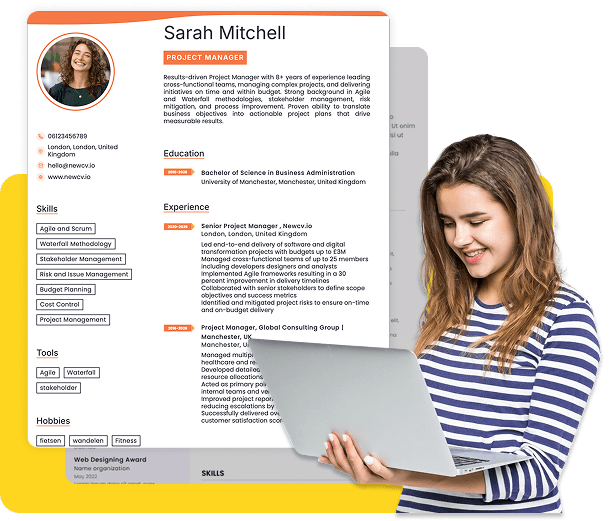
Use ATS-optimised Resume and resume templates that pass applicant tracking systems. Our Resume builder helps recruiters read, scan, and shortlist your Resume faster.

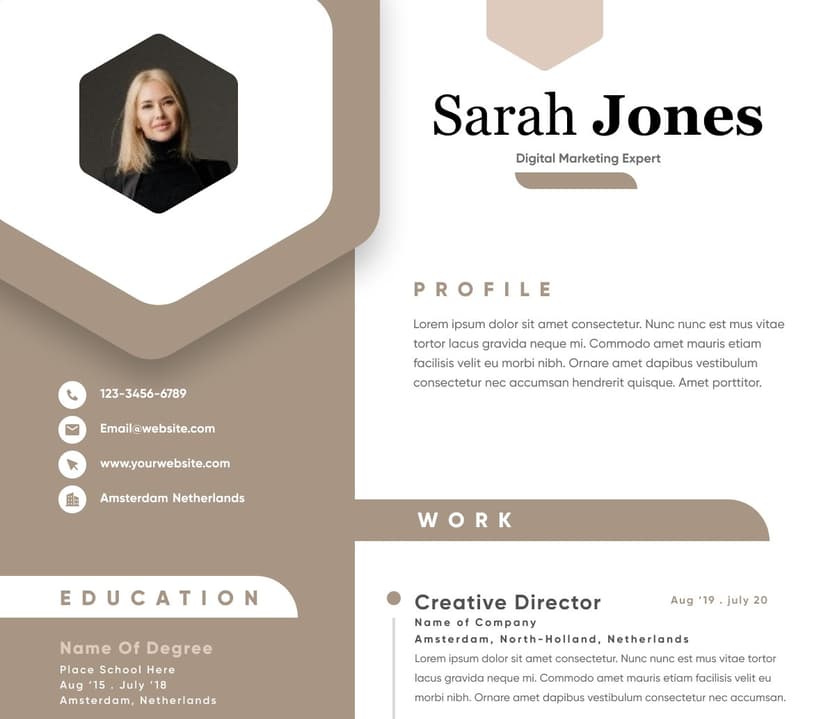
Use professional field-tested resume templates that follow the exact Resume rules employers look for.
Create Resume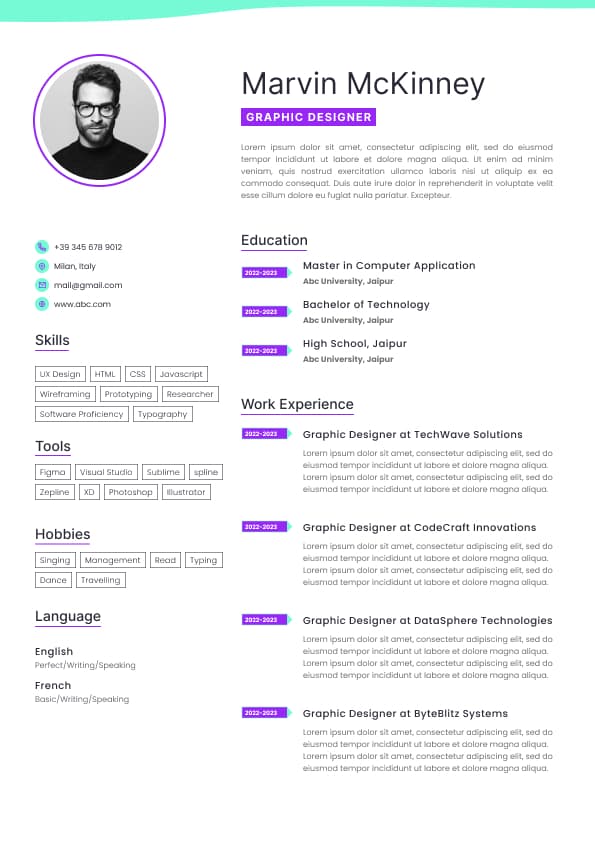
Use professional field-tested resume templates that follow the exact Resume rules employers look for.
Create ResumeAn Australian government job resume is very different from a standard private-sector resume. APS recruiters and hiring panels assess candidates against formal capability frameworks, merit-based hiring principles, and highly specific role requirements. A generic corporate resume usually fails because it does not clearly demonstrate evidence, stakeholder impact, policy understanding, or alignment with government capability expectations.
To get shortlisted for government roles in Australia, your resume needs to show:
Clear alignment to the job description and capability framework
Evidence-based achievements with measurable outcomes
Strong examples of communication, stakeholder management, and judgement
Relevant public sector or transferable experience
Structured, ATS-friendly formatting
Australian government recruitment follows a structured merit-based process. Whether you are applying for APS roles, state government positions, local council jobs, or federal agencies, the evaluation process is more evidence-driven than most private-sector hiring.
Hiring managers are usually assessing:
Capability alignment
Behavioural evidence
Risk awareness
Stakeholder communication
Policy or governance understanding
Written communication quality
Accountability and decision-making
In many cases, the panel is not just asking:
Most candidates underestimate how quickly government recruiters reject resumes.
Common rejection reasons include:
Generic summaries
No evidence of outcomes
Poor alignment to the job ad
Overly corporate language without public sector relevance
No demonstration of stakeholder management
Weak formatting and readability
Resume too short or too vague
Strategic keyword alignment without keyword stuffing
The biggest mistake candidates make is writing a resume that describes duties instead of proving capability. Government hiring panels are looking for evidence, not claims. Your resume must help them quickly justify shortlisting you against merit criteria.
“Can this person do the job?”
They are asking:
“Can we defend shortlisting this candidate against formal criteria?”
That changes how your resume must be written.
No contextual detail around responsibilities
Government recruiters want clarity fast.
A strong government resume immediately answers:
What level have you worked at?
What environments have you worked in?
What problems have you solved?
What stakeholders did you manage?
What policies, systems, or frameworks did you work with?
What measurable outcomes did you achieve?
For most Australian government roles, the reverse chronological format performs best.
Your resume should typically include:
Contact details
Professional profile
Key skills or capabilities
Professional experience
Education
Certifications or clearances
Technical systems or platforms
Referees optional unless requested
For APS and government applications, resume length expectations are different from private-sector norms.
Typical expectations:
APS 3–4: 2–3 pages
APS 5–6: 3–4 pages
EL1–EL2: 4–6 pages depending on complexity
State government senior roles: often 4+ pages acceptable
In government recruitment, detail matters more than brevity when the detail is relevant.
Your opening summary should position you strategically for the specific government level and function.
Weak summaries are vague:
Weak Example
“Highly motivated professional with strong communication skills seeking a government opportunity.”
This says nothing meaningful.
A strong government summary establishes:
Level of experience
Relevant sector expertise
Capability strengths
Stakeholder scope
Operational or policy context
Good Example
“Experienced project and policy professional with eight years’ experience delivering complex stakeholder programs across state government and regulated environments. Strong background in policy implementation, cross-agency collaboration, procurement governance, and community engagement. Proven ability to manage competing priorities, prepare ministerial documentation, and deliver operational improvements within compliance-focused environments.”
That sounds like someone ready for government recruitment.
Most candidates write task-focused resumes.
Government panels shortlist evidence-focused resumes.
Compare these:
Weak Example
Managed stakeholder communications
Assisted with reporting
Supported project delivery
These statements are weak because they show activity, not impact.
Good Example
Coordinated communication between internal business units, external contractors, and regulatory stakeholders during a statewide infrastructure rollout, contributing to project delivery two weeks ahead of schedule
Developed executive reporting packs and briefing materials used by senior leadership to support quarterly operational reviews
Supported delivery of a $2.4 million community program by managing scheduling, stakeholder engagement, and compliance documentation across multiple sites
Government recruiters want context, scale, accountability, and outcomes.
APS recruitment often aligns with capabilities such as:
Supports strategic direction
Achieves results
Cultivates productive working relationships
Displays personal drive and integrity
Communicates with influence
Your resume should naturally demonstrate these capabilities through achievements.
Do not simply list capability headings without evidence.
For example:
Instead of:
Show:
That demonstrates communication capability in a government context.
ATS systems matter, but keyword stuffing fails quickly with human reviewers.
Government resumes should naturally include role-relevant terms such as:
Stakeholder engagement
Policy implementation
Governance
Compliance
Risk management
Procurement
Ministerial correspondence
Program delivery
Public sector
Legislative compliance
Community engagement
Cross-functional collaboration
Regulatory environment
Briefing papers
Case management
Service delivery
The key is contextual usage.
Recruiters notice when candidates artificially repeat keywords without evidence.
Strong bullet points follow a simple structure:
Action + Context + Outcome
This is one of the biggest differences between average and shortlisted resumes.
What you did
Why it mattered
Who it impacted
What outcome occurred
Good Example
That bullet demonstrates:
Leadership
Stakeholder management
Operational delivery
Measurable impact
Change implementation
One bullet communicates multiple capabilities.
The most valued capabilities vary by role, but Australian government recruiters consistently prioritise:
Government environments rely heavily on written communication.
Strong resumes demonstrate:
Brief writing
Report preparation
Policy documentation
Stakeholder communication
Ministerial correspondence
Government work is stakeholder-heavy.
Panels look for:
Community engagement
Internal collaboration
Vendor coordination
Cross-agency communication
Public-facing interaction
Especially important for:
APS roles
Regulatory agencies
Procurement
Program management
Finance
Health
Infrastructure
Government hiring managers value candidates who:
Navigate ambiguity
Handle competing priorities
Manage risk
Escalate appropriately
Make evidence-based decisions
There are several subtle signals recruiters use during resume screening that candidates rarely realise matter.
Many private-sector applicants fail because their resume sounds disconnected from government realities.
Terms like:
“Sales-driven mindset”
“Revenue acceleration”
“Growth hacking”
Can weaken applications for many government environments unless directly relevant.
Government resumes should reflect:
Public value
Service delivery
Accountability
Compliance
Stakeholder impact
Operational effectiveness
Government recruiters dislike vague resumes.
This:
Means almost nothing.
This:
Provides context recruiters can assess.
Government recruitment places heavy weight on written communication quality.
Common problems:
Long messy paragraphs
Generic phrasing
Grammar errors
Poor structure
Weak readability
A poorly written resume creates immediate concerns about briefing, reporting, and documentation capability.
Tailoring does not mean rewriting your entire resume every time.
It means strategically adjusting:
Summary
Keywords
Capability emphasis
Achievement selection
Role relevance
The strongest candidates mirror the language of the job ad naturally.
If the role repeatedly references:
Stakeholder engagement
Program coordination
Policy support
Your resume should clearly demonstrate those areas through real evidence.
Government resumes generally require more detail than private-sector resumes.
But detail must still be strategic.
You should include:
Scope
Stakeholders
Systems
Budget exposure
Outcomes
Regulatory context
You should avoid:
Generic task lists
Repeating identical responsibilities
Irrelevant early-career history
Dense blocks of text
The goal is assessable evidence.
There are similarities, but also differences.
APS recruitment often focuses heavily on:
Capability framework alignment
Behavioural evidence
Merit principles
Structured examples
Written communication
APS recruiters often expect stronger evidence of:
Policy
Governance
Stakeholder management
Formal communication
State government recruitment can vary significantly by department.
Operational departments may prioritise:
Service delivery
Program execution
Community outcomes
Technical capability
Corporate and policy divisions may assess more similarly to APS processes.
Government recruitment is highly role-specific.
Generic resumes perform poorly.
Panels shortlist outcomes, not job descriptions.
Government hiring culture values clarity and evidence over hype.
Even when separate selection criteria responses are requested, your resume still needs alignment.
In government hiring, a two-page executive resume often lacks sufficient evidence.
Strong government resumes feel:
Clear
Evidence-driven
Structured
Professional
Relevant
Outcome-focused
Easy to assess quickly
The reader should immediately understand:
Your level
Your environment
Your strengths
Your relevance to the role
Good resumes reduce recruiter uncertainty.
That is the real goal.
The candidates who consistently secure interviews for Australian government roles are not always the most experienced.
They are usually the candidates who:
Understand how merit-based recruitment works
Provide strong evidence
Write clearly
Align their resume to the role
Demonstrate outcomes instead of responsibilities
Make assessment easy for the hiring panel
Government recruitment is structured, competitive, and evidence-driven.
Your resume needs to help the panel justify selecting you.
That means clarity beats cleverness.
Evidence beats buzzwords.
And relevance beats generic experience every time.


 Upload Resume
 Import from Linkedin