
Choose from a wide range of NEWCV resume templates and customize your NEWCV design with a single click.

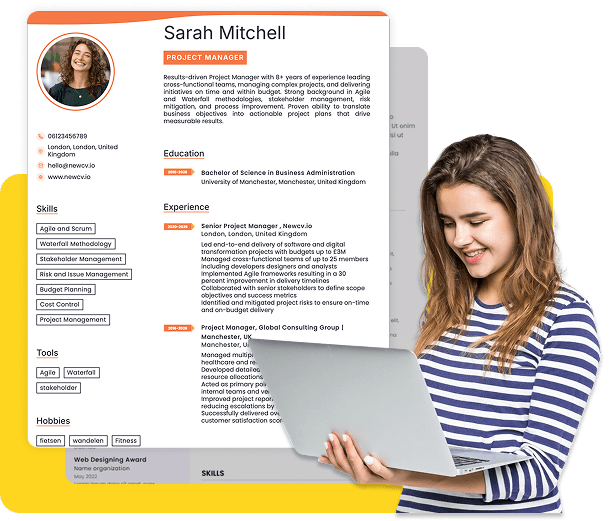
Use ATS-optimised Resume and resume templates that pass applicant tracking systems. Our Resume builder helps recruiters read, scan, and shortlist your Resume faster.

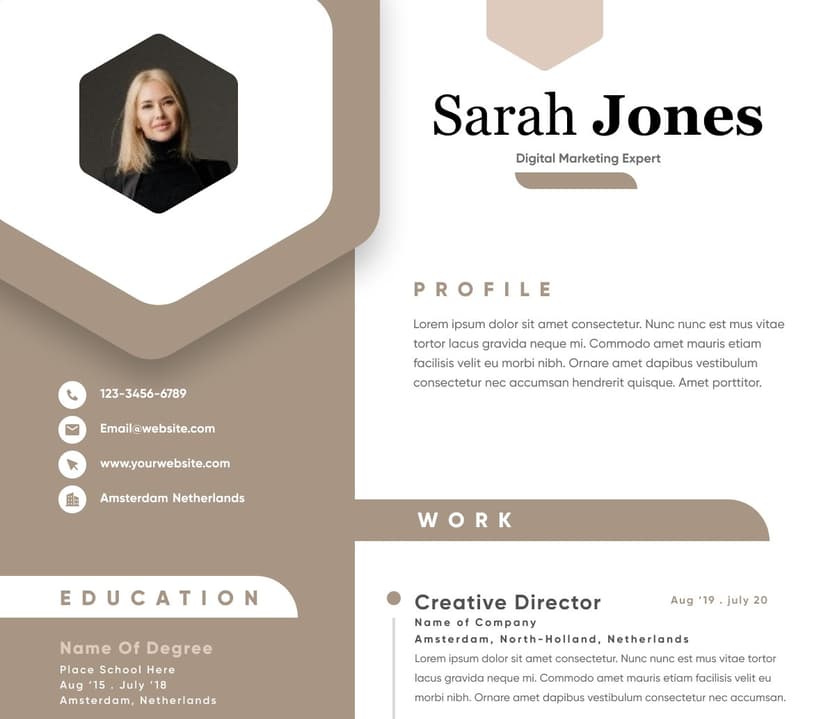
Use professional field-tested resume templates that follow the exact Resume rules employers look for.
Create Resume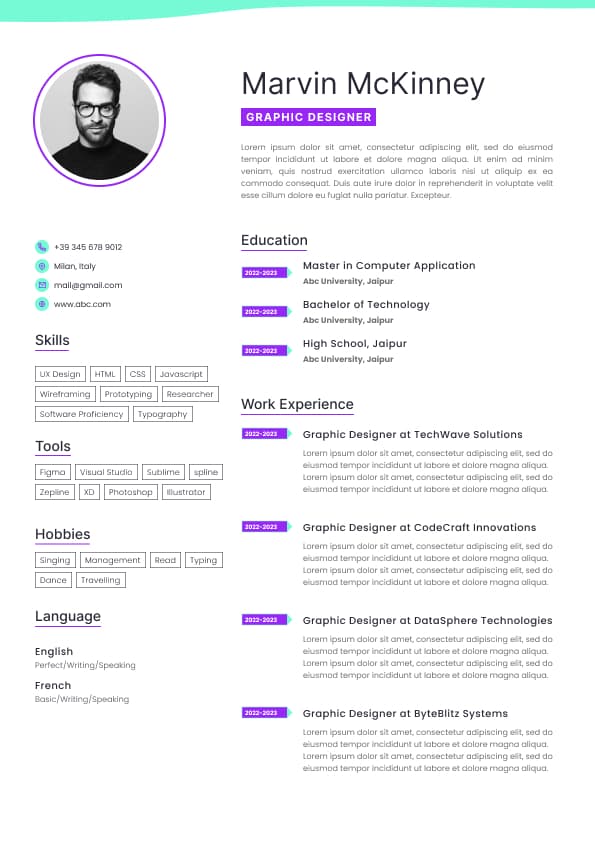
Use professional field-tested resume templates that follow the exact Resume rules employers look for.
Create ResumeMost candidates misunderstand how ATS resume systems actually work. In Australia, Applicant Tracking Systems are not “robots rejecting resumes” in the way people think. The ATS is primarily a filtering, parsing, and ranking tool used by recruiters and hiring managers to manage large applicant volumes quickly.
The real problem is this: most resumes fail because they are poorly structured, poorly targeted, or written without understanding how recruiters search databases. A resume can be highly experienced and still fail ATS screening if the system cannot correctly parse information or if the resume does not align with the role requirements recruiters are searching for.
To beat ATS resume systems in Australia, your resume needs to do three things exceptionally well:
Parse cleanly into ATS software
Match the hiring criteria recruiters search for
Convince a human recruiter within seconds after passing ATS screening
That means ATS optimisation is not about gaming software. It is about making your resume easier for both technology and recruiters to evaluate quickly and accurately.
An ATS, or Applicant Tracking System, is recruitment software used by employers and recruiters to manage applications, search candidate databases, filter resumes, track hiring stages, and shortlist applicants.
Common ATS platforms used across Australia include:
:contentReference[oaicite:0]
:contentReference[oaicite:1]
:contentReference[oaicite:2]
:contentReference[oaicite:3]
:contentReference[oaicite:4]
:contentReference[oaicite:5]
:contentReference[oaicite:6]
In Australia, ATS systems are heavily used across:
One of the biggest misconceptions is that ATS systems “read” resumes like humans. They do not.
ATS software primarily performs four functions:
The ATS extracts information from your resume and attempts to categorise it into fields such as:
Name
Contact details
Job titles
Employers
Employment dates
Skills
Education
Government
Mining and resources
Healthcare
Banking and finance
Professional services
Enterprise corporate hiring
Graduate recruitment
Large-scale recruitment agencies
Smaller businesses may not use sophisticated ATS filtering, but most mid-sized and enterprise employers do.
Certifications
If your formatting is messy, the ATS may incorrectly interpret your information.
This is where many resumes fail before recruiter review even begins.
Recruiters search ATS databases using keywords related to:
Job titles
Industry tools
Technical skills
Certifications
Systems
Qualifications
Sector-specific terminology
If your resume does not contain the relevant terminology naturally used in the job ad, recruiters may never find your profile in database searches.
Some ATS platforms rank candidates based on:
Keyword alignment
Skills overlap
Job title relevance
Experience recency
Industry match
Location
Education criteria
This ranking is not always automated rejection. Often, it simply affects visibility.
The ATS also helps recruiters:
Review applications faster
Leave notes
Shortlist candidates
Track interview stages
Collaborate with hiring managers
This matters because once your resume reaches human review, recruiter behaviour becomes more important than ATS scoring itself.
Most ATS advice online is either outdated or oversimplified.
These are the actual mistakes Australian recruiters see every day.
Highly designed resumes often break ATS parsing.
Common problems include:
Text inside graphics
Multi-column layouts
Icons replacing text
Tables containing key information
Fancy headers and footers
Infographics
Canva-style design-heavy resumes
Many ATS systems still struggle with these formats.
A clean, professionally structured Word document usually performs best.
Use:
Standard headings
Single-column layout
Clear section structure
Consistent formatting
Simple fonts
Standard bullet points
The best ATS-friendly resumes are usually visually clean rather than visually impressive.
This is one of the fastest ways to disappear in ATS searches.
Recruiters search using language from the actual role requirements. If your resume is too generic, it may not align strongly enough with the specific position.
Recruiters search for alignment between:
Your recent experience
The advertised role
Industry terminology
Systems and tools
Seniority level
Functional expertise
A resume written broadly for “all jobs” often ranks poorly for specific jobs.
Some candidates attempt to “beat ATS” by cramming keywords unnaturally into the document.
This usually fails for two reasons:
Recruiters immediately notice unnatural writing
Modern ATS systems increasingly evaluate contextual relevance
“Project management project manager stakeholder management Agile Scrum communication leadership.”
“Led cross-functional Agile project teams across multiple enterprise technology deployments, managing stakeholder engagement, project delivery timelines, and risk mitigation.”
The second version contains the same core keywords naturally while demonstrating real capability.
Recruiters search ATS databases using expected market terminology.
If your internal company title is unusual, recruiters may never find your resume.
“Customer Happiness Ninja”
“Customer Success Manager”
You can still preserve internal titles where needed, but translate them into recognisable market terminology.
Use:
Official Internal Title (Equivalent Market Title)
For example:
“Client Solutions Lead (Account Manager)”
This preserves accuracy while improving searchability.
The job ad itself is often the best ATS optimisation guide.
Recruiters frequently search resumes using exact terminology from the position description.
Pay attention to:
Technical skills
Software platforms
Certifications
Methodologies
Industry frameworks
Compliance requirements
Sector language
If the ad repeatedly references “stakeholder engagement” but your resume only says “communication”, you may reduce keyword alignment unnecessarily.
ATS-friendly resumes are usually simple, highly targeted, and strategically written.
Include:
Full name
Mobile number
Professional email
LinkedIn URL
Location
Do not include:
Full street address
Photos
Date of birth
Marital status
Nationality unless required
Australian hiring standards generally avoid unnecessary personal information.
Your opening summary should position you immediately for the target role.
This section is heavily important because recruiters often skim resumes in under 10 seconds initially.
A strong summary includes:
Target function
Years of experience
Industry expertise
Core strengths
Key value proposition
“Operations Manager with 10+ years’ experience leading large-scale logistics and supply chain operations across FMCG and retail environments. Proven success improving operational efficiency, workforce performance, and inventory accuracy across national distribution networks.”
This works because it aligns immediately with recruiter search intent.
Include a dedicated skills section with relevant ATS-searchable terms.
Example areas:
Stakeholder management
Financial analysis
WHS compliance
CRM systems
Project delivery
Business development
Salesforce
SAP
Contract negotiation
This section improves ATS parsing and recruiter scanning speed.
This is where ATS optimisation and recruiter persuasion intersect.
Each role should clearly include:
Job title
Employer
Dates
Scope
Achievements
Relevant systems/tools
Measurable outcomes
Recruiters usually prioritise:
Relevance
Recency
Stability
Impact
Seniority progression
Industry match
Not generic responsibilities.
Use:
Action + Scope + Outcome
“Reduced warehouse processing times by 22% through implementation of revised inventory management procedures across three national distribution centres.”
This demonstrates:
Leadership
Operational capability
Quantified impact
Relevant business outcomes
Yes, but strategically.
You should naturally mirror important terminology from the role advertisement where it truthfully reflects your experience.
This improves:
ATS relevance
Recruiter alignment
Perceived fit
But forced duplication looks obvious and weak.
Focus on:
Skills
Systems
Qualifications
Industry terminology
Functional expertise
Compliance frameworks
Do not blindly repeat:
Entire sentences
Generic soft skills
Buzzwords without evidence
Many ATS formatting “rules” online are exaggerated.
These are the formatting elements that genuinely matter most.
In Australia, .docx files generally parse most reliably across ATS systems.
PDFs are often acceptable, but poorly generated PDFs can still create parsing issues.
If no format is specified:
Use Word for ATS-heavy corporate applications
Use PDF only when formatting consistency matters more
ATS systems recognise common resume section headings better.
Use headings like:
Professional Experience
Education
Skills
Certifications
Professional Summary
Avoid creative headings like:
“My Journey”
“Where I’ve Been”
“What I Bring”
Tables can confuse parsing systems.
Especially avoid putting these inside tables:
Skills
Employment history
Contact details
Dates
Some ATS systems may scramble or omit the content entirely.
Icons often create parsing problems.
Do not rely on icons for:
Phone
Location
Use plain text instead.
This is the part most ATS articles completely miss.
Recruiters do not simply rely on automated scores.
They actively search databases manually.
Recruiters typically search combinations of:
Job titles
Industry terms
Certifications
Technical skills
Systems
Seniority indicators
Location
For example, a recruiter hiring for a Business Analyst role may search:
“Business Analyst”
“Agile”
“JIRA”
“Stakeholder management”
“Process improvement”
If your resume lacks those terms, you may never appear in results even if you are qualified.
The strongest ATS resumes are not “tricking software”.
They are strategically written to improve:
Search discoverability
Relevance
Recruiter clarity
Screening efficiency
That is a major distinction.
Tailored resumes outperform generic resumes because recruiters evaluate fit comparatively, not independently.
Your resume is judged against competing applicants.
A tailored resume signals:
Strong alignment
Clear relevance
Better understanding of the role
Lower hiring risk
Generic resumes create uncertainty.
And uncertainty kills shortlist decisions.
Positioning.
Many resumes fail because candidates describe responsibilities instead of positioning themselves strategically.
“Responsible for managing customer enquiries.”
“Managed high-volume customer enquiries across enterprise accounts while maintaining 96% customer satisfaction performance.”
The second example communicates:
Scale
Environment
Performance
Commercial value
Recruiters shortlist candidates who appear capable of succeeding in similar environments.
Sometimes, but not always.
In Australia, automatic knockout filtering is more common in:
Graduate programs
Government hiring
High-volume enterprise recruitment
Compliance-heavy industries
Questions that may trigger automatic filtering include:
Work rights
Required certifications
Security clearances
Location eligibility
Licence requirements
But most ATS “rejection” issues are actually visibility and relevance problems.
Before applying, review your resume against this practical checklist.
Single-column format
Standard headings
Consistent fonts
No graphics
No text boxes
No important information in tables
Targeted to the specific role
Includes relevant industry terminology
Uses searchable job titles
Reflects seniority accurately
Includes systems and tools
Easy to skim quickly
Strong measurable achievements
Clear career progression
Relevant recent experience
Concise but specific language
After years in recruitment, the candidates consistently shortlisted are not the ones with the “best ATS hacks”.
They are the candidates whose resumes make recruiter decision-making easier.
That means:
Clear positioning
Relevant experience
Strong alignment
Commercial impact
Readable structure
Credibility
Obvious fit for the role
ATS optimisation simply helps ensure recruiters actually see that value.
The real goal is getting shortlisted.
A resume can pass ATS parsing perfectly and still fail because:
It lacks relevance
It feels generic
Achievements are weak
Positioning is unclear
Career narrative is confusing
ATS optimisation matters.
But recruiter persuasion matters more.
The best resumes succeed at both simultaneously.


 Upload Resume
 Import from Linkedin