
Choose from a wide range of NEWCV resume templates and customize your NEWCV design with a single click.

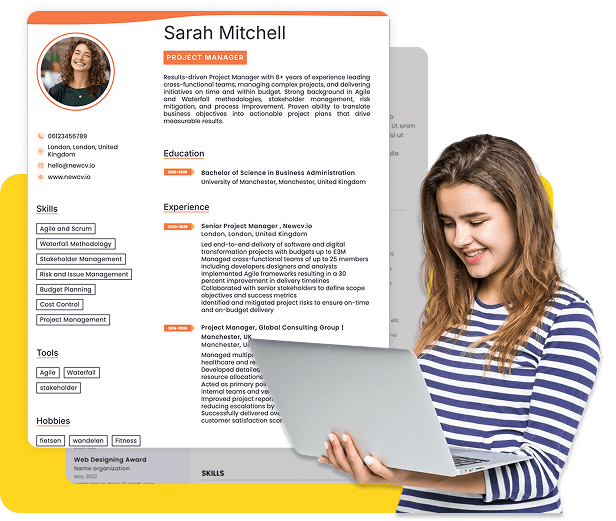
Use ATS-optimised Resume and resume templates that pass applicant tracking systems. Our Resume builder helps recruiters read, scan, and shortlist your Resume faster.

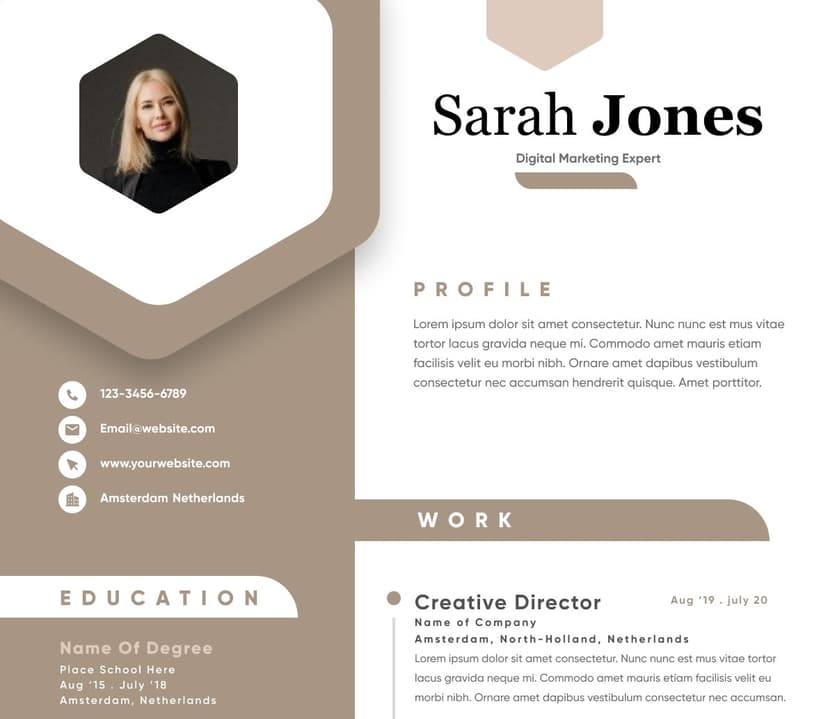
Use professional field-tested resume templates that follow the exact Resume rules employers look for.
Create Resume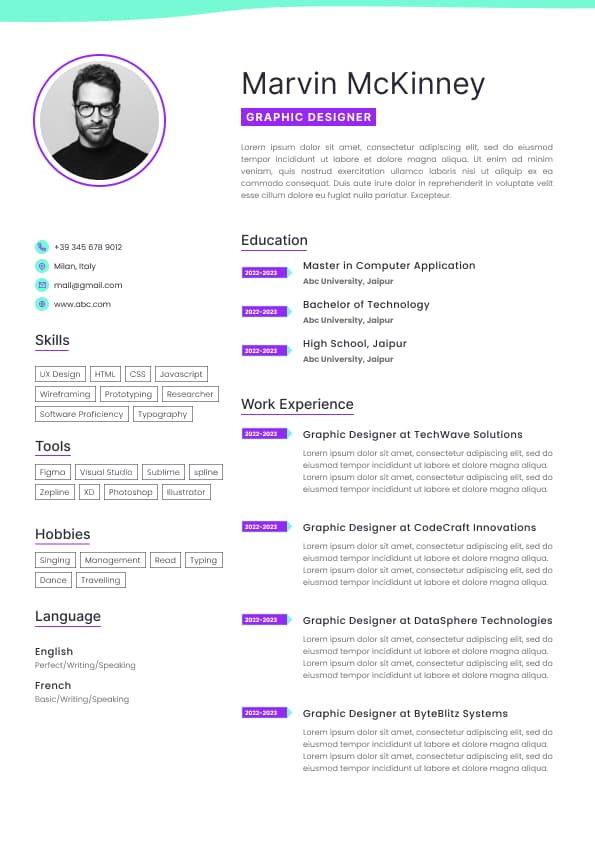
Use professional field-tested resume templates that follow the exact Resume rules employers look for.
Create ResumeIn Australia, the ideal resume length is usually 2 to 4 pages, depending on your experience level, industry, and seniority. A 1 page resume is often too short for most Australian employers unless you are a student, graduate, or applying for entry-level roles. On the other hand, resumes longer than 5 pages are rarely effective unless you are in executive, academic, government, or highly technical roles requiring detailed project history.
Australian recruiters generally expect more detail than recruiters in the US, but less unnecessary information than traditional UK-style CVs. The goal is not to hit a specific page count. The goal is to provide enough relevant evidence to justify an interview without overwhelming the hiring manager.
A strong Australian resume is concise, targeted, and achievement-focused. Every section should help answer one question recruiters are silently asking during screening:
“Can this candidate perform this role in our environment?”
If your resume is too short, you may look underqualified. If it is too long, recruiters may assume you cannot prioritise information effectively. The best resume length is the one that delivers enough relevant proof quickly and clearly.
Resume length expectations change depending on where you are in your career. Recruiters do not assess a graduate resume the same way they assess a senior operations manager or a construction project director.
If you have less than 3 years of experience, your resume should generally stay within 1 to 2 pages.
At this stage, recruiters are assessing:
Education
Internships or placements
Transferable skills
Communication ability
Work ethic and potential
Cultural fit
Padding a graduate resume with excessive detail usually backfires. Recruiters can immediately tell when candidates are trying to artificially stretch limited experience.
What works:
Relevant internships
Casual or part-time work showing reliability
University projects with measurable outcomes
Volunteer leadership
Technical skills relevant to the role
What fails:
Long personal statements
Generic soft skills lists
Detailed descriptions of unrelated casual jobs
High school achievements years after graduation
Australian hiring managers value clarity and maturity. A sharp 2 page graduate resume often outperforms a bloated 4 page version.
For most professionals in Australia, 2 to 3 pages is the sweet spot.
This applies to candidates with approximately:
4 to 10 years of experience
Multiple employers
Career progression
Technical or leadership responsibilities
Achievements worth quantifying
This is the most common resume length recruiters expect across:
Corporate roles
Marketing
HR
Finance
Sales
Operations
IT
Customer success
Healthcare administration
At this level, recruiters want enough detail to understand:
Scope of responsibility
Career progression
Commercial impact
Leadership exposure
Industry relevance
Stability and trajectory
A 2 page resume often works well if your experience is tightly aligned to the target role.
A 3 page resume is usually appropriate if:
You manage teams
You have multiple major projects
Your achievements need context
Your role is technically complex
You have industry certifications or specialised systems expertise
Senior professionals typically require more depth because hiring decisions become more risk-sensitive.
For leadership hires, employers assess:
Strategic capability
Commercial performance
Stakeholder management
Transformation experience
Team leadership
Revenue or operational impact
Scale of responsibility
A senior resume that is too short often creates distrust.
If a General Manager claims 20 years of leadership experience but submits a 2 page resume with minimal detail, recruiters may assume:
Limited achievements
Lack of strategic exposure
Poor communication
Generic executive branding
In Australia, executive resumes commonly sit between 3 and 5 pages when properly written.
However, length alone is not valuable. Senior resumes fail when they become:
Chronological job descriptions
Corporate jargon dumps
Endless responsibilities lists
Unfocused career histories
Executives get shortlisted when their resumes clearly demonstrate:
Business outcomes
Leadership scale
Commercial impact
Organisational complexity
Decision-making authority
One of the biggest mistakes candidates make is following American resume advice without understanding Australian hiring expectations.
US resume culture strongly favours:
1 page resumes
Extreme brevity
Minimal detail
Australian hiring culture is different.
Australian recruiters and hiring managers usually expect:
Career context
Achievements with detail
Scope of responsibility
Industry-specific evidence
Clear employment history
A 1 page resume in Australia often feels incomplete unless the candidate is very junior.
This is especially true in:
Government
Mining
Engineering
Construction
Healthcare
Education
Corporate leadership
Australian recruiters generally prefer substance over aggressive minimalism.
That said, Australian resumes should still be concise. More detail does not mean more waffle.
Recruiters rarely reject resumes because they are technically “too long” or “too short”.
They reject resumes because the content-to-value ratio is poor.
A strong 4 page resume can outperform a weak 2 page resume easily.
The real evaluation criteria are:
Is the information relevant?
Is it easy to scan?
Does it prove capability?
Is the candidate aligned to the role?
Can the recruiter quickly assess suitability?
Recruiters spend very little time on the first screen.
Most resumes get an initial scan of roughly:
10 to 30 seconds in high-volume recruitment
30 to 90 seconds for specialist or leadership hiring
That means structure matters more than page count alone.
Many resumes are not objectively too long. They are simply inefficient.
Here is what recruiters commonly see.
Candidates often copy similar duties across every position.
For example:
Managed stakeholders
Led team meetings
Prepared reports
Assisted operations
Repeating generic responsibilities across 10 years wastes space and weakens impact.
Instead:
Focus on achievements
Show progression
Highlight increasing complexity
Your first retail job from 15 years ago probably does not belong on your current senior marketing manager resume.
Older roles can often be condensed into:
Job title
Employer
Dates only
This is especially important once you have significant professional experience.
This happens frequently in:
IT
Engineering
Project management
Cybersecurity
Candidates sometimes turn resumes into technical manuals.
Hiring managers do want technical depth, but they also want:
Commercial relevance
Outcomes
Communication ability
The best technical resumes balance technical expertise with business impact.
Dense blocks of text kill readability.
Recruiters skim.
Strong resumes use:
Clear structure
Short achievement-driven bullet points
Quantified outcomes
Logical formatting
Short resumes can also create problems.
A resume that says:
“Managed projects”
“Led teams”
“Handled operations”
without examples or outcomes creates weak positioning.
Recruiters need evidence.
Australian employers increasingly want measurable results.
Candidates who fail to show outcomes often lose interviews to candidates who quantify:
Revenue growth
Cost savings
Efficiency improvements
Safety outcomes
Team performance
Delivery metrics
Sometimes candidates remove too much information trying to keep resumes “short”.
This often hurts:
Mid-level professionals
Managers
Technical specialists
Executive candidates
If recruiters cannot understand the scale of your work, they cannot justify shortlisting you.
Many candidates incorrectly believe Applicant Tracking Systems prefer shorter resumes.
This is not true.
Modern ATS platforms primarily assess:
Keyword relevance
Formatting compatibility
Job title alignment
Skills matching
Experience relevance
ATS systems do not reject resumes simply because they are 3 or 4 pages long.
However, overly long resumes can indirectly hurt performance because:
Important keywords get diluted
Core achievements become buried
Readability suffers
Relevance decreases
The issue is not page count itself. The issue is signal clarity.
Different industries have different expectations.
Typical length:
Employers value:
Commercial outcomes
Leadership
Communication
Strategic thinking
Concise, achievement-focused resumes perform best.
Typical length:
Government hiring often requires:
Detailed capability evidence
Policy exposure
Stakeholder engagement examples
Selection criteria alignment
Short resumes can feel underdeveloped in this sector.
Typical length:
Recruiters usually expect:
Project detail
Site exposure
Safety systems
Technical environments
Certifications
Compliance experience
Typical length:
Clinical employers often want:
Registration details
Certifications
Clinical systems
Specialisations
Compliance training
Hospital or care environment context
Typical length:
Strong tech resumes balance:
Technical stack
Systems expertise
Delivery outcomes
Stakeholder communication
Commercial value
Pure keyword dumping performs poorly with experienced tech recruiters.
Most Australian resumes should cover approximately:
Earlier experience can be shortened or summarised unless highly relevant.
Recruiters mainly care about:
Recent capability
Current market relevance
Modern systems knowledge
Leadership maturity
Industry alignment
Very old experience can unintentionally age your resume.
This is particularly important in fast-changing sectors like:
Technology
Digital marketing
SaaS
Cybersecurity
The first page carries disproportionate importance.
Recruiters often decide whether to continue reading based on:
Resume positioning
Relevance
Clarity
Career alignment
Strong first pages usually include:
Clear professional headline
Strong summary
Core skills aligned to the role
Recent experience
Key achievements
Weak first pages often include:
Generic objectives
Long personal profiles
Dense text blocks
Irrelevant information
Vague claims without proof
Yes, but not in the way most candidates think.
You should not randomly cut your resume from 4 pages to 2 pages just to “fit”.
Instead, tailor by:
Prioritising relevant experience
Reducing unrelated detail
Expanding aligned achievements
Adjusting technical depth
Reordering emphasis
The best resumes are strategically edited for relevance, not blindly shortened.
Australian recruiters usually expect more context and detail than US employers.
A 2 page resume is not automatically better than a 4 page resume.
Quality and relevance matter more.
Recruiters do not need a full autobiography.
Prioritise relevance and career value.
Responsibilities alone rarely sell candidates.
Outcomes and achievements do.
Candidates often remove the exact information that would have earned them interviews.
If you are unsure how long your resume should be, use this framework.
You are a graduate or student
You have less than 3 years of experience
You are changing careers with limited relevant experience
You are applying for junior roles
You are a mid-level professional
You have 4 to 10 years of relevant experience
You manage projects or stakeholders
You have measurable achievements to showcase
You are in senior leadership
You manage large teams or budgets
You have highly technical experience
Your industry expects detailed project history
You work in government or executive environments
The best resumes in Australia are:
Easy to scan
Achievement-driven
Commercially focused
Tailored to the role
Structured logically
Rich in relevant evidence
Concise without lacking substance
Strong resumes make recruiters feel confident quickly.
Weak resumes force recruiters to search for reasons to shortlist you.
That difference matters enormously in competitive hiring markets.


 Upload Resume
 Import from Linkedin