
Choose from a wide range of NEWCV resume templates and customize your NEWCV design with a single click.

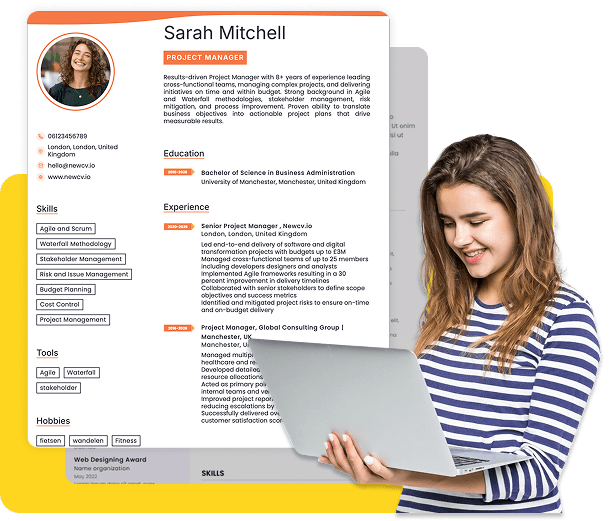
Use ATS-optimised Resume and resume templates that pass applicant tracking systems. Our Resume builder helps recruiters read, scan, and shortlist your Resume faster.

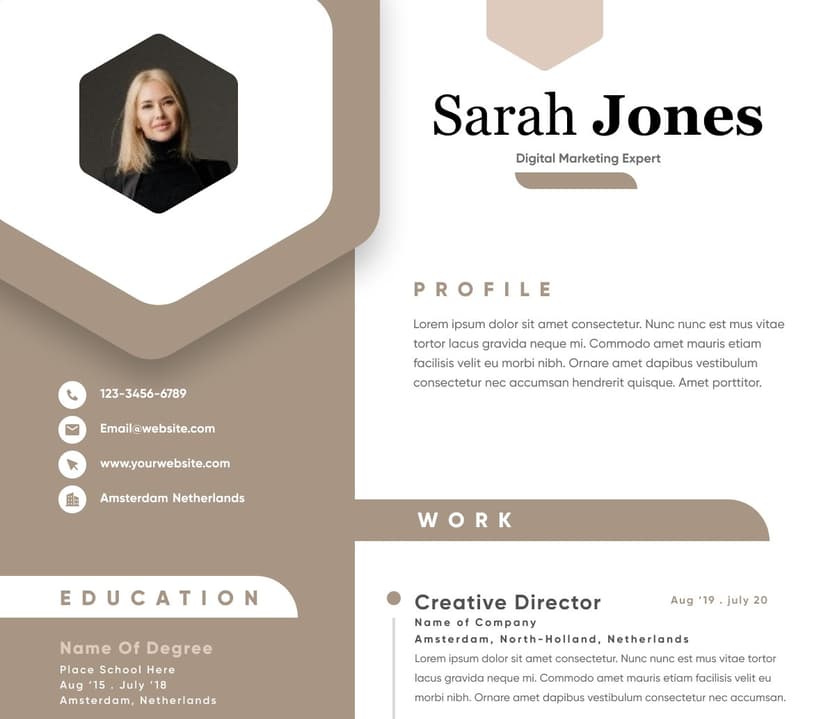
Use professional field-tested resume templates that follow the exact Resume rules employers look for.
Create Resume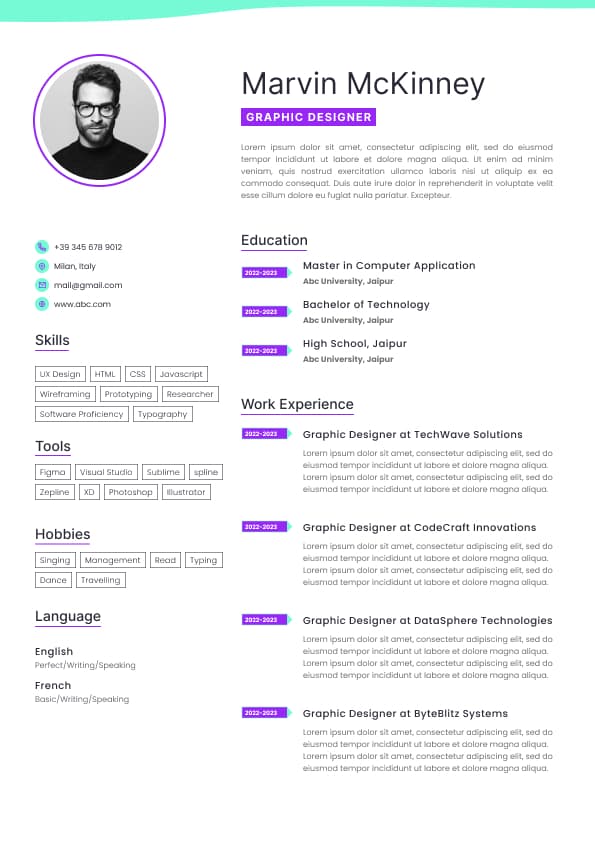
Use professional field-tested resume templates that follow the exact Resume rules employers look for.
Create ResumeMost Australian employers now use Applicant Tracking Systems (ATS) to filter resumes before a recruiter ever sees them. If your resume is poorly formatted, missing the right keywords, too generic, or written for the wrong market, it can be rejected automatically even if you are qualified.
Passing ATS in Australia is not about tricking software. It is about creating a resume that aligns with how Australian recruiters search, screen, shortlist, and assess candidates in real hiring environments.
The resumes that consistently pass ATS in Australia usually have five things in common:
Clear and ATS-friendly formatting
Strong alignment with the job advertisement
Correct Australian terminology and keyword usage
Relevant achievements tied to the role
A resume structure recruiters can scan quickly after ATS parsing
Many candidates fail because they follow overseas resume advice that does not align with Australian hiring expectations. Australian recruiters want resumes that are direct, relevant, achievement-focused, and easy to assess quickly.
An Applicant Tracking System is recruitment software used by employers, recruiters, and HR teams to manage applications.
In Australia, ATS platforms are commonly used across:
Corporate employers
Government departments
Healthcare organisations
Mining and construction companies
Universities
Recruitment agencies
Enterprise-level businesses
Graduate recruitment programs
This guide explains exactly how ATS systems work in Australia, what recruiters actually see after parsing, why good candidates still get rejected, and how to position your resume to pass both ATS filters and human screening.
Popular ATS platforms used in Australia include:
:contentReference[oaicite:0]
:contentReference[oaicite:1]
:contentReference[oaicite:2]
:contentReference[oaicite:3]
:contentReference[oaicite:4]
:contentReference[oaicite:5]
:contentReference[oaicite:6] integrations
:contentReference[oaicite:7]
ATS software does not “read” resumes like humans do. It parses information into structured fields such as:
Name
Contact details
Job titles
Employers
Dates
Skills
Qualifications
Keywords
Certifications
Recruiters then search and filter candidates inside the ATS database.
That means your resume needs to succeed in two stages:
The system extracts and categorises your information correctly.
A recruiter reviews your parsed profile and actual resume to decide whether you are shortlisted.
Many resumes fail before the second stage because the ATS cannot properly interpret the content.
One of the biggest misconceptions is that ATS systems automatically reject resumes using secret AI scoring systems.
In reality, most Australian ATS workflows are recruiter-driven.
Recruiters typically:
Search keywords manually
Filter by location, skills, or experience
Review recent applicants first
Scan resumes quickly for relevance
Shortlist based on alignment to the role
This matters because keyword stuffing alone will not help.
A resume can technically “pass ATS” but still get rejected in under 15 seconds by a recruiter because:
It looks generic
Achievements are weak
Experience is irrelevant
The resume lacks focus
It feels copied or AI-generated
The candidate positioning is unclear
The goal is not just ATS compatibility.
The goal is ATS readability plus recruiter credibility.
Once your resume enters the recruiter review stage, hiring decisions become highly practical.
Australian recruiters usually assess resumes in this order:
This is the biggest factor.
Recruiters ask:
Does this person match the role requirements quickly?
Is the industry experience relevant?
Have they done similar work before?
Can they operate at the required level?
A perfectly formatted ATS resume still fails if it lacks alignment.
Candidates often underestimate this.
If the job ad says:
Project Coordinator
Customer Success Manager
Financial Accountant
Site Supervisor
Then your resume should ideally reflect similar terminology where accurate.
Australian recruiters search exact or closely related titles inside ATS systems.
Using vague titles like:
Team Specialist
Operations Ninja
Business Guru
can hurt discoverability and credibility.
Australian hiring managers want outcomes.
Weak resumes list duties.
Strong resumes show measurable impact.
Weak Example
“Responsible for customer service and administration.”
Good Example
“Managed customer enquiries across phone and email channels while maintaining a 96% client satisfaction rating and reducing response times by 22%.”
ATS can parse both.
But recruiters shortlist the second one.
Australian recruiters pay attention to:
Frequent job changes
Large employment gaps
Inconsistent progression
Unclear career direction
Your resume should tell a logical career story.
The best ATS-friendly resumes are simple, clean, and highly scannable.
Overdesigned resumes often fail parsing.
Use this structure:
Name and contact details
Professional summary
Core skills
Work experience
Education
Certifications
Technical skills if relevant
Usually:
Some ATS systems handle PDFs well, but Word remains safer for compatibility across Australian systems.
Avoid creative headings.
Use:
Professional Summary
Work Experience
Education
Skills
Certifications
Do not use headings like:
My Journey
What I Bring
Career Snapshot
ATS parsing can fail when headings are unclear.
Do not use:
Tables
Text boxes
Icons
Graphics
Columns
Headers and footers for important content
Complex design layouts
Many ATS systems still struggle with them.
Simple formatting wins consistently in Australia.
Keywords matter because recruiters search ATS databases using skill terms, software names, qualifications, and job titles.
But most candidates use keywords badly.
Use keywords naturally in:
Professional summary
Skills section
Work experience achievements
Technical tools
Certifications
The best source of keywords is the actual job advertisement.
Look for repeated terms such as:
Stakeholder management
Payroll processing
WHS compliance
CRM systems
Procurement
Budget forecasting
Agile delivery
If those terms genuinely apply to your experience, incorporate them naturally.
Recruiters can spot keyword stuffing fast.
This fails:
“Project management project manager project coordination Agile project delivery stakeholder management.”
It looks manipulated and weak.
Instead, embed keywords in real outcomes.
Good Example
“Coordinated Agile project delivery across cross-functional teams while managing stakeholder communication, timelines, and risk reporting.”
That works for both ATS and recruiters.
This is one of the biggest ATS issues affecting migrants, international students, and overseas applicants.
Australian hiring expectations differ from many overseas markets.
Overly long resumes
Dense paragraphs
Generic summaries
Excessive personal details
Poor localisation
Weak achievement statements
Unclear visa status
Overseas terminology recruiters do not search for
Australian resumes are usually:
Concise
Achievement-focused
Direct
Tailored to the role
Easy to scan quickly
Most professionals should aim for:
Not 7-page career biographies.
Many ATS failures are not obvious.
These are the mistakes recruiters repeatedly see.
This is one of the biggest reasons candidates fail ATS searches.
Generic resumes rarely rank strongly against tailored applications.
Even small adjustments improve performance significantly.
If the role requires:
MYOB
Xero
Salesforce
WHS
Civil 3D
SAP
and your resume never mentions them despite having experience, recruiters may never find you in ATS searches.
Many Canva-style templates damage ATS parsing.
The problem is not visual appearance.
The problem is technical readability.
Recruiters often receive resumes where:
Dates parse incorrectly
Job titles disappear
Entire sections become unreadable
A simple Word-format resume consistently performs better.
This is one of the clearest shortlist differentiators.
Recruiters compare impact.
Not task lists.
Your summary is often the first section recruiters read after ATS parsing.
Weak summaries are generic.
Strong summaries position you clearly.
“Hardworking professional seeking opportunities to grow.”
“Operations Coordinator with 6+ years’ experience supporting logistics and supply chain teams across manufacturing and distribution environments. Skilled in inventory control, ERP systems, stakeholder coordination, and process improvement within fast-paced Australian operations.”
Specificity creates credibility.
Understanding recruiter behaviour changes how you write resumes.
Recruiters often search combinations like:
“Financial Accountant CPA”
“HR Advisor ER case management”
“Civil Engineer 12d”
“Executive Assistant C-suite”
“Registered Nurse acute care”
This means your resume needs searchable relevance.
If critical terms are missing, you become invisible.
ATS expectations vary slightly by industry.
Most important factors:
Clear achievements
Commercial impact
Systems knowledge
Stakeholder management
Communication skills
Important ATS terms include:
AHPRA registration
Clinical systems
Patient care
Acute care
NDIS
Care planning
Recruiters often search:
Tickets and licences
FIFO
WHS
Site experience
Machinery competency
Compliance systems
Government ATS screening is often more structured.
Applications may require:
Capability alignment
APS criteria
Selection criteria responses
Governance terminology
Policy experience
ATS screening often focuses heavily on:
Tech stacks
Platforms
Certifications
Methodologies
Cloud environments
Programming languages
There is no universal rule.
But recruiter behaviour matters.
Early career: 2 pages
Mid-level professionals: 2 to 4 pages
Senior executives: 4 to 5 pages where justified
Length itself is not the issue.
Irrelevant content is.
A concise, highly relevant 4-page resume performs better than a vague 2-page resume.
Sometimes, but usually not in the way candidates think.
Automatic rejection may happen when:
Mandatory questions fail
Work rights are incompatible
Required licences are missing
Salary expectations exceed limits
Location requirements are unmet
But most ATS rejection issues come from poor alignment and weak recruiter screening outcomes.
The highest-performing resumes combine:
The resume parses cleanly.
The content matches the role clearly.
The candidate appears credible, capable, and commercially valuable.
Impact is measurable and easy to understand.
The resume reflects the exact role requirements.
This combination consistently outperforms “keyword-heavy” resumes.
After reviewing thousands of resumes across the Australian market, the strongest candidates usually do these things exceptionally well:
Tailor every application
Match the employer’s language naturally
Quantify achievements clearly
Keep formatting simple
Show logical career progression
Align experience tightly to the role
Demonstrate commercial value quickly
Remove irrelevant information
Make recruiter screening easy
The candidates who struggle most often:
Use generic resumes
Apply too broadly
Focus on duties instead of impact
Overdesign resumes
Ignore ATS compatibility
Fail to localise their resume for Australia
Before submitting your application, check:
Is the resume tailored to the specific role?
Are the main keywords included naturally?
Is formatting simple and ATS-friendly?
Are achievements measurable?
Are job titles clear and searchable?
Is the summary specific and relevant?
Is the file in Word format where possible?
Is the resume easy to scan in under 20 seconds?
Would a recruiter instantly understand your value?
If not, revise before applying.


 Upload Resume
 Import from Linkedin