
Choose from a wide range of NEWCV resume templates and customize your NEWCV design with a single click.

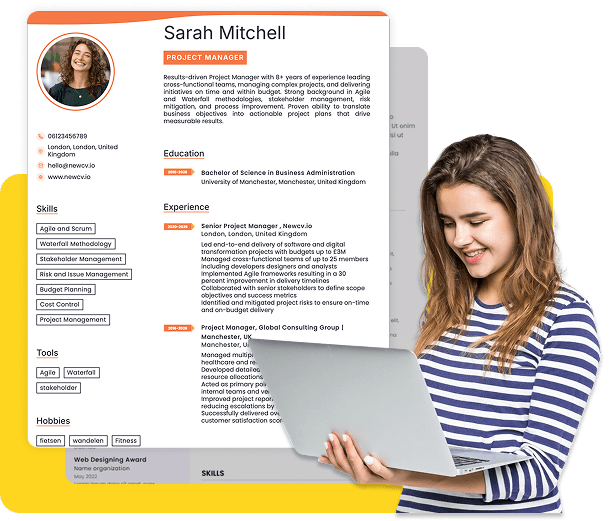
Use ATS-optimised Resume and resume templates that pass applicant tracking systems. Our Resume builder helps recruiters read, scan, and shortlist your Resume faster.
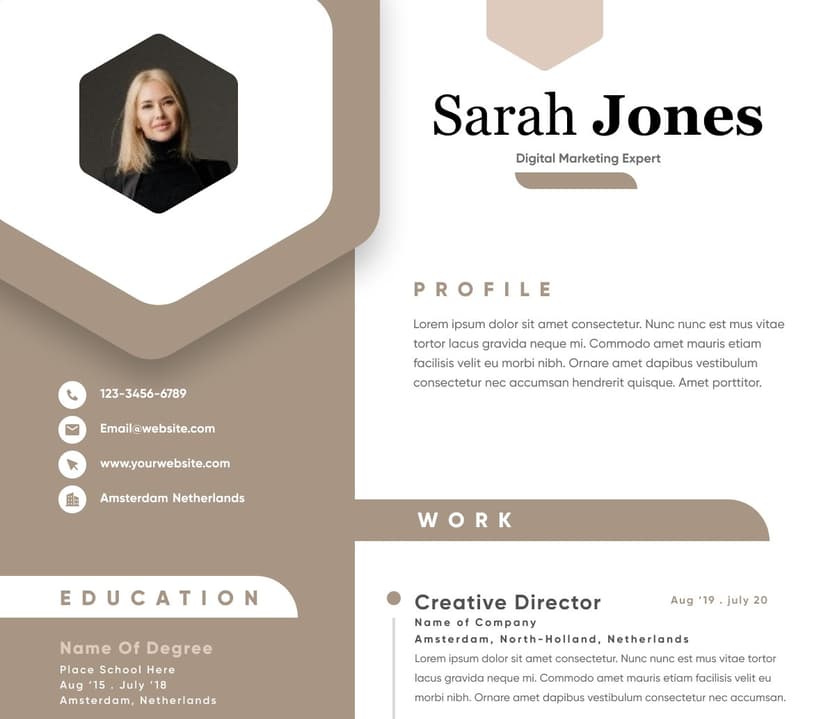
Use professional field-tested resume templates that follow the exact Resume rules employers look for.
Create Resume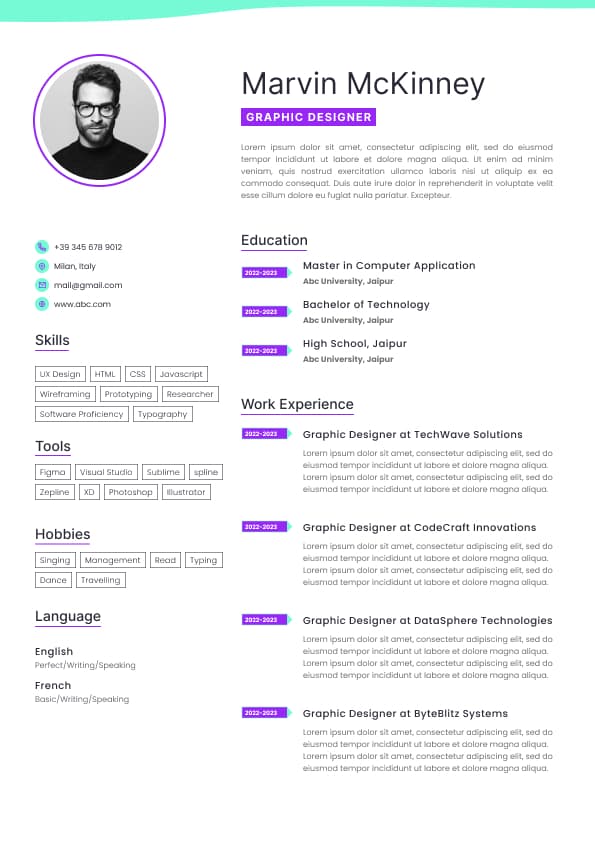
Use professional field-tested resume templates that follow the exact Resume rules employers look for.
Create ResumeYour LinkedIn headline is one of the highest-impact parts of your profile in the Australian job market. Recruiters use it to decide whether to open your profile, shortlist you in LinkedIn Recruiter searches, or move on within seconds.
Most Australian professionals waste this space with generic headlines like “Experienced Professional”, “Open to Work”, or simply their current job title. These headlines do nothing for visibility, positioning, or recruiter interest.
A strong LinkedIn headline in Australia should immediately communicate:
What you do
Your level of expertise
Your industry or niche
Your value to employers
Relevant keywords recruiters search for
The best headlines balance keyword optimisation with credibility and positioning. They are searchable, clear, commercially relevant, and aligned with how Australian recruiters actually screen candidates.
This guide breaks down:
Australian recruiters typically scan LinkedIn profiles in one of two ways:
Through LinkedIn Recruiter search results
Through direct profile clicks from applications or referrals
In both cases, your headline acts as a fast positioning statement.
A recruiter is subconsciously assessing:
Does this candidate clearly fit the role?
Do they appear credible and specialised?
Are they senior enough?
Are they commercially relevant?
Do their keywords align with the role brief?
High-performing LinkedIn headline examples by industry and career stage
What recruiters in Australia actually look for
The biggest headline mistakes hurting profile visibility
Proven headline formulas that increase profile views and recruiter engagement
How to position yourself for promotions, career changes, and competitive roles
The strongest headlines reduce ambiguity immediately.
Weak Example
“Experienced Professional Seeking Opportunities”
Why it fails:
Too vague
No searchable keywords
No industry alignment
Sounds passive and generic
Gives recruiters no reason to click
Weak Example
“Open to Work”
Why it fails:
Wastes valuable keyword space
Adds no positioning value
Signals availability but not capability
Good Example
“Project Manager | Civil Infrastructure & Road Upgrades | PMP Certified”
Why it works:
Clear role alignment
Industry specificity
Relevant certification
Strong LinkedIn search keywords
Good Example
“Senior HR Business Partner | Employee Relations & Workforce Strategy”
Why it works:
Seniority is obvious
Functional expertise is clear
Uses terms Australian employers actively search
The highest-performing LinkedIn headlines in Australia usually follow this structure:
Job Title or Expertise + Industry or Specialty + Value or Key Strength
For example:
“Financial Accountant | ASX Reporting & Compliance | CPA Qualified”
Or:
“Cyber Security Analyst | Threat Detection & SOC Operations”
This works because it combines:
Searchability
Professional clarity
Commercial relevance
ATS-style keyword alignment
Recruiter confidence
Graduates often make the mistake of underselling themselves or sounding overly desperate.
Avoid:
“Looking for a Job”
“Recent Graduate Seeking Opportunities”
Instead, focus on:
Qualification
Area of specialisation
Relevant strengths
Industry alignment
Graduate Civil Engineer | Infrastructure & Transport Projects
Marketing Graduate | Social Media, Content & Digital Campaigns
Graduate Accountant | Tax, Reconciliation & Financial Reporting
IT Graduate | Cloud Computing & Cyber Security
HR Graduate | Talent Acquisition & Employee Engagement
Australian recruiters hiring graduates are not expecting extensive experience. They are assessing:
Clarity of career direction
Communication skills
Professionalism
Alignment with the role
A targeted headline often performs better than a generic “job seeking” headline.
This is where positioning becomes critical. Mid-level candidates compete heavily in the Australian market, especially in corporate, technology, healthcare, and project-based roles.
Your headline should show:
Specialisation
Commercial capability
Industry relevance
Progression
Procurement Specialist | Supplier Management & Contract Negotiation
Registered Nurse | Emergency & Acute Care Experience
Business Analyst | Process Improvement & Agile Delivery
Recruitment Consultant | Technology & Digital Talent Acquisition
Sales Manager | B2B Growth & Strategic Account Management
Mechanical Engineer | Mining & Heavy Industrial Projects
Recruiters in Australia increasingly search by:
Industry
Technical skills
Software systems
Certifications
Sector expertise
This means generic headlines lose visibility compared to niche-specific headlines.
Executives and senior leaders should focus less on tasks and more on strategic outcomes, leadership scope, and industry authority.
Operations Director | National Supply Chain & Logistics Leadership
CFO | Commercial Finance, Growth Strategy & Transformation
General Manager | Multi-Site Retail Operations
Head of People & Culture | Workforce Strategy & Organisational Change
Technology Executive | Digital Transformation & Enterprise Systems
Many senior professionals use overly corporate or inflated language.
Weak Example
“Visionary Thought Leader Driving Synergistic Outcomes”
Why it fails:
Sounds artificial
Lacks specificity
Not aligned with recruiter search behaviour
Australian hiring culture generally values:
Clarity
Practicality
Commercial relevance
Credibility over hype
Technology recruiters in Australia heavily rely on keyword searches.
Include:
Core technologies
Platforms
Methodologies
Specialisations
Software Engineer | Python, AWS & Microservices
Data Analyst | Power BI, SQL & Business Insights
DevOps Engineer | Kubernetes, CI/CD & Cloud Infrastructure
Cyber Security Specialist | SIEM, SOC & Incident Response
UX/UI Designer | Figma, User Research & Product Design
Healthcare hiring managers want immediate clarity around registration, specialty, and environment.
Registered Nurse | ICU & Critical Care
Occupational Therapist | NDIS & Community Rehabilitation
Clinical Psychologist | Adolescent Mental Health
Physiotherapist | Sports Injury & Musculoskeletal Rehab
Enrolled Nurse | Aged Care & Dementia Support
Construction recruiters in Australia often search by:
Licence
Trade
Project type
Sector
Site Supervisor | Commercial Construction & Fit-Out Projects
Electrician | Industrial Maintenance & Automation
Estimator | Residential & Civil Construction
WHS Advisor | Infrastructure & High-Risk Construction
Carpenter | Residential Renovations & Custom Builds
Digital Marketing Specialist | SEO, Paid Media & Lead Generation
Account Executive | SaaS Sales & Enterprise Accounts
Brand Manager | FMCG Product Strategy & Campaign Delivery
Business Development Manager | Industrial Equipment & B2B Sales
CRM Specialist | HubSpot Automation & Customer Retention
Most candidates underestimate how much LinkedIn functions like a search engine.
Recruiters commonly search combinations such as:
“Financial Accountant CPA Sydney”
“HR Advisor employee relations”
“Project Engineer civil infrastructure”
If your headline lacks these keywords:
Your visibility drops
Your profile ranking weakens
Recruiters may never find you organically
The headline is one of LinkedIn’s strongest ranking signals.
Strong keyword categories include:
Job title
Industry
Technical skills
Certifications
Methodologies
Systems or platforms
Specialisation areas
Usually, no.
In the Australian market, placing “Open to Work” directly in the headline often weakens positioning unless:
You are transitioning industries
You are contracting or freelancing
You are urgently available in a high-demand field
Instead, use LinkedIn’s private “Open to Work” feature while keeping your headline focused on capability and expertise.
Instead of:
“Open to Work | Marketing Professional”
Use:
“Digital Marketing Coordinator | EDM Campaigns, SEO & Content Marketing”
This maintains professionalism while improving search relevance.
Generic headlines kill visibility.
Examples:
Professional
Consultant
Experienced Manager
Team Player
These terms have almost zero strategic value.
Overloading keywords makes profiles unreadable.
Weak Example
“Project Manager Agile Scrum PMO Delivery Jira Stakeholder Management”
This looks spammy and damages credibility.
Australian recruiters may not understand internal titles.
For example:
“Customer Happiness Ninja”
“Growth Rockstar”
“Success Champion”
Replace these with market-recognised job titles.
Your headline should position value, not just duties.
Compare:
Weak Example
“HR Coordinator Handling Recruitment and Payroll”
Versus:
Good Example
“HR Coordinator | Recruitment, Payroll & Employee Support”
The second version is cleaner, more professional, and more searchable.
Career changers need headlines that bridge credibility between past experience and future direction.
Target Role + Transferable Expertise + Industry Context
Aspiring Business Analyst | Operations & Process Improvement Background
Transitioning into Cyber Security | IT Support & Network Administration Experience
Project Coordinator Moving into HR | Stakeholder Engagement & Workforce Support
Australian recruiters are cautious about unclear transitions.
Your headline should reduce risk by showing:
Transferable strengths
Logical progression
Relevant skills
Professional direction
Yes, if they materially improve credibility.
Particularly valuable in Australia:
CPA
CA
PMP
PRINCE2
AWS Certified
CISSP
Registered Nurse
Chartered Engineer
White Card or trade licences when relevant
Project Manager | PMP Certified | Infrastructure Delivery
Accountant | CPA Qualified | Financial Reporting & Compliance
Cyber Security Engineer | CISSP & Cloud Security
LinkedIn allows up to 220 characters, but most strong headlines are significantly shorter.
Ideal range:
Why:
Easier to scan
Better mobile readability
Cleaner recruiter experience
Stronger keyword focus
Long headlines often dilute positioning.
The strongest Australian LinkedIn headlines usually achieve five things simultaneously:
Clear job alignment
Strong keyword relevance
Specific expertise
Commercial credibility
Easy readability
If recruiters cannot immediately understand your fit, your headline is underperforming.
Think of your headline as:
A search optimisation tool
A positioning statement
A first impression
A credibility filter
Not just a personal tagline.
[Job Title] | [Specialisation] | [Key Strength]
Example
Business Analyst | Process Improvement & Agile Delivery
[Role] | [Industry] | [Technical Expertise]
Example
Electrical Engineer | Renewable Energy & Grid Infrastructure
[Leadership Title] | [Business Function] | [Commercial Outcome]
Example
Operations Manager | Supply Chain Efficiency & National Logistics
[Aspiring Role] | [Transferable Background] | [Relevant Skills]
Example
Aspiring Data Analyst | Finance Background | SQL & Power BI


 Upload Resume
 Import from Linkedin