
Choose from a wide range of NEWCV resume templates and customize your NEWCV design with a single click.

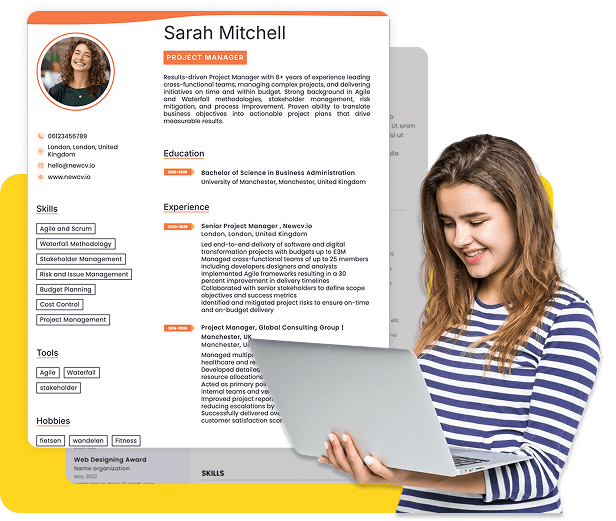
Use ATS-optimised Resume and resume templates that pass applicant tracking systems. Our Resume builder helps recruiters read, scan, and shortlist your Resume faster.

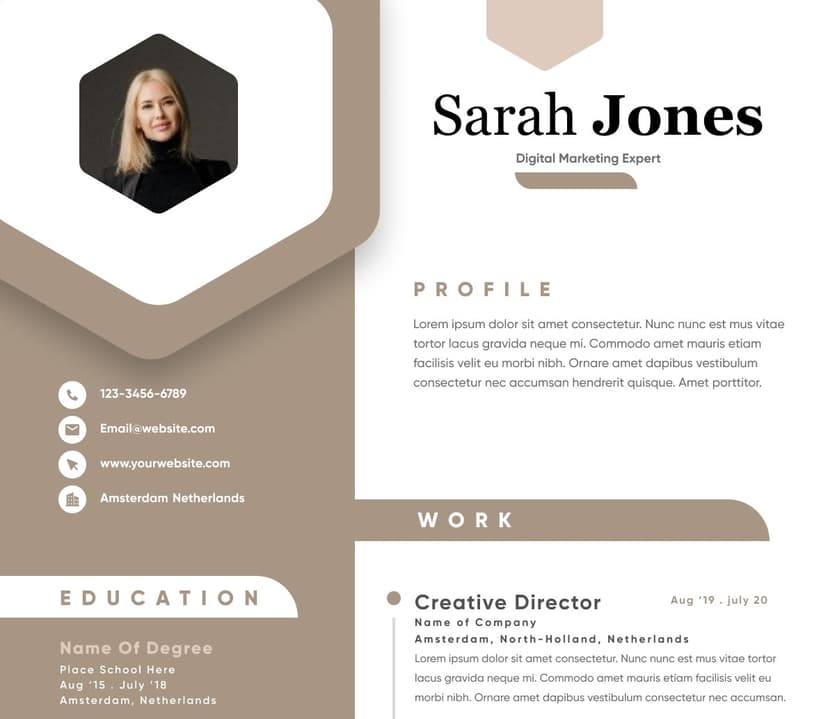
Use professional field-tested resume templates that follow the exact Resume rules employers look for.
Create Resume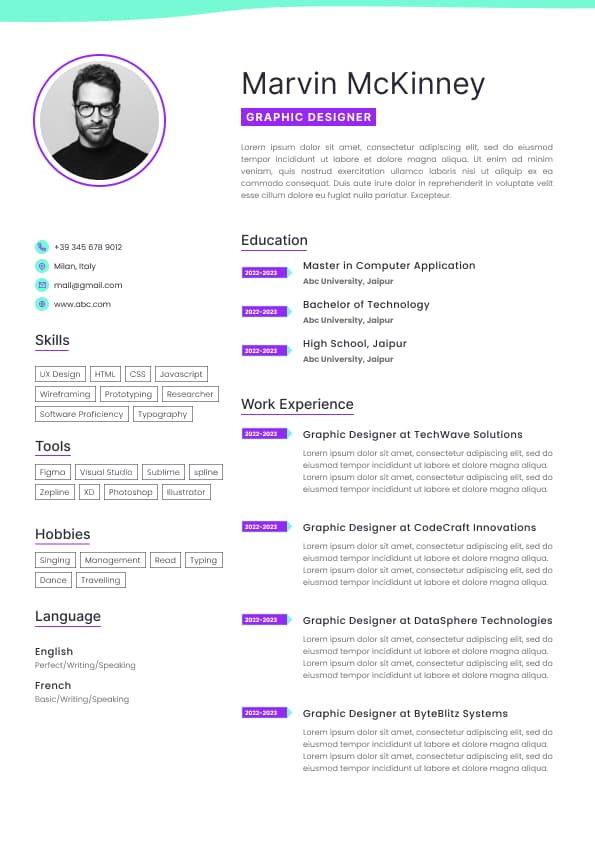
Use professional field-tested resume templates that follow the exact Resume rules employers look for.
Create ResumeAn effective Australian resume is concise, achievement-focused, tailored to the role, and written for both recruiters and ATS software. In most Australian industries, your resume should be 2–4 pages, clearly structured, easy to scan, and focused on outcomes rather than duties. Hiring managers in Australia want evidence that you can solve problems, deliver results, and fit the role quickly.
The biggest mistake candidates make is writing a generic resume packed with responsibilities instead of measurable impact. Australian recruiters typically spend less than 30 seconds on the first scan. If your resume does not immediately show relevance, clarity, and value, it gets overlooked regardless of your experience.
This guide breaks down exactly how to write a resume in Australia using current Australian hiring standards, recruiter screening behaviour, ATS optimisation, and practical strategies that genuinely improve interview outcomes.
Australian recruiters and hiring managers assess resumes differently from many overseas markets. The focus is usually practical capability, relevance, communication clarity, and cultural fit rather than inflated language or excessive personal branding.
During initial screening, recruiters typically look for:
Clear alignment with the advertised role
Relevant industry experience
Achievements and measurable outcomes
Stable employment history or reasonable explanations for movement
Strong communication and formatting
Keywords matching the job ad
Evidence of commercial impact or operational value
In Australia, resume expectations are more conservative and practical than in some other markets. Flashy designs, graphics, skill bars, and over-designed templates often reduce readability and ATS compatibility.
A modern Australian resume usually includes:
Contact details
Professional summary
Core skills
Professional experience
Education
Certifications or licences if relevant
Technical skills if relevant
Optional sections may include:
Appropriate seniority for the position
Australian work rights where relevant
Most recruiters are trying to answer three questions quickly:
Can this person do the job?
Are they likely to perform well in our environment?
Are they worth interviewing ahead of other candidates?
Your resume should make those answers obvious within seconds.
Projects
Professional memberships
Awards
Publications
Volunteer work
Most Australian employers do not expect:
Photos
Date of birth
Marital status
Nationality
Full home address
References written directly on the resume
Resume length depends on career stage.
General expectations:
Graduate or entry-level: 1–2 pages
Mid-level professionals: 2–3 pages
Senior professionals or executives: 3–4 pages
Trying to force 15 years of experience into one page usually weakens the content. Equally, stretching junior experience across four pages creates unnecessary filler.
Australian recruiters generally prefer concise depth over excessive detail.
Keep this section simple and professional.
Include:
Full name
Mobile number
Professional email address
LinkedIn profile if updated
City and state
John1987legend@gmail.com
john.smith@email.com.au
You do not need to include:
Full residential address
Photo
Gender
Visa details unless strategically relevant
Multiple phone numbers
If you are on a temporary visa, mentioning full work rights can sometimes help reduce recruiter uncertainty.
Your professional summary is one of the highest-impact sections on the resume because recruiters read it early during screening.
This section should summarise:
Your experience level
Industry background
Key strengths
Commercial value
Target role alignment
Australian hiring managers generally respond well to straightforward, evidence-based summaries rather than exaggerated personal branding.
Dynamic and highly motivated professional with excellent communication skills and a passion for success.
This says almost nothing.
Project Manager with 8+ years’ experience delivering commercial construction projects across Melbourne valued up to $25M. Strong background in stakeholder management, contractor coordination, budgeting, and WHS compliance. Known for delivering projects on time while reducing cost overruns and improving site efficiency.
The second example immediately communicates:
Industry relevance
Seniority
Scale
Capability
Commercial impact
That is what recruiters want.
One of the biggest resume myths is that one master resume works for every application.
It does not.
Australian recruiters increasingly use ATS software and keyword screening. Tailoring matters significantly.
Tailoring does not mean rewriting your entire career history.
It means adjusting:
Keywords
Professional summary
Key achievements
Skills section
Role emphasis
For example, if a role prioritises:
Stakeholder management
Budget forecasting
SAP
Vendor management
Those terms should appear naturally throughout your resume if genuinely relevant.
This section carries the most weight in most Australian hiring decisions.
Recruiters care less about your job duties and more about your impact.
For each role include:
Job title
Company name
Location
Dates of employment
Short role overview
Achievement-focused bullet points
This is where most resumes fail.
Responsible for managing customer enquiries and resolving complaints.
Resolved an average of 40+ customer enquiries daily while maintaining a 95% customer satisfaction rating and reducing escalation rates by 18%.
The second example demonstrates:
Scale
Performance
Outcomes
Credibility
That is significantly more persuasive.
Strong bullet points typically include:
Action
Context
Outcome
Metric where possible
A useful framework is:
Action + Task + Result
Increased monthly sales revenue by 22% within 9 months through targeted account management strategies
Reduced payroll processing errors by 35% after implementing new reconciliation procedures
Led a team of 12 warehouse staff during peak seasonal operations while maintaining 99.2% dispatch accuracy
Delivered IT infrastructure migration project two weeks ahead of schedule and under budget
These bullets show measurable value.
Weak resumes simply describe job descriptions.
In Australia, most resumes should focus heavily on the last 10–15 years.
Older roles can be summarised unless highly relevant.
Recruiters prioritise:
Recent relevance
Current capability
Career progression
Including outdated or irrelevant experience often dilutes the strength of your resume.
Many Australian employers use Applicant Tracking Systems to filter resumes before human review.
An ATS-friendly resume improves your chances of reaching a recruiter.
Use standard headings
Avoid tables and graphics
Use readable fonts
Match relevant keywords from the job ad
Save as PDF unless Word is requested
Avoid excessive formatting
ATS optimisation alone does not get interviews.
Some candidates obsess over keywords while ignoring content quality.
A resume still needs:
Clear value
Strong achievements
Relevant experience
Credibility
Keyword stuffing without substance usually fails during recruiter review.
The skills section should reinforce your suitability, not become a random keyword dump.
Prioritise role-specific skills.
Stakeholder management
Financial reporting
Contract negotiation
WHS compliance
Microsoft Excel
SAP
Team leadership
Process improvement
Avoid vague soft skills unless supported by evidence elsewhere.
Hard-working
Team player
Fast learner
Motivated
These are generic and unconvincing without proof.
Education should usually appear after work experience unless:
You are a graduate
You recently completed a highly relevant qualification
Your qualification is essential for the role
Include:
Qualification name
Institution
Graduation year if recent
For regulated industries, licences and certifications matter heavily.
Examples include:
CPA
White Card
Forklift Licence
AHPRA registration
Cert IV qualifications
AWS certifications
CISSP
Australian employers often screen for mandatory certifications early.
Recruiters can immediately identify generic resumes copied across multiple applications.
These resumes often fail because they:
Lack specificity
Do not align to the role
Feel low effort
Tailored relevance consistently outperforms broad content.
Listing duties without outcomes is one of the biggest problems in Australian resumes.
Hiring managers care about contribution.
Not just activity.
If recruiters cannot scan your resume quickly, it loses effectiveness.
Avoid:
Dense paragraphs
Tiny fonts
Over-designed templates
Excessive colours
Large blocks of text
Clean formatting improves recruiter engagement significantly.
Australian hiring culture generally values credibility and practicality.
Overly inflated language often creates scepticism.
World-class visionary leader driving transformational excellence.
Operations Manager with experience leading national logistics teams across fast-paced distribution environments.
The second sounds credible and grounded.
Large unexplained gaps create recruiter uncertainty.
Short explanations are usually enough.
Examples:
Career break
Parental leave
Study
Contract work
Travel
Trying to hide gaps often creates more concern.
For many Australian jobs, cover letters still matter, especially for:
Government roles
Professional services
Mid-senior positions
Competitive corporate roles
A strong cover letter can:
Explain career changes
Add context
Demonstrate motivation
Reinforce cultural fit
However, weak generic cover letters can hurt applications.
Quality matters more than simply attaching one.
Candidates moving to Australia often make formatting and cultural mistakes based on overseas resume standards.
Australian resumes generally:
Focus more on outcomes
Use clearer direct language
Avoid excessive personal details
Emphasise practical relevance
Prioritise readability
In some overseas markets, longer academic-style CVs are common.
In Australia, concise commercial relevance usually performs better outside academia, research, or medicine.
Most candidates imagine recruiters carefully reading every line.
That rarely happens initially.
The first review is usually a fast relevance scan.
Recruiters often look in this order:
Job titles
Recent employers
Industry alignment
Key achievements
Employment stability
Keywords
Education
If the top third of the first page does not strongly align with the role, many resumes are rejected immediately.
This is why positioning matters so much.
Strong resumes do not just describe experience.
They position relevance.
There is a major difference.
Lists everything they have ever done.
Strategically highlights the experience most aligned to the target role.
Candidate B usually gets more interviews even with similar experience.
Resume writing is not only about documenting history.
It is about influencing hiring decisions through relevance and clarity.
The best Australian resumes consistently do five things well:
They are tailored to the role
They communicate value quickly
They show measurable impact
They are easy to scan
They sound credible and commercially aware
Most unsuccessful resumes fail because they are too generic, too responsibility-focused, or too difficult to assess quickly.
Recruiters are not looking for perfection.
They are looking for clear evidence that you can solve problems in the role they are hiring for.
If your resume makes that obvious fast, interview rates improve dramatically.


 Upload Resume
 Import from Linkedin