
Choose from a wide range of NEWCV resume templates and customize your NEWCV design with a single click.

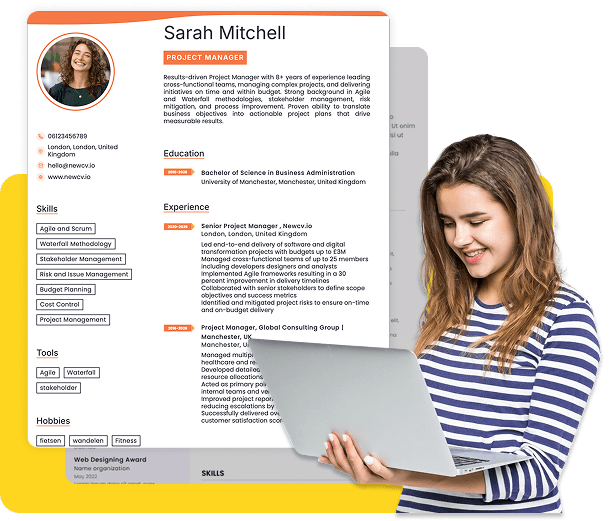
Use ATS-optimised Resume and resume templates that pass applicant tracking systems. Our Resume builder helps recruiters read, scan, and shortlist your Resume faster.
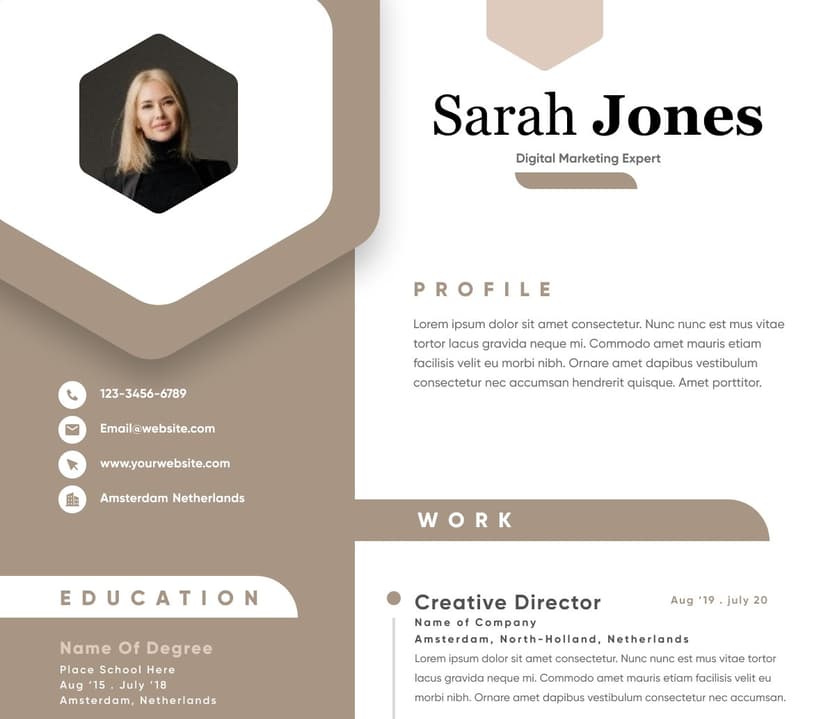
Use professional field-tested resume templates that follow the exact Resume rules employers look for.
Create Resume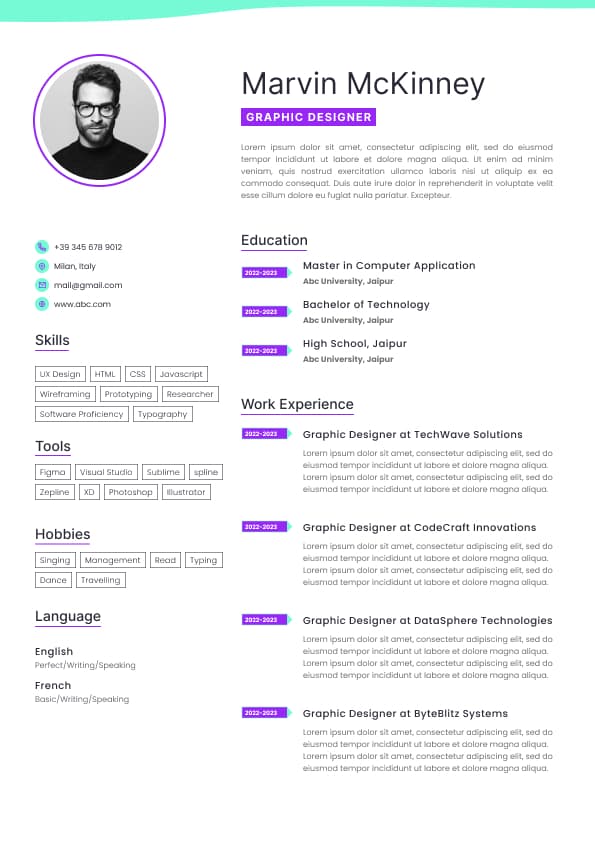
Use professional field-tested resume templates that follow the exact Resume rules employers look for.
Create ResumeYour LinkedIn headline is one of the highest-impact sections of your entire profile in the Australian job market. Recruiters often decide within seconds whether to click your profile based on your headline alone. It influences LinkedIn search rankings, recruiter visibility, profile click-through rates, and first impressions with hiring managers.
Most Australians waste this space by only listing a job title like “Project Manager” or “Marketing Specialist”. That approach rarely differentiates you in competitive hiring markets like Sydney, Melbourne, Brisbane, or Perth.
A strong LinkedIn headline does three things immediately:
Explains what you do
Shows your value or specialisation
Aligns with the keywords recruiters actually search
The best LinkedIn headlines are clear, specific, commercially relevant, and strategically positioned for your target opportunities. This guide breaks down exactly how Australian recruiters evaluate LinkedIn headlines, what works in 2026, and headline examples that genuinely improve profile visibility and interview opportunities.
A LinkedIn headline is the short line of text displayed directly under your name on LinkedIn.
It appears:
In LinkedIn search results
On recruiter search screens
In connection requests
In comments and posts
On mobile previews
In hiring manager profile reviews
In practical terms, your headline functions like a mini personal brand statement combined with an SEO keyword field.
For Australian recruiters using LinkedIn Recruiter, headlines heavily influence:
Search relevance
Most candidates assume recruiters want “creative” headlines.
That is rarely true.
Australian recruiters typically prioritise:
Clarity
Relevance
Searchable keywords
Commercial alignment
Seniority indicators
Industry specialisation
A recruiter searching LinkedIn is usually trying to solve a hiring problem quickly.
If your headline immediately communicates relevance, you are significantly more likely to receive profile clicks.
Profile click decisions
Perceived seniority
Industry alignment
Candidate positioning
A weak headline reduces visibility.
A strong headline increases:
Recruiter searches
Inbound messages
Profile views
Interview opportunities
Industry credibility
A strong Australian LinkedIn headline usually includes:
Current or target role
Industry or niche expertise
Core strengths or specialties
Commercial outcomes where relevant
Relevant keywords recruiters search
Senior Financial Analyst | Commercial FP&A | Power BI | ASX-Listed Environment Experience
Why it works:
Clear role positioning
Strong searchable keywords
Relevant commercial environment
Signals technical capability
Results-Driven Professional Passionate About Success
Why it fails:
Generic corporate language
No searchable keywords
No role clarity
No industry relevance
Sounds AI-generated and low credibility
The most effective formula in the Australian market is:
Job Title + Specialisation + Key Strength/Outcome + Industry or Tool
This structure works because it aligns with how recruiters search LinkedIn Recruiter databases.
[Role] | [Specialisation] | [Commercial Value or Expertise]
HR Business Partner | Employee Relations & Workforce Strategy | Mining & Infrastructure
[Role] Helping [Audience/Business Type] Achieve [Outcome]
Digital Marketing Manager Helping eCommerce Brands Scale Paid Media Performance
This works especially well for:
Consultants
Freelancers
Agency professionals
Business development professionals
Client-facing roles
Financial Controller | Commercial Finance | Budgeting, Forecasting & Stakeholder Management
Senior Accountant | BAS, Tax & Compliance | SME & Mid-Market Clients
FP&A Analyst | Data-Driven Financial Planning | Power BI & SAP Experience
HR Manager | Employee Relations, Talent & Workforce Planning | Multi-Site Operations
Talent Acquisition Specialist | Technology & Digital Recruitment | Employer Branding
HR Business Partner | Industrial Relations & Change Management | Healthcare Sector
Employment Lawyer | Workplace Relations & Fair Work Expertise
Commercial Solicitor | Contracts, Risk & Corporate Advisory
Family Lawyer | Parenting & Property Settlements | Client-Focused Legal Support
Software Engineer | Full Stack Development | React, Node.js & AWS
Cyber Security Analyst | Risk, Governance & Threat Detection
Solutions Architect | Cloud Transformation & Enterprise Systems
Data Analyst | Power BI, SQL & Commercial Insights
Business Intelligence Specialist | Dashboard Automation & Reporting
Data Scientist | Predictive Analytics & Machine Learning
Marketing Manager | Brand Strategy, Campaigns & Lead Generation
SEO Specialist | Organic Growth & Technical SEO Strategy
Content Marketing Manager | B2B SaaS & Demand Generation
Business Development Manager | Enterprise SaaS Sales | APAC Markets
Account Executive | Relationship Management & Revenue Growth
Sales Manager | FMCG Distribution & Retail Partnerships
Project Manager | Commercial Construction & Stakeholder Delivery
Site Supervisor | Residential Builds & WHS Compliance
Electrician | Industrial Maintenance & Fault Finding
Supply Chain Manager | Procurement, Logistics & Operational Efficiency
Warehouse Operations Manager | Inventory & Team Leadership
Procurement Specialist | Vendor Management & Cost Reduction
Registered Nurse | Emergency & Acute Care Experience
Occupational Therapist | NDIS & Community Rehabilitation
Clinical Psychologist | Mental Health & Trauma Support
Case Manager | Youth & Family Support Services
Support Coordinator | NDIS Participant Planning & Advocacy
Social Worker | Crisis Intervention & Community Outreach
Graduates often make the mistake of underselling themselves.
A graduate headline should focus on:
Degree alignment
Career direction
Relevant technical skills
Internship or project experience
Graduate Civil Engineer | Infrastructure & Transport Projects | AutoCAD & Site Coordination
Marketing Graduate | Social Media, Content & Campaign Analytics
Junior Data Analyst | SQL, Excel & Power BI | Business Insights
Avoid:
“Seeking opportunities” as the entire headline
Generic motivational phrases
Unclear career direction
Recruiters already know graduates are looking for opportunities.
The headline should instead show employability.
Career changers need positioning clarity more than creativity.
The biggest mistake career changers make is creating confusing headlines that mix unrelated identities.
Teacher | Learning Professional | Aspiring UX Designer | Customer Service Expert
This creates confusion.
Lead with the target direction while supporting it with transferable strengths.
Junior UX Designer | User Research & Wireframing | Former Educator with Stakeholder Engagement Experience
This works because:
The target role is clear
Transferable strengths support credibility
Recruiters understand the transition story quickly
Executives should focus less on tasks and more on strategic impact.
Strong executive headlines often include:
Leadership scope
Commercial responsibility
Transformation capability
Industry authority
Chief Operating Officer | Operational Transformation & National Growth Strategy
General Manager | Retail Operations, P&L Leadership & Workforce Strategy
CFO | Commercial Finance, M&A & Business Transformation
Avoid excessive buzzwords like:
Visionary leader
Dynamic executive
Innovative thinker
Australian hiring culture generally values credibility and substance over self-promotional language.
A headline like:
Accountant
is too weak in modern LinkedIn search competition.
It gives recruiters no additional context.
Project Manager Project Management Agile Scrum PMP Delivery PMO
This looks spammy and reduces professionalism.
LinkedIn SEO matters, but readability matters more.
Phrases like:
Results-driven professional
Team player
Hardworking individual
Passionate leader
rarely improve search visibility or recruiter engagement.
They are overused and commercially meaningless without evidence.
Helping Businesses Succeed
This creates ambiguity.
Recruiters should immediately understand:
What you do
Who you help
Your professional level
Your specialisation
Creative headlines often underperform because recruiters search using conventional keywords.
Digital Storyteller Creating Magic Through Innovation
This may sound interesting but performs poorly in recruiter search filters.
Most candidates underestimate how keyword-driven LinkedIn Recruiter searches are.
Recruiters commonly search by:
Job title
Industry keywords
Software/tools
Certifications
Technical skills
Sector experience
For example, an Australian recruiter hiring for a business analyst role may search:
“Business Analyst”
“Power BI”
“Agile”
“Stakeholder management”
“Financial services”
If your headline contains relevant combinations naturally, your visibility improves significantly.
Use the exact language employers and recruiters use in job ads.
Review:
SEEK job ads
LinkedIn job listings
Australian recruiter postings
Look for repeated terminology.
Your headline is not the place for inspirational branding.
It is a positioning tool.
Strong positioning answers:
What role are you aligned to?
What market value do you offer?
Why should recruiters click?
Your headline should align with the roles you actually want.
If your target role is:
Product Manager
Operations Manager
HR Business Partner
then those terms should usually appear directly.
Terms like:
Senior
Lead
Principal
Head of
Director
should reflect your actual market positioning.
Overinflated titles can create credibility issues during recruiter screening.
Usually, no.
Australian recruiters can already see your Open to Work status if enabled privately.
Adding:
Open to Work
directly into your headline often weakens positioning.
It can unintentionally signal desperation instead of professional confidence.
A stronger approach is improving:
Headline clarity
Keyword relevance
Profile quality
About section positioning
You should update your headline whenever:
You change career direction
You move industries
You gain new specialisations
You target different roles
The market shifts
Your positioning improves
Strong candidates refine LinkedIn positioning continuously rather than treating profiles as static.
Many LinkedIn optimisation articles focus too heavily on algorithms.
But real hiring outcomes involve both:
Search visibility
Human credibility
A headline that ranks well but sounds robotic still fails.
The best-performing headlines feel:
Clear
Commercial
Specific
Credible
Easy to scan
Australian recruiters typically prefer direct communication over exaggerated personal branding.
That means practical, grounded headlines usually outperform flashy marketing language.
Before updating your headline, ask:
Does this clearly explain what I do?
Would an Australian recruiter immediately understand my value?
Does it include searchable industry keywords naturally?
Is my specialisation obvious?
Does it align with the roles I actually want?
Does it sound commercially credible?
Is it specific rather than generic?
Would this make someone click my profile?
If the answer to multiple questions is no, your headline likely needs repositioning.


 Upload Resume
 Import from Linkedin