
Choose from a wide range of NEWCV resume templates and customize your NEWCV design with a single click.

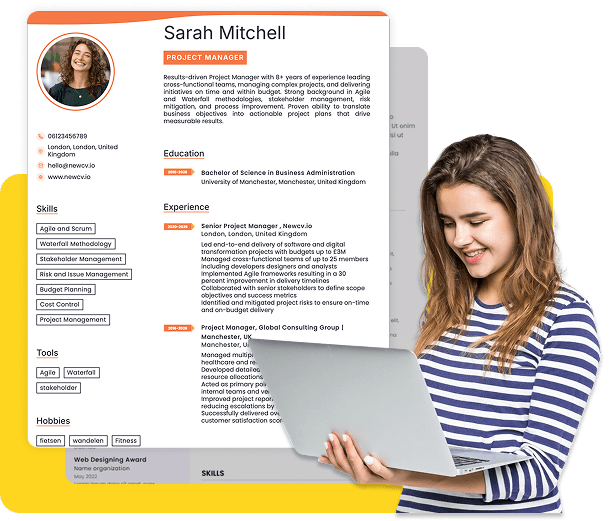
Use ATS-optimised Resume and resume templates that pass applicant tracking systems. Our Resume builder helps recruiters read, scan, and shortlist your Resume faster.
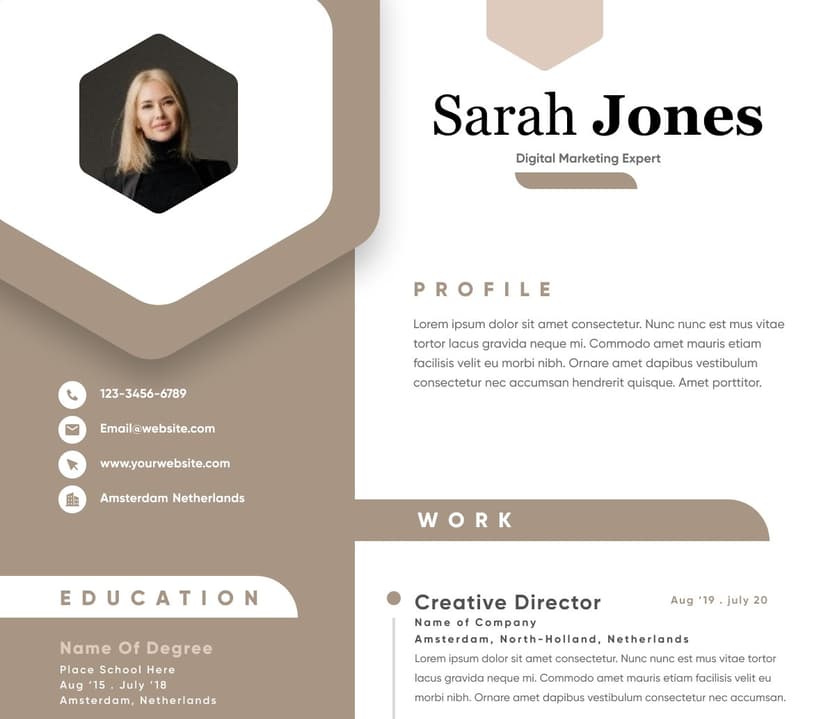
Use professional field-tested resume templates that follow the exact Resume rules employers look for.
Create Resume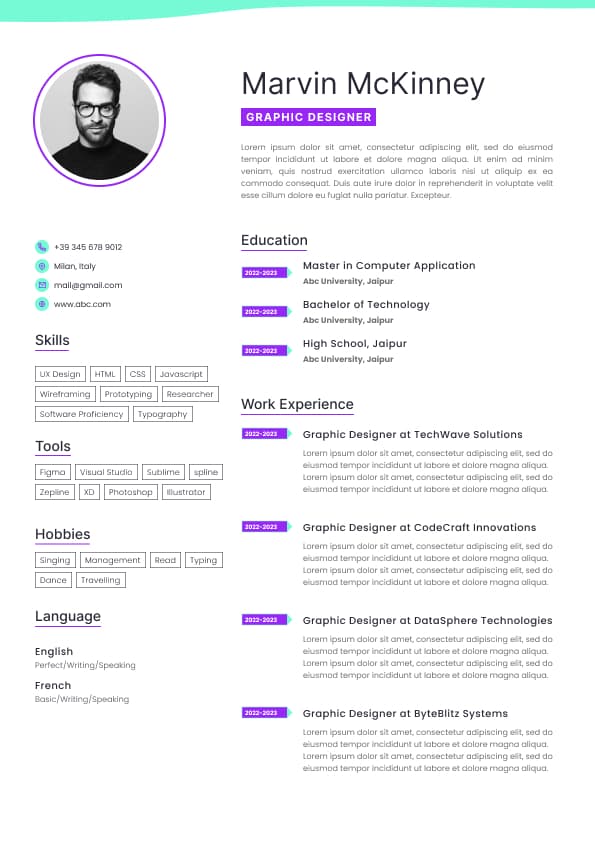
Use professional field-tested resume templates that follow the exact Resume rules employers look for.
Create ResumeYour LinkedIn profile is no longer just an online resume. In the Australian job market, it functions as a searchable recruiter database profile, credibility check, professional brand, and passive job attraction tool all at once.
Most Australian recruiters search LinkedIn before they search job boards. If your profile is weak, incomplete, generic, or keyword-poor, you often get filtered out before you even know a role exists.
The biggest mistake candidates make is treating LinkedIn like a copy-and-paste version of their resume. Strong LinkedIn profiles are strategically written for visibility, positioning, and recruiter psychology.
The best LinkedIn profiles in Australia do four things exceptionally well:
Clearly communicate professional value within seconds
Align with ATS and recruiter keyword searches
Position the candidate for the right salary level and opportunities
Build enough credibility for hiring managers to trust them quickly
This guide breaks down exactly what high-performing LinkedIn profiles look like in Australia, including real profile examples, recruiter insights, and the strategies that actually generate interviews.
Australian recruiters usually review a LinkedIn profile in under 30 seconds initially. During that scan, they are looking for confirmation of five things:
Relevance
Seniority
Stability
Commercial value
Communication ability
Most profiles fail because they are vague.
A recruiter does not want to “figure out” what you do. Your profile must make your positioning immediately obvious.
For example:
Weak Example
“Experienced professional with a passion for business and leadership.”
This says nothing useful.
Good Example
“Project Manager with 8+ years’ experience delivering $15M infrastructure projects across civil construction and utilities sectors in Australia.”
The second example immediately communicates:
Role identity
Experience level
Industry relevance
Commercial scale
Geographic relevance
That is how recruiters scan profiles.
Most LinkedIn profiles are underperforming for predictable reasons.
The headline is one of the most important ranking and click-through factors on LinkedIn.
Yet many candidates use:
“Open to Opportunities”
“Seeking New Challenges”
“Experienced Professional”
These headlines waste valuable keyword space.
Recruiters search by job title, industry terminology, software platforms, certifications, and specialist skills.
A LinkedIn profile should not read like a formal document.
Australian hiring managers prefer concise, commercially aware communication. Profiles that sound overly corporate or robotic often reduce engagement.
Candidates list responsibilities but not impact.
Australian employers increasingly hire based on demonstrated outcomes, not task lists.
Many About sections are:
Too generic
Too personal
Too long
Keyword poor
Focused on personality instead of capability
LinkedIn is effectively a search engine.
If your profile lacks the right keywords, recruiters simply will not find you.
This especially matters in competitive Australian markets like:
Technology
Construction
Healthcare
Finance
Mining
Government
Engineering
Sales
HR
Marketing
Recruiters in Australia commonly search LinkedIn using combinations of:
Job title
Industry
Software platforms
Certifications
Location
Sector terminology
Seniority
Technical skills
For example:
“Financial Accountant CPA Sydney”
“Civil Engineer Roads Brisbane”
“HR Business Partner FMCG Melbourne”
“Business Analyst Agile Salesforce”
If your profile lacks those terms naturally throughout the page, your visibility drops significantly.
This is why keyword placement matters in:
Headline
About section
Job titles
Skills section
Experience descriptions
Your headline should combine:
Job title
Industry or specialisation
Commercial value
Key expertise
“Project Manager | Infrastructure & Civil Projects | PMP Certified | Delivering Large-Scale Construction Outcomes Across Australia”
“HR Business Partner | Employee Relations, Workforce Planning & Talent Strategy | FMCG & Retail Experience”
“Software Engineer | Python, AWS & Cloud Solutions | Building Scalable SaaS Platforms”
“Marketing Manager | Digital Strategy, Paid Media & Brand Growth | B2B & E-commerce”
The strongest headlines are specific without becoming keyword spam.
The About section is where recruiters decide whether you sound credible, commercially aware, and aligned to the role level you are targeting.
A strong About section should:
Explain your professional identity clearly
Highlight commercial strengths
Include industry keywords naturally
Demonstrate credibility
Show career direction
“I’m a Customer Success Manager with 6 years’ experience supporting SaaS clients across Australia and New Zealand. My background includes client onboarding, retention strategy, stakeholder engagement, and cross-functional project delivery.
I’ve worked closely with enterprise and SME clients to improve adoption, reduce churn, and strengthen long-term customer relationships.
My strengths include relationship management, operational problem-solving, and translating technical information into practical business outcomes.
Key areas of expertise include:
Customer onboarding
SaaS account management
Client retention strategies
CRM platforms including Salesforce and HubSpot
Stakeholder engagement
Process improvement”
Why this works:
Clear positioning
Commercial language
Strong keyword relevance
Easy to scan
Balanced professionalism and personality
Your experience section should not simply repeat your resume.
LinkedIn works better when experience descriptions are achievement-focused, keyword-rich, and easier to scan quickly.
“Responsible for managing client relationships and sales activities.”
Managed a portfolio of 120+ SME clients across Queensland and NSW
Increased client retention by 18% within 12 months
Consistently exceeded quarterly revenue targets by 15%+
Delivered onboarding and account management support across multiple SaaS platforms
This version demonstrates:
Scale
Outcomes
Metrics
Commercial impact
That is what recruiters and hiring managers notice.
The highest-performing LinkedIn profiles in Australia typically follow this structure:
Use:
Neutral background
Good lighting
Professional attire suitable for your industry
Clear facial visibility
Avoid:
Casual holiday photos
Heavy filters
Group photos
Poor-quality images
Most candidates ignore banners.
A professional banner can reinforce:
Industry positioning
Specialisation
Personal brand credibility
Your headline should immediately explain:
What you do
Your specialisation
Your value proposition
Focus on:
Professional identity
Career strengths
Commercial achievements
Industry expertise
Prioritise:
Achievements
Scale
Business outcomes
Metrics where possible
The skills section strongly affects recruiter search visibility.
Prioritise skills directly aligned with your target roles.
Many Australian candidates underestimate keyword strategy.
Recruiters often use LinkedIn Recruiter filters aggressively. If your profile lacks matching terminology, visibility drops.
Include:
Job titles
Industry keywords
Technical platforms
Certifications
Software tools
Methodologies
For HR professionals:
Employee Relations
Fair Work
Workforce Planning
Talent Acquisition
HRIS
Performance Management
For IT professionals:
AWS
Azure
DevOps
Agile
Python
Cybersecurity
For project managers:
Stakeholder Management
Risk Management
PMO
Agile Delivery
CAPEX Projects
Construction Delivery
Senior candidates in Australia position themselves differently from junior professionals.
Executives and senior managers focus less on tasks and more on:
Leadership scope
Commercial outcomes
Strategic influence
Team management
Revenue impact
Operational transformation
“Assisted with project coordination activities.”
“Led cross-functional project delivery teams across multiple infrastructure programs valued at $40M+.”
The second example signals authority instantly.
“Marketing Manager | Digital Campaigns, Brand Growth & Paid Media Strategy | B2B & Consumer Markets”
“I’m a Marketing Manager with 9 years’ experience delivering integrated campaigns across retail, e-commerce, and B2B sectors in Australia.
My background includes digital strategy, paid advertising, campaign optimisation, stakeholder engagement, and brand positioning.
I’ve led multi-channel campaigns across Google Ads, Meta, LinkedIn, EDM, SEO, and content marketing, with a strong focus on measurable commercial growth.
Recent achievements include:
Increasing online lead generation by 42%
Reducing paid acquisition costs by 28%
Managing marketing budgets exceeding $1.2M annually
Leading cross-functional campaign delivery teams”
Why this works:
Commercially focused
Strong metrics
Keyword-rich
Easy to scan
Demonstrates strategic capability
Many candidates think LinkedIn is only for recruiters.
In reality, Australian hiring managers regularly check LinkedIn to assess:
Professional credibility
Communication style
Career progression
Industry alignment
Personal brand consistency
A weak profile can create doubt even when the resume is strong.
Common red flags include:
Employment inconsistencies
No achievements listed
Extremely outdated profiles
No professional activity
Generic summaries
Overly inflated language
No.
Your LinkedIn profile and resume should align strategically, but they should not be identical.
Your resume is tailored for a specific application.
Your LinkedIn profile is broader and designed for discoverability.
Your LinkedIn profile should:
Support multiple recruiter search pathways
Reflect your broader career positioning
Build credibility and visibility
Reinforce expertise consistently
Australian recruiters often prioritise recently active candidates.
Update your profile when:
You change roles
You complete certifications
You finish major projects
You gain promotions
Your responsibilities expand
You shift career direction
Regular updates can improve visibility in LinkedIn algorithms.
Many of the strongest candidates in Australia are passive candidates.
They are not actively applying but still receive recruiter outreach.
These profiles typically have:
Clear positioning
Strong keywords
Commercial achievements
Industry credibility
Consistent optimisation
Passive candidate attraction is often more effective than mass-applying for jobs.
Visibility matters before branding.
If recruiters cannot find your profile, the rest becomes irrelevant.
Australian employers hire for business impact.
Metrics, outcomes, and commercial contribution matter significantly.
Avoid phrases like:
“Hard-working professional”
“Team player”
“Results-driven individual”
These phrases are heavily overused and add little value.
Speak the language recruiters search for.
Keyword stuffing weakens credibility.
The best profiles balance:
Search optimisation
Readability
Professional authority
After reviewing thousands of Australian LinkedIn profiles across multiple industries, the strongest profiles consistently share these characteristics:
Clear professional positioning
Strong keyword alignment
Commercially focused achievements
Easy-to-scan formatting
Consistent career narrative
Relevant technical terminology
Evidence of progression and impact
Most importantly, they make decision-making easier for recruiters.
A recruiter should immediately understand:
What you do
What level you operate at
What industries you fit
Why you are commercially valuable
That clarity is what drives recruiter engagement.


 Upload Resume
 Import from Linkedin