
Choose from a wide range of NEWCV resume templates and customize your NEWCV design with a single click.

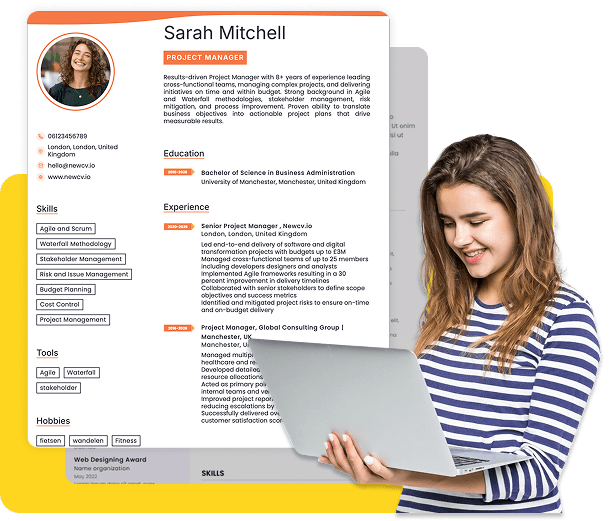
Use ATS-optimised Resume and resume templates that pass applicant tracking systems. Our Resume builder helps recruiters read, scan, and shortlist your Resume faster.
Use professional field-tested resume templates that follow the exact Resume rules employers look for.
Create Resume
Use professional field-tested resume templates that follow the exact Resume rules employers look for.
Create ResumeYour LinkedIn summary is one of the highest-impact sections of your profile in the Australian job market. Recruiters use it to quickly assess positioning, credibility, communication style, and career direction before deciding whether to shortlist, message, or ignore you.
Most LinkedIn summaries fail because they are too generic, too corporate, or too focused on responsibilities instead of value. Australian recruiters and hiring managers want clarity, relevance, and evidence of impact. They are scanning for commercial value, technical credibility, leadership indicators, industry alignment, and communication skills within seconds.
A strong LinkedIn summary should immediately answer:
What you do
What you specialise in
What outcomes you create
What industries or environments you work best in
What makes you different from similar candidates
The best LinkedIn summaries in Australia sound confident, practical, commercially aware, and human. They avoid buzzwords and focus on real-world outcomes recruiters actually evaluate during screening.
Recruiters rarely read LinkedIn summaries word for word on the first pass. Most scan profiles rapidly while comparing multiple candidates. Your summary must therefore communicate value quickly and clearly.
In the Australian market, recruiters typically assess:
Career positioning
Industry relevance
Seniority level
Communication quality
Commercial impact
Leadership capability
Technical depth
Cultural fit indicators
Career consistency
Clarity of future direction
A weak summary creates uncertainty. A strong summary reduces recruiter risk.
Australian hiring managers generally prefer communication that is:
Clear and direct
Professional without sounding overly formal
Confident without exaggeration
Achievement-focused
Commercially realistic
Easy to scan quickly
Overly polished corporate language often performs poorly because it feels generic and disconnected from actual work outcomes.
These are common LinkedIn summary mistakes Australian recruiters see daily:
“Results-driven professional with a proven track record”
Overuse of buzzwords like synergy, dynamic, passionate, innovative
Long blocks of text with no structure
Generic claims with no evidence
Writing that sounds copied from ChatGPT or templates
Listing responsibilities instead of achievements
Trying to sound senior rather than demonstrating expertise
Including unrelated career history that weakens positioning
The highest-performing LinkedIn summaries usually follow this structure:
Immediately establish who you are professionally.
Good Example
“Project Manager with 8+ years’ experience delivering large-scale infrastructure and civil projects across Queensland and New South Wales.”
This works because it is:
Specific
Seniority-aligned
Industry-relevant
Easy to understand instantly
Explain what you actually deliver.
Focus on:
Outcomes
Specialisations
Industry context
Business impact
Include:
Industries
Technical skills
Leadership scope
Revenue impact
Stakeholder complexity
Certifications if highly relevant
This helps recruiters understand:
Where you fit
What roles suit you
What environments align best
This works well in Australia when done naturally.
Examples:
Mentoring graduates
Building inclusive teams
Interest in digital transformation
Supporting operational improvement
Avoid forced personality statements.
“Operations Manager with 10+ years’ experience leading high-performing teams across logistics, warehousing, and supply chain operations within fast-paced Australian distribution environments.
I specialise in improving operational efficiency, reducing delivery bottlenecks, and building scalable processes that support growth without compromising service quality. Across previous roles, I’ve led warehouse restructures, implemented inventory optimisation initiatives, and improved DIFOT performance while managing large frontline teams.
My background includes transport coordination, workforce planning, continuous improvement, WHS compliance, and stakeholder management across national supply chain operations.
I’m known for being commercially practical, calm under pressure, and highly focused on team accountability and operational outcomes.
Currently interested in leadership opportunities across supply chain, operations, and distribution environments where continuous improvement and people leadership are highly valued.”
“HR Business Partner with experience supporting fast-growth and enterprise organisations across Australia within technology, healthcare, and professional services sectors.
My focus is helping businesses scale effectively through strong people strategy, workforce planning, employee relations, and leadership support. I’ve partnered closely with senior stakeholders on organisational change, performance management, talent acquisition strategy, and employee engagement initiatives.
I work best in commercially driven environments where HR is expected to contribute strategically rather than operate purely as an administrative function.
Known for building strong stakeholder relationships, balancing commercial outcomes with people priorities, and navigating complex workplace matters with professionalism and pragmatism.”
Graduate summaries should not try to sound highly experienced. Recruiters see through this immediately.
The goal is positioning, direction, and potential.
“Recent Commerce graduate with a strong interest in business analytics, operations, and commercial decision-making.
During university, I completed projects focused on data analysis, market research, and operational strategy while also working part-time in customer-facing roles that strengthened my communication and problem-solving skills.
I’m particularly interested in graduate opportunities where I can combine analytical thinking with practical business outcomes and continue developing within collaborative team environments.
Known for being reliable, adaptable, and quick to learn, with a genuine interest in understanding how businesses improve performance through data and process improvement.”
Career change summaries must reduce recruiter uncertainty.
The biggest mistake career changers make is ignoring the transition completely.
“After 7 years in retail leadership managing large teams and high-volume operations, I transitioned into recruitment with a focus on customer engagement, stakeholder management, and talent acquisition.
My background in frontline leadership gave me strong commercial awareness, communication skills, and the ability to build trust quickly with both clients and candidates.
Since moving into recruitment, I’ve specialised in high-volume hiring, candidate relationship management, and end-to-end recruitment coordination within fast-paced environments.
I’m particularly interested in agency and internal recruitment opportunities where relationship-building and operational efficiency are equally valued.”
Executive-level summaries require a completely different approach.
At senior levels, recruiters look for:
Scale
Strategic impact
Leadership capability
Transformation experience
Commercial influence
“Senior commercial leader with extensive experience driving operational growth, business transformation, and strategic expansion across Australian and APAC markets.
Over the past 15 years, I’ve led multi-disciplinary teams across operations, sales, and commercial strategy within complex national organisations undergoing rapid growth and transformation.
My experience includes leading large-scale operational restructures, improving profitability through process optimisation, and building leadership capability across geographically dispersed teams.
I’m particularly passionate about building commercially strong cultures that combine operational accountability with long-term people development.”
Technical professionals often make one of two mistakes:
Too technical
Too vague
Strong summaries balance technical credibility with business relevance.
“Software Engineer specialising in backend development, cloud infrastructure, and scalable application architecture within high-growth technology environments.
Experienced across Python, Java, AWS, APIs, and microservices architecture, with a strong focus on building reliable systems that improve performance, scalability, and user experience.
I enjoy working closely with cross-functional teams to solve complex technical problems while keeping commercial outcomes and end-user needs front of mind.
Particularly interested in engineering environments that value clean architecture, continuous improvement, and collaborative problem-solving.”
In Australia, the strongest LinkedIn summaries are usually:
150 to 350 words for most professionals
Slightly shorter for graduates
Slightly longer for executives
Too short creates weak positioning.
Too long reduces readability and recruiter engagement.
The ideal summary feels:
Clear
Focused
Relevant
Easy to skim
LinkedIn search visibility matters heavily in recruitment.
Recruiters search using:
Job titles
Skills
Industries
Systems
Certifications
Specialisations
Your summary should naturally include relevant search terms without keyword stuffing.
Depending on your field, include:
Job titles
Industry terms
Technical tools
Methodologies
Compliance frameworks
Leadership scope
Software platforms
Market sectors
Weak Example
“Experienced professional with strong communication skills.”
This ranks poorly because it lacks searchable specificity.
Good Example
“Procurement Specialist with experience across contract negotiation, supplier management, SAP, and strategic sourcing within mining and infrastructure sectors.”
This improves:
Search visibility
Recruiter relevance
Positioning clarity
Yes. In Australia, first-person writing generally feels more natural and authentic on LinkedIn.
Using “I” strategically often performs better than overly formal third-person summaries.
“I specialise in commercial recruitment across technology and digital transformation environments.”
“Simar is a dynamic recruitment professional with extensive experience.”
Third-person writing often feels:
Overly corporate
Less authentic
Outdated
Less conversational
Your LinkedIn summary should not repeat resume bullet points.
Your resume explains career history.
Your LinkedIn summary explains professional identity and positioning.
Generic profiles perform poorly.
Strong profiles position clearly for:
Specific industries
Specific functions
Specific seniority levels
Recruiters trust outcomes more than adjectives.
“Highly motivated leader with excellent interpersonal skills.”
“Led a national customer service team of 45 staff across multi-site operations while improving customer satisfaction and reducing escalations.”
The second example demonstrates capability instead of claiming it.
Australian recruiters are increasingly spotting AI-generated profiles.
Common signs include:
Generic phrasing
Buzzword overload
Repetitive sentence structures
Overly polished language
No genuine specificity
The best summaries sound:
Human
Practical
Professionally confident
Grounded in real experience
Most candidates misunderstand how LinkedIn profiles are evaluated.
Recruiters often use summaries to decide:
Whether to keep reading
Whether the candidate fits the role directionally
Whether experience aligns commercially
Whether communication quality is strong
Whether the candidate understands their own value proposition
Your summary influences perception before your experience section is fully reviewed.
That makes positioning critically important.
If you want a practical framework, use this structure:
Who are you professionally?
What are you known for?
What outcomes do you create?
Where does your experience apply?
What opportunities align best?
This structure works because it mirrors how recruiters mentally assess candidates during screening.
Only if they support your positioning.
“Interested in opportunities within renewable energy infrastructure projects.”
“Looking for a challenging role where I can grow and develop.”
The second statement is too generic to add value.
Recruiters care more about:
Revenue impact
Team leadership
Operational improvements
Project delivery
Technical capability
Business outcomes
Not task lists.
If your summary and resume position you differently, recruiters notice immediately.
Consistency matters.
Industry terminology improves:
Searchability
Credibility
Recruiter confidence
But avoid overloading jargon.
Dense walls of text reduce readability.
Use:
Short paragraphs
Logical flow
Easy scanning structure


 Upload Resume
 Import from Linkedin