
Choose from a wide range of NEWCV resume templates and customize your NEWCV design with a single click.

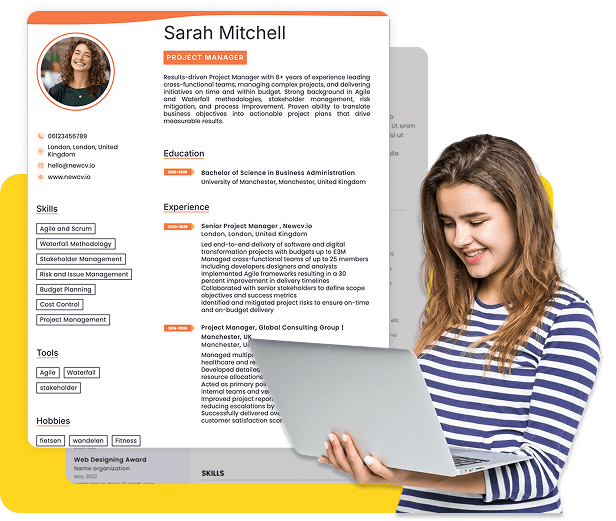
Use ATS-optimised Resume and resume templates that pass applicant tracking systems. Our Resume builder helps recruiters read, scan, and shortlist your Resume faster.

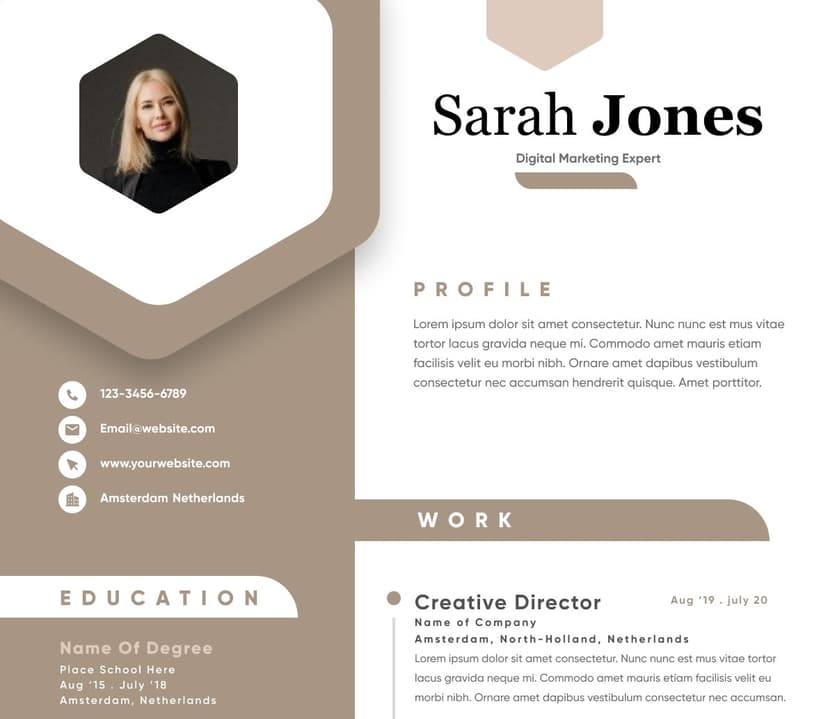
Use professional field-tested resume templates that follow the exact Resume rules employers look for.
Create Resume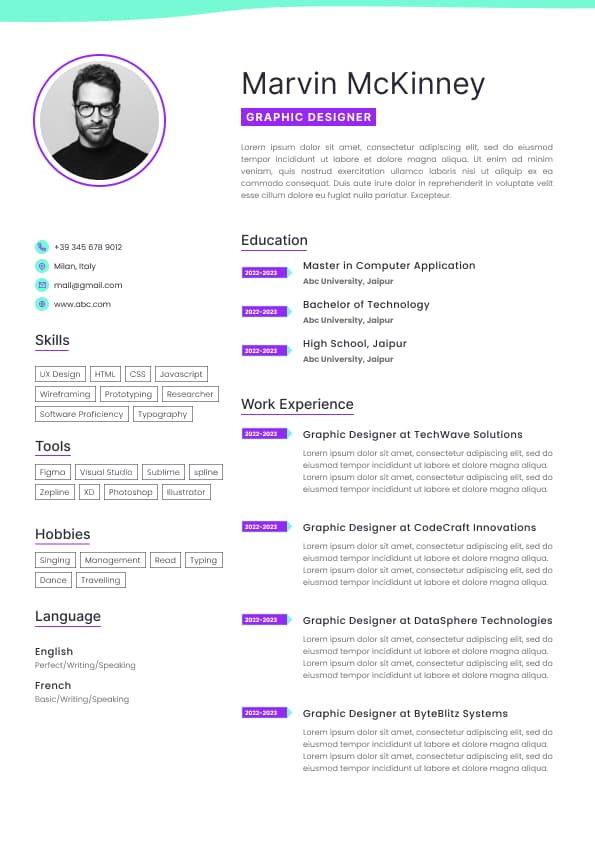
Use professional field-tested resume templates that follow the exact Resume rules employers look for.
Create ResumeA modern Australian resume is not about graphics or fancy layouts. It is about clarity, relevance, and positioning. The strongest templates are designed around how recruiters actually screen candidates: fast scanning, ATS parsing, and evidence-based shortlisting.
If your resume template hides achievements, breaks ATS systems, uses cluttered formatting, or reads like a job description rather than a career story, it will underperform regardless of your experience level. The goal is not to “look creative”. The goal is to make hiring managers instantly understand your value and suitability for the role.
Modern Australian resumes follow a very different logic from outdated templates still circulating online.
Recruiters and hiring managers are assessing three things immediately:
Relevance to the role
Career credibility
Commercial or operational impact
Your template either helps communicate those quickly or creates friction.
A strong modern resume template in Australia should:
Be ATS-compatible
Use a clean single-column layout
Prioritise readability over design
The highest-performing Australian resume templates generally follow this structure:
Include:
Full name
Mobile number
Professional email address
LinkedIn profile
Location (city and state only)
Do not include:
Date of birth
Marital status
Highlight measurable achievements
Use concise Australian workplace language
Make career progression easy to understand
Support fast recruiter scanning
Avoid visual clutter and graphics
Present information in logical hiring order
Modern templates are built around recruiter workflow, not aesthetics.
Photo
Full street address
Nationality unless specifically relevant
Australian employers rarely expect personal details beyond basic contact information.
This is one of the most important sections in a modern Australian resume.
Your summary should position you commercially and strategically within seconds.
A good summary communicates:
Years of experience
Industry expertise
Core strengths
Leadership or technical capability
Key commercial achievements
Career positioning relevant to the target role
“Hardworking and motivated professional seeking new opportunities.”
This says nothing meaningful to a recruiter.
“Project Manager with 9+ years’ experience delivering infrastructure and commercial construction projects across NSW and Victoria. Proven track record managing $20M+ builds, leading multidisciplinary teams, and improving delivery timelines while maintaining compliance and budget control.”
The second example immediately establishes credibility and relevance.
Modern Australian resumes benefit from a tightly focused skills section near the top.
This helps with:
ATS keyword matching
Recruiter scanning
Positioning for shortlist relevance
Avoid generic filler skills like:
Team player
Hard worker
Fast learner
Good communicator
Instead, use role-relevant professional competencies.
Stakeholder Management
Contract Negotiation
Financial Reporting
WHS Compliance
Workforce Planning
Business Development
Agile Delivery
CRM Management
Change Management
Procurement Strategy
The strongest resumes align these skills directly with the target job advertisement.
This is where most resumes fail.
Australian recruiters are not impressed by long responsibility lists copied from position descriptions.
They want evidence of impact.
Your experience section should answer:
What level were you operating at?
What outcomes did you achieve?
How did you improve results?
What problems did you solve?
What commercial value did you add?
High-performing bullet points typically follow this structure:
Action + Context + Outcome
“Responsible for customer service and administration duties.”
“Managed high-volume customer enquiries across phone and email channels, improving response times by 32% while maintaining a 95% customer satisfaction rating.”
The second example demonstrates value, metrics, and business impact.
Many resume articles miss how shortlisting genuinely works.
In Australian hiring environments, recruiters often assess resumes in this order:
Usually 5–10 seconds.
They check:
Job title relevance
Industry alignment
Career stability
Seniority level
Location
Recent experience
Resume readability
If these elements are unclear, many resumes are rejected before deeper review.
If your resume passes the scan phase, recruiters look deeper at:
Measurable achievements
Complexity of work
Leadership scope
Commercial outcomes
Technical capability
Team size
Stakeholder exposure
Industry credibility
Modern resume templates must support both screening phases.
Many templates look modern visually but perform poorly in real hiring situations.
Heavy graphics, icons, sidebars, tables, and multi-column layouts often break ATS parsing.
They may look impressive but reduce readability and keyword extraction accuracy.
Vague introductions destroy positioning.
Recruiters want specificity, not personality traits.
Large text blocks reduce scanability.
Modern resumes prioritise concise, structured information.
Hiring managers care about outcomes more than tasks.
Anyone can claim duties. Achievements create differentiation.
Australian hiring expectations differ from the US, Europe, and parts of Asia.
Common issues include:
Excessively long resumes
Personal details
Photos
Overly formal language
Academic formatting styles
Resume length depends on seniority.
1–2 pages is ideal.
2–3 pages is standard.
3–4 pages may be acceptable if highly relevant and achievement-focused.
The real issue is not length itself.
It is whether the content justifies recruiter attention.
A concise, high-impact 3-page resume often outperforms a weak 1-page resume.
Modern Australian resume templates should prioritise readability.
Calibri
Arial
Aptos
Helvetica
Open Sans
Font size between 10 and 12
Consistent spacing
Clear section headings
Black text on white background
Minimal colour usage
Wide enough margins for readability
Logical content hierarchy
Avoid:
Script fonts
Excessive colours
Infographics
Text boxes
Complex tables
Most medium and large Australian employers now use Applicant Tracking Systems.
Your resume must be machine-readable.
Use standard headings
Avoid graphics and icons
Use searchable text
Match keywords naturally
Keep formatting simple
Submit as PDF unless instructed otherwise
Tailor keywords to the job ad
One of the biggest misconceptions is that ATS systems reward keyword repetition.
Modern ATS platforms are increasingly semantic.
Recruiters also manually review shortlisted resumes.
Keyword stuffing creates obvious low-quality applications.
“Project management project manager stakeholder management leadership project coordination.”
This looks manipulative and unreadable.
“Led cross-functional project delivery across infrastructure and commercial environments, managing stakeholder engagement, budget performance, and delivery timelines.”
Natural language performs better for both ATS and human readers.
The most effective layout for Australian hiring markets is usually:
This format works best because it:
Supports ATS compatibility
Makes career progression obvious
Helps recruiters scan quickly
Prioritises recent experience
Reduces visual confusion
Functional resumes rarely perform well in Australia unless there is a highly specific career-change scenario.
Minimal colour can work well if used strategically.
Good uses include:
Section dividers
Heading accents
Subtle visual hierarchy
Bad uses include:
Bright colours
Heavy design elements
Decorative graphics
Coloured backgrounds
Recruiters prioritise clarity over creativity in most industries.
Different Australian industries have different expectations.
Preferred style:
Minimalist
Clean formatting
Strong commercial achievements
Professional tone
Industries include:
Finance
Consulting
HR
Legal
Operations
Sales
Employers often prioritise:
Project scope
Safety exposure
Technical systems
Compliance
Team leadership
Operational outcomes
Templates should remain practical and highly achievement-focused.
Government resumes in Australia often require:
More detailed achievement evidence
Capability alignment
Clear stakeholder examples
Structured formatting
Selection criteria alignment
This differs slightly from private-sector resumes.
Creative candidates can incorporate slightly more design flexibility, but readability and ATS compatibility still matter.
The strongest creative resumes balance:
Personal branding
Portfolio integration
Clear career narrative
Practical readability
Below is a recruiter-approved modern resume structure commonly used in Australia.
Name
Mobile
Location
3–5 lines focused on positioning, expertise, and achievements.
8–12 highly relevant professional competencies.
For each role include:
Job title
Employer name
Location
Employment dates
Brief role overview
Achievement-focused bullet points
Include:
Qualification
Institution
Completion year
Only include relevant certifications.
Useful for:
IT
Engineering
Data
Digital
Technical operations roles
Many free resume templates are built for aesthetics, not hiring outcomes.
Common problems include:
ATS incompatibility
Poor information hierarchy
Overdesigned visuals
Weak achievement positioning
Generic summaries
Excessive whitespace
Difficult scanning structure
Modern resumes succeed because they align with recruiter behaviour.
That is the real benchmark.
Hiring managers generally ask themselves:
Can this person solve our problems?
Have they done similar work before?
Are they operating at the required level?
Can they add value quickly?
Do their achievements feel credible?
Would they fit our environment?
Your resume template should make these answers obvious fast.
Even the best template fails if it is not tailored properly.
Tailoring does not mean rewriting your entire resume every time.
It means strategically adjusting:
Professional summary
Core skills
Keywords
Achievement emphasis
Industry terminology
Relevant projects or outcomes
The best candidates position themselves for the exact role being advertised.
A major hiring misconception is that “modern” means visually complex.
In reality:
High-performing resumes are usually simple.
Recruiters are not hiring graphic designers for most corporate, technical, operational, or leadership roles.
They are assessing capability.
A clean, strategically written resume with strong achievements will almost always outperform an overdesigned template.
The best modern resume template is not the fanciest one.
It is the one that:
Makes recruiters understand your value immediately
Supports ATS readability
Highlights measurable achievements
Positions you clearly against competitors
Aligns with Australian hiring expectations
Removes friction during screening
Your resume should feel commercially credible, easy to scan, and strategically written.
That is what modern hiring actually rewards.


 Upload Resume
 Import from Linkedin