
Choose from a wide range of NEWCV resume templates and customize your NEWCV design with a single click.

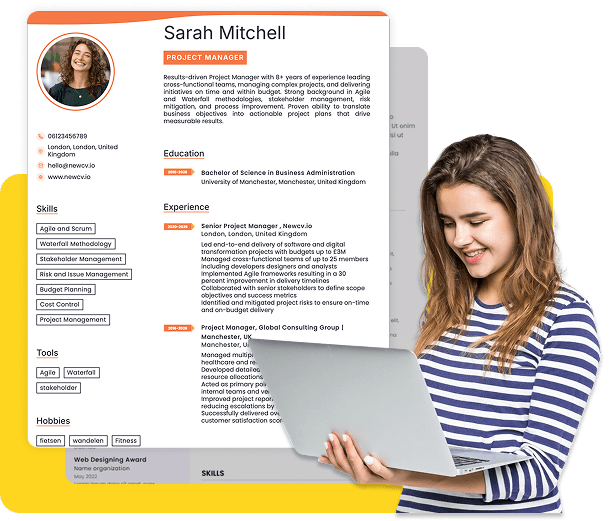
Use ATS-optimised Resume and resume templates that pass applicant tracking systems. Our Resume builder helps recruiters read, scan, and shortlist your Resume faster.

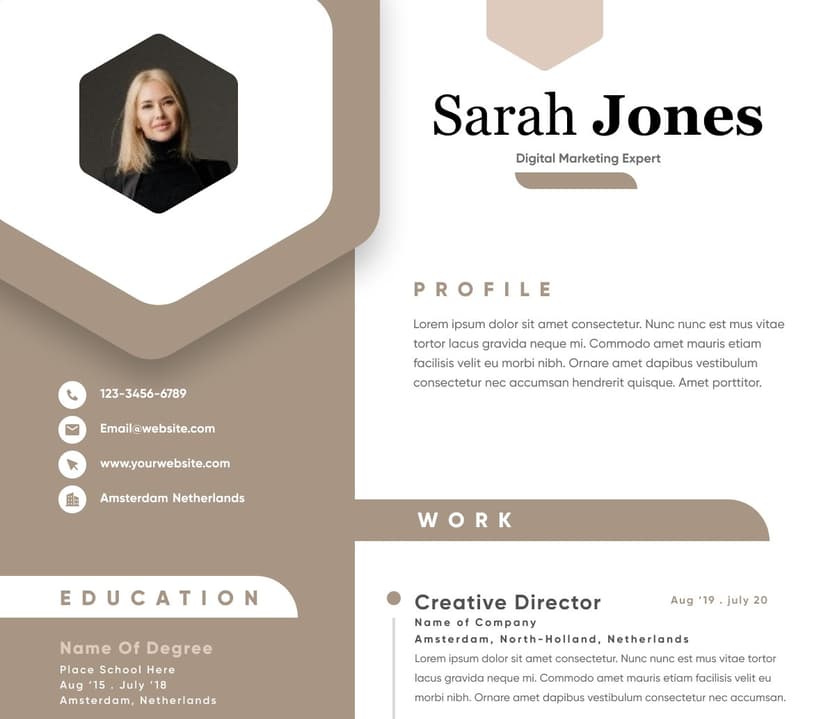
Use professional field-tested resume templates that follow the exact Resume rules employers look for.
Create Resume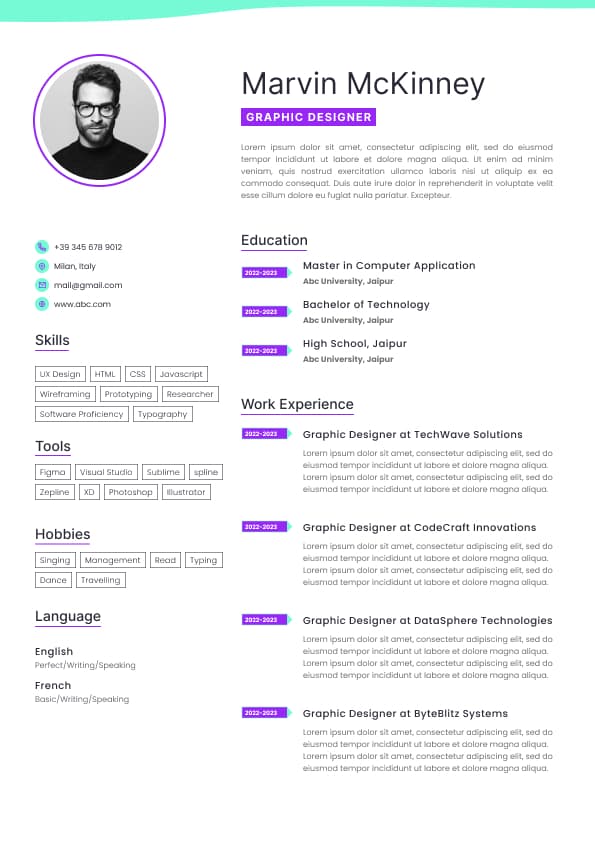
Use professional field-tested resume templates that follow the exact Resume rules employers look for.
Create ResumeOne Page Resume Australia
A one page resume in Australia works best when it is strategically condensed, highly relevant, and tailored to the exact role you are applying for. Recruiters do not automatically prefer one page resumes for every candidate. What they actually want is a resume that is fast to scan, easy to evaluate, and clearly aligned with the job requirements.
For graduates, junior professionals, career changers, and candidates with under 7 to 10 years of relevant experience, a one page resume is often ideal. For senior professionals, technical specialists, executives, or candidates with extensive project history, forcing everything onto one page can hurt your chances if important context is removed.
The key is not reducing length for the sake of appearance. The goal is creating a focused, high-impact resume that communicates value quickly within Australian hiring expectations, ATS systems, and recruiter screening behaviour.
A one page resume is a concise professional resume that fits entirely on a single page while still communicating your qualifications, experience, achievements, and suitability for the role.
In the Australian job market, this format is commonly used for:
•Graduate roles
• Entry-level jobs
• Early career professionals
• Career changers
• Administrative positions
• Retail and hospitality jobs
• Internal applications
• High-volume recruitment roles
A one page resume is not simply a shorter version of a regular resume. It requires tighter positioning, stronger relevance, and better prioritisation.
Recruiters can usually tell within 15 to 30 seconds whether a candidate is potentially suitable. A strong one page resume respects that reality.
Not always.
This is one of the biggest misconceptions candidates have.
Australian recruiters generally prefer:
•Relevance over length
• Clarity over design gimmicks
• Readability over compression
• Evidence over buzzwords
• Fast evaluation over excessive detail
A poorly written one page resume performs worse than a strong two page resume every time.
What recruiters dislike is unnecessary content, including:
•Long career summaries with no substance
• Generic responsibilities
• Outdated experience
• Repetitive bullet points
• Irrelevant qualifications
• Dense walls of text
• Over-designed layouts that break ATS systems
A one page resume only works when the candidate has genuinely streamlined the content to focus on what matters for that specific role.
If you have limited experience, a one page resume is often expected.
Recruiters hiring graduates are mainly assessing:
•Education relevance
• Internship experience
• Transferable skills
• Communication ability
• Work ethic indicators
• Leadership or extracurricular involvement
You usually do not need multiple pages unless you have extensive internships, projects, or technical work.
Candidates moving industries often benefit from a one page resume because it forces sharper positioning.
Instead of listing every previous responsibility, successful career changers focus on:
•Transferable skills
• Relevant achievements
• Industry overlap
• Communication and stakeholder experience
• Problem-solving capability
For roles such as:
•Customer service
• Retail
• Hospitality
• Reception
• Administration
• Warehouse
• Call centre positions
Recruiters often screen hundreds of applications quickly. A concise resume can improve readability and speed up evaluation.
One page resumes become risky when candidates remove critical information purely to stay within one page.
This commonly happens with:
•Senior professionals
• Technical specialists
• Project managers
• Engineers
• Executives
• Consultants
• Government applicants
• Healthcare professionals
• Candidates with complex career histories
In Australia, many mid-level and senior roles expect two pages because hiring managers want:
•Context
• Scope of responsibility
• Commercial impact
• Leadership evidence
• Project outcomes
• Technical depth
Removing this information can make you look less experienced than you actually are.
A recruiter will never reject a strong candidate because their resume is two pages instead of one.
They will reject a candidate whose resume lacks enough evidence.
A high-performing one page resume in Australia usually follows this structure.
Include:
•Full name
• Mobile number
• Professional email address
• LinkedIn profile if relevant
• Location suburb and state only
Do not include:
•Full address
• Date of birth
• Marital status
• Photo unless industry-specific
Australian recruiters generally do not expect photos on resumes.
Your summary should immediately position you for the target role.
Keep it to approximately 3 to 4 lines.
A strong summary includes:
•Current or target profession
• Years of relevant experience
• Key capability areas
• Industry expertise
• Core value proposition
“Hardworking individual seeking opportunities to grow and utilise my skills.”
This says nothing meaningful.
“Customer service professional with 4 years’ experience across retail and telecommunications environments. Strong background in complaint resolution, KPI achievement, and high-volume customer support. Recognised for improving customer satisfaction and maintaining strong retention outcomes.”
This gives recruiters positioning immediately.
Many candidates waste valuable space listing generic soft skills.
Avoid filler like:
•Team player
• Hard worker
• Motivated
• Fast learner
Instead, use role-relevant skills aligned with the job advertisement.
Examples include:
•Stakeholder management
• CRM systems
• Project coordination
• Payroll processing
• Microsoft Excel
• Customer retention
• Scheduling and rostering
• Data analysis
• Accounts payable
• Compliance reporting
• Inventory management
• SAP
• Salesforce
• Recruitment coordination
ATS systems often scan for these role-specific terms.
This section determines whether you get shortlisted.
Most candidates fail because they describe duties instead of outcomes.
Recruiters want evidence of:
•Performance
• Impact
• Commercial value
• Initiative
• Accountability
• Results
A high-performing bullet point usually includes:
•Action
• Context
• Outcome
“Responsible for answering customer enquiries.”
This is generic and low-value.
“Resolved 60 to 80 customer enquiries daily across phone and email channels while maintaining a 94% customer satisfaction rating.”
Now the recruiter understands:
•Volume
• Environment
• Performance standard
• Measurable outcome
That creates credibility.
Most candidates shrink fonts or margins.
That is the wrong approach.
The real solution is strategic editing.
You can usually remove:
•High school details if tertiary qualified
• Irrelevant jobs from 10 to 15 years ago
• Generic responsibilities
• References available upon request
• Long objective statements
• Excessive soft skills
• Outdated software
Your resume is not a career autobiography.
It is a targeted marketing document.
For every bullet point, ask:
“Does this help me get shortlisted for this specific role?”
If the answer is no, remove it.
Applicant Tracking Systems are widely used across Australian recruitment.
A one page resume should still be ATS-friendly.
•Use standard headings like “Work Experience” and “Education”
• Avoid tables and complex graphics
• Use readable fonts
• Include relevant keywords naturally
• Save as PDF unless instructed otherwise
• Match terminology from the job advertisement
Many candidates over-focus on design and under-focus on content relevance.
Recruiters care more about alignment than visual creativity.
Candidates often treat resumes like archives.
This creates:
•Tiny fonts
• Dense formatting
• Poor readability
• Weak prioritisation
A recruiter scanning quickly will disengage.
Generic resumes perform badly because they do not show role alignment.
Australian hiring managers increasingly expect tailored applications.
Heavy graphics, skill bars, icons, and multiple columns can break ATS parsing.
Simple formatting performs better in most professional Australian hiring environments.
This is one of the worst mistakes.
Achievements differentiate candidates.
Removing measurable impact weakens credibility significantly.
Most recruiters follow a fast filtering process.
They scan for:
•Relevant title alignment
• Industry relevance
• Stability
• Key skills
• Career progression
• Measurable outcomes
• Communication quality
The first screen is rarely deep.
It is usually:
“Is this person potentially shortlist-worthy?”
A one page resume works well because it speeds up this assessment when written strategically.
Best for:
•Graduates
• Junior professionals
• Career changers
• Simple career histories
• High-volume recruitment roles
Best for:
•Mid-level professionals
• Senior specialists
• Leadership roles
• Technical positions
• Government applications
• Project-heavy careers
The correct resume length depends on content quality and career complexity, not arbitrary rules.
Hiring managers often focus less on formatting and more on evidence.
They typically notice:
•Whether experience aligns with the role
• Whether achievements are measurable
• Whether the candidate understands the industry
• Whether communication is clear
• Whether the resume feels tailored
A concise resume that quickly communicates relevance performs extremely well.
A vague one page resume does not.
•Font size between 10 and 11.5
• Professional fonts like Calibri or Arial
• Consistent spacing
• Clear section headings
• Bullet points instead of long paragraphs
• Adequate white space
Do not sacrifice readability to force content onto one page.
If the resume becomes visually exhausting, it loses effectiveness.
Yes.
This is one of the biggest differences between average and high-performing candidates.
Tailoring does not mean rewriting everything.
It means adjusting:
•Professional summary
• Key skills
• Achievement emphasis
• Keywords
• Positioning language
Recruiters can immediately tell when a resume is generic.
Tailored resumes consistently perform better because they reduce evaluation friction.
The strongest strategy is not “keeping it short”.
It is keeping it relevant.
A high-performing one page resume typically does three things exceptionally well:
The recruiter immediately understands:
•What you do
• What level you operate at
• What roles you fit
The resume includes measurable outcomes, not vague responsibilities.
The recruiter can scan it quickly without searching for important information.
That increases shortlist potential significantly.
Many online articles repeat outdated or oversimplified advice like:
•“All resumes must be one page”
• “Recruiters only spend 6 seconds reviewing resumes”
• “Fancy design helps you stand out”
Real hiring decisions are more nuanced.
Australian recruiters absolutely will read two pages if the content is strong and relevant.
What they will not tolerate is:
•Poor relevance
• Weak positioning
• Generic language
• Lack of evidence
• Difficult formatting
The best resumes are not necessarily shorter.
They are sharper.
A one page resume is a strategy, not a rule.
It works best when:
•Your experience level supports it
• The content is highly relevant
• Achievements are prioritised
• Formatting stays clean
• The resume is tailored to the role
Do not reduce your resume to one page simply because internet advice says you should.
Australian recruiters care far more about clarity, relevance, and evidence than arbitrary page limits.
If one page genuinely communicates your value effectively, use it.
If it removes critical information, use two pages confidently.


 Upload Resume
 Import from Linkedin