
Choose from a wide range of NEWCV resume templates and customize your NEWCV design with a single click.

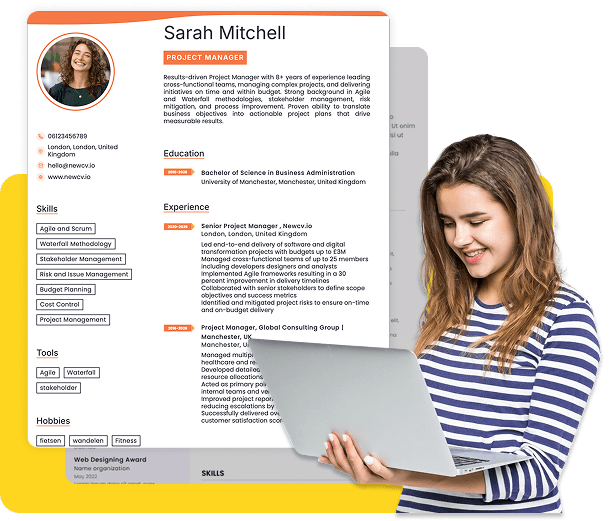
Use ATS-optimised Resume and resume templates that pass applicant tracking systems. Our Resume builder helps recruiters read, scan, and shortlist your Resume faster.

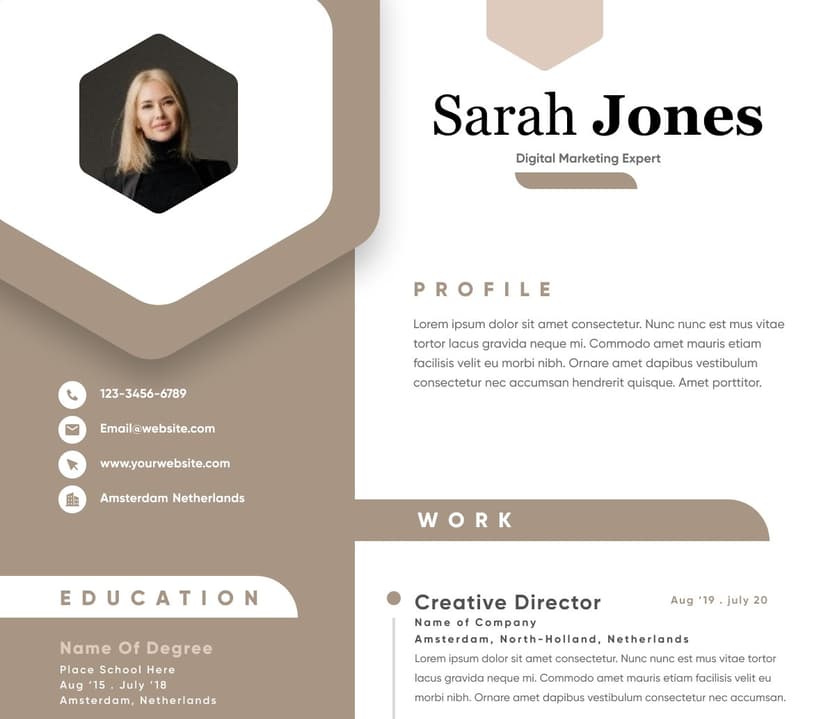
Use professional field-tested resume templates that follow the exact Resume rules employers look for.
Create Resume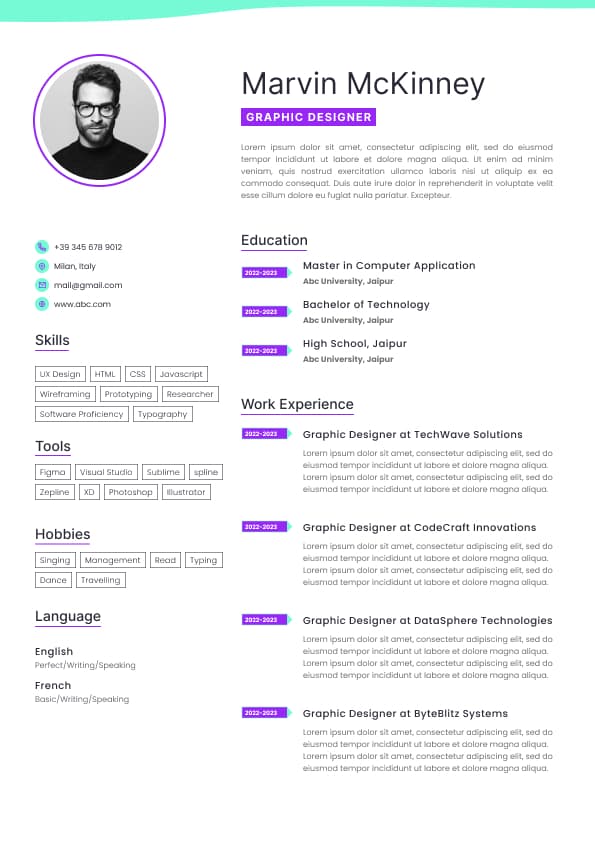
Use professional field-tested resume templates that follow the exact Resume rules employers look for.
Create ResumeA strong public sector resume in Australia is very different from a standard private-sector resume. Government recruiters assess candidates against structured capability frameworks, merit-based hiring principles, and role-specific requirements. That means a generic corporate resume usually fails, even when the candidate is highly qualified.
The biggest mistake applicants make is writing a resume focused only on responsibilities instead of evidence. In Australian government hiring, recruiters want proof of outcomes, stakeholder management capability, policy understanding, governance awareness, communication skills, and alignment with the role’s capability framework.
Whether you're applying for APS, state government, council, healthcare, education, or statutory authority roles, your resume must clearly demonstrate how your experience matches the position requirements. A successful public sector resume is strategic, evidence-based, keyword-aligned, and written for structured assessment processes rather than fast private-sector screening.
This guide explains exactly how Australian government recruiters assess resumes, what hiring managers expect, what causes candidates to get rejected, and how to structure a resume that performs in competitive public sector recruitment.
Australian government hiring follows a merit-based recruitment model. Unlike many private-sector roles, public sector hiring is heavily structured, documented, and compliance-driven.
Most government recruiters assess candidates using:
Capability frameworks
Selection criteria or success profiles
Behaviour-based assessment
Evidence of outcomes and impact
Communication quality
Governance and stakeholder capability
Risk, policy, and compliance awareness
Demonstrated alignment to public sector values
This applies across:
Australian Public Service (APS)
NSW Government
Victorian Public Sector (VPS)
Queensland Government
Local councils
Government healthcare systems
Universities and public education
Regulatory agencies
Statutory authorities
A resume that works for a private company often performs poorly in government recruitment because the evaluation criteria are different.
Government recruiters are not looking for flashy resumes. They are looking for evidence, alignment, and credibility.
The strongest public sector resumes clearly show:
How the candidate delivered measurable outcomes
How they handled stakeholders
Experience working within policies, frameworks, or legislation
Communication and briefing capability
Governance and compliance understanding
Risk management awareness
Collaboration across departments or agencies
Evidence-based decision-making
Leadership and accountability
Recruiters are also assessing how well you understand government environments.
For example, if your resume sounds overly sales-focused, highly corporate, or achievement-heavy without context, it can signal poor fit for government culture.
Public sector hiring managers typically prefer resumes that are:
Clear and structured
Professional but not overly self-promotional
Evidence-focused
Outcome-driven
Aligned to the role requirements
Easy to assess quickly against capability criteria
Most rejected government resumes fail because they do not align with how public sector assessment works.
One of the most common mistakes is using the same resume for private and public sector jobs.
Government hiring managers expect:
Clear alignment to the role description
Public sector language and context
Structured evidence
Capability demonstration
A generic corporate resume often lacks the governance, compliance, stakeholder, and policy language government employers expect.
Government recruiters already know what the role does.
This fails:
Weak Example
“Responsible for stakeholder engagement and project coordination.”
This performs far better:
Good Example
“Coordinated cross-functional stakeholder engagement across three government agencies to support implementation of a statewide service improvement initiative, reducing approval processing times by 22%.”
The second version demonstrates:
Context
Scope
Stakeholders
Outcome
Government relevance
Even when separate selection criteria responses are required, recruiters still expect your resume to reinforce the same capabilities.
If the job description repeatedly references:
Policy development
Stakeholder management
Community engagement
Governance
Procurement
Program delivery
Those themes must appear throughout your resume naturally.
Australian public sector hiring generally values clarity and professionalism over aggressive self-branding.
Avoid language like:
“Sales ninja”
“Growth hacker”
“Results-driven superstar”
“Dynamic thought leader”
This style can actively hurt credibility in government recruitment.
Include:
Full name
Mobile number
Professional email address
LinkedIn profile if relevant
Location suburb and state
Do not include:
Date of birth
Marital status
Photo
Full address
Your summary should immediately position you for government hiring.
Strong public sector summaries include:
Years of experience
Relevant sector expertise
Core capabilities
Public sector alignment
Major strengths relevant to the role
Experienced policy and program professional with 8+ years’ experience across state government and community services environments. Skilled in stakeholder engagement, policy implementation, governance, and cross-functional project delivery. Strong background managing complex initiatives within compliance-driven environments, with demonstrated success improving service outcomes, coordinating multi-agency collaboration, and delivering evidence-based recommendations to senior leadership.
This works because it sounds aligned to government capability expectations.
A strong public sector skills section should reflect the role and agency language.
Examples include:
Policy development
Stakeholder engagement
Governance and compliance
Program coordination
Strategic communication
Community consultation
Procurement processes
Risk management
Briefing preparation
Project delivery
Legislative compliance
Data analysis and reporting
Cross-agency collaboration
Public administration
Avoid generic filler skills like:
Hard worker
Team player
Motivated professional
These add no assessment value.
This is the most important section.
Every role should demonstrate:
Scope
Stakeholder complexity
Outcomes
Government relevance
Capability alignment
A high-performing public sector resume uses evidence-based bullet points.
Developed policy briefing materials for executive leadership supporting implementation of updated regulatory compliance procedures across multiple business units.
Managed stakeholder engagement activities involving local councils, community groups, and internal departments during delivery of regional infrastructure initiatives.
Coordinated procurement and contract administration processes in accordance with government policy and compliance requirements.
Prepared ministerial correspondence, reports, and briefing notes for senior departmental review.
Led cross-functional collaboration between operational teams and external service providers to improve community service delivery outcomes.
Analysed operational data and produced evidence-based recommendations that contributed to a 17% reduction in processing delays.
Notice the pattern:
Action
Context
Stakeholders
Outcome
Public sector relevance
That is how government recruiters assess value.
APS recruitment is especially capability-driven.
Recruiters commonly assess:
Communicates with influence
Supports productive working relationships
Displays resilience
Delivers results
Thinks strategically
Applies government frameworks correctly
APS hiring managers also look for:
Concise writing
Clear examples
Strong alignment to the Integrated Leadership System (ILS)
Ability to operate in structured environments
Accountability and judgement
One major mistake in APS applications is writing vague achievement statements without context.
Government recruiters want evidence of how outcomes were achieved, especially in collaborative or policy-heavy environments.
For Australian government roles:
Entry-level to mid-level: usually 2 to 4 pages
Senior government roles: often 4 to 6 pages
Unlike many private-sector resumes, public sector resumes can be longer if the content is highly relevant and evidence-based.
However, length alone does not help.
A strong 3-page targeted resume will outperform a generic 6-page document every time.
Usually no.
If the application separately requests:
Pitch statement
Statement of claims
Selection criteria response
Capability statement
Keep those separate unless explicitly requested otherwise.
However, your resume should still reinforce the same evidence areas.
The best government applications create consistency across:
Resume
Cover letter
Selection criteria
Candidate pitch
Weak applications often feel disconnected between documents.
Government recruitment increasingly uses ATS systems and keyword filtering.
However, keyword stuffing does not work.
The best approach is naturally integrating relevant public sector terminology such as:
Governance
Policy implementation
Stakeholder engagement
Ministerial briefing
Community consultation
Legislative compliance
Program delivery
Procurement
Risk management
Strategic planning
Public administration
Service delivery
Regulatory frameworks
Cross-agency collaboration
Use the exact language appearing in the role description where appropriate.
The best government resumes do not just describe tasks.
They show:
Judgement
Accountability
Collaboration
Structured thinking
Communication capability
Operational understanding
Policy awareness
Stakeholder maturity
Hiring managers are often trying to reduce hiring risk.
A resume that demonstrates calm professionalism, evidence-based thinking, and reliable delivery usually performs better than one trying too hard to sound impressive.
The strongest strategy is this:
Identify:
Repeated capability themes
Required technical skills
Stakeholder expectations
Behavioural capabilities
Reporting lines
Key deliverables
Those patterns tell you how the role will be assessed.
Do not just claim skills.
Show evidence.
If stakeholder engagement is important, include examples involving:
Difficult stakeholders
Cross-department collaboration
Community consultation
Executive communication
Government hiring managers want impact, not task lists.
Focus on:
Improvements
Outcomes
Efficiency gains
Risk reduction
Compliance outcomes
Community outcomes
Delivery success
Australian public sector culture generally values:
Clarity
Professionalism
Credibility
Collaboration
Accountability
Overly exaggerated language can reduce trust.
A strong Australian public sector resume typically follows this order:
Contact details
Professional summary
Key capabilities or skills
Professional experience
Education
Certifications or training
Technical systems if relevant
Optional sections:
Security clearance
Government panels
Professional memberships
Publications for policy or academic roles
The biggest differences are strategic, not cosmetic.
Revenue
Commercial growth
Sales performance
Fast achievements
Competitive positioning
Governance
Stakeholder management
Policy alignment
Compliance
Service delivery
Collaboration
Accountability
Risk management
Candidates transitioning from corporate roles often underestimate this shift.
Sometimes candidates have excellent experience but still get rejected because the resume does not communicate government relevance clearly enough.
Common reasons include:
Too much corporate jargon
Weak evidence
Poor capability alignment
Generic achievements
No stakeholder context
No governance or compliance references
Resume not tailored to the role
Lack of public sector language
Government recruiters are assessing fit within structured environments, not just technical competence.
Before submitting your application, check whether your resume:
Aligns clearly to the role description
Demonstrates outcomes, not just duties
Uses government-relevant terminology naturally
Includes stakeholder and governance examples
Reflects capability-based hiring expectations
Shows evidence of communication and collaboration
Avoids generic corporate language
Is tailored specifically to the role
Supports your selection criteria responses
Reads clearly and professionally
A successful public sector resume in Australia is not about sounding impressive.
It is about making it easy for recruiters and hiring managers to confidently assess your capability against structured government hiring criteria.


 Upload Resume
 Import from Linkedin