
Choose from a wide range of NEWCV resume templates and customize your NEWCV design with a single click.

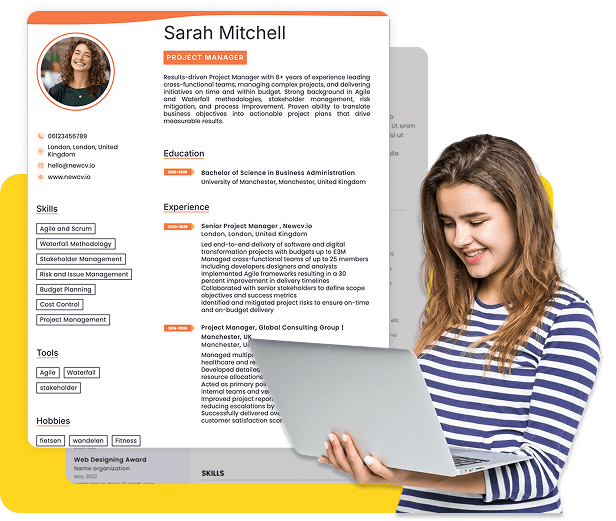
Use ATS-optimised Resume and resume templates that pass applicant tracking systems. Our Resume builder helps recruiters read, scan, and shortlist your Resume faster.

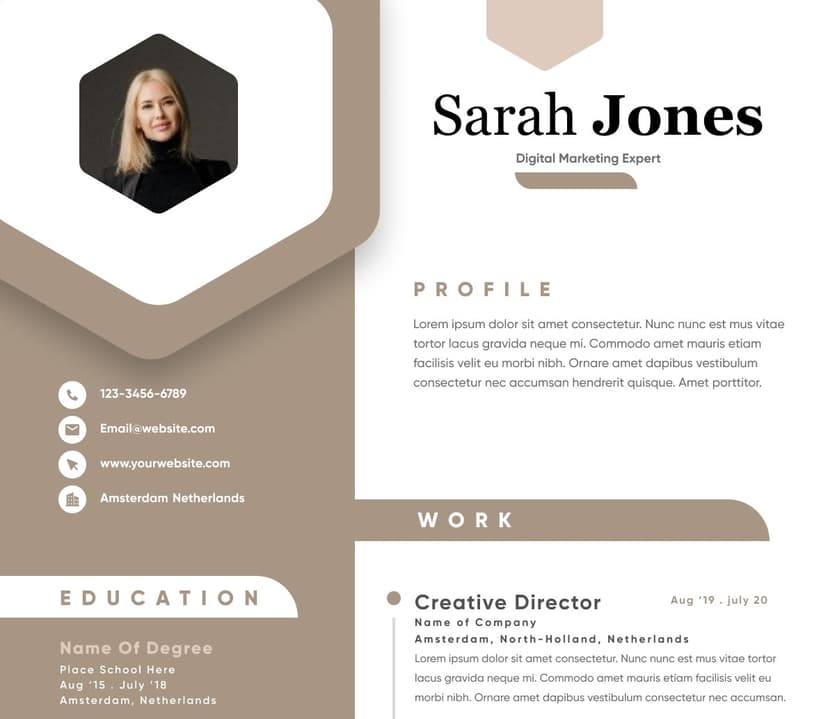
Use professional field-tested resume templates that follow the exact Resume rules employers look for.
Create Resume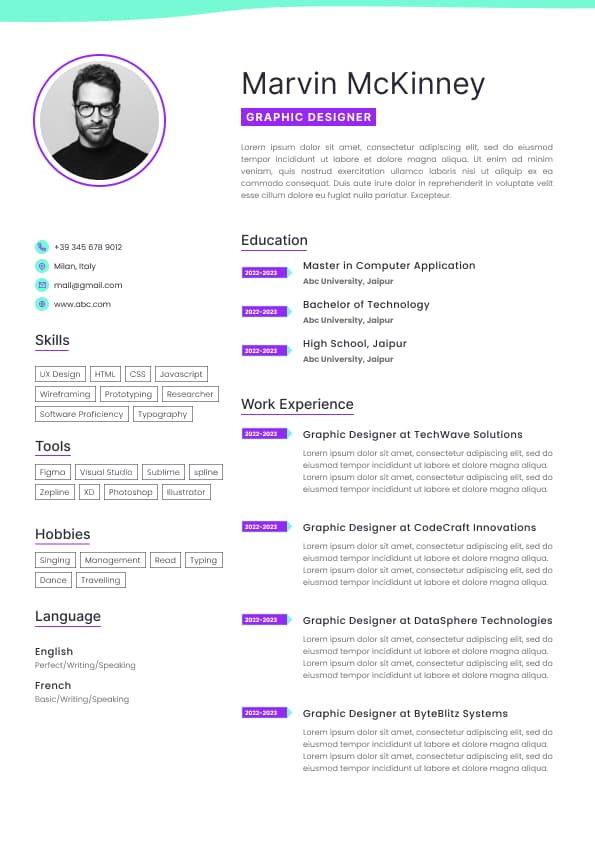
Use professional field-tested resume templates that follow the exact Resume rules employers look for.
Create ResumeA professional resume writer in Australia can absolutely improve your chances of getting interviews, but only if they understand Australian hiring standards, ATS systems, recruiter behaviour, and how local employers actually evaluate candidates.
Most resume services fail because they produce polished-looking documents that sound impressive but do not position the candidate strategically for Australian recruiters or hiring managers. The difference between a resume that gets ignored and one that gets shortlisted is rarely “better writing”. It is usually better positioning, clearer commercial value, stronger relevance to the role, and smarter alignment with how recruiters screen applications.
If you are applying for competitive roles in Australia, changing industries, targeting leadership positions, returning to work, migrating, or struggling to secure interviews despite solid experience, a high-quality professional resume writer can provide a measurable advantage.
The challenge is that the Australian market is flooded with low-quality resume services, offshore writers with limited local hiring knowledge, AI-generated resumes, and generic templates that fail under recruiter scrutiny.
This guide explains how professional resume writing actually works in Australia, what good resume writers do differently, how recruiters evaluate resumes, realistic pricing expectations, warning signs to avoid, and how to choose a resume writer that genuinely improves your job search outcomes.
A strong Australian resume writer does far more than “rewrite” your CV.
Their real job is to strategically position you for the Australian hiring market.
That includes:
Understanding how recruiters screen applications
Translating experience into commercially relevant value
Aligning your resume with ATS keyword expectations
Clarifying career progression and positioning
Improving readability for fast recruiter scanning
Addressing hiring risks or objections
Tailoring your positioning for your target market
Most resumes are rejected long before interview stage for predictable reasons.
Not because the candidate lacks capability.
Because the resume fails to communicate capability clearly enough.
Responsibilities instead of achievements
Generic summaries with no positioning
Poor structure and weak readability
Overly long resumes with no strategic focus
Missing commercial impact or measurable results
Resume content that sounds copied or AI-generated
Presenting achievements in measurable, credible ways
Helping you compete against stronger applicants
Most recruiters spend between 6 and 20 seconds on the first scan of a resume.
That initial scan usually answers five questions:
Is this candidate relevant?
Do they match the level required?
Is their experience easy to understand quickly?
Do they solve the employer’s problem?
Is there any obvious risk or concern?
A professional resume writer’s job is to make those answers obvious within seconds.
No tailoring for target roles
Confusing career transitions
Weak executive presence for senior roles
Irrelevant information diluting strong experience
Outdated formatting and layout
Keyword stuffing without strategic alignment
Australian recruiters are especially sensitive to resumes that feel exaggerated, inflated, or overly corporate.
Local hiring culture tends to favour clarity, credibility, practical outcomes, and direct communication over buzzwords or self-promotion.
Not every candidate needs a resume writer.
But certain situations dramatically increase the value of professional support.
You are applying for jobs but getting few interviews
You are changing industries or career direction
You are targeting management or executive roles
You are re-entering the workforce
You recently migrated to Australia
You struggle to explain your experience clearly
Your career history is complex or fragmented
You are competing in highly saturated markets
You are applying for six-figure positions
You are unsure how Australian resumes differ
You know your resume undersells your experience
Senior-level hiring decisions are heavily influenced by positioning.
For leadership roles, recruiters and hiring managers are not just assessing capability.
They are assessing:
Commercial influence
Strategic thinking
Leadership maturity
Stakeholder management
Scale of responsibility
Business outcomes
Organisational impact
Weak executive resumes often sound operational rather than strategic.
A strong executive resume writer understands how to shift perception upward.
Many resume services optimise for appearance.
Recruiters optimise for decision-making speed.
That is a critical difference.
Clear relevance to the role
Easy-to-scan structure
Specific achievements
Measurable outcomes
Industry alignment
Career stability and progression
Strong communication skills
Credible language
Commercial impact
Practical experience
The best resumes reduce cognitive load.
A recruiter should not have to “work hard” to understand your value.
Recruiters often ignore:
Long personal statements
Generic soft skills
Buzzword-heavy language
Overdesigned templates
Paragraph-heavy resumes
Vague achievements
Inflated language
Unnecessary graphics
Irrelevant early-career history
Australian hiring managers generally prefer substance over style.
A clean, strategically written resume consistently outperforms flashy designs.
Most medium-to-large Australian employers use Applicant Tracking Systems (ATS).
But ATS optimisation is widely misunderstood.
A good resume writer does not “game” ATS systems.
They ensure your resume aligns naturally with relevant search criteria.
Using role-relevant keywords naturally
Matching job title terminology where appropriate
Structuring information clearly
Avoiding formatting that breaks parsing
Including relevant technical competencies
Reflecting industry language accurately
Ensuring readability for both ATS and humans
Keyword stuffing is one of the biggest mistakes candidates make.
Modern ATS systems are increasingly semantic.
Human recruiters still make the final decision.
A resume overloaded with repetitive keywords often performs worse because it reads unnaturally.
Pricing varies significantly depending on experience, service quality, and target market.
Entry-level resumes: approximately AUD $150 to $350
Mid-level professional resumes: approximately AUD $300 to $700
Executive resumes: approximately AUD $800 to $2,500+
LinkedIn optimisation: approximately AUD $150 to $600
Selection criteria responses: approximately AUD $200 to $1,500+
Government applications: often premium-priced due to complexity
Extremely cheap resume services are usually a red flag.
Low-cost providers often rely on:
Generic templates
Offshore writers unfamiliar with Australian hiring
AI-generated content
Minimal consultation
Mass-production writing
The best resume writers invest significant time understanding your background, goals, and target market.
The Australian resume industry is largely unregulated.
Anyone can claim to be a “professional resume writer”.
That makes due diligence essential.
No understanding of Australian hiring culture
No recruiter or HR experience
Generic package descriptions
Unrealistic guarantees
Overemphasis on visual design
No consultation process
No strategic questioning
Extremely cheap pricing
Poor grammar or awkward wording
One-size-fits-all templates
AI-generated sounding language
No evidence of industry expertise
No legitimate resume writer can guarantee interviews or employment.
Too many variables affect hiring decisions.
Strong resume writers improve competitiveness and positioning.
They do not promise unrealistic outcomes.
The best Australian resume writers think like recruiters.
That is the real differentiator.
Recruiter scanning behaviour
Hiring manager expectations
Industry-specific evaluation criteria
Australian workplace communication standards
Candidate positioning psychology
Salary-level expectations
Leadership signalling
Market competitiveness
ATS logic
Commercial storytelling
Average writers simply rewrite content.
Elite writers reshape perception.
Some candidates can absolutely write strong resumes themselves.
Especially if they:
Understand hiring processes
Write clearly and strategically
Know how recruiters assess applications
Can articulate achievements well
Understand ATS alignment
But many professionals are too close to their own experience.
They either undersell themselves or include too much irrelevant information.
Professional resume writers provide external strategic perspective.
That perspective is often what improves interview conversion.
This is especially important for migrants and internationally experienced professionals.
Australian resumes are generally:
More achievement-focused
More concise than some international CV standards
Less formal than UK CVs
Less self-promotional than some US resumes
More practical and commercially focused
Written with clearer readability
More direct in communication style
Including unnecessary personal information
Using overseas formatting standards
Overly formal language
Excessive detail
Failing to localise terminology
Not translating international experience into Australian market relevance
Australian employers care less about where experience occurred and more about whether it appears transferable and relevant.
Most resumes describe work.
Strong resumes explain value.
That distinction changes everything.
“Responsible for managing customer accounts and supporting sales activity.”
“Managed a portfolio of 120+ enterprise accounts, contributing to 18% annual revenue growth and improving client retention across key national accounts.”
One explains duties.
The other demonstrates commercial impact.
Recruiters shortlist candidates based on evidence of value, not task lists.
Templates are not inherently bad.
Poor strategic use of templates is the problem.
Many template-driven resumes:
Prioritise design over readability
Waste space on visuals
Reduce ATS compatibility
Make resumes look generic
Distract from actual content
Create formatting inconsistencies
In Australia, simple and strategically structured resumes usually outperform visually complex resumes.
Especially in corporate, government, operations, finance, engineering, healthcare, and leadership hiring.
Recruiters regularly cross-check resumes against LinkedIn profiles.
Inconsistencies create doubt.
A professional resume writer should ideally help align:
Job titles
Career timelines
Positioning
Branding
Keywords
Leadership narrative
Industry focus
Your resume gets you shortlisted.
Your LinkedIn profile often validates credibility.
Recruiters shortlist.
Hiring managers decide.
Those are different audiences.
Hiring managers often focus more heavily on:
Business impact
Technical capability
Team leadership
Industry experience
Stakeholder management
Problem-solving capability
Scale and complexity
A strong resume balances recruiter readability with hiring manager depth.
That balance is difficult for inexperienced writers to achieve.
Australian resume length depends heavily on career stage.
Early career: 1 to 2 pages
Mid-level professionals: 2 to 3 pages
Senior management and executives: 3 to 5 pages where justified
The real issue is not page count.
It is relevance density.
A concise but weak resume loses to a longer strategically written one every time.
Before committing, ask direct questions.
Do you understand Australian hiring practices?
Have you worked in recruitment or hiring?
What industries do you specialise in?
How do you approach ATS optimisation?
How customised is the process?
Will I work directly with the writer?
How do you position candidates strategically?
What information do you need from me?
Do you provide LinkedIn optimisation?
How do you handle career changes or gaps?
The quality of their answers usually reveals their expertise level quickly.
Strong resumes share consistent characteristics.
A clear target direction
Strong opening positioning summary
Relevant keyword alignment
Measurable achievements
Strategic career storytelling
Strong readability
Clear progression
Concise but meaningful detail
Industry-specific relevance
Clean formatting
Most importantly, they create confidence.
Hiring decisions are heavily influenced by perceived confidence and clarity.
Confusing resumes create hiring hesitation.
The value of a resume writer is not the document itself.
It is the improvement in opportunity access.
A better resume can potentially lead to:
More interviews
Faster interview conversion
Higher salary opportunities
Better role alignment
Improved recruiter response rates
Increased confidence during applications
Better positioning against competitors
For senior professionals, one successful role transition can easily justify the investment many times over.
AI-generated resumes are rapidly increasing in Australia.
Recruiters are already noticing.
Generic wording
Repetitive phrasing
Inflated claims
Lack of specificity
Weak strategic positioning
Poor achievement depth
Robotic tone
Overuse of buzzwords
Good resume writers may use AI tools for efficiency.
But elite resume writing still depends heavily on human strategy, market understanding, and recruiter judgement.
Hiring managers can often detect generic AI-style resumes surprisingly quickly.
The quality of input matters.
Candidates who provide stronger information usually receive stronger resumes.
Define your target roles clearly
Share relevant job ads
Provide measurable achievements
Explain major projects and outcomes
Clarify career goals
Identify concerns or blockers
Be honest about gaps or issues
Share LinkedIn profile details
The more commercially useful detail you provide, the stronger your positioning becomes.


 Upload Resume
 Import from Linkedin