STILL APPLYING. STILL HEARING NOTHING?BUILD YOUR RESUME

STILL APPLYING. STILL HEARING NOTHING?BUILD YOUR RESUME
Choose from a wide range of NEWCV resume templates and customize your NEWCV design with a single click.
FAQ

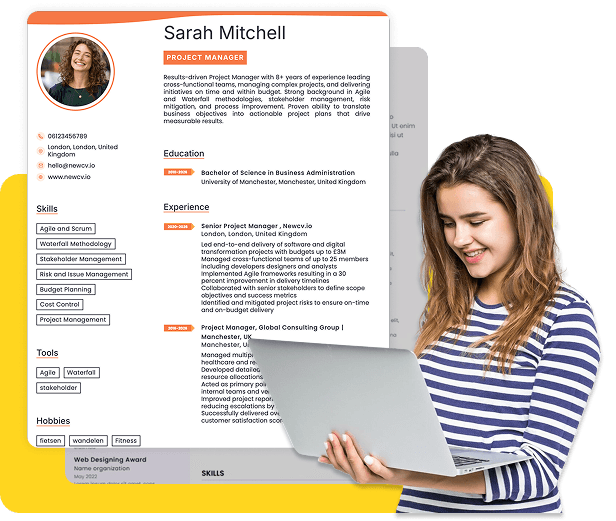
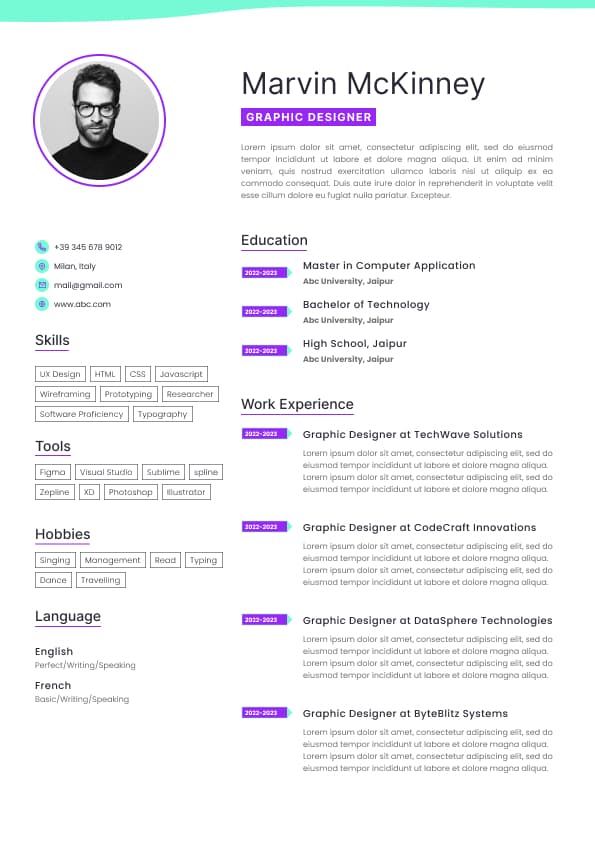
Use professional field-tested resume templates that follow the exact Resume rules employers look for.
Create ResumeA Python developer resume in simple English should clearly show your technical skills, projects, and business impact without using complicated language or buzzwords. Most junior and entry-level candidates lose interviews because their resumes are too vague, too technical without context, or filled with copied phrases that do not explain real work.
Hiring managers for junior Python roles are usually looking for three things first:
Can you build or support backend applications using Python?
Can you work with APIs, databases, and debugging tasks?
Can you communicate your work clearly and professionally?
Simple language is not a weakness. In fact, recruiters often prefer resumes that are direct, readable, and easy to scan quickly. A strong junior Python developer resume explains what you built, what tools you used, and what improved because of your work.
The goal is clarity, not complexity.
Most recruiters spend less than 10 seconds on the first resume scan. For entry-level Python developers, they are not expecting senior architecture experience. They are checking for signals that you can contribute to a development team without heavy supervision.
Here is what recruiters typically prioritize for junior Python candidates:
Backend development exposure
REST API experience
Python frameworks like Flask, Django, or FastAPI
Database knowledge
Git and collaboration tools
Debugging and testing experience
Cloud or deployment familiarity
Clear communication skills
Real projects instead of only coursework
A common mistake is trying to sound “advanced” instead of sounding credible.
Weak Example:
“Highly motivated Python developer with excellent problem-solving abilities and passion for technology.”
This says almost nothing.
Good Example:
“Built REST APIs using Python and FastAPI for a task management application with PostgreSQL database integration.”
This immediately tells recruiters:
What you built
Which technologies you used
What type of development work you performed
That is how technical resumes get interviews.
A junior Python developer resume should usually stay within one page unless you already have meaningful professional experience.
Use this structure:
Contact Information
Professional Summary
Technical Skills
Projects or Experience
Education
Certifications if relevant
The order matters.
Recruiters often scan technical skills and projects before reading education for junior engineering candidates.
Your summary should be short, specific, and aligned with backend development roles.
Avoid generic career objective statements.
Weak Example:
“Seeking a challenging position where I can grow my skills and contribute to organizational success.”
This sounds copied and adds no hiring value.
Good Example:
“Junior Python developer with experience building backend APIs using FastAPI, Flask, and Django. Worked with PostgreSQL, Docker, GitHub, and AWS on academic and personal projects. Comfortable debugging applications, writing tests, and working in Agile teams.”
This works because it:
Uses relevant backend keywords naturally
Sounds realistic for entry-level candidates
Matches ATS searches
Shows practical exposure
Many junior candidates overload the skills section with every tool they have ever touched.
Recruiters care more about usable skills than long lists.
A cleaner technical skills section performs better.
Languages: Python, SQL, JavaScript
Frameworks: FastAPI, Flask, Django
Databases: PostgreSQL, MongoDB, Redis
Cloud & DevOps: AWS, Docker, GitHub Actions
Testing: PyTest, unittest
Tools: Git, GitHub, Postman, Linux
Concepts: REST APIs, Authentication, Caching, Debugging, Agile Development
This structure improves readability for both recruiters and ATS systems.
Michael Carter
Austin, Texas
michaelcarter@email.com
LinkedIn: linkedin.com/in/michaelcarter
GitHub: github.com/michaelcarter
Junior Python developer with experience building backend applications using Python, FastAPI, Flask, and Django. Created REST APIs, worked with PostgreSQL and MongoDB databases, and deployed projects using Docker and AWS. Comfortable debugging applications, writing automated tests, and collaborating in Agile development teams.
Programming Languages: Python, SQL, JavaScript
Frameworks: FastAPI, Flask, Django
Databases: PostgreSQL, MongoDB, Redis
Cloud & DevOps: AWS, Docker, GitHub
Testing: PyTest, unittest
Tools: Linux, Postman, VS Code, Git
Built backend REST APIs using Python and FastAPI
Added JWT authentication and PostgreSQL database integration
Improved API response time using Redis caching
Used Docker containers for deployment and local development
Wrote automated tests using PyTest
Created backend features using Django and SQLite
Fixed bugs and improved application stability
Added user login and role-based authentication
Used GitHub for version control and team collaboration
Built Python scripts to automate file processing tasks
Reduced repetitive manual work for data cleanup operations
Added logging and error handling for better reliability
Built backend APIs using Flask and PostgreSQL
Fixed bugs and improved application performance
Participated in sprint planning and code reviews
Worked with developers using Git and Agile workflows
Assisted with AWS deployment and cloud monitoring
Bachelor of Science in Computer Science
University of Texas at Dallas
This resume performs well because it matches how junior engineering hiring actually works.
It demonstrates:
Real technical exposure
Backend development alignment
Modern Python ecosystem tools
Deployment familiarity
Collaboration skills
Problem-solving experience
Most importantly, it sounds believable.
Recruiters reject many resumes because they look exaggerated or copied from AI-generated templates.
This example avoids that problem by using practical, specific language.
Strong bullet points focus on actions, technologies, and outcomes.
Use this framework:
Action + Technology + Result
Built backend APIs using Python, FastAPI, Flask, and Django
Fixed bugs and improved application speed and stability
Created automation scripts to reduce repetitive manual work
Used PostgreSQL and MongoDB to manage application data
Deployed Python applications to AWS, Azure, and Google Cloud
Worked with developers using Git, GitHub, and Agile workflows
Wrote automated tests using PyTest and unittest
Improved API performance and reduced server downtime
Used Docker containers for application deployment
Built REST APIs with authentication and database integration
Worked with Redis caching and background task processing
Monitored applications using logging and cloud monitoring tools
Participated in sprint planning, code reviews, and debugging sessions
These bullets work because they sound operational and credible.
Saying “problem solver” means nothing unless your resume demonstrates problem-solving work.
Recruiters do not care if you “know AWS” unless you explain how you used it.
Junior candidates often paste enterprise-level architecture terminology they cannot explain during interviews.
That creates immediate credibility problems.
Engineering resumes should be highly scannable.
Dense blocks of text reduce recruiter engagement.
Do not list technologies you barely used.
Hiring managers may ask detailed technical questions about everything on your resume.
Most companies use Applicant Tracking Systems before human review.
Your resume should naturally include keywords related to the actual job.
Important Python resume keywords include:
Python Developer
Backend Developer
REST API
FastAPI
Flask
Django
PostgreSQL
MongoDB
Docker
AWS
Git
PyTest
API Development
Backend Engineering
Cloud Deployment
Authentication
Database Integration
Do not stuff keywords unnaturally.
Modern ATS systems evaluate context, not just keyword repetition.
Yes. Projects are often the most important section for entry-level developers.
Many recruiters care more about good technical projects than GPA.
Strong projects demonstrate:
Practical coding ability
Technical curiosity
Problem-solving
Framework familiarity
Deployment understanding
The best projects solve realistic problems.
Task management API
Expense tracker backend
Authentication system
Inventory management application
Chat application backend
File automation scripts
Web scraper with database storage
Background job processing application
Projects become much stronger when deployed publicly on GitHub or cloud platforms.
Recruiters usually screen resumes first.
Hiring managers evaluate technical potential differently.
Hiring managers often ask:
Can this person learn quickly?
Do they understand backend fundamentals?
Can they debug issues independently?
Can they explain their projects clearly?
Have they used modern development workflows?
A resume that uses simple, direct language often performs better in interviews because candidates can confidently explain everything written on the page.
Overcomplicated resumes create interview failure risk.
Certain patterns trigger quick rejection for technical recruiters.
Generic summaries with no technologies
No projects listed
Only coursework with no practical work
Huge skills sections with no supporting experience
Poor formatting
Buzzword-heavy language
No GitHub or portfolio links
Unrealistic claims for entry-level experience
Missing backend terminology
The fastest way to improve a junior Python resume is to make it more practical and more specific.
Many candidates misunderstand “simple English.”
Simple does not mean shallow.
Strong technical resumes explain complex work clearly.
Weak Example:
“Utilized advanced object-oriented methodologies to facilitate scalable enterprise-level backend infrastructures.”
This sounds artificial.
Good Example:
“Built scalable backend APIs using FastAPI and PostgreSQL for a customer management application.”
This sounds like real engineering work.
Clarity builds trust.
Trust gets interviews.
If you do not have formal experience yet, focus on evidence of capability.
That includes:
Personal projects
Internships
Freelance work
Open-source contributions
Hackathons
Technical coursework
Volunteer development work
Recruiters mainly want proof that you can build, troubleshoot, and collaborate.
Professional experience is helpful, but practical evidence matters more for many junior engineering roles.
Use a clean, modern layout.
Keep formatting simple and ATS-friendly.
One-page resume for junior candidates
Standard fonts like Arial or Calibri
Clear section headings
Consistent spacing
Bullet points for achievements
No graphics or complex columns
PDF format for submissions
Complex resume designs often break ATS parsing systems.
Simple formatting usually performs better.
The strongest junior Python resumes are not the most impressive-looking.
They are the most believable, relevant, and easy to understand.
Focus on:
Real projects
Clear technical explanations
Backend development relevance
Practical tools and frameworks
Honest experience representation
Strong readability
A recruiter should immediately understand:
What you built
Which technologies you used
How you contributed
Why you are qualified for junior backend roles
That clarity is what gets interviews.
Use ATS-optimised Resume and resume templates that pass applicant tracking systems. Our Resume builder helps recruiters read, scan, and shortlist your Resume faster.

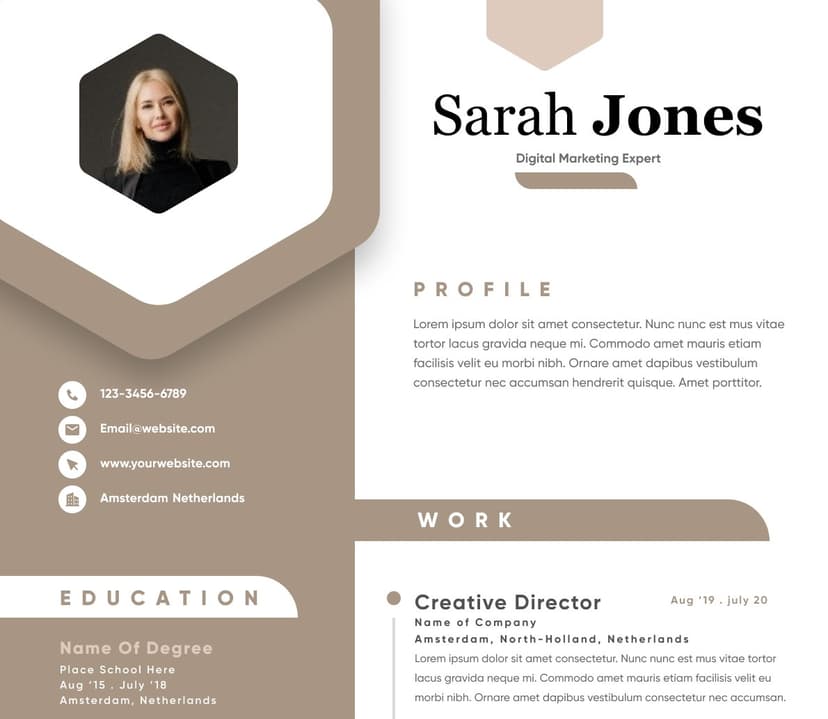
Use professional field-tested resume templates that follow the exact Resume rules employers look for.
Create Resume


 Upload Resume
 Import from Linkedin