
Choose from a wide range of NEWCV resume templates and customize your NEWCV design with a single click.

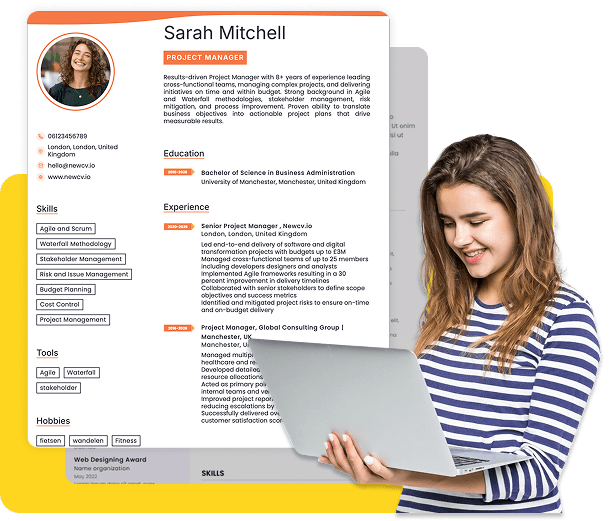
Use ATS-optimised Resume and resume templates that pass applicant tracking systems. Our Resume builder helps recruiters read, scan, and shortlist your Resume faster.

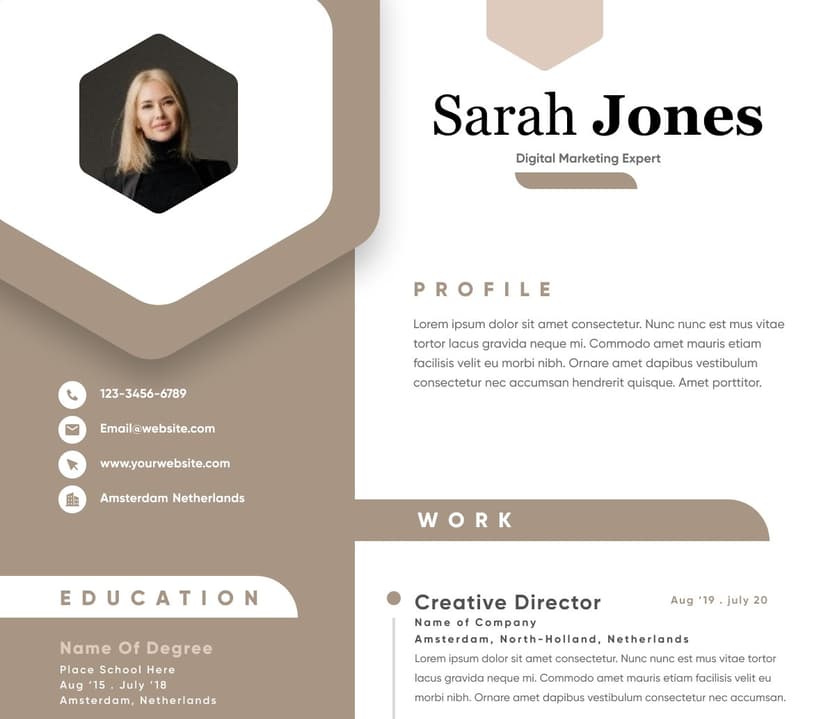
Use professional field-tested resume templates that follow the exact Resume rules employers look for.
Create Resume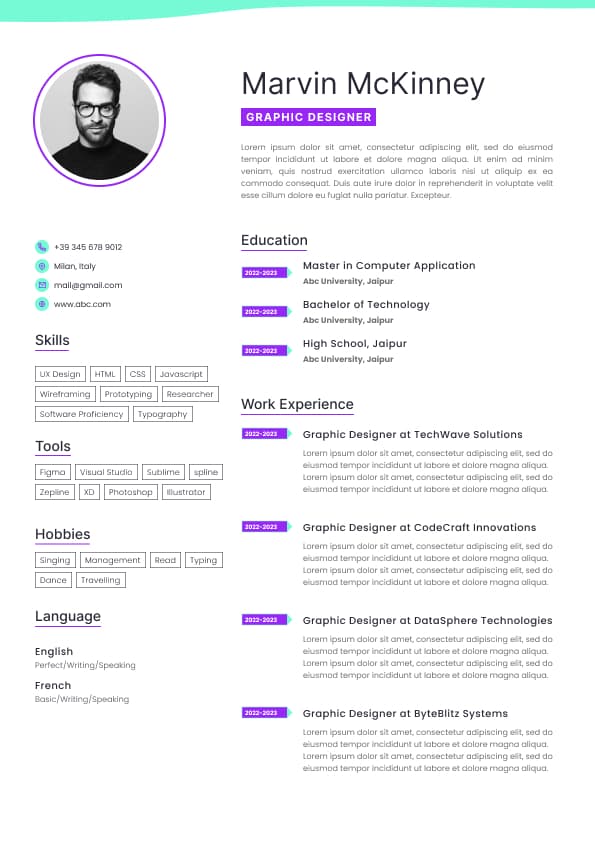
Use professional field-tested resume templates that follow the exact Resume rules employers look for.
Create ResumeAn ATS resume builder can absolutely help you get more interviews in Australia, but only if it creates resumes that work for both applicant tracking systems and human recruiters. Most candidates focus too much on “beating the ATS” and end up with keyword-stuffed resumes that recruiters reject within seconds.
In the Australian job market, the best ATS resume builders do three things well:
Create clean, readable resume structures
Optimise keyword relevance naturally for the role
Present experience in a way hiring managers can quickly assess
The reality is this: ATS software rarely rejects strong candidates on its own. Most resumes fail because they are poorly targeted, badly structured, overloaded with graphics, or too generic for the role. A good ATS resume builder helps solve those problems. A bad one creates templated resumes that look robotic and underqualified.
This guide explains how ATS resume builders actually work in Australia, what recruiters look for, which features matter, what mistakes hurt candidates, and how to choose a builder that improves your interview chances rather than damaging them.
An ATS resume builder is a tool designed to help candidates create resumes that can be correctly scanned, parsed, indexed, and ranked inside applicant tracking systems used by employers and recruiters.
In Australia, ATS platforms are widely used across:
Corporate recruitment
Government hiring
Mining and resources
Healthcare
Professional services
Technology
Banking and finance
Large retail employers
Most candidates misunderstand ATS software completely.
An ATS does not usually “approve” or “reject” resumes automatically the way social media myths suggest.
Instead, modern ATS systems primarily:
Store candidate applications
Parse resume information into structured fields
Allow recruiters to search keywords
Rank relevance against job requirements
Filter based on knockout criteria
Help recruiters manage applicant pipelines
In Australian recruitment, recruiters still make the vast majority of shortlisting decisions manually.
That means your resume must succeed in two stages:
Graduate recruitment programs
Common ATS platforms used in Australia include:
Workday
PageUp
SuccessFactors
Greenhouse
SmartRecruiters
Taleo
Lever
iCIMS
An ATS resume builder typically helps with:
Resume formatting
ATS-compatible layouts
Keyword optimisation
Section structuring
Resume scoring
Skills alignment
Content suggestions
The problem is that many resume builders optimise for ATS readability but ignore recruiter psychology and hiring manager decision-making.
That creates resumes that technically “pass ATS” but fail when viewed by humans.
ATS readability
Human evaluation
A resume builder that only focuses on keyword density without improving clarity usually fails at the second stage.
The strongest ATS resumes in Australia are not the ones with the most keywords.
They are the ones that make recruiter decisions easy.
When recruiters review resumes, they assess:
Relevance to the role
Career stability
Industry alignment
Seniority level
Commercial impact
Technical capability
Communication quality
Evidence of results
Local market fit
Employment chronology
An ATS resume builder should help structure this information clearly.
Recruiters typically spend:
5 to 15 seconds on first-pass resume screening
Longer only when the candidate looks immediately relevant
That means your resume builder must produce resumes that:
Scan fast visually
Surface key qualifications quickly
Match role terminology naturally
Prioritise relevant experience above everything else
Most resume builders advertise flashy features that have little impact on hiring outcomes.
These are the features that genuinely matter in Australia.
This is the baseline requirement.
Your resume builder should produce:
Clean section headings
Standard fonts
Simple layouts
Proper text hierarchy
Consistent formatting
Readable PDF exports
Avoid builders that heavily rely on:
Text boxes
Graphic timelines
Multi-column complexity
Decorative icons
Infographics
Visual rating bars
Many ATS systems can technically parse these elements now, but recruiter readability often suffers badly.
Good ATS resume builders help you align language with the job ad naturally.
They should improve:
Skill alignment
Industry terminology
Job title matching
Technical competency phrasing
They should not encourage:
Keyword stuffing
Repetitive phrasing
Artificial language
Hidden keywords
Australian recruiters spot manipulated ATS resumes immediately.
The best ATS resumes follow predictable recruiter-friendly layouts.
Typical Australian resume structure:
Professional summary
Core skills
Professional experience
Education
Certifications
Technical skills if relevant
Good builders reinforce this structure automatically.
One of the biggest problems with cheap ATS resume builders is forced templating.
Australian recruiters can often tell when candidates mass-produce generic resumes.
Strong resume builders allow:
Full editing flexibility
Tailored summaries
Custom bullet points
Industry-specific positioning
Different resume versions
A resume builder should support strategic tailoring, not replace it.
Most ATS failures are not technical.
They are strategic.
This is the biggest issue recruiters see.
Candidates use:
Broad responsibilities
Empty buzzwords
Generic summaries
Non-specific achievements
Weak Example
“Responsible for customer service and administration duties.”
This tells recruiters almost nothing.
Good Example
“Managed high-volume customer enquiries across phone and email channels while supporting scheduling, invoicing, and CRM administration for a national service team.”
The second version:
Clarifies scope
Shows environment
Adds operational context
Improves keyword relevance naturally
Candidates often apply using the same resume across multiple jobs.
ATS builders cannot fix bad targeting.
If the role requires:
Stakeholder engagement
Project coordination
Contract administration
And your resume only talks generally about “office support”, you will likely rank poorly and fail recruiter review.
This is extremely common.
Many ATS resume builders prioritise aesthetics over hiring effectiveness.
Australian recruiters generally prefer:
Clean formatting
Clear readability
Straightforward layouts
Overdesigned resumes often signal:
Junior candidate thinking
Poor professional judgement
Style over substance
Some builders encourage ATS gaming strategies that damage credibility.
Examples include:
Repeating keywords unnaturally
Adding invisible text
Listing irrelevant software tools
Copy-pasting entire job ads
These tactics often reduce recruiter trust immediately.
The best ATS strategy is surprisingly simple.
Use the terminology employers actually use.
If the job ad says:
Stakeholder engagement
Tender coordination
Financial reporting
Use those exact concepts where truthful and relevant.
This improves:
ATS relevance scoring
Recruiter familiarity
Searchability
Australian recruiters care far more about relevance than resume length.
Your strongest matching experience should appear:
Higher on the page
More detailed
More achievement-focused
An ATS resume builder should allow flexible emphasis.
Many candidates describe duties instead of impact.
Recruiters want evidence.
Strong ATS resumes show:
Revenue impact
Process improvement
Team leadership
Customer outcomes
Operational scale
Efficiency gains
The safest ATS resume formatting includes:
Standard headings
Clear dates
Left-aligned text
Simple bullet formatting
Consistent spacing
Complex design rarely improves interview rates.
For many Australian job seekers, yes.
But only when used properly.
An ATS resume builder helps if:
You struggle with resume formatting
Your resume looks outdated
You need structure guidance
You want ATS-compatible layouts
You need help tailoring content
They are less useful if:
You rely entirely on automation
You use generic AI-generated content
You avoid tailoring resumes
You expect software to replace strategy
The builder is only the framework.
Your positioning still determines interview outcomes.
Useful features:
Resume structure guidance
Skills section assistance
Graduate formatting
ATS-safe templates
Common graduate mistake:
Most valuable features:
Achievement-focused bullet guidance
Keyword alignment
Career progression positioning
Resume tailoring support
This group benefits most from ATS builders because strategic presentation matters heavily here.
Senior professionals need:
Executive-level formatting
Leadership positioning
Commercial impact framing
Complex career structuring
Most cheap ATS builders fail badly at senior-level positioning because they create overly templated executive resumes.
Recruiters increasingly recognise generic AI writing.
Common signs:
Repetitive sentence structure
Empty corporate language
Over-polished phrasing
Lack of specificity
Candidates still need:
Personalisation
Strategic positioning
Real examples
Commercial context
This is a major mistake.
The ATS helps organise candidates.
Recruiters still decide who gets interviewed.
Human readability matters more than algorithm obsession.
Australian resumes differ from other markets.
Australian recruiters generally expect:
Clear, direct language
Concise summaries
Relevant experience focus
Practical achievements
Minimal fluff
Overly American-style self-promotion can sometimes reduce credibility in Australian hiring environments.
Recruiters form rapid assumptions based on:
Resume clarity
Relevance
Professional structure
Career consistency
Communication quality
Strong ATS resumes instantly communicate:
“This person understands the role”
“This candidate matches the environment”
“This resume is easy to assess”
“This applicant is commercially relevant”
Weak ATS resumes create confusion.
Confused recruiters rarely shortlist candidates.
This depends on career stage and complexity.
An ATS resume builder is usually enough if:
You are early or mid-career
Your experience is straightforward
You can write clearly
You understand your target roles
Professional resume support becomes more valuable when:
Changing industries
Targeting leadership roles
Returning after career gaps
Applying in highly competitive sectors
Repositioning senior experience
The biggest difference is strategy.
A strong recruiter-level resume writer understands:
Hiring psychology
Market positioning
Industry expectations
Decision-making patterns
Software alone cannot fully replicate that.
Prioritise builders that:
Use ATS-safe templates
Allow full editing control
Support role-specific tailoring
Produce clean PDF exports
Encourage achievement-focused writing
Avoid builders that:
Push graphic-heavy templates
Auto-fill excessive jargon
Limit customisation heavily
Focus mainly on visual design
The best ATS resume builder is the one that helps you produce:
A clearer resume
A more targeted application
Faster recruiter comprehension
Better role alignment
That is what actually improves interview conversion.
The real goal is shortlist conversion.
Too many candidates optimise for ATS software while forgetting how recruiters actually hire.
Strong Australian resumes:
Match the role clearly
Present relevant experience fast
Communicate commercial value
Use natural industry language
Stay easy to scan
ATS resume builders are tools, not solutions.
Used strategically, they improve resume structure, readability, and keyword alignment.
Used poorly, they create generic resumes that disappear into applicant systems without generating interviews.
The candidates who consistently secure interviews are not the ones with the “most ATS keywords”.
They are the ones whose resumes immediately make recruiters think:
“This person looks like they can do the job.”


 Upload Resume
 Import from Linkedin