
Choose from a wide range of NEWCV resume templates and customize your NEWCV design with a single click.

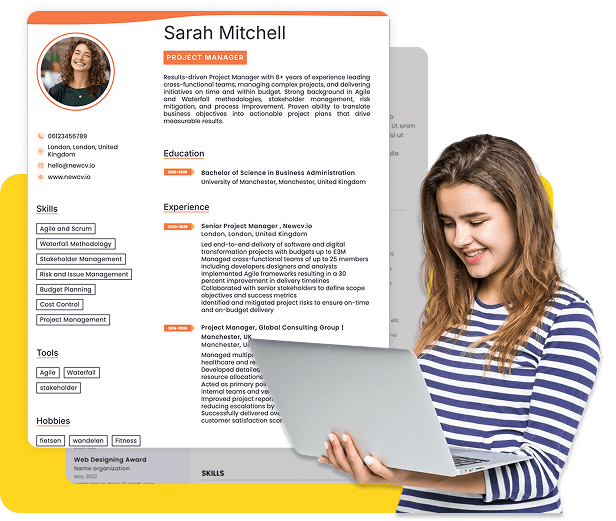
Use ATS-optimised Resume and resume templates that pass applicant tracking systems. Our Resume builder helps recruiters read, scan, and shortlist your Resume faster.

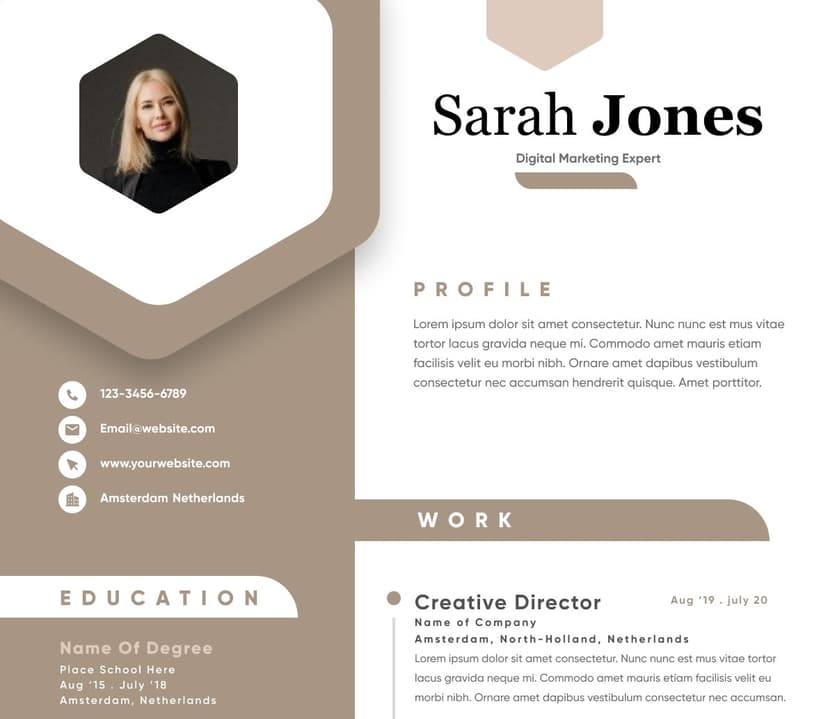
Use professional field-tested resume templates that follow the exact Resume rules employers look for.
Create Resume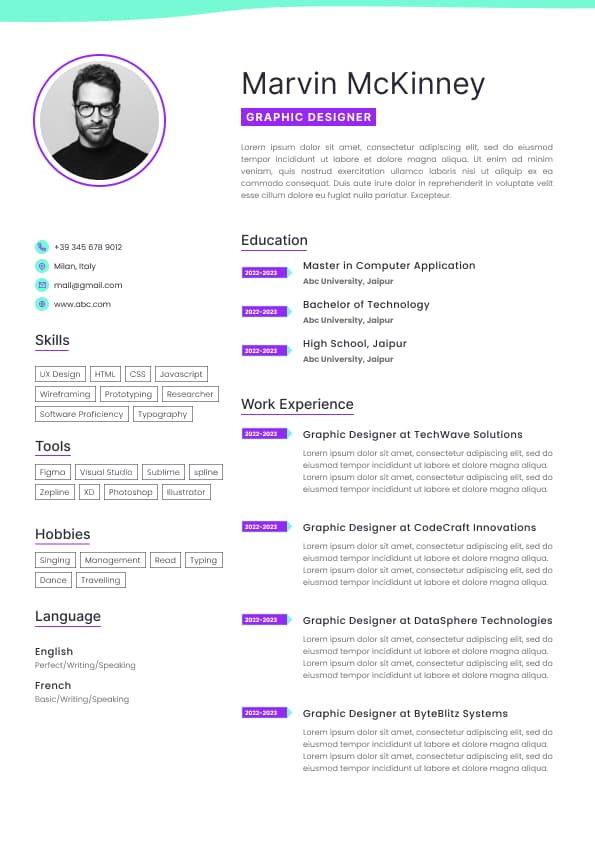
Use professional field-tested resume templates that follow the exact Resume rules employers look for.
Create ResumeAn effective Australian resume format is clear, achievement-focused, easy to scan, and tailored to the role. Most Australian recruiters spend less than 30 seconds on the first review, so your resume must immediately show relevance, credibility, and measurable impact.
In Australia, the preferred resume format is typically:
Reverse chronological order
2 to 4 pages depending on seniority
ATS-friendly formatting
Clear professional summary
Achievement-based experience section
Minimal graphics or design elements
The standard Australian resume format follows a reverse chronological structure, where your most recent experience appears first.
This format works best because it aligns with how recruiters and hiring managers assess candidates during initial screening.
A modern Australian resume usually includes:
Contact details
Professional summary
Core skills
Work experience
Education
Certifications or licences if relevant
Technical skills if relevant
This is one of the biggest misconceptions candidates have.
In Australia, a resume does not need to be restricted to one page.
Typical expectations are:
Entry-level candidates: 1 to 2 pages
Mid-level professionals: 2 to 3 pages
Senior professionals and executives: 3 to 4 pages
What matters is not page count. It is quality and relevance.
Recruiters reject resumes because they are:
Generic
Poorly structured
Filled with responsibilities instead of outcomes
Australian spelling and terminology
Tailored to the specific role and industry
What gets candidates shortlisted is not fancy formatting. It is relevance, clarity, and evidence of results. Australian hiring managers want to quickly understand:
What you do
Your level of experience
Your industry background
Your commercial impact
Whether you fit the role requirements
The strongest resumes are written strategically for recruiter screening behaviour, not just to “look professional”.
Optional extras like awards, publications, or memberships
Unlike some international CV styles, Australian resumes generally avoid:
Photos
Date of birth
Marital status
Nationality
Full home address
Personal information unrelated to the role
Australian hiring culture strongly prioritises relevance and practical experience over excessive personal detail.
Difficult to scan
Not tailored to the role
A strong 3-page resume will outperform a weak 1-page resume every time.
Include:
Full name
Mobile number
Professional email address
LinkedIn profile if updated and relevant
City and state only
Good Example
Sarah Mitchell
Sydney, NSW
0400 000 000
sarah.mitchell@email.com
linkedin.com/in/sarahmitchell
Avoid:
Full street address
Multiple phone numbers
Unprofessional email addresses
Irrelevant social media links
Australian recruiters rarely need your full address during early screening.
Your professional summary is one of the most important sections of the entire resume.
This section should immediately position you for the role.
A strong summary:
Matches the target role
Aligns with the job ad
Highlights years of experience
Shows industry expertise
Includes measurable value or specialisation
Recruiters are subconsciously asking:
Does this candidate fit the role quickly?
Are they aligned to our industry?
Do they look commercially valuable?
Are they likely worth interviewing?
Weak summaries fail because they are vague and generic.
Weak Example
“Hardworking professional seeking new opportunities where I can grow my skills.”
This tells the recruiter nothing useful.
Good Example
“Project Manager with 8+ years’ experience delivering commercial construction projects across NSW valued up to $45M. Strong background in stakeholder management, subcontractor coordination, budget control, and programme delivery within Tier 2 construction environments.”
The second version positions the candidate immediately.
Australian recruiters often scan the skills section before reading experience in detail.
Your skills should align directly with the target role.
Stakeholder Management
Financial Reporting
Contract Negotiation
WHS Compliance
Team Leadership
Strategic Planning
CRM Systems
Talent Acquisition
Business Development
Project Delivery
Avoid:
Overloading with buzzwords
Listing outdated software
Including soft skills without evidence
Generic filler like “team player” or “hardworking”
Skills only matter if your experience later proves them.
This section determines whether you get shortlisted.
Australian hiring managers care less about what your duties were and more about:
What you achieved
How you improved outcomes
Whether your experience matches their environment
For each role include:
Job title
Company name
Location
Employment dates
Brief company context if helpful
Achievement-focused bullet points
Strong bullet points:
Start with action verbs
Include measurable outcomes
Show ownership
Demonstrate commercial impact
Weak Example
This is passive and generic.
Good Example
The second version shows scale, ownership, and measurable results.
Most resumes read like job descriptions.
Recruiters already know what the role does.
What they want to know is:
Were you good at it?
Did you perform above average?
What impact did you have?
How complex was your environment?
That is why achievement-driven writing consistently outperforms responsibility-heavy resumes.
Good formatting improves readability and ATS compatibility.
Use clean fonts like Calibri, Arial, or Aptos
Font size between 10 and 12
Consistent spacing and headings
Use clear section titles
Save as PDF unless otherwise requested
Use standard margins
Keep formatting simple and professional
Many Australian employers use Applicant Tracking Systems.
ATS software struggles with:
Text boxes
Graphics
Icons
Tables
Multiple columns
Over-designed templates
Simple formatting usually performs better.
One of the biggest myths online is that heavily designed resumes stand out positively. In reality, many recruiters see them as harder to scan.
Usually no.
Career objectives are outdated unless:
You are changing careers
You are a graduate
You are re-entering the workforce
You need to explain a major transition
Most experienced candidates should use a professional summary instead.
For experienced professionals, education should usually appear after work experience.
Include:
Qualification
Institution
Graduation year if recent
Relevant distinctions if valuable
Bachelor of Commerce
University of Melbourne
Graduated: 2020
If you are highly experienced, the education section can remain brief.
Not directly on the resume.
You do not need:
“References available upon request.”
Australian recruiters already assume references will be available later in the process.
Only provide referees when specifically requested.
Many resumes are technically acceptable.
Very few are strategically positioned.
The resumes that consistently generate interviews usually do three things exceptionally well:
Align tightly with the target role
Demonstrate measurable impact
Make recruiter screening easy
Recruiters typically scan in this order:
Current title
Recent employer
Industry alignment
Years of experience
Keywords matching the role
Achievements
Stability and career progression
If critical information is buried, unclear, or diluted by irrelevant content, your chances drop quickly.
Generic resumes perform poorly in competitive markets.
Tailoring matters because recruiters assess relevance fast.
Tailoring is not rewriting the entire document every time.
It means strategically adjusting:
Professional summary
Core skills
Keywords
Priority achievements
Industry terminology
A Project Manager applying for:
Construction roles
IT roles
Infrastructure roles
Should not use the exact same resume version.
Hiring managers look for industry-specific relevance.
Candidates often write resumes based on what they personally value.
Recruiters assess based on:
Relevance
Commercial value
Risk reduction
Role fit
Your resume must answer the employer’s priorities, not your personal story.
Words like:
Motivated
Passionate
Dynamic
Results-driven
Mean almost nothing without evidence.
Recruiters trust outcomes, not adjectives.
Older or unrelated experience should be reduced or removed if it dilutes the target positioning.
A focused resume is stronger than an overly broad one.
ATS systems and recruiters both rely heavily on keyword relevance.
If the role asks for:
Stakeholder management
Procurement
Salesforce
WHS compliance
And your resume uses completely different language, you may be filtered out even if qualified.
Visual resumes rarely help in Australian corporate hiring.
They often:
Reduce ATS readability
Distract from content
Look less professional in conservative industries
Content quality matters far more than visual complexity.
Strong hiring managers assess more than qualifications.
They look for signals like:
Career progression
Stability
Commercial awareness
Leadership level
Scope of responsibility
Industry credibility
Communication quality
Attention to detail
Your resume communicates all of this indirectly.
Even formatting consistency influences perception.
A poorly formatted resume can subconsciously signal low attention to detail.
The strongest resumes usually position candidates around:
Impact
Specialisation
Credibility
Scale
Industry relevance
Instead of:
“Managed projects”
Use:
“Delivered infrastructure projects valued between $5M and $30M across transport and utilities sectors.”
Instead of:
“Handled recruitment”
Use:
“Managed end-to-end recruitment across technical and corporate functions, reducing average time-to-fill from 42 to 28 days.”
Specificity creates credibility.
Before sending your resume, check:
Is the resume tailored to the role?
Does the first half-page position you clearly?
Are achievements measurable?
Is formatting consistent?
Is the document ATS-friendly?
Are keywords aligned to the job ad?
Is unnecessary information removed?
Are spelling and grammar error-free?
Does the experience match the target role logically?
Would a recruiter understand your value within 30 seconds?
If not, revise before applying.


 Upload Resume
 Import from Linkedin