
Choose from a wide range of NEWCV resume templates and customize your NEWCV design with a single click.

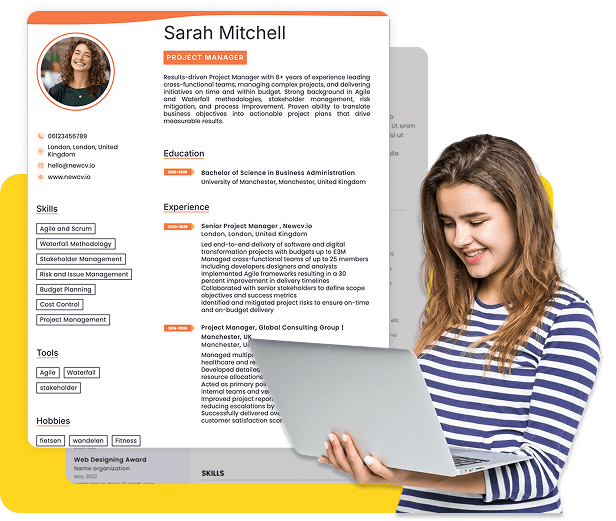
Use ATS-optimised Resume and resume templates that pass applicant tracking systems. Our Resume builder helps recruiters read, scan, and shortlist your Resume faster.

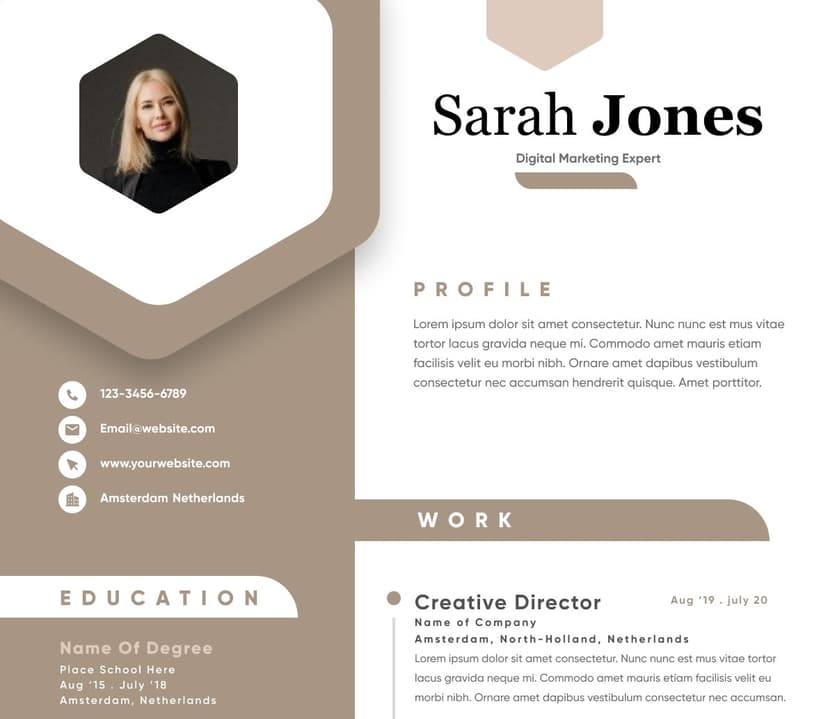
Use professional field-tested resume templates that follow the exact Resume rules employers look for.
Create Resume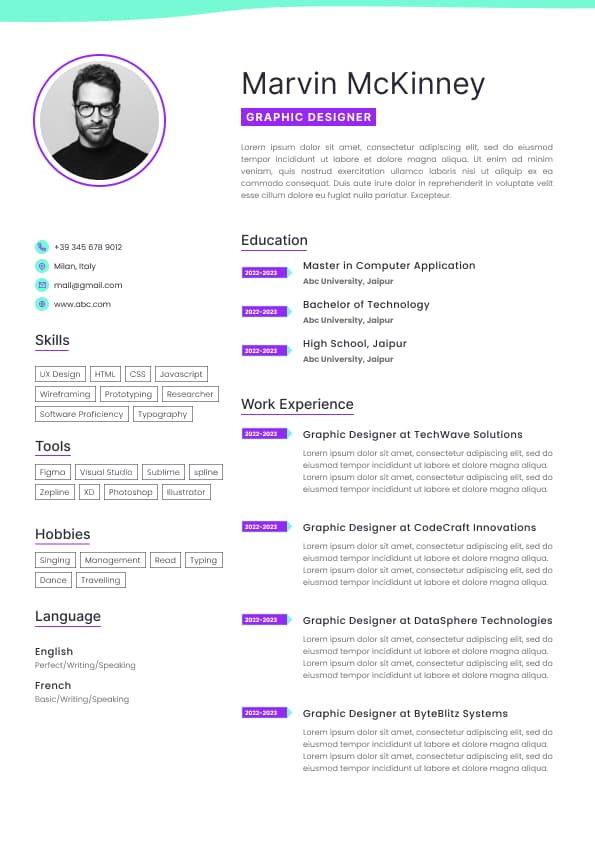
Use professional field-tested resume templates that follow the exact Resume rules employers look for.
Create ResumeThe best Australian resume layout is clean, ATS-friendly, achievement-focused, and easy for recruiters to scan in under 30 seconds. In Australia, hiring managers expect a resume that clearly shows your recent experience, measurable results, relevant skills, and suitability for the role without unnecessary graphics, complex formatting, or long career summaries.
A strong Australian resume layout typically includes:
Contact details
Professional summary
Key skills
Work experience
Education
Certifications or licences if relevant
For most Australian industries, the ideal resume length is:
Most candidates underestimate how quickly resumes are assessed.
In Australia, recruiters often review resumes in stages:
Initial ATS screening
Rapid recruiter scan
Shortlisting comparison
Hiring manager review
Your layout directly affects performance at every stage.
A poorly structured resume creates friction. Even strong candidates get rejected because recruiters cannot quickly identify relevance, seniority, achievements, or technical alignment.
A good layout improves:
ATS readability
Recruiter scanning speed
2 pages for early to mid-career professionals
3 pages maximum for senior, technical, executive, or government roles
The biggest mistake candidates make is confusing design with effectiveness. Australian recruiters care far more about clarity, relevance, and evidence of impact than visually impressive templates.
If your resume layout makes information difficult to scan, ATS systems struggle to parse it properly, or achievements are buried under generic responsibilities, your chances of securing interviews drop significantly.
This guide explains exactly how Australian recruiters evaluate resume layouts, what works in the current market, and how to structure a resume that performs well with both ATS software and hiring managers.
Perceived professionalism
Information hierarchy
Interview conversion rates
Australian recruiters typically spend between 10 and 30 seconds on first-pass resume screening. That means layout is not cosmetic. It affects whether your strengths are even seen.
Australian hiring culture generally values:
Clear communication
Practicality over flashy design
Direct evidence of results
Relevance to the advertised role
Easy readability
Unlike some overseas markets, Australian resumes usually avoid:
Photos
Date of birth
Marital status
Religious information
Excessive colours or graphics
Highly stylised infographic resumes
Recruiters here are typically looking for competence, clarity, and alignment rather than aggressive self-promotion.
Your resume should feel professional, modern, and easy to navigate without appearing overly designed.
Your contact details should appear at the top of page one.
Include:
Full name
Mobile number
Professional email address
LinkedIn profile
Location suburb and state
You do not need:
Full residential address
Headshot
Multiple phone numbers
Personal social media accounts
John Smith
123 Smith Street, Brisbane QLD 4000
DOB: 14/04/1992
Married
Instagram: johnsmithlife
John Smith
Brisbane, QLD
0400 000 000
johnsmith@email.com.au
linkedin.com/in/johnsmith
The second version aligns with modern Australian hiring expectations and avoids unnecessary information that adds no hiring value.
Your professional summary should sit directly below your contact details.
This section is critical because recruiters often decide whether to continue reading based on these first lines.
A strong summary should:
Match the target role
Highlight years of experience
Show industry alignment
Include measurable strengths
Position you strategically
Recruiters respond well to summaries that quickly answer:
What does this person do?
What level are they at?
What industries have they worked in?
Why are they relevant for this role?
Hardworking team player seeking opportunities to grow my career and contribute to company success.
This says nothing meaningful.
Project Coordinator with 5+ years’ experience delivering commercial construction projects across healthcare and education sectors. Strong background in contractor coordination, scheduling, stakeholder communication, and compliance management within Tier 2 construction environments.
This immediately positions the candidate clearly.
Australian recruiters heavily rely on skills sections for rapid alignment checks.
This section should be concise and targeted to the role.
Good skills sections combine:
Technical skills
Industry knowledge
Software/tools
Operational capabilities
Stakeholder Management
Budget Forecasting
Contract Administration
WHS Compliance
CRM Management
Microsoft Excel
SAP
Project Scheduling
Avoid soft-skill overload.
Recruiters are tired of seeing:
Team player
Hard worker
Fast learner
Motivated individual
These phrases add little credibility unless supported by achievements later in the resume.
This is the most important section on your resume.
Australian recruiters typically assess work experience in this order:
Job title relevance
Employer quality
Employment dates
Scope of responsibilities
Measurable achievements
Your layout must support this scanning behaviour.
For each role, include:
Job title
Company name
Location
Employment dates
Short role overview
Achievement-focused bullet points
Project Coordinator
ABC Construction | Melbourne, VIC
Jan 2022 – Present
Managed project coordination activities across commercial fit-out projects valued up to $8M, supporting delivery teams across scheduling, procurement, and compliance.
Coordinated subcontractor schedules across 12 concurrent projects
Reduced procurement delays by 18% through supplier tracking improvements
Supported successful delivery of projects within budget and timeline constraints
Managed documentation compliance for WHS and contractor onboarding
This structure works because recruiters can quickly absorb:
Seniority
Industry relevance
Scale
Impact
Operational competence
Many modern resume templates damage ATS readability.
Common problems include:
Text boxes
Columns
Icons
Graphics
Skill bars
Tables
Complex formatting
ATS systems can misread or completely skip content inside certain layouts.
Australian recruiters often prefer simpler formatting because it speeds up review.
Large text blocks reduce readability dramatically.
Recruiters scan, not study.
Your resume should use:
Short paragraphs
Clear spacing
Achievement bullets
Logical structure
Candidates frequently list tasks instead of demonstrating impact.
Responsible for customer service and handling enquiries.
Resolved customer enquiries with a 96% satisfaction rating while managing daily inbound volumes exceeding 80 calls.
The second version provides evidence, not just duties.
If your most important information is buried, recruiters may never see it.
Your strongest selling points should appear early:
Relevant experience
Key achievements
Industry alignment
Technical capabilities
Most medium and large Australian employers use Applicant Tracking Systems.
ATS software scans resumes before recruiters often see them.
To improve ATS compatibility:
Use standard section headings
Submit resumes as Word documents unless PDF is requested
Avoid tables and graphics
Use standard fonts
Include exact keywords from the job ad naturally
Keep formatting simple and structured
Recruiters generally prefer:
Calibri
Arial
Aptos
Helvetica
Cambria
Ideal font size:
10.5 to 12 for body text
14 to 18 for headings
Usually no.
Two-column layouts can create ATS parsing issues and make scanning more difficult on mobile devices.
Single-column resumes perform better in most Australian industries because they:
Improve ATS compatibility
Increase readability
Reduce formatting errors
Support faster scanning
Exceptions may include:
Graphic design
Creative industries
Some marketing portfolios
Even then, readability should always come first.
Graduates should prioritise:
Education
Internships
Projects
Technical skills
Volunteer work
Because experience is limited, layout should highlight potential and capability clearly.
Mid-level professionals should focus heavily on:
Career progression
Achievements
Industry expertise
Team leadership
Operational impact
This is where strong achievement structuring becomes crucial.
Senior leaders need more strategic positioning.
Executive resumes should emphasise:
Commercial impact
Revenue growth
Transformation leadership
Strategic initiatives
Board engagement
Organisational scale
Australian executive resumes are still generally cleaner and less self-promotional than some US-style resumes.
No.
Photos are not standard in Australia and can create unconscious bias concerns.
Most Australian recruiters prefer resumes without photos unless required for specific industries such as acting or modelling.
In most cases:
Use Word format (.docx) for ATS-heavy applications
Use PDF only if formatting consistency is essential and the employer accepts PDFs
Some ATS platforms parse Word documents more reliably than PDFs.
If unsure, follow the job ad instructions exactly.
Hiring managers review resumes differently from recruiters.
Recruiters focus on filtering and alignment.
Hiring managers focus on:
Problem-solving capability
Team fit
Technical credibility
Commercial impact
Relevant achievements
This means your layout must support both quick screening and deeper evaluation.
Strong resumes allow hiring managers to quickly identify:
Business impact
Complexity handled
Industry familiarity
Scope of responsibility
Leadership capability
Many candidates accidentally undersell themselves through poor layout and wording.
Senior resumes usually demonstrate:
Strategic contribution
Business outcomes
Ownership
Stakeholder influence
Decision-making authority
They also avoid overly task-heavy bullet points.
Assisted with reporting
Helped manage projects
Supported operations
Led reporting optimisation initiatives across national operations
Managed project delivery across cross-functional stakeholder groups
Improved operational efficiency through process redesign initiatives
Language changes perceived seniority significantly.
Even in modern hiring, basic professionalism still influences perception.
Always ensure:
Consistent spacing
Uniform date formatting
Professional grammar
Australian spelling
Clear alignment
No excessive bolding
Clean section structure
Small formatting inconsistencies can subtly damage perceived attention to detail.
Ideal length depends on experience level.
General expectations:
Graduate: 1 to 2 pages
Mid-career: 2 pages
Senior professionals: 3 pages maximum
Longer resumes are acceptable only when content remains highly relevant.
Australian recruiters strongly dislike unnecessary filler.
Content matters more, but layout controls whether the content gets read properly.
Think of layout as a delivery system.
Even excellent experience can fail if:
Information is difficult to find
Formatting creates friction
Achievements are buried
ATS cannot parse the file correctly
The strongest resumes combine:
Clear structure
Relevant positioning
Measurable outcomes
Fast readability
Before submitting your resume, check:
Is the layout clean and easy to scan?
Are achievements measurable and visible?
Is the document ATS-friendly?
Does the summary clearly position you?
Are skills relevant to the target role?
Is the formatting consistent throughout?
Is the resume tailored to the role?
Are unnecessary graphics removed?
Is the length appropriate?
Would a recruiter understand your value within 30 seconds?
If the answer to the last question is no, the resume still needs work.


 Upload Resume
 Import from Linkedin