
Choose from a wide range of NEWCV resume templates and customize your NEWCV design with a single click.

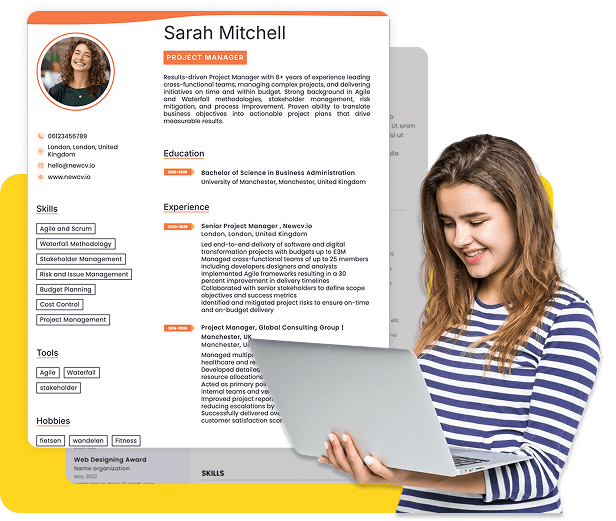
Use ATS-optimised Resume and resume templates that pass applicant tracking systems. Our Resume builder helps recruiters read, scan, and shortlist your Resume faster.

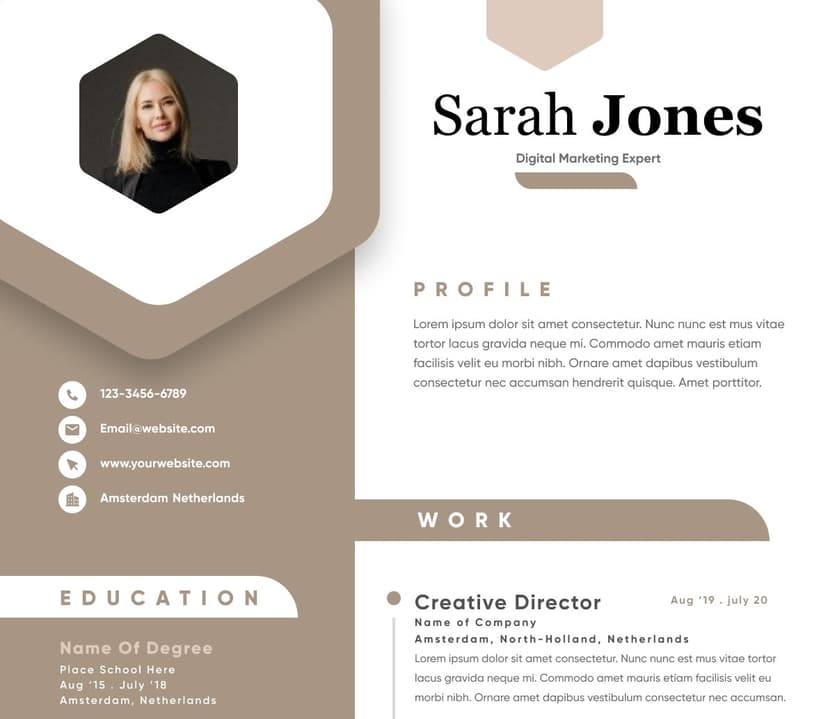
Use professional field-tested resume templates that follow the exact Resume rules employers look for.
Create Resume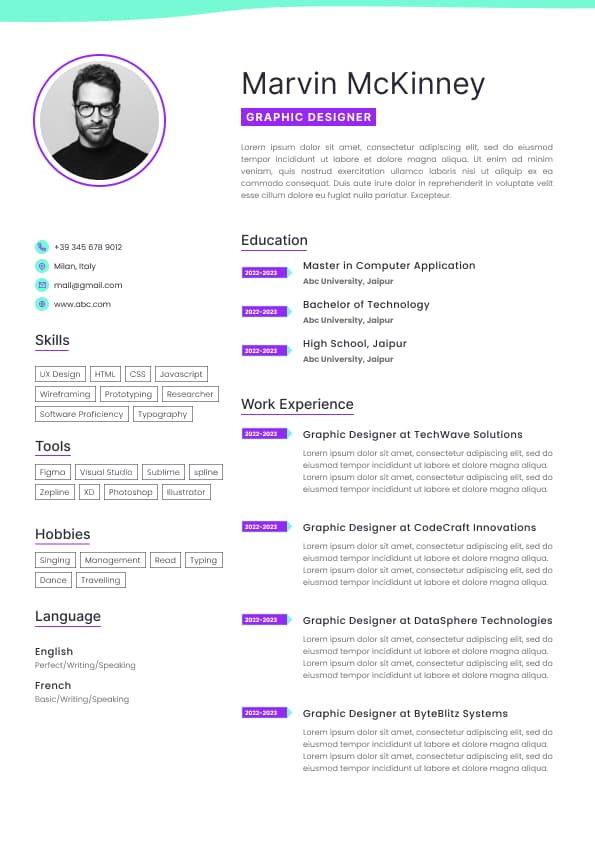
Use professional field-tested resume templates that follow the exact Resume rules employers look for.
Create ResumeAn Australian resume builder can absolutely help you create a cleaner, more professional resume faster, but most candidates use them incorrectly. The biggest issue recruiters see is not poor formatting. It’s generic resumes that look polished but say nothing meaningful about the candidate’s value.
A strong Australian resume builder should help you:
Create an ATS-friendly resume format
Match Australian hiring standards
Improve readability for recruiters and hiring managers
Structure achievements properly
Tailor applications faster
An Australian resume builder is a tool designed to help job seekers create resumes that align with local hiring expectations, ATS requirements, and recruiter preferences in Australia.
Unlike international CV builders that often follow US or European standards, Australian-focused resume builders generally support:
Australian resume formatting
Appropriate resume length expectations
Local terminology and spelling
ATS-compatible layouts
Professional summary structures used in Australia
Selection criteria and government application support in some cases
The best resume builders simplify structure and formatting while still allowing customisation. That flexibility matters because Australian recruiters strongly prefer resumes that feel tailored to the role and industry rather than mass-produced.
Most candidates overestimate the importance of design and underestimate the importance of positioning.
From a recruiter’s perspective, the core evaluation questions are:
Does this candidate match the role quickly and clearly?
Is their experience relevant to our environment?
Can they demonstrate measurable outcomes?
Is the resume easy to scan?
Does the candidate understand how to present themselves professionally?
A resume builder should help support those goals, not distract from them.
Recruiters in Australia typically assess these areas first:
Avoid formatting mistakes that break applicant tracking systems
What it should not do is generate vague, keyword-stuffed content that sounds AI-written or copied from templates.
In the Australian job market, recruiters typically scan resumes in under 30 seconds during the first review. The builder you choose matters less than how strategically you use it. A well-structured resume with strong positioning, relevant achievements, and clear alignment to the role will outperform a visually impressive but generic CV almost every time.
Current role and seniority
Industry relevance
Employment stability
Key achievements
Technical skills
Communication quality
Resume readability
Evidence of impact
This is why many auto-generated resumes fail. They focus heavily on responsibilities instead of outcomes.
“Responsible for customer service and administrative support.”
“Managed front-desk operations and resolved customer enquiries, contributing to a 22% improvement in client satisfaction scores over 12 months.”
One sounds passive and generic. The other demonstrates measurable value.
Not all resume builders are equally useful for Australian job seekers. Some prioritise visual design over ATS compatibility. Others produce extremely generic content that recruiters can spot immediately.
Here are the strongest options based on recruiter usability, ATS performance, flexibility, and suitability for the Australian market.
:contentReference[oaicite:0]
Canva is extremely popular in Australia because it’s easy to use and visually polished. However, it works best for creative industries rather than traditional corporate roles.
Marketing
Design
Creative industries
Personal branding
Freelancer portfolios
Over-designed templates can break ATS readability
Multi-column layouts may confuse parsing systems
Some templates prioritise visuals over clarity
Many Canva resumes look impressive initially but become difficult to scan quickly. If using Canva, choose a clean single-column format with strong spacing and minimal graphics.
:contentReference[oaicite:1]
Resume.io is popular because it simplifies resume creation and includes ATS-friendly layouts.
Entry-level candidates
Career changers
General corporate applications
Fast resume creation
Easy formatting
Good ATS compatibility
Helpful structure prompts
Clean professional layouts
Generated content often sounds generic
Heavy reliance on template wording
Limited strategic customisation
The platform is useful structurally, but candidates should rewrite most auto-generated bullet points.
:contentReference[oaicite:2]
Novorésumé tends to balance professional formatting and ATS functionality better than many highly visual builders.
Mid-level professionals
Corporate applications
Professional services
Tech and operations roles
Strong readability
Clean hierarchy
Better modern formatting balance
Easier achievement presentation
This style generally aligns well with Australian recruiter preferences because it feels professional without becoming overly corporate or outdated.
:contentReference[oaicite:3]
LinkedIn’s built-in resume tools can help streamline applications, especially when candidates already maintain a strong profile.
Fast application workflows
White-collar professionals
Networking-focused job searches
Most LinkedIn-generated resumes become profile summaries rather than strategic resumes. The content usually requires significant refinement.
Recruiters often notice when candidates simply export their LinkedIn profile without tailoring it.
:contentReference[oaicite:4]
Zety is widely used but produces highly templated resumes unless customised carefully.
Candidates needing structure guidance
First-time resume writers
Administrative and support roles
Recruiters increasingly recognise repetitive Zety phrasing because many applicants use identical wording.
This becomes a problem in competitive Australian markets where differentiation matters heavily.
ATS compatibility is one of the most misunderstood areas of resume writing.
Many candidates believe ATS systems automatically reject resumes aggressively. In reality, most ATS platforms simply organise and search applications.
The bigger issue is poor parsing.
Text boxes
Graphics-heavy layouts
Tables for critical information
Unusual fonts
Multi-column complexity
Header/footer content hiding important information
The safest Australian resume format typically includes:
Single-column layout
Clear section headings
Standard fonts
Reverse chronological order
Simple bullet formatting
Clean spacing
Consistent structure
Many hiring managers still manually review resumes after ATS filtering. A resume that satisfies ATS but feels difficult for humans to read still performs poorly.
Good resumes balance:
ATS readability
Human readability
Strategic positioning
Most resume builder failures come from how candidates use the tools rather than the tools themselves.
This is now one of the most common recruiter complaints.
Many resume builders generate bullet points that sound polished but meaningless.
“Dedicated professional with strong communication skills and proven ability to work in fast-paced environments.”
This says almost nothing.
“Managed inbound customer escalations across retail and online channels, maintaining a 94% customer satisfaction rating during peak seasonal periods.”
Specificity creates credibility.
Australian hiring managers generally prefer:
Clean
Professional
Easy-to-read
Moderately modern
They do not usually want:
Excessive colour
Infographics
Skill bars
Graphic timelines
Highly stylised layouts
Especially for:
Government
Finance
Healthcare
Operations
Mining
Logistics
Corporate environments
Strong candidates tailor resumes strategically.
That does not mean rewriting everything every time.
It means adjusting:
Professional summary
Key skills
Achievement emphasis
Industry terminology
Keywords aligned to the role
Resume builders are most effective when they help speed up tailoring, not mass application spam.
The ideal format depends partly on industry and seniority, but most successful Australian resumes follow a similar structure.
Include:
Name
Mobile number
Professional email
LinkedIn profile
City and state
Do not include:
Full address
Date of birth
Photo
Marital status
Photos remain uncommon in Australian resumes outside some creative sectors.
This should position the candidate strategically, not describe personality traits.
“Hardworking team player seeking opportunities for career growth.”
“Operations Coordinator with 6+ years’ experience across logistics and supply chain environments, specialising in inventory control, stakeholder coordination, and process improvement within high-volume distribution settings.”
Focus on relevant, role-specific capabilities.
Stakeholder management
Project coordination
SAP
Financial reporting
WHS compliance
Payroll processing
Data analysis
Contract administration
Avoid generic filler like:
Team player
Fast learner
Hard worker
This remains the most important section.
Strong resumes include:
Context
Scope
Outcomes
Metrics where possible
Recruiters want evidence, not task lists.
Position this section strategically based on:
Industry
Seniority
Relevance
For experienced professionals, education should rarely dominate the top half of the resume.
AI resume tools are becoming standard, but recruiters are increasingly identifying AI-generated patterns.
The problem is not AI itself.
The problem is low-quality prompting and zero customisation.
First drafts
Resume restructuring
Achievement brainstorming
Tailoring support
Grammar improvement
Generating achievements without context
Writing leadership examples generically
Creating identical summaries
Stuffing keywords unnaturally
The strongest candidates use AI as an assistant, not a replacement for strategic thinking.
The best resumes still reflect:
Real experience
Clear positioning
Human communication
Industry relevance
The best builder depends on your career stage, industry, and application goals.
Many resume builders advertise:
ATS optimisation
AI writing
Interview-winning templates
But recruiters care far more about:
Clarity
Relevance
Readability
Positioning
This is non-negotiable for online applications.
You need control over:
Wording
Layout
Section order
Achievement emphasis
The platform should support:
Australian spelling
Resume conventions
Appropriate formatting expectations
Poor PDF formatting destroys otherwise strong resumes.
Always test exports carefully before applying.
This depends on candidate complexity.
Early-career candidates
Straightforward career paths
Basic role transitions
Internal applications
Targeting executive roles
Changing industries
Returning after career gaps
Applying in highly competitive sectors
Struggling with positioning
Applying for senior leadership roles
Many candidates do not actually need a resume rewrite.
They need:
Better positioning
Stronger achievements
Cleaner structure
Clearer relevance to the target role
A good resume builder can help with that if used strategically.
Candidates often assume resumes are judged purely on qualifications.
In reality, hiring managers evaluate risk.
They assess:
Can this person perform quickly?
Will they fit the environment?
Do they communicate clearly?
Does their experience align practically?
Are they likely to stay?
This is why tailored relevance matters more than broad experience lists.
Hiring managers respond strongly to:
Industry alignment
Measurable outcomes
Stable progression
Clear scope
Specific achievements
Practical commercial impact
Common red flags include:
Vague achievements
Overuse of buzzwords
Poor formatting
Unexplained employment gaps
Inconsistent dates
Generic summaries
Keyword stuffing
Australian resumes are typically:
2 pages for most professionals
3 pages maximum for highly experienced candidates
1 page only for graduates or junior applicants
Longer resumes are acceptable when:
The experience is highly relevant
The candidate is senior
The content remains valuable and readable
Recruiters do not reject resumes purely because they exceed two pages.
They reject resumes that waste space.
An Australian resume builder is only as effective as the strategy behind it.
The strongest resumes are not necessarily the most visually impressive. They are the clearest, most relevant, and easiest for recruiters to assess quickly.
The best-performing candidates use resume builders to:
Save time
Improve structure
Maintain consistency
Tailor applications faster
But they still apply recruiter-level thinking to:
Positioning
Achievement writing
Industry relevance
Resume strategy
That combination is what consistently leads to more interviews in the Australian market.


 Upload Resume
 Import from Linkedin