
Choose from a wide range of NEWCV resume templates and customize your NEWCV design with a single click.

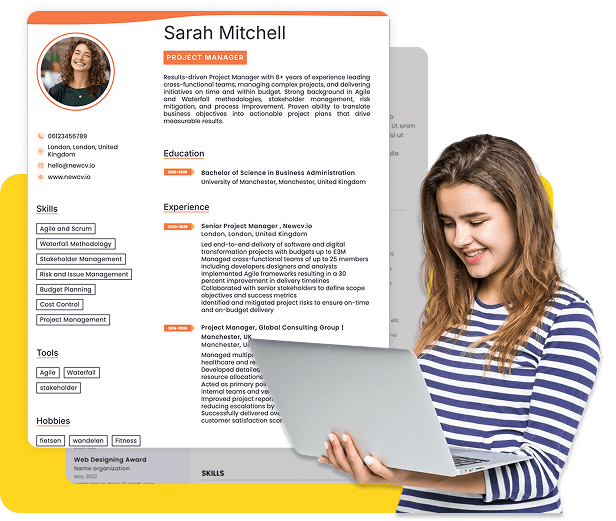
Use ATS-optimised Resume and resume templates that pass applicant tracking systems. Our Resume builder helps recruiters read, scan, and shortlist your Resume faster.

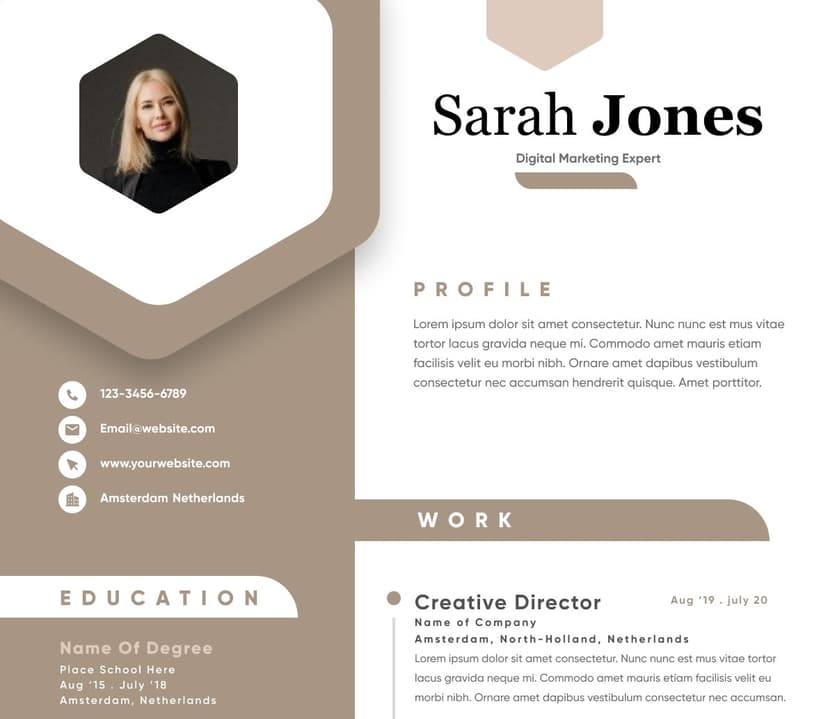
Use professional field-tested resume templates that follow the exact Resume rules employers look for.
Create Resume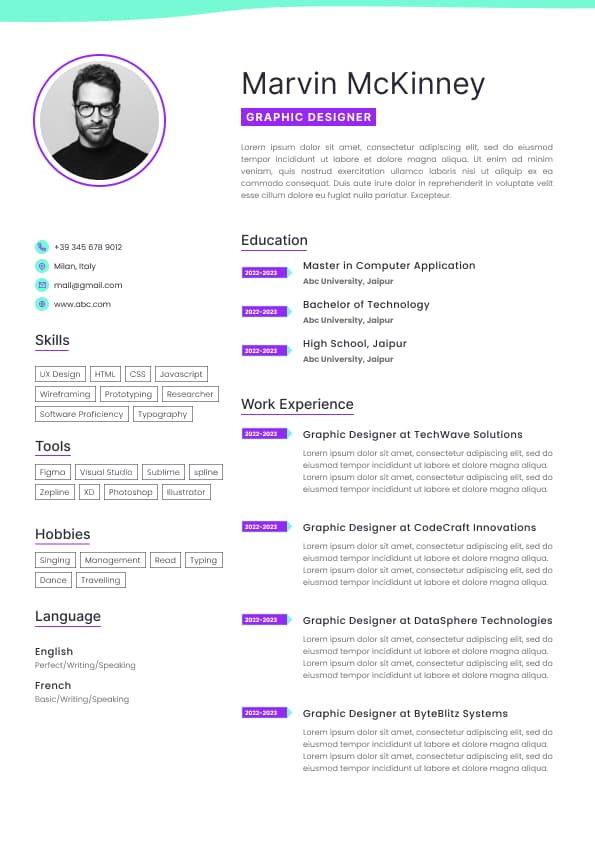
Use professional field-tested resume templates that follow the exact Resume rules employers look for.
Create ResumeAn effective Australian resume is concise, achievement-focused, ATS-friendly, and tailored to the role you are applying for. Most Australian employers expect a resume between 2 and 4 pages depending on experience level, with clear results, measurable achievements, and direct alignment to the advertised role. Generic resumes rarely perform well in Australia’s competitive hiring market, especially when recruiters often spend less than 30 seconds on an initial scan.
The biggest mistake candidates make is writing a resume that reads like a job description instead of a hiring case. Australian recruiters want evidence of impact, commercial value, reliability, communication skills, and role relevance. Your resume must quickly answer three questions:
Can this candidate do the job?
Have they done similar work successfully before?
Are they likely to perform well in our environment?
A strong Australian resume positions you as a low-risk, high-value hire within the first page.
Most resume advice online is too generic because it ignores how recruiters and hiring managers really screen candidates in Australia.
Recruiters are not reading every word line by line. They are scanning for alignment, relevance, credibility, and risk indicators.
Within the first 15 to 30 seconds, recruiters are usually assessing:
Job title relevance
Industry alignment
Years of experience
Stability and career progression
Achievement quality
Communication clarity
ATS keyword alignment
Education or certifications where required
Whether the candidate matches the salary and seniority level
If your resume does not immediately look relevant, it is often rejected before deeper review.
This is especially important in Australia because many organisations receive high application volumes for mid-level and remote roles.
A modern Australian resume should be clean, highly readable, and strategically ordered.
The strongest structure is usually:
Include:
Full name
Mobile number
Professional email address
LinkedIn profile
City and state
Do not include:
Date of birth
Marital status
Religion
Passport number
Photo
Full home address
Photos are uncommon in Australian resumes outside certain creative industries.
Your summary should position you strategically, not simply describe you.
This section should immediately establish:
Your professional identity
Years of experience
Core expertise
Industry background
Key strengths
Value proposition
“Hardworking professional seeking opportunities to grow my career.”
This says nothing meaningful and sounds generic.
“Operations Manager with 9+ years’ experience leading warehouse, logistics, and supply chain teams across FMCG and retail environments. Proven success reducing operational costs, improving DIFOT performance, and leading large frontline teams in fast-paced national distribution environments.”
The second example immediately establishes commercial relevance and capability.
This section helps both ATS systems and recruiters quickly identify alignment.
Include skills directly relevant to the role, such as:
Stakeholder management
Project delivery
Financial reporting
Contract negotiation
WHS compliance
CRM systems
Team leadership
Strategic planning
Avoid outdated soft-skill filler like:
Team player
Hardworking
Fast learner
Go-getter
These do not differentiate candidates anymore.
Below is a realistic recruiter-approved Australian resume example.
Sarah Mitchell
Sydney, NSW
0400 000 000
sarahmitchell@email.com
linkedin.com/in/sarahmitchell
Marketing Manager with 8+ years’ experience across digital marketing, brand strategy, and campaign management within retail and eCommerce sectors. Proven track record increasing customer acquisition, improving ROI across paid campaigns, and leading high-performing marketing teams in fast-growth businesses.
Digital marketing strategy
Paid social campaigns
Google Ads
SEO and content strategy
Stakeholder management
Budget management
Team leadership
CRM optimisation
Marketing analytics
Campaign reporting
Marketing Manager
RetailCo Australia | Sydney NSW
January 2021 – Present
Led national digital campaigns generating a 37% increase in online revenue within 12 months
Reduced paid acquisition costs by 24% through campaign optimisation and audience segmentation
Managed a $1.8M annual marketing budget across digital, social, and email channels
Introduced performance reporting frameworks that improved executive visibility across campaign ROI
Managed a team of six marketing specialists across paid media and content functions
Digital Marketing Specialist
Growth Brands | Sydney NSW
March 2018 – December 2020
Increased organic website traffic by 61% through SEO-led content strategy
Improved EDM conversion rates from 2.1% to 4.8% within six months
Coordinated multi-channel campaigns across Google Ads, Meta, and email marketing
Supported product launches contributing to year-on-year sales growth
Bachelor of Marketing
University of Technology Sydney
Google Ads Certification
Meta Certified Digital Marketing Associate
Most rejected resumes are not rejected because candidates lack ability.
They fail because the resume creates uncertainty.
Common resume problems include:
Generic summaries
No measurable achievements
Poor formatting
Too much irrelevant history
Weak keyword alignment
Walls of text
Vague responsibilities
No evidence of results
Bad grammar or spelling
Using overseas resume styles that do not align with Australian expectations
One of the biggest issues recruiters see is responsibility-heavy resumes.
Candidates list tasks instead of outcomes.
“Responsible for managing customer enquiries and supporting the sales team.”
“Handled high-volume customer enquiries while supporting a sales team that exceeded quarterly revenue targets by 18%.”
Outcomes matter far more than responsibilities.
Many Australian organisations use Applicant Tracking Systems to filter resumes before human review.
ATS systems scan for:
Relevant keywords
Job title alignment
Skills relevance
Industry terminology
Certifications
Formatting readability
Poor formatting can hurt ATS performance.
Avoid:
Graphics-heavy resumes
Tables with critical information
Text boxes
Multiple columns
Excessive icons
Unusual fonts
Use straightforward formatting that is easy to scan.
Australian resume length expectations differ slightly from some other markets.
Typical expectations are:
Graduate resume: 1 to 2 pages
Mid-level professional: 2 to 3 pages
Senior leadership: 3 to 4 pages
Australian recruiters generally prefer concise resumes that still provide enough evidence of impact.
A short but weak resume performs worse than a slightly longer, highly relevant one.
The employment history section carries the most weight.
This is where hiring decisions are heavily influenced.
Recruiters assess:
Scope of responsibility
Career progression
Industry relevance
Commercial impact
Stability
Team size
Environment complexity
The strongest resumes show measurable business outcomes.
Strong achievement examples include:
Revenue growth
Cost reduction
Process improvement
Team leadership outcomes
Customer satisfaction improvements
Efficiency gains
Project delivery success
Compliance improvements
Numbers increase credibility dramatically.
Hiring managers review resumes differently from recruiters.
Recruiters focus on filtering risk and relevance quickly.
Hiring managers focus more on operational fit and capability depth.
Hiring managers usually care about:
Can this person solve our problems?
Have they worked in similar environments?
Will they integrate well with the team?
Do they understand our industry?
Can they operate independently?
This is why contextual relevance matters.
A mining operations resume should sound different from a SaaS sales resume.
Generic resumes perform poorly because they fail contextual alignment.
Australian recruiters can immediately tell when a resume is mass-applied.
Tailoring does not mean rewriting the entire resume every time.
It means adjusting:
Professional summary
Key skills
Achievement emphasis
Keywords
Role alignment
Industry terminology
The strongest candidates align their resume directly to the advertised role priorities.
If a role repeatedly mentions:
Stakeholder engagement
Compliance
ERP systems
Team leadership
Then those themes should appear naturally throughout your resume where relevant.
Formatting affects both readability and recruiter perception.
Strong formatting signals professionalism and communication ability.
Use:
Clear headings
Consistent spacing
Professional fonts
Bullet points for achievements
Logical structure
Adequate white space
Avoid:
Dense paragraphs
Over-designed templates
Multiple colours
Fancy graphics
Inconsistent formatting
Tiny font sizes
The best resumes are easy to scan quickly.
For many Australian roles, cover letters still matter, particularly when:
Changing industries
Applying for government roles
Addressing career gaps
Applying for leadership roles
Explaining relocation
Competing in crowded markets
A strong cover letter provides strategic context your resume cannot fully explain.
However, weak generic cover letters often hurt applications.
Some resume mistakes do not cause immediate rejection but reduce interview probability significantly.
These include:
Inflated titles
Overuse of buzzwords
Unclear career gaps
Generic achievements
Inconsistent dates
Keyword stuffing
Lack of commercial impact
Excessive jargon
Poor spelling or grammar
Australian hiring culture generally values authenticity and clarity over aggressive self-promotion.
Candidates who sound credible usually outperform candidates who sound exaggerated.
Strong resumes create confidence quickly.
The best-performing resumes usually have:
Clear positioning
Strong alignment to the role
Commercially relevant achievements
Clean formatting
Measurable outcomes
Industry-specific language
Strategic summaries
Strong readability
Most importantly, they feel credible.
Credibility is one of the biggest hidden hiring factors.
Modern Australian resumes are becoming:
More achievement-focused
More ATS-aligned
More concise
More tailored
More commercially focused
Recruiters increasingly expect candidates to demonstrate:
Adaptability
Digital literacy
Communication skills
Cross-functional collaboration
Business impact
Resumes that still read like outdated job descriptions are falling behind.
The goal of a resume is not to tell your life story.
Its purpose is to secure interviews.
That means every section should strategically support employability, relevance, and confidence.
Before submitting your resume, ask:
Does this clearly match the role?
Are my achievements measurable?
Would this resume stand out in a stack of 200 applicants?
Does the first page immediately establish value?
Am I showing outcomes rather than duties?
The strongest Australian resumes are commercially relevant, highly targeted, and easy to trust.


 Upload Resume
 Import from Linkedin