
Choose from a wide range of NEWCV resume templates and customize your NEWCV design with a single click.

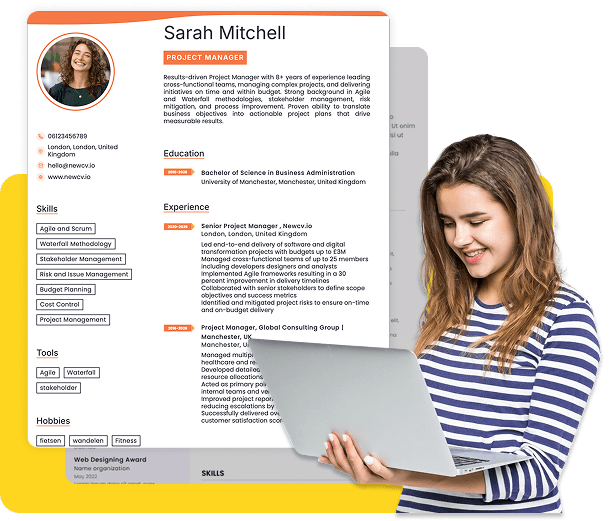
Use ATS-optimised Resume and resume templates that pass applicant tracking systems. Our Resume builder helps recruiters read, scan, and shortlist your Resume faster.

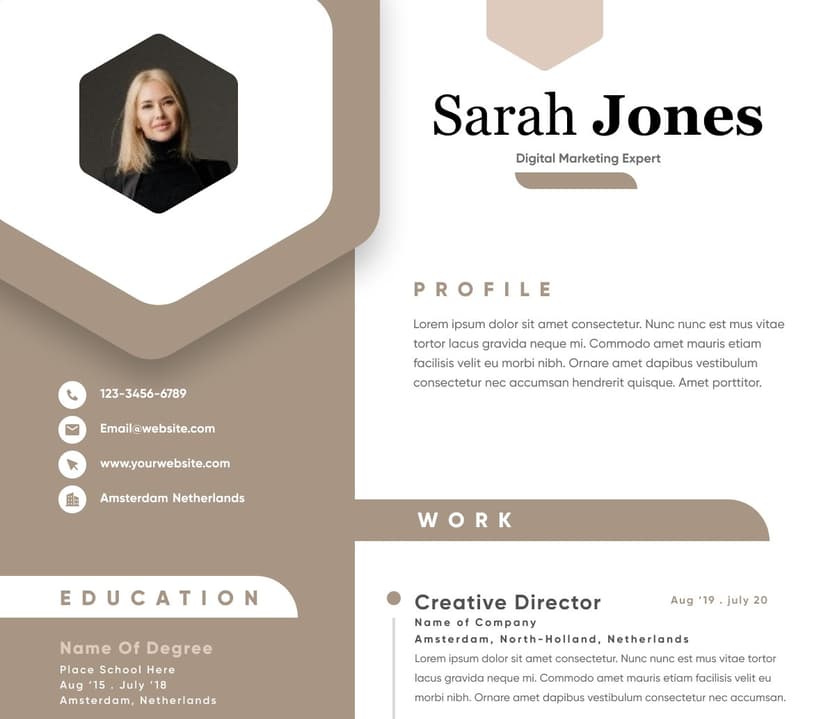
Use professional field-tested resume templates that follow the exact Resume rules employers look for.
Create Resume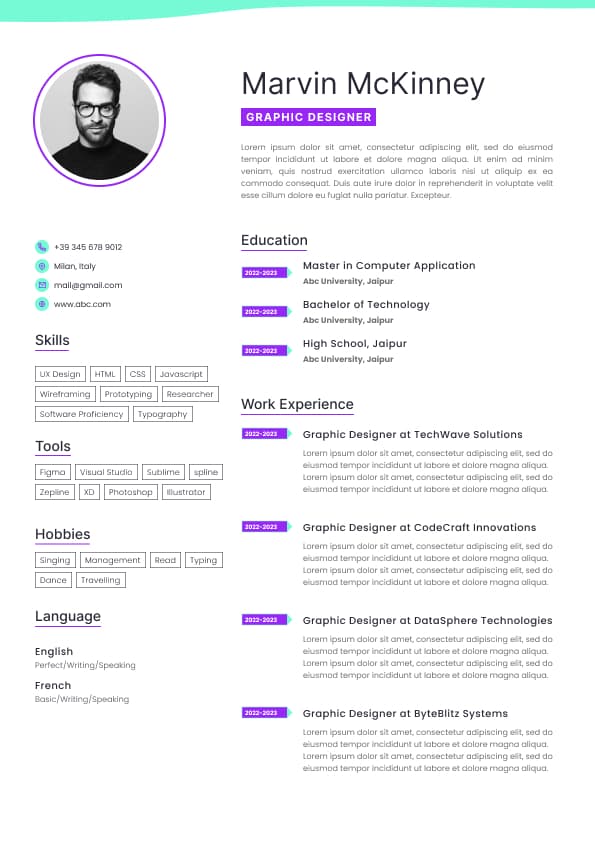
Use professional field-tested resume templates that follow the exact Resume rules employers look for.
Create ResumeAn effective Australian resume format is not about making your resume look “fancy”. It is about making it easy for recruiters and hiring managers to assess you quickly, accurately, and confidently. Most Australian recruiters scan resumes for less than 30 seconds during the first review. If your formatting creates friction, hides key information, or looks outdated, your application can be rejected before your experience is properly evaluated.
Good resume formatting in Australia prioritises:
Fast readability
Clear hierarchy of information
ATS compatibility
Professional presentation
Strong positioning of relevant experience
Most resume advice online focuses too heavily on design. Australian recruiters care far more about usability than visual creativity.
A strong resume format reduces cognitive load. In practical terms, that means recruiters should be able to identify your:
Current role
Industry background
Career progression
Key achievements
Technical skills
Qualifications
within seconds of opening the document.
When formatting is poor, recruiters subconsciously assume:
The reverse chronological resume format is the standard across most Australian industries.
This format lists your most recent experience first and works best because it aligns with how recruiters naturally evaluate candidates.
A modern Australian resume should typically include:
Header with contact details
Professional summary
Core skills section
Employment history
Education
Certifications or licences if relevant
Technical skills if applicable
For most professional roles, this structure performs best because it allows recruiters to:
Logical structure recruiters expect
The best resume formats help recruiters find three things immediately:
Your suitability for the role
Your level of experience
Your relevance to the employer’s requirements
This guide explains exactly how Australian recruiters evaluate resume formatting, what works in the current Australian hiring market, and the formatting mistakes that commonly reduce interview outcomes.
The candidate lacks attention to detail
Communication skills may be weak
The candidate may struggle with professional standards
The resume has been mass-applied without strategy
This matters because Australian recruitment processes are often high-volume. Corporate recruiters commonly screen hundreds of resumes per role. A resume that is easier to review gains a genuine advantage.
Assess recency of experience
Evaluate career progression
Compare achievements quickly
Identify relevant industry exposure
Functional resumes are generally weaker in the Australian market unless there is a very specific reason for using one, such as:
Major career changes
Significant employment gaps
Complex consulting portfolios
Even then, recruiters often remain cautious because functional resumes can appear to hide timeline issues.
The ideal resume length in Australia depends on your experience level.
General expectations are:
Early career candidates: 1 to 2 pages
Mid-level professionals: 2 to 3 pages
Senior managers and executives: 3 to 5 pages
Government or academic CVs: Often longer depending on requirements
The biggest misconception is that shorter automatically means better.
Australian recruiters do not reject resumes because they are slightly longer. They reject resumes when the content lacks relevance, clarity, or structure.
A strong 3-page resume will outperform a weak 1-page resume every time.
What recruiters actually dislike:
Dense blocks of text
Repetition
Irrelevant older experience
Poor organisation
Unclear achievements
The goal is efficient relevance, not forced brevity.
Your font choice affects readability more than most candidates realise.
The safest and most effective resume fonts are:
Calibri
Arial
Aptos
Helvetica
Cambria
Ideal font sizes:
Headings: 12 to 14 pt
Body text: 10 to 11 pt
Australian recruiters generally prefer clean, modern formatting over stylised designs.
Avoid:
Script fonts
Decorative fonts
Excessively small text
Over-designed templates
Bright colours
Multi-column layouts for ATS-heavy industries
Many resumes fail because candidates prioritise aesthetics over readability.
Most medium and large Australian employers use Applicant Tracking Systems (ATS).
Poor formatting can break ATS parsing and prevent your information from being properly indexed.
To make your resume ATS-friendly:
Use standard section headings
Submit in Word or PDF unless instructed otherwise
Avoid tables where possible
Avoid graphics and icons
Avoid text boxes
Use simple bullet formatting
Keep formatting consistent
Use clear job titles
Match keywords naturally to the job ad
One major ATS mistake candidates make is downloading highly designed Canva templates that look attractive but parse poorly.
In Australia, ATS readability almost always matters more than visual creativity.
Good resume layout is about scanning efficiency.
Recruiters typically review resumes in this order:
Name and current title
Current employer
Dates of employment
Most recent achievements
Skills alignment
Education if relevant
Your formatting should support this behaviour.
Strong layouts use:
Clear spacing
Consistent headings
Logical section order
Short paragraphs
Bullet points for achievements
Consistent date formatting
Clean white background
Black text
Consistent spacing
Clear section hierarchy
Professional font
Achievement-focused bullet points
Easy-to-scan structure
Excessive colours
Multiple columns
Tiny font sizes
Large text blocks
Graphic-heavy templates
Inconsistent formatting
Crowded layout
The best resumes feel effortless to read.
Formatting should reflect recruiter priorities.
Your professional summary should be:
3 to 5 lines maximum
Positioned near the top
Highly targeted to the role
Written in plain English
Focused on value and relevance
“Hardworking professional seeking opportunities to grow skills in a challenging environment.”
This says almost nothing.
“Project Manager with 8+ years’ experience delivering commercial construction projects across Brisbane and Melbourne valued up to $25M. Strong stakeholder management, contract administration, and subcontractor coordination experience within Tier 2 environments.”
This immediately positions the candidate.
Each role should include:
Job title
Employer name
Location
Employment dates
Brief context if necessary
Key achievements
The strongest formatting approach is:
Short intro paragraph
Achievement-focused bullet points underneath
Avoid giant paragraphs describing responsibilities.
Recruiters want evidence of impact, not generic task lists.
Instead of:
Use:
Specificity improves credibility.
Skills sections work best when:
Relevant to the target role
Easy to scan
Grouped logically
Supported by evidence elsewhere in the resume
Avoid keyword dumping.
Australian recruiters can immediately tell when candidates copy skills lists without demonstrating those capabilities in their work history.
White space dramatically improves readability.
Recommended formatting:
Standard margins around 2 cm
Adequate spacing between sections
Consistent line spacing
Clean separation of content
Crowded resumes create mental fatigue during screening.
A resume that “breathes” is easier to process and generally performs better during initial reviews.
Templates are fine if they support readability and ATS compatibility.
The problem is not templates themselves. The problem is poor template selection.
Many candidates use visually impressive templates that:
Break ATS systems
Hide important information
Waste space
Reduce readability
Look unprofessional in corporate hiring environments
Templates that generally work best in Australia:
Minimalist
Single-column
Clean typography
Conservative design
Structured hierarchy
Industries like marketing, design, and creative sectors allow more flexibility, but readability still matters.
These mistakes are extremely common in the Australian market.
Recruiters skim first.
If your resume looks difficult to read, many recruiters will move on before fully assessing your experience.
Excessive graphics, colours, and visual elements often weaken professional credibility outside creative industries.
Examples include:
Different font sizes
Misaligned bullet points
Mixed date formats
Irregular spacing
These issues create a perception of poor attention to detail.
Formatting and content work together.
Even a visually clean resume fails if the content lacks measurable impact.
Some candidates bury critical achievements deep inside paragraphs.
Strong formatting surfaces key selling points immediately.
Recruiters see the same templates repeatedly.
If your resume looks generic and lacks strategic positioning, it becomes forgettable.
Formatting expectations vary slightly by industry.
Preferred format:
Clean
Conservative
ATS-friendly
Achievement-focused
Minimal design
This applies to:
Finance
HR
Operations
Consulting
Legal support
Administration
Government resumes often require:
More detailed examples
Longer resumes
Strong alignment with selection criteria
Clear competency evidence
Formatting still needs to remain readable and structured.
Formatting should prioritise:
Licences
Tickets
Site experience
Machinery competencies
Safety records
Availability
Over-design is usually unnecessary.
Tech resumes should balance:
ATS optimisation
Technical clarity
Project outcomes
Stack visibility
Commercial impact
Technical recruiters scan very quickly for relevant stack alignment.
Senior-level resumes require stronger strategic positioning.
Formatting should emphasise:
Leadership scope
Commercial outcomes
Transformation projects
Revenue impact
Operational scale
Stakeholder complexity
Executive resumes generally require:
More white space
Strong hierarchy
Concise executive summaries
Selective achievement presentation
At senior levels, weak formatting damages perceived executive presence.
PDF is generally safest unless the employer specifically requests Word format.
PDF benefits:
Preserves formatting
Looks consistent across devices
Prevents layout shifts
Word format may be preferred when:
Recruiters need ATS parsing flexibility
Government systems request DOCX
Employers explicitly ask for Word documents
Always follow employer instructions first.
The fastest formatting improvements usually involve:
Simplifying the layout
Improving spacing
Removing visual clutter
Strengthening hierarchy
Standardising formatting
Improving bullet point structure
Reducing text density
Most resumes do not need a full redesign.
They need clearer communication.
Before submitting your resume, check:
Is the layout easy to scan in under 30 seconds?
Are the most relevant achievements visible quickly?
Is formatting consistent throughout?
Is the resume ATS-friendly?
Are headings clear and professional?
Is spacing clean and readable?
Are bullet points achievement-focused?
Is the font modern and readable?
Are dates consistent?
Is irrelevant information removed?
Does the resume look current and professional?
If recruiters need to “work” to understand your value, the formatting is not doing its job.


 Upload Resume
 Import from Linkedin