
Choose from a wide range of NEWCV resume templates and customize your NEWCV design with a single click.

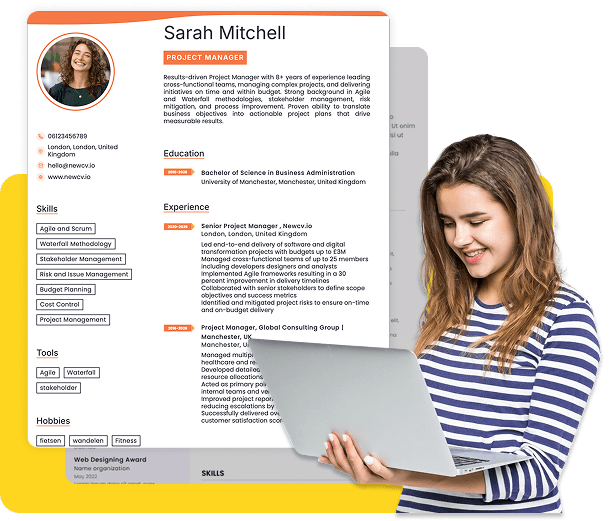
Use ATS-optimised Resume and resume templates that pass applicant tracking systems. Our Resume builder helps recruiters read, scan, and shortlist your Resume faster.

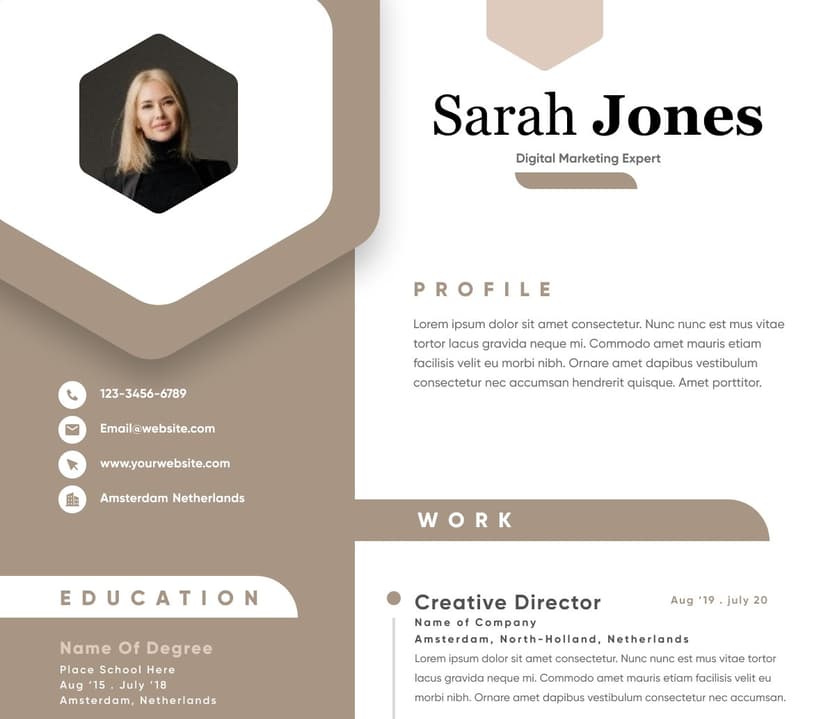
Use professional field-tested resume templates that follow the exact Resume rules employers look for.
Create Resume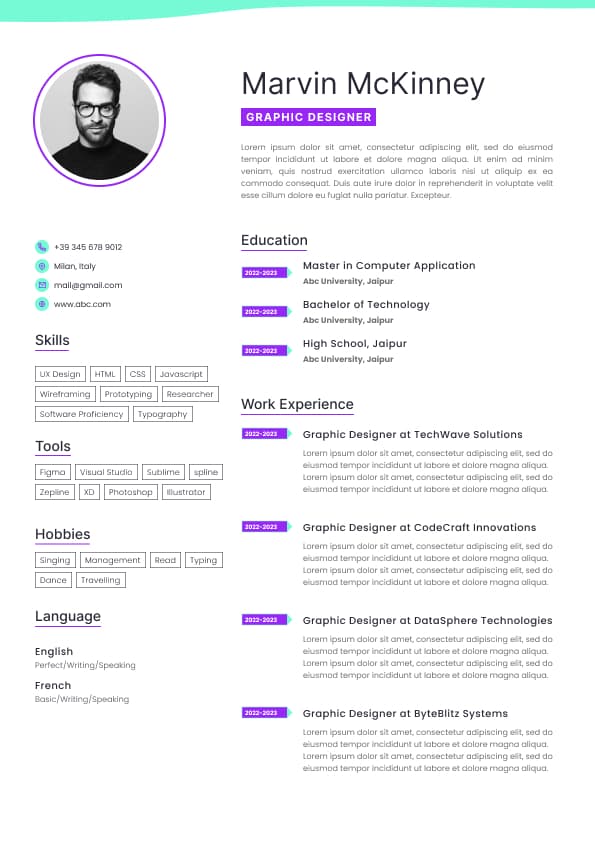
Use professional field-tested resume templates that follow the exact Resume rules employers look for.
Create ResumeIf your resume is not getting interviews in Australia, the problem is usually not your experience. It is how your experience is presented, positioned, and evaluated during recruiter screening.
Most Australian recruiters spend less than 30 seconds on an initial resume scan. During that time, they are checking for very specific signals:
Relevance to the role
Clear alignment with the job ad
Easy readability
Evidence of outcomes and impact
Career stability and progression
Professional presentation
ATS compatibility
A strong resume in the Australian market is not about fancy design or keyword stuffing. It is about making it easy for recruiters and hiring managers to quickly decide:
Australian hiring managers generally prefer resumes that are:
Clear and direct
Achievement-focused
Easy to scan quickly
Professionally formatted without excessive graphics
Tailored to the role
Honest and evidence-based
Unlike some overseas markets, Australian employers typically value practical relevance over self-promotion. Overly inflated language, generic buzzwords, or exaggerated claims can reduce credibility quickly.
Recruiters are usually looking for:
Capability
“Is this candidate worth interviewing?”
This checklist breaks down exactly what Australian recruiters expect in 2026 and beyond, including ATS requirements, formatting standards, common rejection triggers, and practical improvements that genuinely increase interview chances.
Reliability
Relevant experience
Communication skills
Commercial value
Cultural fit
A good Australian resume balances professionalism with clarity. It should feel commercially aware, realistic, and easy to trust.
Before recruiters even read your experience, formatting affects whether they continue reading.
Your resume should generally follow this order:
Name and contact details
Professional summary
Core skills
Professional experience
Education
Certifications or licences if relevant
Technical skills if applicable
Avoid:
Large profile photos
Graphics-heavy templates
Multi-column layouts that break ATS systems
Excessive colours
Over-designed Canva templates with poor readability
Simple formatting performs better in Australian recruitment because recruiters scan resumes fast.
For most Australian roles:
Early career: 1 to 2 pages
Mid-level professionals: 2 to 3 pages
Senior leadership or technical specialists: 3 to 4 pages maximum
Long resumes are not automatically better. Recruiters care more about relevance than volume.
A concise, strategically tailored 2-page resume often outperforms a generic 5-page document.
Most medium and large Australian employers use Applicant Tracking Systems.
ATS-friendly formatting includes:
Standard section headings
Simple fonts
Consistent formatting
Minimal tables
No text boxes
No embedded graphics containing important information
Use readable professional fonts such as:
Calibri
Arial
Aptos
Helvetica
Cambria
Recommended size:
Headings: 12 to 14 pt
Body text: 10 to 11 pt
Tiny font sizes signal poor judgement and hurt readability.
Your contact details should be simple and professional.
Include:
Full name
Mobile number
Professional email address
LinkedIn profile if updated and relevant
Location suburb and state only
You do not need:
Full street address
Date of birth
Marital status
Nationality
Photo unless industry-specific
John1987party@email.com
john.smith@email.com
Recruiters absolutely judge professionalism based on small details like email addresses.
Your professional summary is one of the most important sections because recruiters often read it first.
A strong summary should quickly explain:
Who you are professionally
Years of experience
Industry expertise
Key strengths
Type of roles targeted
Recruiters want immediate relevance.
Good summaries answer:
What level are you?
What industry do you work in?
What value do you bring?
Why are you suitable for this role?
Hardworking team player with excellent communication skills seeking opportunities for growth.
This says almost nothing useful.
Project Coordinator with 6+ years of experience delivering commercial construction projects across Queensland. Skilled in stakeholder management, scheduling, contractor coordination, and compliance within fast-paced Tier 2 environments.
The second example immediately establishes relevance and credibility.
Your skills section should align directly with the job advertisement.
Focus on skills recruiters actively search for, such as:
Stakeholder management
Payroll processing
Salesforce CRM
WHS compliance
Financial reporting
Contract negotiation
Data analysis
SAP
Project coordination
Recruiters are tired of seeing:
Team player
Hardworking
Fast learner
Motivated
Great communicator
These claims mean nothing without evidence.
Instead, demonstrate soft skills through achievements in your work experience.
This is the section recruiters care about most.
For each role include:
Job title
Company name
Location
Employment dates
Short overview if needed
Achievement-focused bullet points
One of the biggest resume mistakes in Australia is writing job descriptions instead of achievements.
Responsible for customer service and administration duties.
Managed customer enquiries across phone and email channels, maintaining a 95% customer satisfaction rating while reducing response times by 20%.
The second version demonstrates measurable value.
Strong resumes use:
Percentages
Revenue figures
Time savings
Team sizes
Project values
Operational improvements
Metrics make achievements believable and commercially valuable.
Recruiters are looking for relevance, not your entire career history.
If applying for:
A management role → emphasise leadership
A sales role → emphasise revenue and targets
A project role → emphasise delivery outcomes
A customer service role → emphasise client results
This is where many candidates fail. They send the same resume everywhere.
Australian recruiters can spot untailored resumes immediately.
ATS systems and recruiters both rely heavily on keywords.
Look for repeated terms in:
Responsibilities
Requirements
Skills
Software
Qualifications
Then naturally integrate those terms into your resume.
For example, if the job ad repeatedly mentions:
Stakeholder engagement
Risk management
Agile delivery
Those phrases should appear naturally within your experience if genuinely applicable.
Recruiters can instantly detect forced keyword insertion.
Bad keyword optimisation looks unnatural and damages credibility.
The goal is alignment, not manipulation.
List:
Qualification name
Institution
Graduation year if relevant
If you have strong professional experience, education should not dominate the resume.
Especially important in Australia for:
Construction
Healthcare
Mining
Trades
Finance
IT
Government roles
Examples:
White Card
RSA
CPA
Azure Certifications
First Aid
Security Licence
These can directly affect screening decisions.
This is one of the biggest reasons candidates struggle.
Australian recruiters expect tailoring.
Even minor tailoring significantly improves interview rates.
Dense walls of text reduce interview chances quickly.
Recruiters skim first. If scanning is difficult, they move on.
Words like:
Dynamic
Synergistic
Passionate
Innovative
Often weaken resumes unless backed by real examples.
Hiring managers care about:
Impact
Outcomes
Commercial contribution
Not generic task lists.
Not all gaps are negative, but unclear timelines raise questions.
Short explanations can help where appropriate:
Career break
Study
Parenting leave
Travel
Contract work
Transparency usually works better than avoidance.
A resume should support your target role.
Irrelevant detail dilutes positioning and weakens relevance signals.
Understanding how recruiters actually screen resumes gives candidates a major advantage.
Most recruiters are subconsciously asking:
Is this candidate relevant?
Are they credible?
Are they stable?
Are they likely interview-worthy?
Can I confidently shortlist them quickly?
A resume that reduces recruiter uncertainty performs better.
Recruiters feel more confident when resumes show:
Clear career progression
Logical career moves
Consistent formatting
Measurable achievements
Alignment with the role
Professional communication
Recruiters become cautious when they see:
Vague achievements
Job hopping without explanation
Inconsistent formatting
Overly generic summaries
Inflated claims
Poor grammar or spelling
The strongest resumes reduce friction and make shortlisting feel easy.
Before applying, check whether your resume aligns with:
The exact role title
Industry terminology
Required systems or tools
Seniority level
Australian market expectations
Strong candidates mirror employer language naturally.
For example:
If the ad says:
“Cross-functional stakeholder engagement”
And your resume says:
“Worked with different teams”
You are underselling yourself.
Language alignment matters significantly in ATS and recruiter screening.
Before sending your resume, confirm:
Resume is tailored to the role
Formatting is ATS-friendly
Professional summary matches the target role
Achievements are measurable where possible
Keywords align with the job ad
No spelling or grammar issues
Contact details are professional
Resume length is appropriate
Bullet points focus on outcomes, not duties
Most relevant experience appears first
LinkedIn profile matches the resume
Dates and job titles are accurate
This final review process alone can dramatically improve interview conversion rates.
The resumes that consistently perform well in Australia usually have three things in common:
Clear relevance
Commercially valuable achievements
Easy readability
Most candidates focus too heavily on formatting tricks or resume templates.
Recruiters focus on:
Fit for the role
Evidence of capability
Confidence in shortlisting
Your resume should make those decisions easier.
A clean, targeted, strategically written resume will almost always outperform a flashy generic one.


 Upload Resume
 Import from Linkedin