
Choose from a wide range of NEWCV resume templates and customize your NEWCV design with a single click.

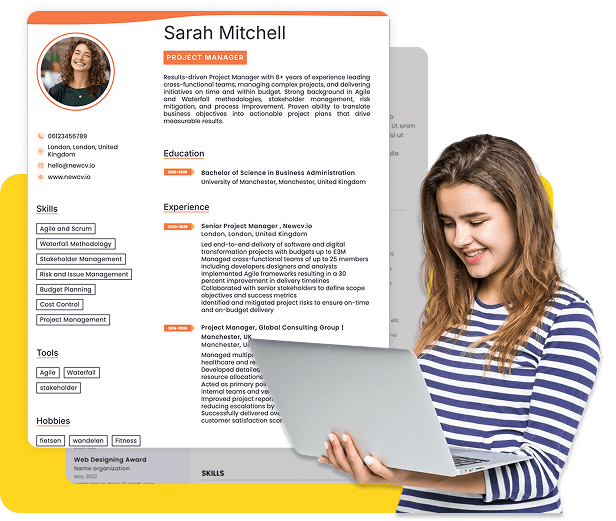
Use ATS-optimised Resume and resume templates that pass applicant tracking systems. Our Resume builder helps recruiters read, scan, and shortlist your Resume faster.

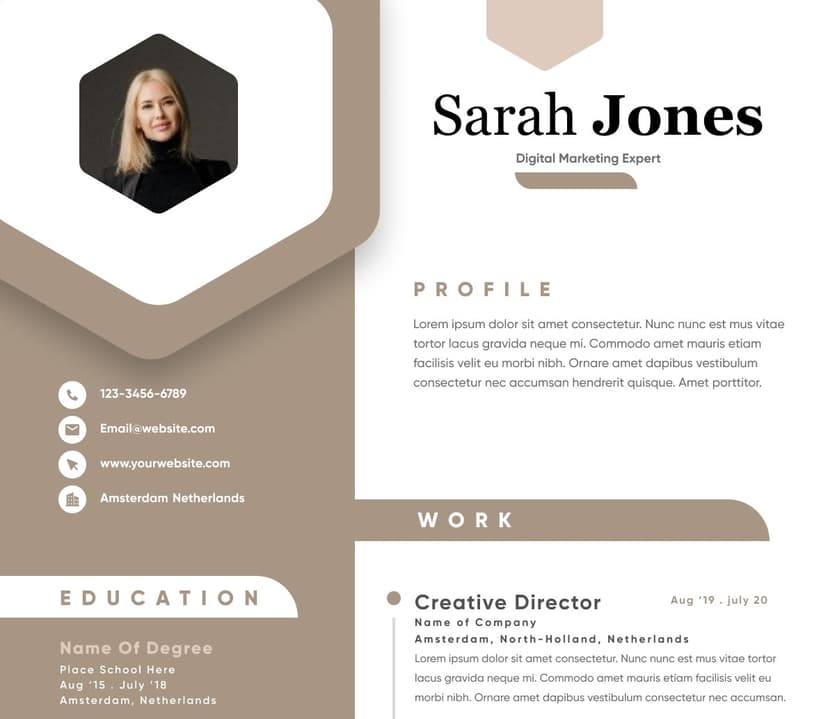
Use professional field-tested resume templates that follow the exact Resume rules employers look for.
Create Resume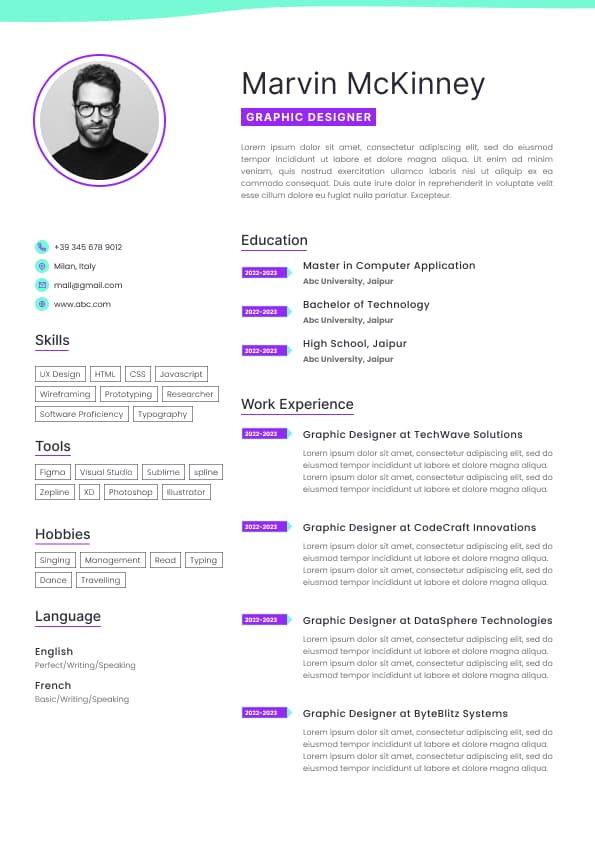
Use professional field-tested resume templates that follow the exact Resume rules employers look for.
Create ResumeA strong resume objective can improve your chances of getting shortlisted in Australia, but only when it is written strategically and used in the right situation. Most resume objectives fail because they are generic, self-focused, or filled with vague career goals that recruiters ignore within seconds.
Australian recruiters and hiring managers typically scan a resume in under 10 seconds during the first review. Your resume objective must immediately explain three things:
Who you are professionally
What value you bring
Why you fit the specific role
If it does not do that quickly and clearly, it becomes wasted space.
The best resume objective examples in Australia are concise, tailored to the role, aligned with local hiring expectations, and focused on business value rather than personal ambition. They work particularly well for graduates, career changers, migrants, return-to-work candidates, and applicants targeting competitive roles where positioning matters.
A resume objective is a short opening statement placed near the top of your resume that explains your professional direction and the value you bring to an employer.
In the Australian market, it is usually 2 to 4 lines long and sits directly below your name and contact details.
Its purpose is not to tell employers what you want from them.
Its purpose is to position you quickly for the role.
That distinction matters enormously.
Hiring managers are not looking for motivational statements like:
Weak Example
“Seeking a challenging opportunity to grow my skills and contribute to company success.”
This says almost nothing.
It does not explain:
What role you want
What industry experience you have
What measurable value you bring
Resume objectives are not mandatory in Australia.
In fact, experienced professionals often perform better with a professional summary instead.
A resume objective is most effective when the candidate needs to quickly explain positioning, transition, or direction.
Recent graduates with limited work experience
Career changers moving into a new industry
Migrants entering the Australian workforce
Candidates returning after a career break
School leavers applying for entry-level roles
Apprenticeship or traineeship applicants
Why you are suitable
Instead, recruiters look for signals of alignment.
Good Example
“Customer service professional with 4 years’ experience across retail and telecommunications environments, recognised for resolving high-volume customer enquiries efficiently and maintaining strong customer satisfaction outcomes.”
This immediately communicates:
Relevant experience
Industry exposure
Transferable strengths
Commercial relevance
That is how recruiters screen resumes in Australia.
Candidates applying for their first Australian job
Professionals changing from overseas experience into local employment
Applicants targeting highly competitive roles where positioning matters
A poor objective can weaken strong experience.
This happens frequently with senior candidates who use outdated or generic wording.
If you already have strong industry experience, a vague objective may:
Reduce perceived credibility
Make you appear junior
Waste prime resume space
Distract from measurable achievements
Experienced professionals in Australia usually benefit more from a results-focused professional summary rather than a traditional objective statement.
The strongest Australian resume objectives generally follow this structure:
Here is the pattern recruiters respond to:
Who you are
Years or type of experience
Relevant strengths
Commercial or operational outcome
“Administration professional with 3 years’ experience supporting fast-paced healthcare teams, recognised for strong stakeholder communication, scheduling accuracy, and maintaining organised operational workflows.”
This works because it:
Sounds credible
Feels specific
Aligns with Australian hiring language
Uses practical workplace terminology
Focuses on value instead of personal ambition
“Recent Bachelor of Business graduate with strong analytical and communication skills developed through university projects and part-time retail experience. Seeking an entry-level administration role where attention to detail, customer service capability, and problem-solving skills can support day-to-day operations.”
“Motivated and reliable school leaver with strong communication skills and hands-on experience through hospitality and volunteer work. Eager to contribute to a customer-focused team environment while developing long-term retail and customer service experience.”
“Hard-working and safety-conscious applicant seeking an electrical apprenticeship opportunity. Strong mechanical aptitude, practical problem-solving ability, and willingness to learn from experienced tradespeople within a structured team environment.”
“Customer-focused retail professional transitioning into administration, bringing 5 years’ experience managing customer enquiries, handling cash reconciliation, and maintaining organised workflows in fast-paced environments.”
“Hospitality supervisor with strong stakeholder communication, scheduling, and team coordination experience seeking to transition into an office support role within a professional corporate environment.”
“Experienced secondary teacher transitioning into corporate learning and development, bringing strong presentation, stakeholder engagement, and training delivery skills developed across diverse educational settings.”
“Accounting professional with 6 years’ international experience across financial reporting and accounts reconciliation, currently seeking to apply strong analytical and compliance skills within the Australian finance sector.”
“Customer service professional with multilingual communication skills and previous international retail experience seeking an opportunity to contribute within a fast-paced Australian customer support environment.”
One of the biggest mistakes migrants make is over-explaining relocation or visa details in the objective.
Australian recruiters prefer concise positioning.
Visa information should usually sit elsewhere on the resume unless directly relevant.
“Organised administration assistant with experience supporting busy office operations, managing calendars, handling customer enquiries, and maintaining accurate records within fast-paced professional environments.”
“Customer service professional with strong conflict resolution and communication skills developed across retail and call centre environments, recognised for maintaining positive customer experiences under pressure.”
“Compassionate enrolled nurse with clinical placement experience across aged care and hospital settings, committed to delivering patient-centred care while supporting multidisciplinary healthcare teams.”
“Junior IT support professional with hands-on troubleshooting experience, strong technical problem-solving skills, and knowledge of Microsoft 365 environments gained through study and practical project work.”
“Detail-oriented project coordinator with experience supporting cross-functional teams, maintaining project documentation, and tracking deliverables within deadline-driven environments.”
“Results-driven sales professional with experience exceeding KPI targets in retail and telecommunications environments, recognised for relationship building and consultative customer engagement.”
“Analytical finance graduate with strong attention to detail and knowledge of financial reporting principles, seeking an entry-level accounting opportunity within a structured professional environment.”
“Reliable construction labourer with experience supporting commercial building projects, maintaining site safety standards, and assisting trades across physically demanding environments.”
Australian recruiters see the same weak resume objectives repeatedly.
Most are instantly ignored.
Weak Example
“Looking for a challenging role where I can utilise my skills and grow professionally.”
Problems:
Generic
Self-focused
No positioning
No evidence
No relevance
Weak Example
“Dynamic, passionate, results-driven team player with excellent communication skills.”
This sounds artificial because it lacks proof.
Recruiters prefer demonstrated capability, not personality adjectives.
Weak Example
“Seeking a role that offers career progression and development opportunities.”
This explains what the candidate wants.
It does not explain why the employer should hire them.
That is a critical difference in Australian recruitment culture.
Australian hiring culture generally values:
Direct communication
Clarity
Practicality
Professional confidence without exaggeration
Overly polished corporate wording can reduce authenticity.
Strong candidates mirror relevant language from the advertisement naturally.
For example, if the role emphasises:
Stakeholder management
Customer engagement
Scheduling
Compliance
Cross-functional collaboration
Your objective should reflect relevant alignment where truthful.
This improves:
ATS relevance
Recruiter recognition
Perceived fit
Australian recruiters are generally sceptical of unsupported claims.
Instead of saying:
Weak Example
“Exceptional leader with outstanding communication skills.”
Use:
Good Example
“Team leader with experience supervising 12 staff across high-volume retail operations.”
Specificity creates credibility.
This causes confusion for many Australian candidates.
Focuses on:
Direction
Positioning
Transferable skills
Career transition
Best for:
Graduates
Career changers
Entry-level candidates
Focuses on:
Experience depth
Achievements
Commercial impact
Industry credibility
Best for:
Mid-level professionals
Senior candidates
Specialists
Managers
Many experienced candidates incorrectly use entry-level objectives, which weakens perceived seniority.
Applicant Tracking Systems are heavily used across Australian recruitment, especially by:
Large employers
Government organisations
Recruitment agencies
Enterprise businesses
Your resume objective should naturally include:
Relevant job titles
Core skills
Industry terminology
Operational keywords
But avoid obvious keyword stuffing.
“Customer service customer support customer experience customer relations professional.”
This looks manipulative and unreadable.
“Customer service professional with experience resolving customer enquiries, managing complaints, and supporting high-volume retail operations.”
This works for both ATS systems and human recruiters.
In Australia, the ideal length is usually:
35 to 70 words
2 to 4 lines maximum
Long objectives create several problems:
Recruiters skip them
Key information gets buried
Resume readability suffers
Scanning efficiency drops
Shorter and sharper almost always performs better.
Recruiters subconsciously ask one question when reading a resume objective:
If the answer is unclear, your shortlist chances drop quickly.
That is why vague objectives underperform.
A strong objective reduces recruiter uncertainty immediately.
It answers:
What role you fit
What environment you know
What strengths you bring
Whether you align commercially
Fast clarity wins interviews.
One major mistake candidates make is sounding too junior.
For example:
Weak Example
“Seeking an opportunity to learn and grow within a company.”
This is damaging for experienced professionals.
Instead:
Good Example
“Operations coordinator with experience improving scheduling efficiency and supporting multi-site teams within fast-paced logistics environments.”
This communicates operational capability instead of dependency.
Australian employers often value:
Reliability
Initiative
Team contribution
Communication
Adaptability
Practical capability
Excessively aggressive self-promotion can sometimes backfire.
Confidence works best when grounded in evidence.
One generic objective across 50 applications is usually ineffective.
Even small adjustments improve results significantly.
Customise:
Job title alignment
Industry terminology
Key operational strengths
Relevant environment experience
The highest-performing candidates tailor strategically without rewriting the entire resume every time.
Here is a recruiter-approved structure candidates can adapt:
“[Professional identity] with [experience/background] and strengths in [relevant skills]. Seeking to contribute to [type of employer or role] through [specific capability or value].”
“Warehouse professional with experience operating in high-volume logistics environments and strengths in inventory accuracy and safety compliance. Seeking to contribute reliable operational support within a fast-paced distribution team.”
This format works because it:
Feels modern
Sounds credible
Avoids fluff
Aligns with Australian hiring expectations
Some online advice does not align with Australian hiring culture.
Phrases like:
“Results-oriented visionary”
“Go-getter mindset”
“Seeking to leverage synergies”
Often feel unnatural or exaggerated locally.
Australian resumes generally perform better when they sound:
Clear
Professional
Practical
Genuine
A healthcare employer and a construction employer assess fit differently.
Generic positioning weakens both applications.
Do not waste your objective saying:
“Experienced accountant applying for accountant role.”
Add meaningful differentiation instead.
Many candidates write resume objectives based on what they want.
Strong candidates write them based on:
Employer priorities
Hiring risks
Operational needs
Team fit
That mindset shift dramatically improves resume quality.
A resume objective is not there to impress recruiters with fancy wording.
Its job is to reduce friction.
The best resume objectives in Australia:
Position you quickly
Clarify your fit
Match the role
Sound authentic
Reflect real capability
Support ATS relevance
Help recruiters shortlist faster
If your objective feels generic enough to fit 100 jobs, it is probably too weak to help you land one.
The strongest candidates use resume objectives strategically, not automatically.


 Upload Resume
 Import from Linkedin