
Choose from a wide range of NEWCV resume templates and customize your NEWCV design with a single click.

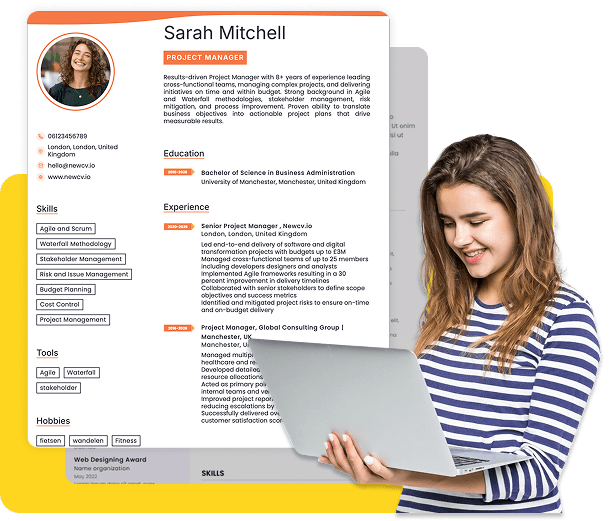
Use ATS-optimised Resume and resume templates that pass applicant tracking systems. Our Resume builder helps recruiters read, scan, and shortlist your Resume faster.

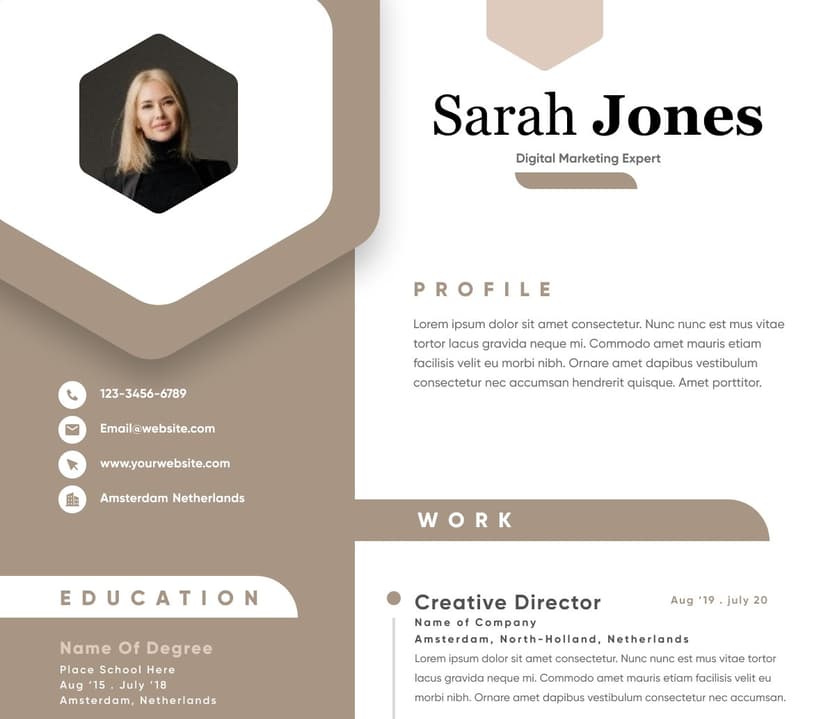
Use professional field-tested resume templates that follow the exact Resume rules employers look for.
Create Resume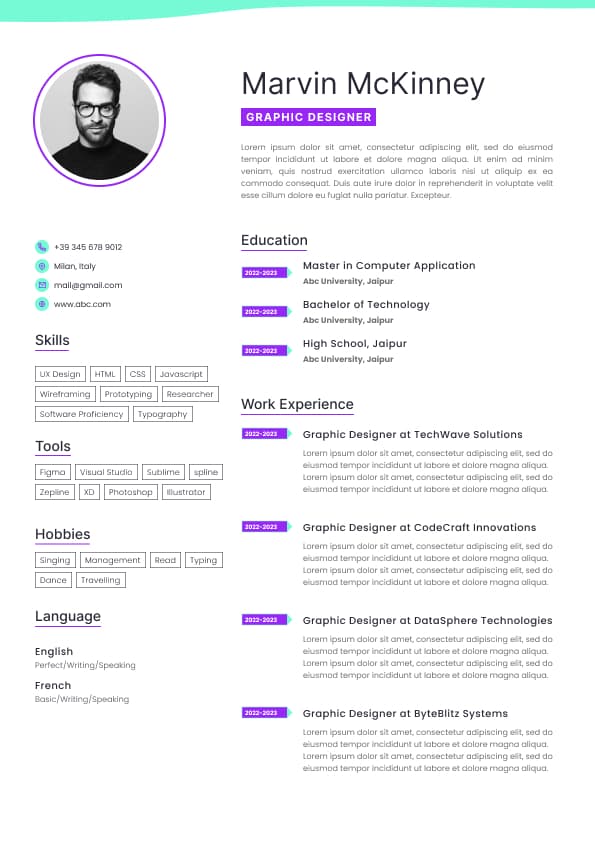
Use professional field-tested resume templates that follow the exact Resume rules employers look for.
Create ResumeA weak resume rarely fails because of one major issue. In the Australian job market, candidates usually get rejected because of multiple small mistakes that collectively signal poor fit, lack of clarity, weak positioning, or low commercial value. Recruiters often decide within 10 to 30 seconds whether a resume moves forward. If your resume is difficult to scan, overly generic, poorly targeted, or filled with vague claims, it will likely be ignored even if you are qualified.
The biggest mistake most candidates make is writing resumes based on what they have done instead of what employers actually want to hire for. Australian recruiters and hiring managers screen resumes based on relevance, alignment, commercial outcomes, communication quality, and risk reduction. Your resume must immediately show why you fit this specific role in this specific market.
This guide breaks down the most common resume mistakes in Australia, why they fail in real hiring situations, and what strong candidates do differently.
Australia is a highly competitive hiring market, particularly across:
Professional services
Government roles
Mining and resources
Healthcare
Technology
Operations and logistics
Corporate support roles
Graduate and entry-level recruitment
Many employers receive hundreds of applications per role. Recruiters are under pressure to reduce shortlists quickly. That means resumes are screened aggressively for relevance and clarity before deeper review even happens.
This is the mistake behind most unsuccessful applications.
Many candidates use one resume for every job application with minimal changes. Recruiters can spot this immediately.
Generic resumes usually contain:
Broad summaries
Vague responsibilities
Weak keyword alignment
No industry tailoring
Irrelevant experience
No positioning strategy
A resume should not be a career history document. It should be a targeted marketing document aligned to a specific role.
Australian hiring culture also values:
Direct communication
Clear achievements
Practical capability
Cultural fit
Commercial awareness
Evidence over exaggeration
Candidates who use generic international resume styles often struggle because they fail to align with local recruiter expectations.
Recruiters are asking:
Does this candidate clearly fit the role?
Can I justify shortlisting them?
Do they match the required experience level?
Is their industry background relevant?
Have they solved similar problems before?
Will the hiring manager immediately understand their value?
If your relevance is unclear, you will usually be rejected before your experience is fully reviewed.
“Experienced professional with strong communication and organisational skills seeking new opportunities.”
“Operations Coordinator with 5+ years’ experience supporting national logistics teams across transport and warehousing environments. Skilled in supplier coordination, inventory reporting, scheduling, and ERP systems including SAP and Oracle.”
The second version immediately reduces recruiter uncertainty.
One of the most common Australian resume mistakes is listing responsibilities without outcomes.
Recruiters already know what most jobs involve. They care about:
Impact
Results
Scale
Complexity
Improvements
Business contribution
Hiring managers compare candidates based on evidence of performance, not task lists.
Responsible for customer service
Managed schedules
Assisted the operations team
Resolved 60+ customer enquiries daily while maintaining 95%+ satisfaction scores
Coordinated scheduling across 3 operational sites with changing workforce requirements
Supported a logistics team that reduced delivery delays by 18% over 12 months
The second version demonstrates capability and commercial value.
Australian recruiters prefer resumes that are:
Easy to scan
Cleanly structured
ATS-friendly
Professionally formatted
Clear within seconds
Overdesigned resumes often perform worse.
Large text blocks
Excessive colours
Multiple columns
Hard-to-read fonts
Graphic-heavy layouts
Inconsistent spacing
Tiny font sizes
Overuse of bold formatting
Many ATS systems also struggle with complex templates.
Strong Australian resumes usually follow a straightforward structure:
Professional summary
Core skills
Professional experience
Education
Certifications
Technical tools if relevant
Simple formatting consistently outperforms visually complex resumes in recruiter screening environments.
A major resume mistake is treating the document like a full life history.
Recruiters do not need:
Every job from 20 years ago
Irrelevant casual work
Personal details unrelated to hiring
Long hobby sections
Outdated software skills
Generic references available upon request
Every section should support your suitability for the target role.
In Australia, resumes generally should not include:
Date of birth
Marital status
Religion
Passport number
Full residential address
Photos unless industry-specific
Including unnecessary personal information can appear outdated.
The professional summary is often the first section recruiters read after your name and title.
Weak summaries waste valuable screening time.
Buzzwords without evidence
Generic personality claims
No specialisation
No target role alignment
No industry context
“Hardworking team player with excellent communication skills and a passion for success.”
This tells recruiters almost nothing.
“Senior Financial Accountant with 8 years’ experience across ASX-listed and mid-market organisations. Strong background in month-end reporting, compliance, audit preparation, and stakeholder management within fast-paced commercial environments.”
This creates immediate positioning clarity.
Many candidates misunderstand how ATS systems actually work.
A common myth is that resumes need excessive keyword repetition to pass screening systems.
In reality, modern ATS platforms primarily support recruiter workflow and search functionality. Human recruiters still make the majority of screening decisions.
Repeating keywords unnaturally
Hidden keywords
Copying the entire job ad
Robotic language
Long keyword lists without context
Use relevant keywords naturally within:
Job titles
Skills sections
Achievement statements
Industry terminology
Technical platforms
Certifications
The goal is alignment, not keyword manipulation.
This is particularly common among migrants and international candidates entering Australia.
Australian resumes differ from UK, US, Indian, European, and Middle Eastern resume styles in several ways.
Extremely long resumes
Highly formal language
Dense paragraphs
Excessive personal information
Academic writing tone
Lack of achievements
Overly inflated titles
Australian recruiters generally prefer:
Direct communication
Practical evidence
Concise explanations
Commercial outcomes
Clear relevance
Candidates who localise their resume positioning usually perform far better in Australian hiring processes.
Many resumes fail because the candidate positions themselves at the wrong level.
This happens in both directions.
Candidates appear too senior because they:
Overinflate titles
Use executive language in mid-level roles
Claim leadership without strategic responsibility
Recruiters may reject these candidates because:
Salary expectations appear too high
They seem likely to leave quickly
Role alignment becomes unclear
Candidates also fail by underselling themselves.
This often happens when:
Achievements are buried
Leadership experience is minimised
Commercial responsibility is unclear
Strong resumes position candidates accurately within the market.
Resume length should reflect career complexity, not personal preference.
In Australia:
Early-career professionals usually need 2 to 3 pages
Mid-level professionals often need 3 pages
Senior executives may justify 4 pages if highly relevant
Problems arise when resumes become bloated with low-value information.
Repetitive bullet points
Old irrelevant roles
Excessive detail
Generic descriptions
Multiple pages without strategic value
Recruiters are not impressed by length. They are impressed by clarity and relevance.
Language choice dramatically affects recruiter perception.
Weak resumes use passive language.
Helped with projects
Assisted management
Worked on reporting
These statements reduce perceived ownership.
Led
Coordinated
Improved
Delivered
Reduced
Implemented
Managed
Streamlined
Increased
“Implemented revised reporting processes that reduced monthly reconciliation time by 25%.”
This demonstrates ownership and business impact.
Many candidates write resumes only for recruiters.
But hiring managers are the final decision-makers.
Recruiters shortlist candidates partly based on whether the hiring manager will quickly understand their value.
Hiring managers usually want to see:
Relevant industry exposure
Problem-solving capability
Operational impact
Communication quality
Team fit
Evidence of performance
If your resume sounds vague, inflated, or disconnected from practical business outcomes, it creates hiring risk.
Hiring managers avoid risk.
Some resume mistakes immediately damage credibility.
Short tenures are not always fatal, but unexplained movement creates concern.
Especially when combined with:
No promotions
Repeated lateral moves
Vague achievements
Contract roles without clarification
Recruiters notice timeline inconsistencies quickly.
Even small date errors reduce trust.
Changing your title beyond recognition is risky.
Recruiters often verify titles during reference checks or background screening.
This is becoming increasingly common.
Signs include:
Generic corporate buzzwords
Repetitive phrasing
No specificity
Overly polished but empty language
Unrealistic claims
Recruiters are becoming highly sensitive to resumes that sound manufactured rather than authentic.
Many candidates explain what they did but fail to explain context.
Context is critical in Australian recruitment because recruiters evaluate scale and relevance.
For example:
“Managed stakeholder communication” means very little alone.
But this changes perception:
“Managed stakeholder communication across a national infrastructure project involving contractors, vendors, and internal executive teams.”
Now the recruiter understands:
Complexity
Environment
Scale
Stakeholder level
Industry relevance
Context transforms ordinary experience into commercially meaningful experience.
High-performing resumes usually share these traits:
Clear positioning from the first page
Strong alignment to the target role
Specific achievements
Commercial outcomes
Relevant industry language
Easy readability
Realistic and credible claims
Evidence of progression
Strong contextual detail
Most importantly, strong resumes reduce uncertainty.
That is the core purpose of an effective resume.
Before submitting any application, review your resume against these questions:
Does this resume clearly match the role?
Would a recruiter immediately understand the fit?
Can key strengths be identified within 15 seconds?
Is the structure easy to scan?
Are achievements measurable or specific?
Is there proof of capability?
Does the seniority level feel accurate?
Does the experience match the target market?
Does the resume show business contribution?
Are outcomes explained clearly?
Candidates who review resumes strategically rather than emotionally usually achieve significantly better results.
Many capable professionals are rejected not because they lack ability, but because their resume fails to communicate value properly.
Recruiters can only assess what is visible on the page.
Strong candidates often undersell themselves through:
Weak summaries
Generic wording
Poor structure
Missing achievements
Lack of context
Unclear positioning
A resume is not simply a document about your background. It is a strategic positioning tool designed to reduce hiring risk and justify shortlisting decisions.
That distinction changes how effective resumes are written.


 Upload Resume
 Import from Linkedin