
Choose from a wide range of NEWCV resume templates and customize your NEWCV design with a single click.
Use ATS-optimised Resume and resume templates that pass applicant tracking systems. Our Resume builder helps recruiters read, scan, and shortlist your Resume faster.

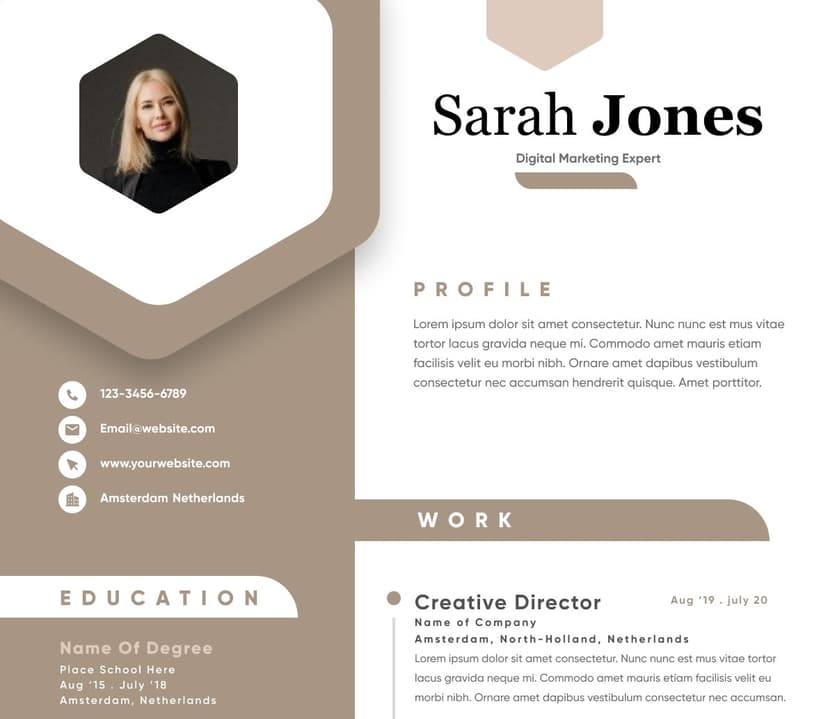
Use professional field-tested resume templates that follow the exact Resume rules employers look for.
Create Resume
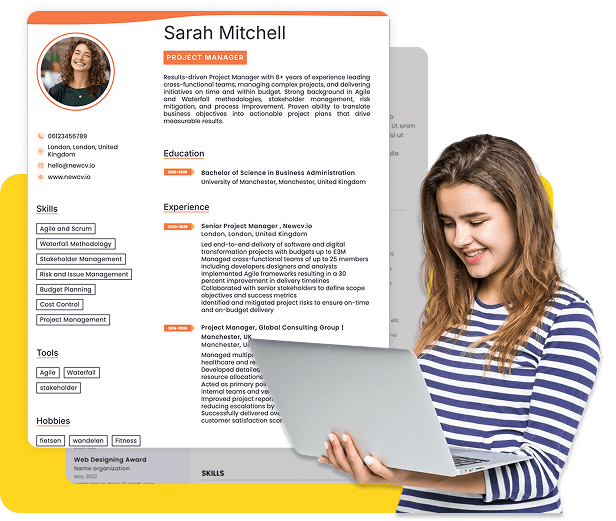
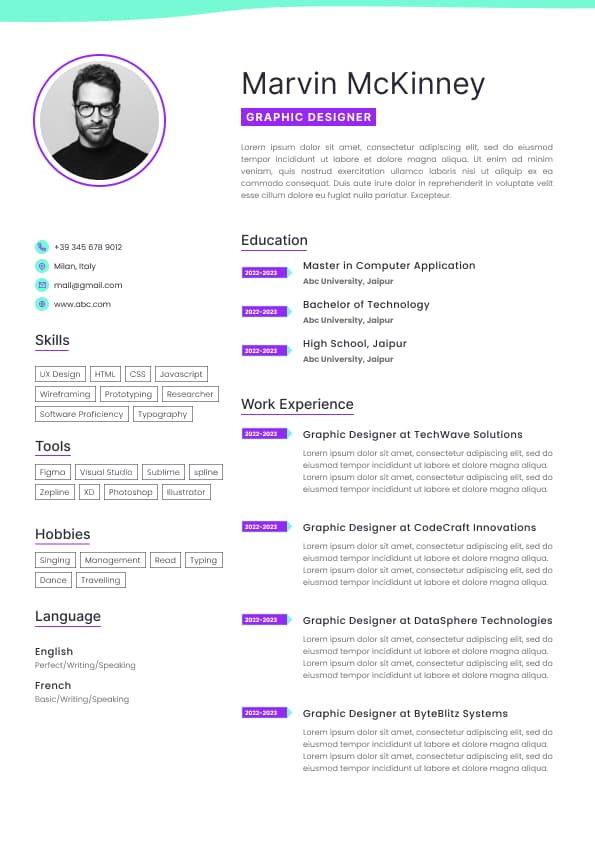
Use professional field-tested resume templates that follow the exact Resume rules employers look for.
Create ResumeIf you’re searching for resume help in Australia, you probably don’t need generic formatting tips. You need a resume that gets shortlisted in a competitive Australian hiring market where recruiters often spend less than 30 seconds on an initial screen.
Most resumes fail because they’re written like job descriptions instead of commercial positioning documents. Australian employers want fast evidence of capability, relevance, outcomes, and alignment with the role. Your resume needs to show hiring managers why you are worth interviewing quickly and clearly.
Strong Australian resumes are:
Tailored to the specific role
Built around measurable outcomes
Easy to scan within seconds
ATS-friendly without sounding robotic
Written with local hiring expectations in mind
Focused on relevance rather than excessive detail
The biggest difference between average resumes and interview-winning resumes is positioning. The strongest candidates understand how recruiters assess risk, fit, capability, and hiring value during screening.
Most candidates overestimate how deeply recruiters read resumes during first-round screening.
In reality, recruiters are trying to answer a few core questions quickly:
Does this candidate match the role requirements?
Are they credible at the level they claim?
Is their experience relevant to this exact opportunity?
Can they demonstrate results, not just responsibilities?
Are there any obvious risks or concerns?
Is this person likely to progress to interview?
This means your resume is primarily a decision-making tool, not a biography.
Australian recruiters typically prioritise:
This guide breaks down what actually works in the Australian job market, what recruiters ignore, and how to improve your resume strategically rather than cosmetically.
Directly relevant experience almost always beats broad experience.
A candidate with four years of highly relevant experience will usually outperform someone with ten years of loosely related experience.
This is why tailoring matters heavily in Australia’s hiring market, particularly in competitive sectors like:
Corporate administration
HR and recruitment
Project management
Finance
Technology
Government
Healthcare
Mining and engineering
Recruiters want proof you made a measurable contribution.
Strong resumes show:
Revenue impact
Process improvements
Cost savings
Efficiency gains
Team leadership
Stakeholder management
Customer outcomes
Delivery performance
Weak resumes simply list duties.
Australian recruiters strongly prefer resumes that are:
Clean
Direct
Easy to scan
Free from unnecessary jargon
Structured logically
Dense walls of text reduce interview chances significantly.
The majority of resumes fail for predictable reasons.
One of the biggest resume mistakes in Australia is writing responsibility-heavy bullet points.
Weak Example
This tells recruiters almost nothing about performance.
Good Example
The second version demonstrates:
Performance
Scale
Context
Results
Generic resumes signal low effort and poor alignment.
Recruiters can immediately tell when candidates apply broadly without tailoring.
Common generic phrases include:
Hardworking professional
Team player
Excellent communication skills
Fast learner
Results-driven individual
These statements are meaningless unless proven through evidence.
Most medium-to-large Australian employers use Applicant Tracking Systems.
However, ATS optimisation is commonly misunderstood.
Keyword stuffing does not work well anymore.
Modern ATS systems are increasingly semantic and context-aware. Your resume should naturally include:
Relevant job titles
Industry terminology
Technical skills
Certifications
Systems and platforms
Operational language relevant to the role
The goal is relevance, not repetition.
Australian resumes should generally avoid:
Full residential address
Date of birth
Marital status
Photo/headshot
Excessive personal profiles
Irrelevant hobbies
Unless specifically relevant, these elements add little hiring value.
Australian resume expectations are relatively consistent across industries.
Include:
Full name
Mobile number
Professional email address
LinkedIn profile
City and state
You do not need your full home address.
This section should position you strategically within seconds.
A strong summary includes:
Years of experience
Industry expertise
Core strengths
Key commercial value
Relevant specialisations
Operations Coordinator with 6+ years’ experience supporting logistics, procurement, and supply chain operations across fast-paced Australian distribution environments. Skilled in stakeholder coordination, inventory management, ERP systems, and process improvement initiatives that improve operational efficiency and reduce delays.
This works because it immediately establishes:
Experience level
Industry relevance
Functional expertise
Commercial value
Use a concise skills section aligned to the target role.
Examples:
Stakeholder Management
Contract Administration
Data Analysis
WHS Compliance
Payroll Processing
CRM Systems
Project Coordination
SAP
Microsoft Excel
Recruitment and Onboarding
This section helps both recruiters and ATS systems quickly identify relevance.
This is the most important section of the resume.
Each role should include:
Job title
Company name
Location
Dates
Short contextual overview
Achievement-focused bullet points
A high-performing formula is:
Action + Context + Outcome
This works because it shows:
Ownership
Scale
Measurable improvement
Operational impact
Include:
Degrees
Diplomas
Relevant certifications
Licences
Industry training
In Australia, certifications can strongly influence hiring outcomes in fields like:
Construction
HR
IT
Finance
Healthcare
Project management
The ideal resume length depends on career level.
General Australian market expectations:
Early career: 1 to 2 pages
Mid-level professionals: 2 to 3 pages
Senior leadership: 3 to 4 pages
Longer resumes are acceptable only when the content remains highly relevant.
Recruiters dislike unnecessary padding.
A concise, targeted two-page resume often outperforms a generic four-page document.
Tailoring is one of the highest-impact improvements candidates can make.
Most hiring decisions are comparative, not absolute.
Recruiters compare:
Relevance
Alignment
Industry exposure
Transferability
Risk level
Candidates who tailor effectively reduce perceived hiring risk.
Tailoring does not mean rewriting your entire resume every time.
It means adjusting:
Keywords
Role emphasis
Achievements
Professional summary
Skills section
Technical language
Based on:
The job ad
Industry expectations
Seniority level
Employer priorities
Understanding recruiter workflow helps candidates write more effective resumes.
The first screen is usually fast.
Recruiters typically scan:
Job titles
Recent employers
Industry relevance
Career progression
Key skills
Location
Formatting quality
This means poor layout alone can reduce interview chances.
Once relevance is established, recruiters assess:
Impact
Stability
Capability level
Communication quality
Consistency
Seniority alignment
At this stage, strong achievements matter significantly more.
Keyword relevance varies by industry, but Australian employers commonly search for:
Stakeholder engagement
Process improvement
Compliance
Reporting
Cross-functional collaboration
Budget management
Customer experience
Risk management
These depend heavily on industry.
Examples:
Xero
Salesforce
Power BI
SAP
MYOB
Jira
Python
AutoCAD
ServiceNow
For management roles:
Team leadership
Strategic planning
Workforce management
Change management
Performance coaching
Operational delivery
Some resume problems create immediate concern.
If recruiters cannot quickly understand:
Your level
Industry
Specialisation
Target role
Your shortlist chances drop significantly.
Experienced recruiters spot exaggeration quickly.
Overstated leadership claims, unrealistic metrics, or vague executive language without evidence reduce credibility.
Many candidates undersell themselves.
Instead of:
Use:
Specificity increases credibility.
Formatting errors suggest poor attention to detail.
Common problems:
Multiple font styles
Uneven spacing
Inconsistent dates
Dense paragraphs
Overuse of colour or graphics
Australian recruiters generally prefer simple, professional formatting over heavily designed resumes.
Recruiters focus on shortlist potential.
Hiring managers focus on performance potential.
This difference matters.
Hiring managers often evaluate:
Complexity of work handled
Decision-making capability
Independence
Business impact
Communication clarity
Technical depth
Leadership scope
This is why strong resumes demonstrate:
Ownership
Accountability
Results
Scale
Commercial understanding
Not just participation.
Templates are useful only if they improve clarity.
The best resume templates are:
ATS-friendly
Clean
Professional
Minimalist
Structured logically
Templates become harmful when they:
Overuse graphics
Use tables heavily
Include excessive design elements
Reduce readability
Break ATS parsing
Australian recruiters generally prioritise readability over visual creativity unless you work in:
Design
Marketing
Creative industries
Career changers face a different challenge.
The goal is not to hide your background.
The goal is to reposition transferable value.
Strong career-change resumes focus on:
Transferable skills
Relevant achievements
Industry overlap
Functional capability
Communication of intent
They focus too heavily on explaining why they want the new career.
Recruiters care more about:
Whether you can perform the role
How transferable your experience is
How quickly you can adapt
Bridge your experience using:
Shared responsibilities
Comparable environments
Relevant systems
Stakeholder similarities
Transferable outcomes
This reduces perceived hiring risk.
The Australian hiring market has shifted noticeably in recent years.
Many employers now prioritise:
Capability
Outcomes
Adaptability
Over rigid career paths.
This benefits candidates with:
Diverse backgrounds
Contract experience
Industry crossover
Non-linear careers
If positioned properly.
Generic AI-generated resumes often:
Sound repetitive
Lack specificity
Include vague achievements
Overuse buzzwords
Feel impersonal
Recruiters increasingly notice this.
Strong resumes still require:
Human positioning
Contextual relevance
Strategic judgement
Genuine achievements
The best resumes are not necessarily the longest or most polished visually.
They stand out because they communicate value clearly and quickly.
Strong resumes typically demonstrate:
Clear career direction
Relevant experience
Commercial awareness
Measurable outcomes
Professional communication
Strategic positioning
Most importantly, they make the recruiter’s decision easier.
That is the real purpose of an effective resume.


 Upload Resume
 Import from Linkedin