
Choose from a wide range of NEWCV resume templates and customize your NEWCV design with a single click.

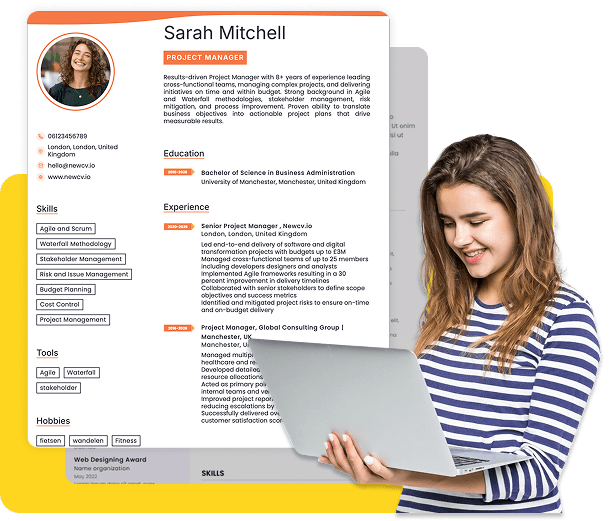
Use ATS-optimised Resume and resume templates that pass applicant tracking systems. Our Resume builder helps recruiters read, scan, and shortlist your Resume faster.

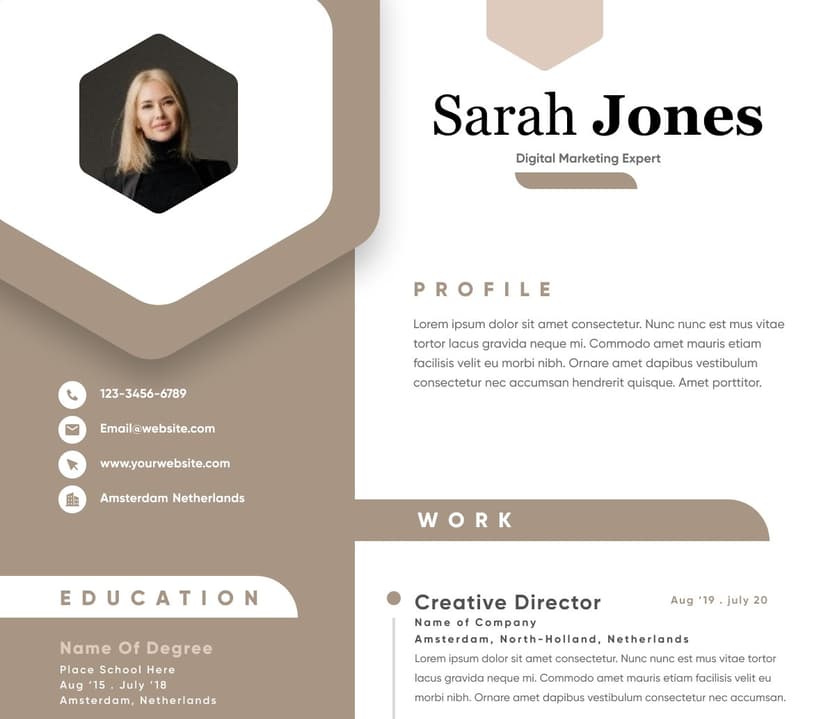
Use professional field-tested resume templates that follow the exact Resume rules employers look for.
Create Resume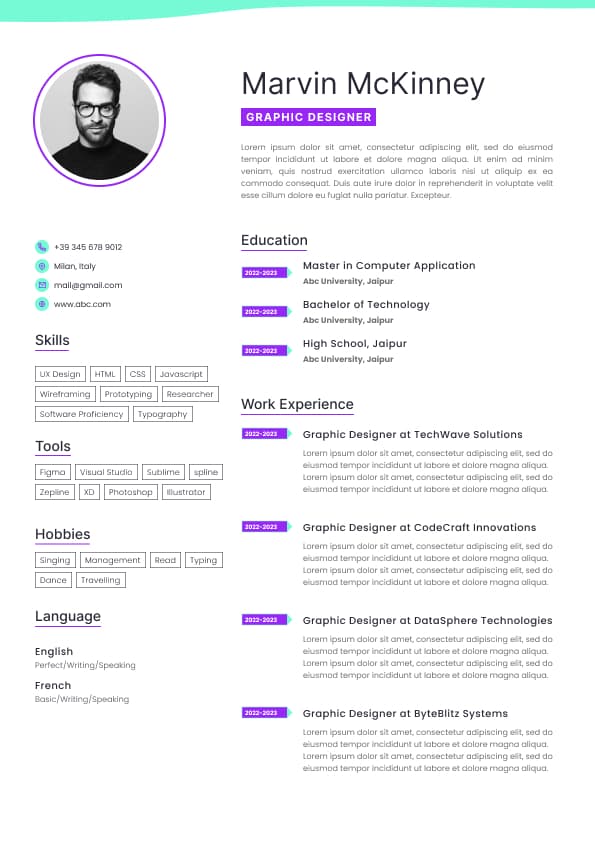
Use professional field-tested resume templates that follow the exact Resume rules employers look for.
Create ResumeYour SEEK profile is not just an online resume. In the Australian job market, it acts as a searchable candidate database that recruiters actively use to find applicants before they even advertise roles. A weak or incomplete SEEK profile dramatically reduces your visibility, while a strategically written profile can increase recruiter searches, interview requests, and direct approaches.
Most candidates make the mistake of treating SEEK like a storage place for their resume. Recruiters do not use it that way. They search by keywords, recent activity, job titles, skills, location, salary alignment, and profile completeness. Your profile needs to work for both ATS-style search visibility and human recruiter decision-making.
If your SEEK profile is not generating recruiter contact, there is usually a specific reason:
Your keywords do not match market searches
Your job titles are unclear or outdated
Your profile lacks commercial positioning
Your achievements are too vague
Many Australian recruiters search SEEK’s candidate database before advertising roles publicly. This is especially common for:
Mid-level professional roles
High-volume recruitment
Specialist skill shortages
Confidential hiring
Urgent replacement hires
Contract and temporary recruitment
A strong SEEK profile creates three advantages:
Increased visibility in recruiter searches
Most candidates optimise their SEEK profile incorrectly because they misunderstand how recruiters search.
Recruiters rarely search using broad phrases like:
“Hardworking professional”
“Team player”
“Results-driven candidate”
Instead, they search using highly specific combinations such as:
Job titles
Systems
Industry terminology
Certifications
Your settings reduce visibility
Your profile looks inactive or incomplete
This guide breaks down exactly how Australian recruiters evaluate SEEK profiles and what actually improves your chances of being found and shortlisted.
Higher credibility during screening
Faster shortlisting decisions
Recruiters often decide within seconds whether a profile is worth opening further. Your profile needs to communicate relevance immediately.
Technical skills
Locations
Salary bands
Years of experience
For example, an Australian recruiter hiring an Accounts Payable Officer might search:
“Accounts Payable”
“SAP”
“High volume invoicing”
“Reconciliations”
“End-to-end AP”
If those exact terms are missing from your profile, you may never appear in the search results.
The most common mistake is copying a generic resume summary into SEEK without adapting it for search visibility and recruiter scanning behaviour.
A SEEK profile must do two things simultaneously:
Rank in recruiter searches
Convince humans quickly
That requires strategic keyword placement combined with commercially relevant positioning.
Example
“Motivated professional with strong communication skills seeking new opportunities.”
This tells recruiters almost nothing.
Example
“Customer Service Team Leader with 6+ years’ experience across retail banking and contact centre environments. Skilled in complaints resolution, workforce planning, KPI management, coaching, and stakeholder engagement. Experienced using Salesforce, Zendesk, and Genesys in high-volume customer environments.”
The second version:
Contains searchable keywords
Establishes industry relevance
Demonstrates seniority
Improves ATS visibility
Helps recruiters assess fit immediately
Your headline is one of the most important parts of your SEEK profile because recruiters often scan headlines first in search results.
Avoid vague positioning.
Experienced Professional
Open to Opportunities
Looking for New Challenges
These do not help recruiters understand where you fit.
Project Coordinator | Construction & Infrastructure
HR Advisor | Employee Relations & Recruitment
Digital Marketing Specialist | SEO, Paid Media & Analytics
Warehouse Supervisor | FMCG & Distribution
Good headlines improve:
Search relevance
Click-through rates
Recruiter confidence
Immediate positioning clarity
Candidates often use internal company titles that do not align with broader market terminology.
This creates a major visibility problem.
Your internal title may be:
But recruiters are searching:
Customer Success Consultant
Account Coordinator
Customer Service Representative
If your profile only contains your internal title, you may never appear in recruiter searches.
Use market-recognised Australian job titles wherever possible.
You can still clarify your actual internal title within the role description if needed.
Your skills section should reflect real hiring searches, not generic soft skills.
Communication
Teamwork
Hardworking
Fast learner
These do not improve recruiter search performance meaningfully.
MYOB
Xero
Salesforce
AutoCAD
Contract administration
WHS compliance
End-to-end recruitment
Payroll processing
Stakeholder engagement
Financial reporting
Specificity matters.
Recruiters search using operational language tied directly to the role requirements.
Many SEEK profiles fail because the work history only lists responsibilities without showing business impact.
Recruiters are not just assessing tasks. They are assessing:
Capability
Scale
Complexity
Commercial contribution
Environment fit
Example
“Handled customer enquiries and managed escalations.”
Example
“Managed high-volume customer enquiries across inbound contact centre operations, resolving escalated complaints while maintaining 95%+ customer satisfaction scores and meeting strict SLA targets.”
The second version provides:
Context
Scale
Performance evidence
Recruiter confidence
Incomplete SEEK profiles are often deprioritised both algorithmically and psychologically.
A complete profile signals:
Professionalism
Active job seeking
Candidate engagement
Reduced recruiter risk
Complete the following sections fully:
Resume upload
Career summary
Employment history
Skills
Education
Certifications
Licences
Salary expectations
Preferred work type
Location preferences
This is a major misconception.
Your resume and SEEK profile serve different purposes.
Tailored application document
Specific role targeting
Strategic storytelling
Recruiter discoverability
Search optimisation
Broad market positioning
Your SEEK profile should generally contain:
More keywords
Broader search visibility
More searchable skills
Slightly wider positioning
Keyword stuffing damages readability and recruiter trust.
Instead, integrate keywords naturally into:
Headline
Summary
Skills
Role descriptions
Certifications
“Project management project manager PMP stakeholder management agile scrum.”
This looks artificial.
“Project Manager with experience delivering Agile transformation projects across financial services environments. Skilled in stakeholder management, sprint planning, change delivery, and cross-functional team leadership.”
Natural keyword placement performs better for both recruiters and search systems.
Recency matters.
Many recruiters filter for recently active candidates because they are:
More responsive
More engaged
More available
Update your profile regularly by:
Refreshing your summary
Adding recent projects
Updating skills
Uploading newer resume versions
Adjusting salary expectations
Even small updates can improve visibility.
Many candidates either:
Leave salary blank
Set unrealistic expectations
Undervalue themselves
All three create problems.
Australian recruiters often use salary filters early during searches.
If your expectations are too high:
If too low:
Research realistic salary bands for your market, industry, and location.
Candidates sometimes unknowingly limit recruiter access.
Review:
Recruiter visibility settings
Current employer privacy settings
Contact preferences
Resume visibility permissions
Some candidates accidentally make themselves effectively invisible.
International candidates often lose opportunities because their SEEK profiles do not align with Australian hiring expectations.
Australian recruiters generally value:
Clear communication
Direct achievements
Practical capability
Industry alignment
Local terminology
Concise positioning
Avoid:
Overly academic language
Excessive jargon
Inflated self-promotion
Long personal statements
Australian hiring culture generally prefers commercially practical communication over corporate buzzwords.
Systems experience is one of the biggest recruiter filters on SEEK.
Many recruiters search directly for:
SAP
Power BI
Salesforce
Pronto
TechnologyOne
MYOB
Xero
Workday
Oracle
Zendesk
If you have these skills but fail to mention them clearly, you reduce your discoverability.
Unlike LinkedIn, SEEK profiles generally do not rely heavily on profile photos.
In many Australian industries:
Recruiters focus more on relevance and skills
Photos have minimal impact on search outcomes
A photo is optional unless your industry specifically values personal branding.
Career changers often struggle because recruiters search based on direct alignment.
To improve transition opportunities:
Emphasise transferable skills
Use target-industry terminology
Reposition achievements strategically
Align your headline with your desired direction
Highlight overlapping responsibilities
A retail manager moving into operations coordination should emphasise:
Rostering
KPI management
Supplier coordination
Inventory management
Staff leadership
Process improvement
Not just “retail experience”.
Within the first 10 to 20 seconds, recruiters usually assess:
Current job title relevance
Industry alignment
Seniority level
Career stability
Search keyword relevance
Location
Salary compatibility
Communication quality
Profile completeness
Candidates who fail early screening rarely recover later in the process.
These issues regularly reduce shortlist chances:
Generic summaries
Missing achievements
Keyword-poor profiles
Excessive buzzwords
Inconsistent dates
Outdated resume uploads
Unrealistic salary expectations
Poor spelling or grammar
Confusing career direction
Incomplete work history
Recruiters interpret these as risk signals.
Strong candidates often optimise beyond the basics.
Use variations recruiters may search:
HR Advisor / Human Resources Advisor
EA / Executive Assistant
BDM / Business Development Manager
Some industries use overlapping terminology:
Accounts Receivable / Credit Control
Administration / Office Coordination
Customer Support / Client Services
One of the best optimisation methods is analysing:
Current SEEK job ads
Common requirements
Repeated terminology
Frequently requested systems
This reveals the exact language recruiters are searching.
For active job seekers:
For passive candidates:
Update immediately after:
Promotions
Certifications
Major projects
System training
Industry changes
Many candidates incorrectly treat them as interchangeable.
Primarily used for:
Active recruitment
Immediate hiring
Database searching
ATS-style filtering
More focused on:
Networking
Personal branding
Industry visibility
Professional engagement
Your SEEK profile should prioritise:
Searchability
Clarity
Relevance
Recruiter scanning behaviour
Over broader thought leadership or networking content.
The strongest SEEK profiles make recruiters think:
“This person obviously fits the role.”
That happens when your profile clearly communicates:
What you do
Your level
Your industry
Your systems
Your value
Your employment alignment
Confused positioning kills shortlist chances.
Clear positioning improves:
Search visibility
Recruiter trust
Shortlisting speed
Interview conversion rates


 Upload Resume
 Import from Linkedin