
Choose from a wide range of NEWCV resume templates and customize your NEWCV design with a single click.

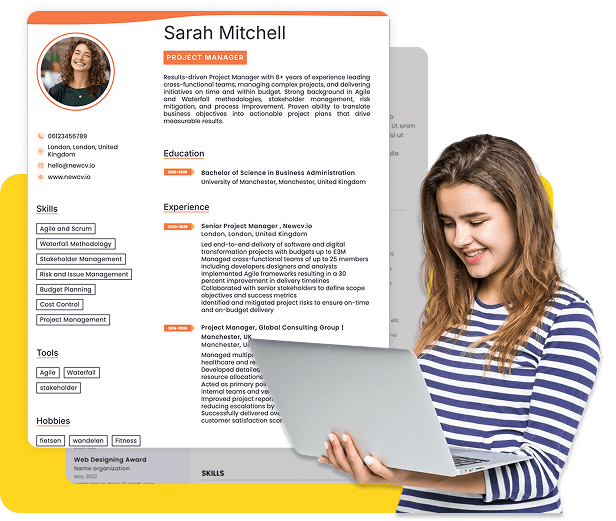
Use ATS-optimised Resume and resume templates that pass applicant tracking systems. Our Resume builder helps recruiters read, scan, and shortlist your Resume faster.

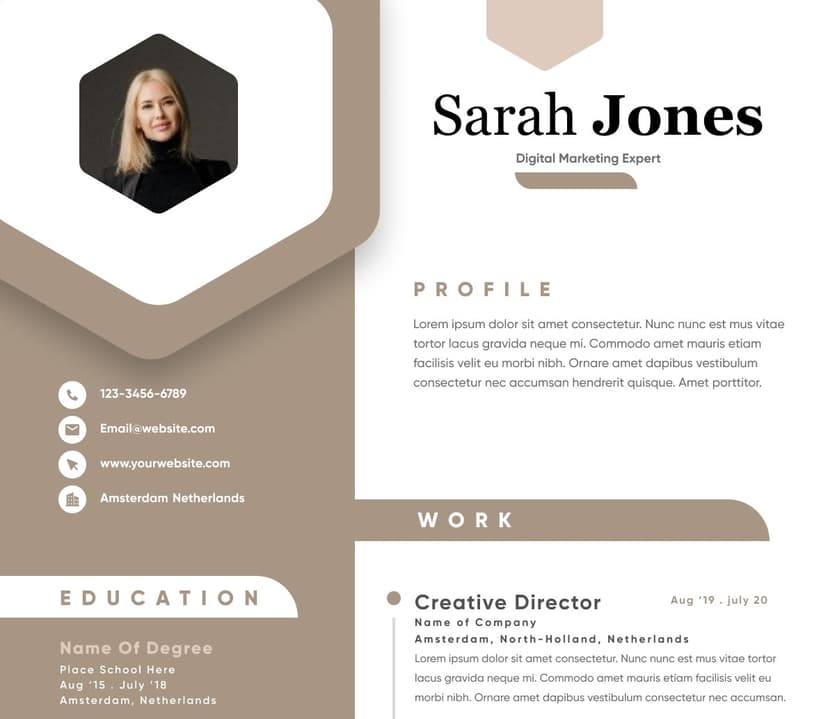
Use professional field-tested resume templates that follow the exact Resume rules employers look for.
Create Resume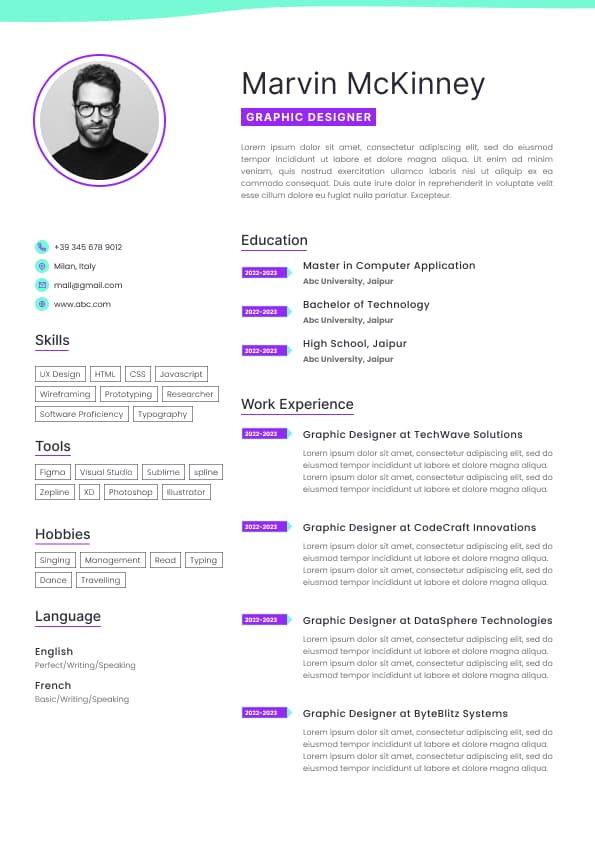
Use professional field-tested resume templates that follow the exact Resume rules employers look for.
Create ResumeA simple resume template is still the safest and most effective option for most Australian job seekers. Recruiters in Australia typically spend less than 30 seconds on an initial resume scan, especially when reviewing high-volume applications. The resumes that perform best are usually the easiest to read, logically structured, and tailored clearly to the role.
Over-designed resumes often fail ATS screening, distract from achievements, or frustrate hiring managers trying to assess suitability quickly. A clean, professional layout with strong content consistently outperforms complicated templates in real-world recruitment.
The ideal Australian resume template should:
Be easy to scan on desktop and mobile
Use a simple chronological structure
Highlight achievements instead of duties
Australian recruiters generally prefer resumes that are:
Clear
Direct
Relevant
Achievement-focused
Easy to assess quickly
Most hiring managers are not looking for creativity in resume design unless the role is specifically design-related. They are looking for evidence that you can perform the job, communicate professionally, and fit the requirements of the role.
A strong simple resume demonstrates:
Clear career progression
Relevant experience
The most effective format for the Australian market is usually the reverse chronological resume.
This structure works best because recruiters can quickly understand:
Your current position
Your recent experience
Career progression
Relevant industry exposure
Stability and consistency
A standard Australian resume structure includes:
Contact details
Professional summary
Include keywords naturally for ATS compatibility
Match Australian hiring expectations
Avoid unnecessary graphics, columns, and design clutter
This guide includes:
A recruiter-approved simple resume template
What Australian employers actually look for
Common mistakes that reduce interview chances
What to include and remove
ATS optimisation strategies
Real examples of strong vs weak resume content
Measurable impact
Professional presentation
Attention to detail
Alignment with the advertised role
In Australia, resumes that feel overly corporate, excessively wordy, or filled with generic buzzwords often perform poorly.
Key skills
Work experience
Education
Certifications or licences
Optional additional sections if relevant
For most candidates, a resume should be:
1 to 2 pages for early career professionals
2 to 3 pages for experienced professionals
Focused on relevance rather than total career history
FULL NAME
Phone Number | Professional Email Address | LinkedIn URL | City, State
Experienced and results-driven professional with expertise in [industry or specialisation]. Strong background in [key strengths]. Proven ability to [relevant achievement or capability]. Known for [professional quality relevant to role]. Seeking to contribute to [target role or industry].
Stakeholder management
Customer service
Project coordination
Team leadership
Microsoft Office Suite
Reporting and documentation
Problem-solving
Communication skills
Time management
Company Name – Location
Month Year – Present
Achieved [specific measurable outcome] by improving [process or activity]
Managed [responsibility] across [team/client/project scope]
Reduced [problem/cost/time] through [specific action]
Supported delivery of [project/service/outcome] within deadlines
Collaborated with stakeholders to improve [result]
Company Name – Location
Month Year – Month Year
Delivered [specific contribution or achievement]
Maintained strong client relationships across [industry/customer group]
Assisted with [operational or strategic responsibility]
Improved efficiency by [specific percentage or measurable impact]
Institution Name
Completion Year
Certification Name
Licence or accreditation if relevant
Available on request
Simple resumes are easier for both ATS software and human recruiters to process.
Most Australian employers use Applicant Tracking Systems to:
Scan resumes for keywords
Categorise applicants
Rank relevance
Filter candidates
Complex templates often create problems such as:
Broken formatting
Missing information during ATS parsing
Confusing layouts
Poor mobile readability
A simple format improves:
ATS compatibility
Recruiter readability
Information hierarchy
Professional credibility
From a recruiter perspective, clarity almost always beats creativity unless the role specifically requires visual portfolio skills.
Most candidates misunderstand how resumes are evaluated during the initial screening stage.
Recruiters are usually scanning for five things first:
Recruiters quickly assess whether your background aligns with the advertised position.
They look for:
Similar job titles
Industry relevance
Transferable experience
Matching technical skills
Relevant software or systems
If relevance is unclear within seconds, many resumes are rejected early.
Australian employers often pay attention to:
Frequent short-term moves
Unexplained employment gaps
Repeated contract exits
Lack of progression
This does not mean career changes are bad. It means your resume must explain positioning clearly.
Weak resumes list tasks.
Strong resumes demonstrate impact.
Weak Example
Responsible for customer service
Answered phone calls
Managed emails
Good Example
Resolved customer enquiries with a 95% satisfaction rating
Reduced response times by improving ticket handling processes
Managed high-volume client communication across multiple channels
The second version demonstrates value, not just activity.
Recruiters assess communication immediately through:
Resume structure
Grammar
Clarity
Formatting
Conciseness
Poor presentation creates concerns about professionalism and attention to detail.
Hiring managers also assess whether your experience level matches:
The role scope
Salary band
Seniority expectations
Industry benchmarks
Overqualified and underqualified resumes can both create risk concerns if positioning is unclear.
One of the biggest mistakes is writing vague introductions such as:
Weak Example
“Hardworking professional seeking opportunities to grow and contribute.”
This says almost nothing.
A strong summary should immediately clarify:
Industry
Experience level
Core strengths
Relevant positioning
Hiring managers care about:
Results
Performance
Business impact
Team contribution
Not generic task lists.
Australian recruiters prefer targeted resumes.
Including outdated or unrelated experience can dilute relevance and weaken positioning.
Many Canva-style templates create ATS issues and reduce readability.
Common problems include:
Multiple columns
Graphics
Icons
Tables
Text boxes
Poor spacing
Simple formatting is usually safer and more effective.
ATS optimisation matters, but unnatural keyword repetition looks manipulative and weakens credibility.
Strong resumes use keywords naturally within:
Achievements
Skills
Experience descriptions
Applicant Tracking Systems do not “hire” candidates, but they do influence visibility.
To improve ATS performance:
Match terminology used in the job advertisement
Include relevant hard skills naturally
Use standard headings
Avoid images and graphics
Submit in Word or PDF unless instructed otherwise
Use clean formatting
Good ATS optimisation should still read naturally to humans.
Many candidates optimise only for software and forget the recruiter still makes the hiring decision.
The safest professional formatting choices are:
Calibri
Arial
Aptos
Helvetica
Cambria
10.5 to 12 for body text
14 to 18 for headings
Use consistent spacing
Keep margins balanced
Avoid excessive bold formatting
Use bullet points strategically
Keep sections easy to scan
Recruiters often review resumes on laptops, mobile devices, or inside ATS systems. Simplicity improves readability across all formats.
Tailoring does not mean rewriting your entire resume every time.
It means adjusting:
Professional summary
Keywords
Achievement emphasis
Skills prioritisation
For example:
A customer service role may prioritise communication and conflict resolution
A project role may prioritise stakeholder management and delivery outcomes
A sales role may prioritise revenue growth and client acquisition
The strongest resumes align clearly with the advertised priorities.
In most Australian industries, the answer is no.
Photos are generally unnecessary and can:
Distract from qualifications
Create unconscious bias concerns
Reduce ATS compatibility
Exceptions may include:
Modelling
Acting
Certain creative industries
For standard corporate, professional, government, healthcare, retail, hospitality, and trade roles, photos are typically avoided.
The resumes that consistently secure interviews are usually not the most visually impressive.
They are the most strategically positioned.
Strong resumes:
Match the role closely
Demonstrate measurable value
Use clear language
Show credibility quickly
Remove irrelevant distractions
Make recruiter decisions easier
Hiring managers are ultimately looking for reduced hiring risk.
A strong resume reduces uncertainty by clearly showing:
Capability
Relevance
Professionalism
Results
Communication quality
Some industries require more specialised resume approaches.
Examples include:
Executive leadership
Government applications
Academic CVs
Mining and engineering
Creative portfolios
Defence roles
These may require:
Additional compliance information
Technical project detail
Selection criteria responses
Portfolio links
Expanded leadership achievements
However, even in these industries, clarity still matters more than visual complexity.


 Upload Resume
 Import from Linkedin