STILL APPLYING. STILL HEARING NOTHING?BUILD YOUR RESUME

STILL APPLYING. STILL HEARING NOTHING?BUILD YOUR RESUME
Choose from a wide range of NEWCV resume templates and customize your NEWCV design with a single click.
FAQ
A startup Android developer resume is not evaluated the same way as a traditional enterprise engineering resume.
Startup founders, product leaders, and early engineering managers are not primarily looking for someone who maintained a massive legacy Android codebase for five years. They are looking for someone who can build, ship, iterate, and solve product problems fast with minimal oversight.
That changes everything about how your resume should be written.
In startup hiring, your resume is evaluated through these questions:
Can this person build features quickly without hand-holding?
Have they shipped real mobile products users actually used?
Can they work in ambiguity and changing priorities?
Do they think like a product engineer, not just a ticket executor?
Have they owned Play Store releases, MVPs, or app launches?
Most candidates underestimate how differently startup companies evaluate mobile engineers.
Enterprise companies optimize for:
Stability
Process compliance
Long-term maintainability
Large team collaboration
Specialized responsibilities
Predictable delivery cycles
Startups optimize for:
Fast execution
Startup hiring managers skim resumes aggressively. Your resume structure must surface the right signals fast.
The highest-performing startup Android resumes typically include:
Professional summary
Technical skills
Startup-focused experience
Product and shipping impact
Mobile stack and tooling
Key projects
Metrics and outcomes
Your summary should immediately position you as a fast-moving product engineer.
Do not write a generic Android developer summary.
Weak Example
Android Developer with 5 years of experience developing mobile applications using Java and Kotlin.
This says almost nothing about startup readiness.
Good Example
Android Developer with 5+ years of experience building and scaling mobile products in fast-paced startup environments. Specialized in Kotlin, Firebase, MVP development, and rapid feature delivery. Proven track record of shipping Android apps from scratch, owning Play Store releases, and collaborating cross-functionally with product, design, and growth teams to accelerate user acquisition and retention.
This communicates:
Product ownership
Startup experience
Delivery speed
Startup recruiters often search resumes using highly practical operational keywords, not just technologies.
Strong startup Android resume keywords include:
MVP development
Rapid prototyping
Product engineering
Kotlin
Firebase
Play Store deployment
Agile mobile delivery
Startup environment
The experience section is where most startup resumes either succeed or fail.
Startup hiring managers want evidence of:
Building products from scratch
Operating with limited resources
Shipping quickly
Taking ownership beyond coding
Working directly with product stakeholders
Solving business problems through mobile engineering
Your bullets should focus heavily on outcomes and ownership.
One of the biggest startup hiring filters is product mindset.
Startups want Android engineers who understand:
User behavior
Retention
Conversion
Feature prioritization
Customer pain points
Business impact
Candidates who sound like isolated developers often lose to engineers who sound product-oriented.
Weak Example
Startups operate with incomplete information, changing roadmaps, and shifting priorities.
Hiring managers actively screen for candidates who can handle uncertainty without slowing down.
Strong resumes demonstrate ambiguity tolerance indirectly through achievements.
Built products from scratch
Worked on early-stage teams
Shipped MVPs
Handled multiple responsibilities
Iterated quickly based on feedback
Worked directly with non-technical stakeholders
Kotlin is now the default expectation for modern Android startup hiring.
But simply listing Kotlin is not enough.
Startups want engineers who use Kotlin to accelerate delivery and improve product velocity.
Built scalable Android features using Kotlin coroutines and modern Jetpack libraries
Migrated legacy Java modules to Kotlin, reducing development friction and improving release speed
Leveraged Kotlin Flow and MVVM architecture to accelerate feature iteration cycles
Developed modular Kotlin components enabling faster experimentation and deployment
This framing connects technical skills to startup outcomes.
Many Android developers underestimate how valuable release ownership is in startup hiring.
In startups, engineers often own:
App releases
QA coordination
Production debugging
Monitoring
Rollbacks
Analytics
Crash management
Candidates who demonstrate operational ownership stand out significantly.
Generic responsibilities destroy startup resume performance.
Startups care about outcomes, not participation.
Words like:
Assisted
Participated
Supported
Coordinated
often weaken startup positioning unless paired with measurable impact.
Startup hiring managers want evidence of impact.
Missing metrics makes your work harder to evaluate.
For startup Android roles, clarity and speed matter.
A strong layout typically follows this order:
Position yourself immediately as a startup-ready engineer.
Keep this concise and relevant.
Focus on:
Kotlin
Jetpack Compose
Firebase
Android SDK
REST APIs
James Carter
San Francisco, CA
jamescarter.dev@email.com
(415) 555-0182
LinkedIn: linkedin.com/in/jamescarterdev
Android Developer with 6+ years of experience building mobile products in startup and SaaS environments. Specialized in Kotlin, Firebase, rapid MVP development, and scalable Android architecture. Proven success shipping Android applications from concept to Play Store launch while collaborating directly with founders, product teams, and growth stakeholders.
Kotlin
Jetpack Compose
Android SDK
Firebase
Most startup resume reviews happen incredibly fast.
Initial scans usually focus on:
Startup experience
Ownership signals
Shipping velocity
Product impact
Technical stack relevance
Communication clarity
Recruiters often eliminate resumes within 20 to 40 seconds if they appear:
Too generic
Metrics dramatically improve startup resume credibility.
Strong metrics include:
Retention increases
Conversion improvements
App downloads
Revenue impact
Crash reductions
Performance gains
Feature adoption rates
The strongest startup Android resumes consistently demonstrate five things:
They sound accountable, not managed.
They understand why features matter.
They communicate rapid delivery capability.
They show comfort operating in uncertainty.
They connect engineering to outcomes.
Average resumes focus mostly on tasks.
Strong startup resumes focus on impact.

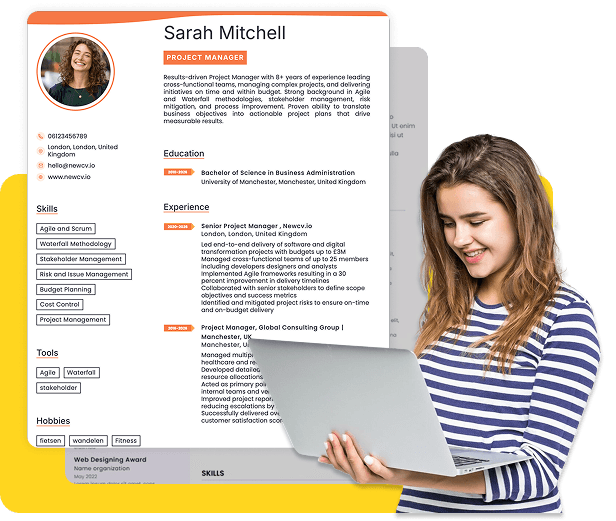
Use ATS-optimised Resume and resume templates that pass applicant tracking systems. Our Resume builder helps recruiters read, scan, and shortlist your Resume faster.
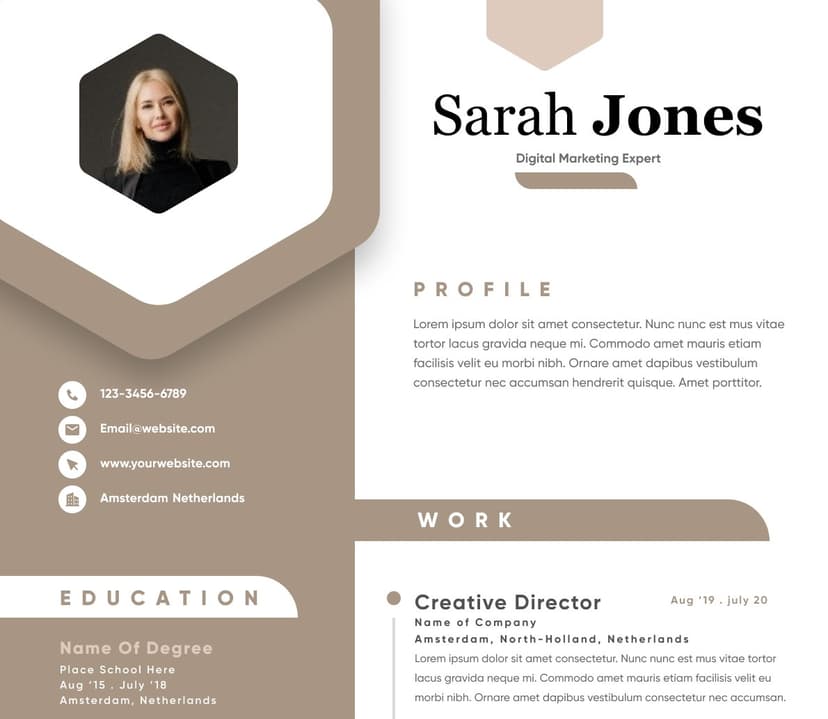
Use professional field-tested resume templates that follow the exact Resume rules employers look for.
Create Resume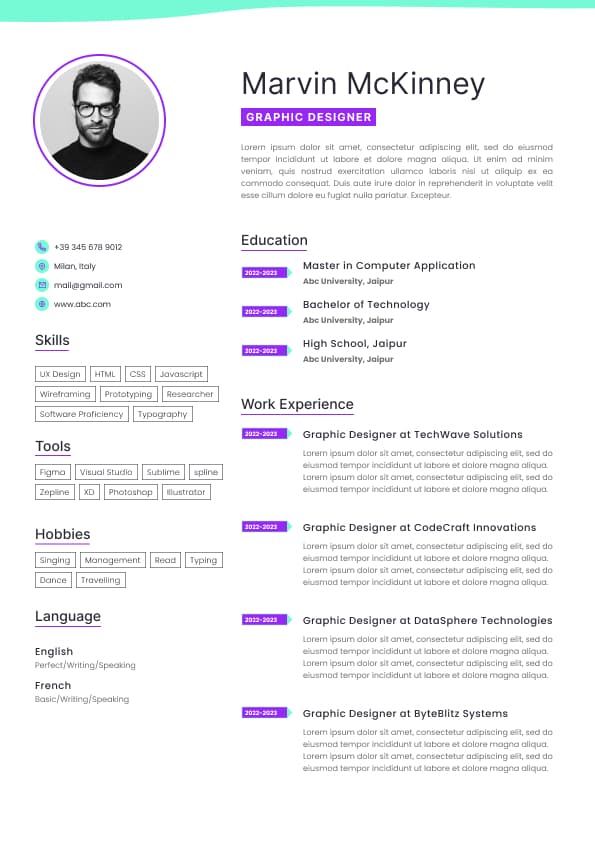
Use professional field-tested resume templates that follow the exact Resume rules employers look for.
Create ResumeCan they collaborate directly with founders, designers, and growth teams?
Will they move fast without creating engineering chaos?
Most Android resumes fail startup hiring because they look too enterprise-heavy, too task-oriented, or too generic.
A startup-focused Android resume needs to communicate:
Product ownership
Speed of execution
Mobile-first product thinking
MVP development experience
Cross-functional collaboration
Fast iteration cycles
Customer impact
Startup adaptability
Technical independence
The strongest startup Android resumes make hiring managers believe the candidate can contribute immediately in a lean, high-pressure environment.
Shipping velocity
Problem solving
Product impact
Ownership
Adaptability
MVP thinking
Resourcefulness
That means a startup Android developer resume should emphasize outcomes and ownership far more than process participation.
Weak Example
Participated in Android application development lifecycle
Worked with Agile teams to deliver sprint objectives
Assisted senior developers with mobile feature implementation
This sounds passive and low ownership.
Good Example
Built and launched a Kotlin-based MVP Android app used by 25,000+ users within four months
Owned Play Store releases, Firebase integrations, and crash monitoring independently
Collaborated directly with product and growth teams to reduce onboarding drop-off by 31%
This sounds like someone startups can trust immediately.
Education and certifications only if relevant
Avoid overloading the resume with unnecessary sections.
Startup recruiters care far more about what you built and shipped than generic credentials.
Technical depth
Business impact
All within a few lines.
Mobile product ownership
Cross-functional collaboration
Feature experimentation
User retention optimization
CI/CD pipelines
Crash analytics
Mobile performance optimization
Android SDK
Jetpack Compose
REST APIs
Early-stage startup
SaaS mobile platform
Fast iteration cycles
But keywords alone are not enough.
The resume must demonstrate real execution behind those terms.
Developed and launched a Kotlin-based Android MVP in under 12 weeks, helping secure $2M in seed funding
Reduced app crash rate by 43% through Firebase Crashlytics monitoring and performance optimization initiatives
Built core onboarding and subscription flows that increased mobile conversion rates by 27%
Led Play Store release management and coordinated production deployments across multiple sprint cycles
Collaborated directly with founders and product managers to prioritize high-impact features during rapid growth stages
Implemented Firebase Authentication, analytics, and push notifications to improve retention and engagement metrics
Built reusable mobile architecture components that accelerated feature delivery speed across engineering teams
Optimized API synchronization and caching, reducing mobile load times by 38%
Developed rapid prototypes for user testing initiatives that shortened product validation cycles
Owned Android app performance monitoring, crash resolution, and release stability during scaling phases
These bullets communicate startup readiness because they show:
Ownership
Speed
Product thinking
Technical contribution
Business impact
Technically acceptable, but strategically weak.
Good Example
This demonstrates business awareness.
That matters enormously in startup hiring.
Operated without rigid requirements
Supported scaling transitions
Good Example
This signals adaptability and independence.
Managed end-to-end Play Store deployment pipeline for a SaaS mobile application with 100K+ downloads
Coordinated release testing, staged rollouts, crash monitoring, and hotfix deployments independently
Improved release stability by implementing automated CI/CD workflows and pre-release validation processes
This communicates operational maturity.
A giant skills list without execution proof weakens credibility.
If your resume sounds heavily managed or process-dependent, startup recruiters may assume you need too much structure.
CI/CD
MVVM
GraphQL
Crashlytics
Play Store deployment
Agile delivery
This should dominate the resume.
Especially important if:
You worked at very small startups
You built independent apps
You launched side products
You contributed to MVPs
Keep compact unless highly relevant.
MVVM Architecture
REST APIs
GraphQL
CI/CD Pipelines
Crashlytics
Agile Mobile Delivery
Play Store Deployment
GitHub Actions
Senior Android Developer
NovaPay Mobile — San Francisco, CA
2022–Present
Led Android MVP development for a fintech startup application that reached 150K+ downloads within the first year
Built onboarding and payment flow optimizations that increased user activation rates by 29%
Owned Play Store release management, crash monitoring, and production deployment workflows
Collaborated directly with founders and growth teams to prioritize high-impact mobile features
Reduced application startup time by 34% through performance optimization initiatives
Implemented Firebase Analytics and event tracking to support mobile acquisition strategies
Android Developer
LaunchGrid SaaS — Austin, TX
2019–2022
Developed Kotlin-based Android features for a B2B SaaS platform serving startup clients
Built rapid mobile prototypes used for customer validation and investor demonstrations
Integrated Firebase Authentication, push notifications, and analytics tools across mobile workflows
Improved crash-free user sessions from 92% to 98.7% through debugging and release stabilization
Worked cross-functionally with product and UX teams during fast iteration cycles
QuickCart Android App
Built and launched a mobile-first grocery delivery MVP independently
Achieved 25K+ downloads within six months of Play Store launch
Implemented real-time order tracking, payment integration, and push notification systems
Too enterprise-heavy
Too task-oriented
Too junior in ownership
Too buzzword-heavy without proof
The strongest resumes immediately communicate:
“This person can help us build and ship product fast.”
That is the core startup hiring objective.
Startup engineers rarely work in isolation.
Mention collaboration with:
Founders
Product managers
Designers
Growth teams
Marketing stakeholders
Startups value adaptability heavily.
Strong signals include:
New technology adoption
Rapid migrations
Cross-platform exposure
Independent feature ownership
Startups obsess over users.
Resumes that connect engineering work to customer outcomes consistently perform better.


 Upload Resume
 Import from Linkedin