STILL APPLYING. STILL HEARING NOTHING?BUILD YOUR RESUME

STILL APPLYING. STILL HEARING NOTHING?BUILD YOUR RESUME
Choose from a wide range of NEWCV resume templates and customize your NEWCV design with a single click.
FAQ

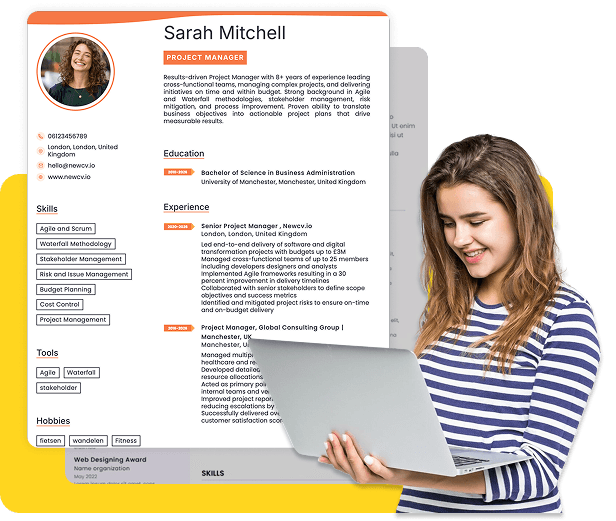
If you’re a high school or college student trying to land an Android developer internship, part-time job, or first full-time role, your resume does not need years of experience to compete. Hiring managers for student Android developer roles care far more about proof of technical ability, project ownership, learning potential, and consistency than formal job titles.
The strongest student Android developer resumes show real hands-on work with Kotlin, Java, Android Studio, APIs, GitHub, Firebase, Jetpack Compose, and mobile app projects. Even coursework, hackathons, coding bootcamps, freelance work, and personal apps can become strong resume material when positioned correctly.
Most students lose interviews because their resumes look generic, list technologies without evidence, or fail to explain what they actually built. This guide shows exactly how recruiters evaluate student Android developer resumes, what hiring managers want to see, and how to structure your resume to compete for internships, summer roles, new grad jobs, and entry-level Android development positions.
For student and entry-level Android roles, recruiters are not expecting senior engineering experience. They are looking for signals that predict future performance.
The strongest resumes consistently demonstrate:
Technical curiosity
Ability to build working Android apps
Understanding of core Android fundamentals
Consistent learning and self-improvement
Project ownership
Team collaboration
Problem-solving ability
Familiarity with modern Android tools and workflows
Strong communication and follow-through
A recruiter reviewing entry-level Android resumes typically asks:
Did this candidate actually build something?
Can they explain their projects clearly?
Do they understand Android fundamentals beyond tutorials?
Have they worked with GitHub or collaborative development?
Are they capable of learning quickly in a real engineering environment?
Would an engineer trust them with junior-level tasks?
That evaluation happens extremely fast. In many cases, your resume gets less than 15 seconds during the first screening pass.
For students and new grads, a reverse-chronological format works best because it keeps projects, technical skills, and education easy to scan.
Your resume should typically include:
Contact information
Resume summary or objective
Technical skills
Android projects
Experience or internships
Education
Certifications or coursework
GitHub and portfolio links
Hackathons or technical activities
For most student Android developer resumes, projects matter more than traditional work experience.
A strong Android project section can outperform unrelated retail or customer service jobs if the role is technical.
Your summary should immediately position you as a capable junior Android developer with hands-on technical experience.
Avoid vague claims like:
Weak Example
“Motivated student seeking opportunities to grow skills in Android development.”
This says almost nothing.
Instead, communicate technologies, project experience, and role readiness.
Good Example
“Computer science student with hands-on experience building Android applications using Kotlin, Jetpack Compose, Firebase, and REST APIs. Developed multiple mobile projects through coursework, hackathons, and personal development. Experienced with GitHub collaboration, debugging, and Agile team environments. Seeking an Android developer internship or entry-level role.”
This works because it gives recruiters concrete signals immediately.
Your skills section should reflect technologies you can reasonably discuss in an interview.
Do not overload your resume with every framework you have seen online.
Recruiters and hiring managers often verify technical depth during interviews.
Focus on relevant Android development technologies such as:
Kotlin
Java
Android Studio
XML layouts
Jetpack Compose
Android SDK
Gradle
Git and GitHub
REST APIs
Firebase
Room Database
MVVM architecture
Dependency Injection basics
RecyclerView
Navigation components
State management
Mobile UI design
Data structures
Algorithms
Object-oriented programming
Databases
Software debugging
Unit testing basics
Agile methodologies
Jira
GitHub pull requests
Team collaboration
Version control
For student resumes, projects are often the deciding factor.
A weak project section kills interview chances. A strong one can compensate for limited experience.
Recruiters want evidence that you can:
Build functioning Android applications
Solve technical problems
Work through bugs
Connect APIs
Structure mobile interfaces
Handle app data
Use modern Android practices
Your projects should include:
Project name
Technologies used
What the app does
Technical challenges solved
Measurable outcomes when possible
Campus Events App
Kotlin, Jetpack Compose, Firebase, REST API, GitHub
Built an Android application that displays real-time campus events using a public REST API
Designed responsive UI screens with Jetpack Compose for event browsing and filtering
Integrated Firebase Authentication for secure student login functionality
Implemented Room database caching to improve offline usability
Collaborated with 3 students using GitHub branches, pull requests, and Agile sprint tracking
Debugged API response handling and improved app load performance during testing
This works because it sounds like actual engineering work instead of tutorial copying.
Most student resumes fail because projects are too generic.
Hiring managers see hundreds of resumes saying:
“Built a to-do app”
“Created weather application”
“Learned Kotlin basics”
Those projects only become impressive when the resume explains technical depth, implementation decisions, and problem-solving.
Strong projects usually include:
Real API integration
Firebase implementation
Authentication flows
Local data storage
Error handling
Team collaboration
Performance improvements
UI responsiveness
GitHub workflow usage
Even simple apps can become strong resume projects when explained correctly.
Relevant coursework matters for students because it helps recruiters evaluate foundational knowledge.
Only include courses relevant to software engineering or Android development.
Good coursework examples include:
Mobile Application Development
Data Structures and Algorithms
Object-Oriented Programming
Database Systems
Software Engineering
Computer Networks
Human-Computer Interaction
Do not list basic general education courses.
Relevant Coursework:
Data Structures and Algorithms, Mobile Application Development, Object-Oriented Programming, Database Systems, Software Engineering
This gives recruiters fast insight into technical foundation.
Yes. Absolutely.
For high school students pursuing internships or early technical opportunities, Android projects are often more valuable than formal experience.
A strong high school Android resume can include:
Personal Android apps
Coding bootcamp projects
Hackathon participation
GitHub repositories
Freelance app work
School technology clubs
STEM competitions
Recruiters hiring interns understand that younger candidates have limited professional experience.
What matters is initiative and technical ability.
College students should prioritize:
Technical depth
Project complexity
Collaboration experience
Internship readiness
Engineering fundamentals
At the college level, recruiters expect:
Cleaner GitHub portfolios
Better architecture understanding
Stronger debugging ability
Team project experience
Better communication of technical decisions
A college student resume should feel closer to junior engineer readiness than beginner coding exposure.
Strong bullet points explain outcomes, technologies, and technical contribution.
Weak bullets are vague and passive.
Worked on Android apps
Helped build mobile interfaces
Learned Kotlin programming
These provide no evidence of competence.
Developed Android UI screens using Jetpack Compose and Material Design principles
Connected mobile application to REST APIs for real-time data retrieval and display
Implemented Firebase Authentication and Firestore database integration
Improved application responsiveness by optimizing RecyclerView rendering performance
Collaborated with student developers using GitHub pull requests and Agile workflows
Debugged Android lifecycle issues and resolved app crashes during testing
Good bullet points demonstrate actual engineering contribution.
Your GitHub profile matters more than many students realize.
Recruiters and engineers often check GitHub when evaluating junior Android candidates.
A strong GitHub portfolio should include:
Clean repositories
Clear README documentation
Project screenshots
Meaningful commit history
Organized code structure
Active learning progression
Avoid:
Empty repositories
Broken projects
Tutorial clones with no customization
Poor documentation
Random unfinished uploads
Even 2 to 4 strong Android repositories can significantly improve your interview chances.
Saying you know Kotlin means very little without project evidence.
Every important technology should connect to actual implementation.
Recruiters want specifics.
“Built mobile app” is weak.
“Built Android app using Kotlin, Firebase, and REST APIs for student event tracking” is far stronger.
Recruiters scan quickly.
Make technologies and outcomes obvious.
If your only work experience is unrelated retail work, your Android projects should still come first.
Technical relevance matters more than chronology for student engineering resumes.
Many online templates create robotic, keyword-stuffed resumes that feel fake.
Recruiters notice immediately.
Your resume should sound like a real junior developer, not an SEO-generated document.
Applicant Tracking Systems scan resumes for:
Android-related keywords
Relevant technologies
Project terminology
Education alignment
Role relevance
Important ATS keywords for Android student resumes include:
Android Developer
Kotlin
Java
Android Studio
Firebase
REST API
Jetpack Compose
GitHub
Mobile Application Development
MVVM
Android SDK
However, keyword stuffing hurts readability.
The goal is natural technical relevance, not repetition.
Sometimes.
If you lack technical experience entirely, non-technical jobs can demonstrate:
Reliability
Communication
Teamwork
Time management
Customer interaction
But they should not dominate the resume.
For Android developer applications, technical projects should remain the centerpiece.
For most students:
A second page is only justified if you have substantial internships, open-source contributions, or advanced technical work.
Most hiring managers prefer concise resumes that quickly demonstrate technical competence.
Hiring managers usually know junior candidates are still learning.
They are not expecting production-level expertise.
What they want is confidence that you can:
Learn quickly
Take feedback well
Solve problems independently
Contribute to engineering teams
Write maintainable code
Handle junior-level Android tasks responsibly
The strongest resumes reduce perceived hiring risk.
That happens when your resume demonstrates:
Consistent project work
Technical curiosity
Ownership mentality
Real implementation experience
Collaboration skills
Recruiters like seeing growth.
For example:
Started with Java basics
Learned Kotlin
Built simple apps
Added Firebase
Implemented APIs
Learned Jetpack Compose
That progression signals long-term engineering potential.
Projects become stronger when you explain technical challenges.
Example:
“Resolved inconsistent API response handling by implementing coroutine-based asynchronous data loading.”
This sounds far more credible than generic app descriptions.
Even student projects can include measurable impact.
Examples:
Reduced app loading time by 30%
Supported 500+ mock data entries
Collaborated with 4 developers during hackathon sprint
Metrics increase credibility.
If the job emphasizes:
Kotlin
Firebase
MVVM
REST APIs
Your resume should naturally reflect those technologies where relevant.
Customization improves both ATS performance and recruiter alignment.
Include:
Name
Phone number
Professional email
GitHub link
LinkedIn link
Portfolio website if available
Briefly position yourself as an Android-focused student developer.
Focus on Android-relevant technologies only.
This should usually be the strongest section.
Include internships, freelance work, research, or technical collaboration.
Include degree, graduation date, GPA if strong, and relevant coursework.
Optional but useful:
Hackathons
Coding clubs
Open-source contributions
Technical certifications
Many students believe they lose interviews because they lack experience.
In reality, most lose interviews because their resumes fail to communicate capability clearly.
Recruiters are not expecting senior engineers.
They are looking for evidence that you can contribute as a junior developer without excessive hand-holding.
The biggest differentiators are usually:
Better project explanations
Cleaner technical positioning
Stronger GitHub visibility
More realistic bullet points
Clear evidence of hands-on Android development
Students who communicate technical work clearly consistently outperform candidates with similar skill levels but weaker resumes.
Use ATS-optimised Resume and resume templates that pass applicant tracking systems. Our Resume builder helps recruiters read, scan, and shortlist your Resume faster.

Use professional field-tested resume templates that follow the exact Resume rules employers look for.
Create Resume
Use professional field-tested resume templates that follow the exact Resume rules employers look for.
Create Resume


 Upload Resume
 Import from Linkedin