STILL APPLYING. STILL HEARING NOTHING?BUILD YOUR RESUME

STILL APPLYING. STILL HEARING NOTHING?BUILD YOUR RESUME
Choose from a wide range of NEWCV resume templates and customize your NEWCV design with a single click.
FAQ
A strong JavaScript developer resume should not look the same for every job type. Full time roles require proof of long term product ownership, collaboration, reliability, and scalable feature delivery. Contract, freelance, and temporary roles require faster evidence of impact, clear technical fit, rapid onboarding, and project completion. Remote, hybrid, and onsite roles also change what recruiters look for because each work setup creates different risk signals.
The best JavaScript developer resume is not just a list of frameworks. It shows the hiring manager why you are the safest match for that specific employment structure, technical environment, and business need.
Recruiters do not screen full time, contract, freelance, and temporary JavaScript resumes the same way. The job title may look similar, but the hiring risk is different.
For a full time JavaScript developer role, the employer is asking, “Can this person grow with the product, work well with the team, and maintain code quality over time?”
For a contract JavaScript developer role, the question becomes, “Can this person start quickly, understand our codebase fast, and deliver the exact feature or fix we need?”
For a temporary JavaScript developer job, the concern is even more immediate. The company may need release support, bug fixing, migration help, production stabilization, or team augmentation. They are not looking for broad career potential first. They are looking for fast, useful execution.
That means your resume must adjust the emphasis without changing the truth. The same experience can be positioned differently depending on the role.
A full time resume should highlight:
Product ownership
Cross functional collaboration
Application reliability
Scalable architecture
Most JavaScript developer resumes are scanned in layers. The first layer is usually fit. The second is evidence. The third is risk.
At the fit layer, recruiters look for the required technologies. For JavaScript roles, this often includes React, Node.js, TypeScript, Next.js, Vue, Angular, Express, REST APIs, GraphQL, testing frameworks, Git, cloud platforms, and modern front end tooling.
At the evidence layer, they look for proof that you used those technologies in real applications. Listing React is not enough. A stronger resume shows what you built, improved, migrated, optimized, integrated, or maintained.
At the risk layer, the recruiter or hiring manager asks whether your background matches the role type. A candidate with only long term full time experience may still be a good contractor, but the resume must show independence and delivery speed. A freelancer may be a strong full time candidate, but the resume must show team collaboration, code maintainability, and product continuity.
This is where resume positioning matters.
Weak Example:
Built JavaScript applications using React and Node.js.
Good Example:
Delivered React and Node.js features for a B2B SaaS dashboard, improving user workflow efficiency and supporting weekly production releases in an Agile team.
The good version gives context, technology, business environment, and delivery signal. It makes the recruiter’s decision easier.
A part time JavaScript developer resume should prove that limited hours will not create delivery risk. Employers hiring part time developers are usually concerned about availability, communication, independence, and whether you can complete scoped work without constant oversight.
Your resume should not overemphasize that you want flexibility. It should show that you can deliver useful JavaScript work within a defined schedule.
Strong positioning for part time roles includes:
Flexible availability across agreed work windows
Ability to work independently on scoped features
Front end, back end, or full stack contribution without heavy supervision
Freelance, side project, or project based development experience
Clear communication with product owners, founders, agencies, or engineering leads
Experience balancing priorities and meeting deadlines
A full time JavaScript developer resume should show that you can contribute beyond isolated tasks. Employers hiring full time developers want someone who can support product growth, improve code quality, collaborate with engineering teams, and stay accountable after launch.
This resume should emphasize depth, consistency, and ownership.
Strong positioning for full time roles includes:
Long term product development experience
Ownership of features from planning through deployment
Collaboration with product managers, designers, QA, DevOps, and backend teams
Code reviews and engineering standards
Scalable front end or full stack architecture
Testing, debugging, performance optimization, and maintainability
A contract JavaScript developer resume must make speed and fit obvious. Staffing agencies, technical recruiters, and hiring managers often review contractor resumes quickly because the business need is urgent.
For contract roles, your resume should lead with:
Exact tech stack match
Recent project outcomes
Ability to work with existing codebases
Rapid onboarding
Stakeholder communication
Short term delivery impact
Contract, consulting, or client facing experience
Contract recruiters often search for very specific combinations such as React and TypeScript, Node.js and AWS, Next.js and ecommerce, or JavaScript and legacy modernization. Your resume should make those matches easy to find.
A temporary JavaScript developer resume should be direct, practical, and outcome heavy. Temporary roles are often created because the team has a short term problem that needs coverage.
Common temporary JavaScript needs include:
Release support
Bug fixing
Front end cleanup
Legacy JavaScript modernization
Migration from older frameworks
API integration support
QA issue resolution
A freelance JavaScript developer resume is different from a general portfolio. A portfolio shows work. A resume must prove business value, technical fit, reliability, and client delivery.
Freelance resumes should highlight:
Client project outcomes
Scope, timeline, and deliverables
Website or application performance improvements
CMS, ecommerce, SaaS, or agency experience
Communication with nontechnical stakeholders
Independent planning and execution
Repeat clients or long term consulting relationships when relevant
Freelancers often undersell themselves by writing like task takers. A better resume positions you as a developer who solves business problems with JavaScript.
Work location changes resume strategy because it changes perceived risk.
For remote JavaScript developer roles, the resume should prove you can work without constant visibility. Hiring managers look for communication, documentation, ownership, async collaboration, and reliable delivery.
Remote resume signals include:
Distributed team experience
Async communication
Clear documentation
Ticket based development
Git workflow discipline
Independent debugging
Ownership across time zones
Industry targeting can dramatically improve resume relevance. JavaScript skills are transferable, but hiring managers prefer candidates who understand their business environment.
For SaaS roles, emphasize product dashboards, subscription workflows, user management, analytics, multi tenant architecture, onboarding flows, role based access, and recurring product releases.
Strong SaaS resume language focuses on:
B2B SaaS platforms
React dashboards
Customer facing product features
Subscription billing UI
Product analytics
Multi tenant interfaces
You do not need a completely new resume for every JavaScript job. You need a flexible master resume and a targeted version for each application type.
The most important areas to customize are the headline, summary, skills, project descriptions, and accomplishment bullets.
Your headline should match the role type when appropriate.
Examples include:
JavaScript Developer
React JavaScript Developer
Full Stack JavaScript Developer
Contract JavaScript Developer
Freelance JavaScript Developer
Remote JavaScript Developer
The biggest mistake is treating JavaScript as the whole message. Employers are not hiring JavaScript in isolation. They are hiring someone to build, fix, scale, modernize, or support web applications.
Another common mistake is listing every tool without showing practical use. A skills section can help with ATS matching, but hiring managers still need evidence.
Common resume problems include:
Using the same resume for full time, contract, temporary, and freelance roles
Listing frameworks without project context
Hiding the most relevant JavaScript experience too low on the page
Describing responsibilities instead of outcomes
Overloading the resume with outdated libraries or unrelated tools
Failing to show whether experience is front end, back end, or full stack
Before applying, read the job posting and identify the main hiring need. Do not just scan for keywords. Look for the business reason behind the role.
Ask yourself:
Is this a long term product role or a short term delivery role?
Does the employer need front end, back end, or full stack JavaScript expertise?
Is the company hiring for growth, migration, stabilization, or client delivery?
Does the role require remote independence, onsite collaboration, or hybrid flexibility?
Which industry context matters most?
What technical stack appears more than once?
What risk would the hiring manager worry about with this role?


Use ATS-optimised Resume and resume templates that pass applicant tracking systems. Our Resume builder helps recruiters read, scan, and shortlist your Resume faster.


Use professional field-tested resume templates that follow the exact Resume rules employers look for.
Create Resume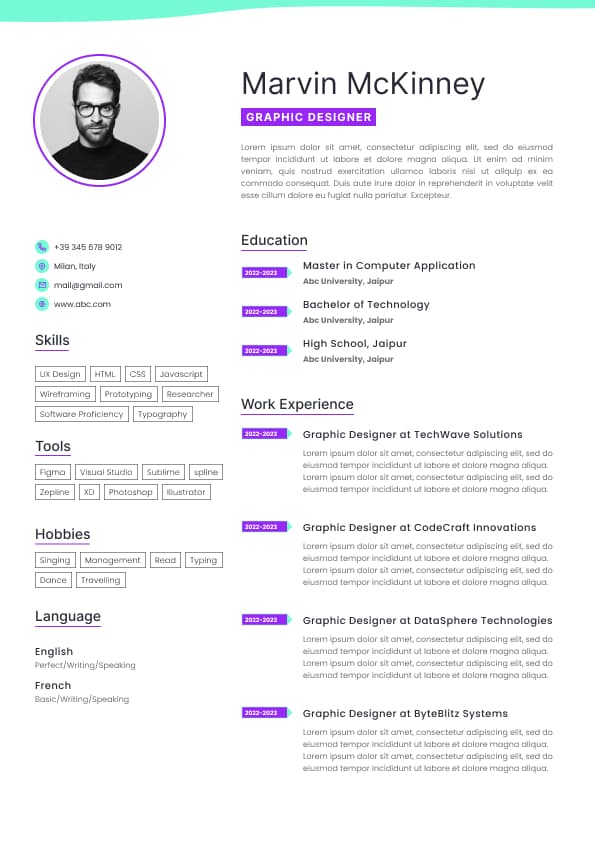
Use professional field-tested resume templates that follow the exact Resume rules employers look for.
Create ResumeLong term technical contribution
Team based development process
A contract or freelance resume should highlight:
Project outcomes
Speed of onboarding
Tech stack match
Client or stakeholder delivery
Independent execution
Clear scope and deadlines
A temporary resume should highlight:
Immediate availability when true
Short term project success
Bug resolution
Migration support
Release readiness
Production troubleshooting
The mistake many JavaScript developers make is using one generic resume for every opening. That weakens keyword relevance, makes the resume feel unfocused, and fails to answer the hiring manager’s real concern.
For part time React developer resumes, emphasize component development, UI improvements, dashboard work, landing pages, reusable design systems, accessibility fixes, and integration with APIs.
For part time Node.js developer resumes, emphasize API development, backend feature support, database queries, authentication flows, server side logic, and bug fixing.
A strong part time JavaScript resume summary might read:
JavaScript Developer with experience building React interfaces, Node.js APIs, and responsive web features for SaaS, ecommerce, and client facing applications. Strong fit for part time and project based roles requiring independent execution, clear communication, and reliable delivery within scoped timelines.
That summary works because it speaks directly to the hiring risk. It does not just say the candidate knows JavaScript. It says the candidate can contribute effectively in a part time structure.
Experience supporting production applications
For a full time React developer resume, show experience with reusable components, state management, accessibility, performance, design systems, and API integration.
For a full time full stack JavaScript developer resume, show how you connect front end interfaces with backend services, databases, authentication, cloud infrastructure, and deployment workflows.
Weak Example:
Worked on web apps with the development team.
Good Example:
Owned front end feature development for a subscription based SaaS platform, partnering with product and design teams to build reusable React components, improve dashboard performance, and support production releases.
The good version signals product ownership, collaboration, technical contribution, and business context. That is what full time hiring managers want to see.
A strong contractor profile should include a clear technical summary near the top. Do not bury your stack in dense paragraphs. Use a clean skills section with grouped technologies.
Useful categories include:
Languages: JavaScript, TypeScript, HTML, CSS
Front End: React, Next.js, Vue, Angular
Back End: Node.js, Express, REST APIs, GraphQL
Testing: Jest, Cypress, React Testing Library
Tools: Git, Docker, Webpack, Vite, CI and CD pipelines
Cloud and Data: AWS, Azure, Firebase, PostgreSQL, MongoDB
For contract to hire JavaScript developer resumes, balance both sides. Show immediate delivery ability and long term team fit. Employers using contract to hire arrangements want low risk now and full time potential later.
Production stabilization
Team bandwidth during peak workload
Your resume should show that you can step into an active environment and reduce pressure quickly.
A temporary JavaScript resume summary might read:
JavaScript Developer experienced in short term web development projects, production bug fixes, React feature support, API integrations, and release stabilization. Effective in temporary team augmentation roles requiring fast onboarding, clean communication, and practical delivery.
This type of summary is stronger than a generic developer summary because it matches the reason temporary roles exist.
Weak Example:
Created websites for clients.
Good Example:
Built responsive JavaScript and React websites for small business and agency clients, improving page speed, mobile usability, and lead capture through cleaner front end architecture.
Freelance JavaScript resumes should also include selected project experience when the projects are more relevant than traditional job history. Keep the format professional and ATS friendly. Avoid turning the resume into a design portfolio unless the job specifically values visual presentation.
Experience with Slack, Jira, GitHub, Linear, Notion, or similar tools
For hybrid JavaScript developer roles, show both independence and collaboration. Hybrid teams usually want someone who can focus remotely but also contribute during onsite planning, sprint reviews, team discussions, and stakeholder sessions.
For onsite JavaScript developer roles, emphasize team integration, cross functional collaboration, pair programming, whiteboarding, stakeholder interaction, and hands on support during releases or incidents.
Do not overstate remote experience if you do not have it. Instead, show behaviors that transfer well, such as strong documentation, clear communication, independent feature ownership, and disciplined task management.
Scalable component libraries
For ecommerce roles, hiring managers want to see conversion awareness and performance. JavaScript developers in ecommerce often work on checkout flows, product pages, search, filters, carts, headless commerce, Shopify, payment integrations, and page speed.
Strong ecommerce resume language focuses on:
Checkout optimization
Product catalog UI
Cart experience
Search and filtering
Shopify or headless commerce
Mobile conversion
Performance optimization
FinTech resumes must show security awareness, data accuracy, API reliability, and user trust. You do not need to claim compliance ownership unless you truly had it, but you should mention relevant exposure.
Strong FinTech resume language focuses on:
Payment workflows
Transaction dashboards
Secure API integration
Authentication and authorization
Data validation
PCI DSS awareness when accurate
Error handling and audit friendly interfaces
Healthcare JavaScript roles often value accessibility, privacy awareness, secure workflows, and integrations with patient, provider, or administrative systems.
Strong healthcare resume language focuses on:
Patient portals
Provider dashboards
EHR or EMR integration exposure
HIPAA aware application development
Accessibility standards
Secure user workflows
Form validation and data accuracy
Agency roles require speed, client communication, CMS flexibility, landing page development, and the ability to switch between brands or projects.
Strong agency resume language focuses on:
Client websites
Landing pages
CMS integrations
SEO friendly front end development
Fast turnaround projects
Cross functional work with designers and account teams
Responsive development
Enterprise employers care about maintainability, standards, governance, design systems, internal tools, security reviews, and legacy modernization.
Strong enterprise resume language focuses on:
Internal tools
Admin dashboards
Design systems
Legacy application modernization
Code reviews
Accessibility and compliance
Large scale team collaboration
Front End JavaScript Developer
Node.js Developer
Your summary should answer the employer’s risk question. For full time roles, show ownership and collaboration. For contract roles, show speed and technical fit. For temporary roles, show immediate usefulness. For remote roles, show communication and independence.
Your skills section should match the job posting language without keyword stuffing. If the job uses TypeScript, React, REST APIs, and AWS, those terms should be visible if you have that experience.
Your bullet points should connect JavaScript work to outcomes. Strong bullets usually include what you built, what technology you used, who benefited, and what improved.
Weak Example:
Used JavaScript to develop features.
Good Example:
Developed JavaScript and React features for a customer analytics dashboard, reducing manual reporting steps and improving visibility for account management teams.
Not clarifying remote, freelance, contract, or project based experience
Using vague phrases like worked on, helped with, or responsible for
Ignoring industry relevance when applying to SaaS, ecommerce, FinTech, healthcare, agency, or enterprise roles
The fix is not adding more words. The fix is sharper positioning.
Then adjust your resume to answer those questions.
For full time jobs, lead with product ownership, team collaboration, quality, and scalability.
For contract jobs, lead with tech stack fit, project outcomes, and fast onboarding.
For temporary jobs, lead with short term execution, bug fixing, migration support, and release readiness.
For freelance jobs, lead with client outcomes, independent delivery, and business value.
For remote jobs, lead with communication, documentation, ownership, and async collaboration.
This approach works because it aligns your resume with how hiring decisions are actually made.



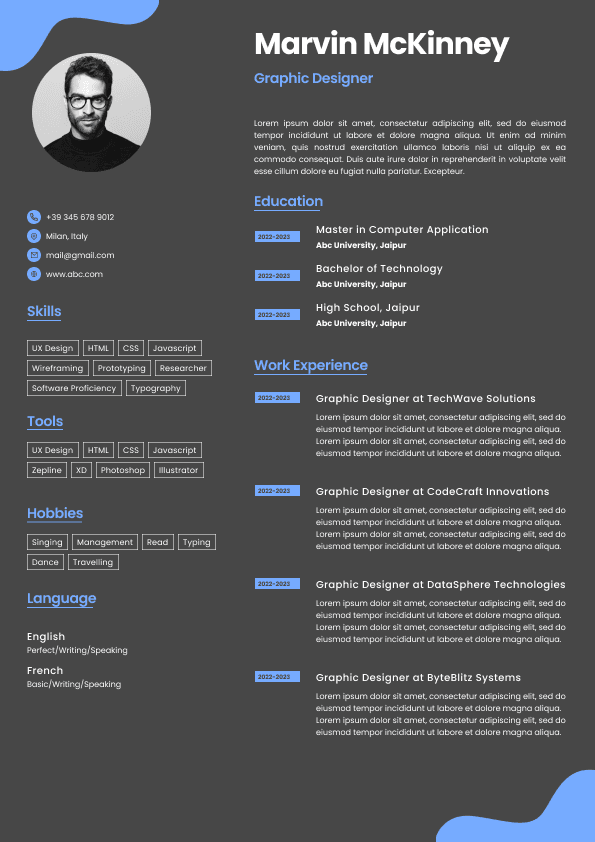
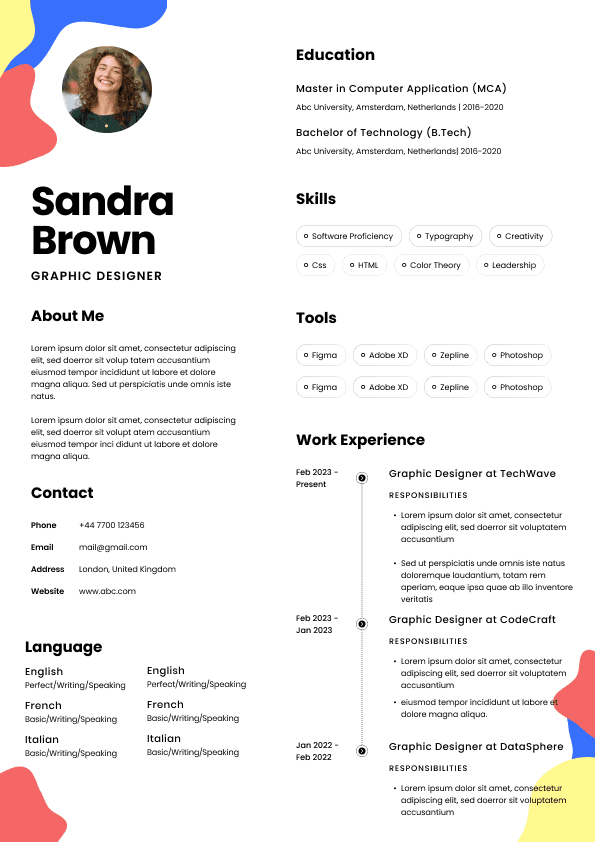
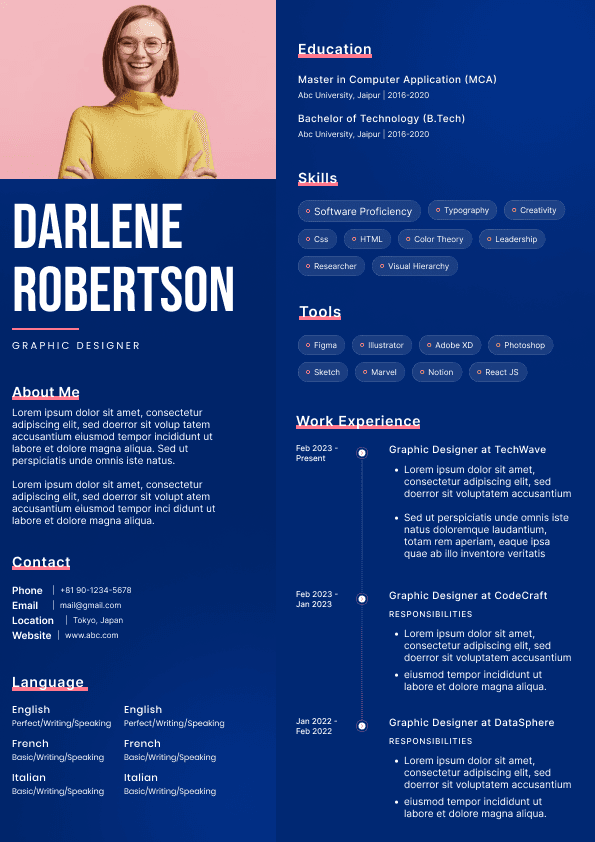

 Upload Resume
 Import from Linkedin