
Choose from a wide range of NEWCV resume templates and customize your NEWCV design with a single click.

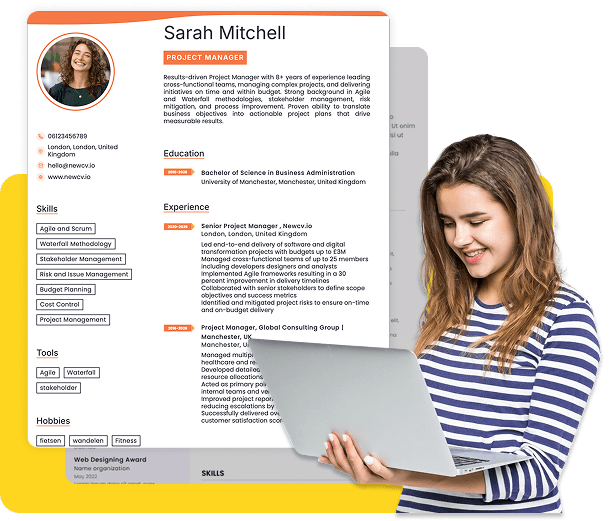
Use ATS-optimised Resume and resume templates that pass applicant tracking systems. Our Resume builder helps recruiters read, scan, and shortlist your Resume faster.

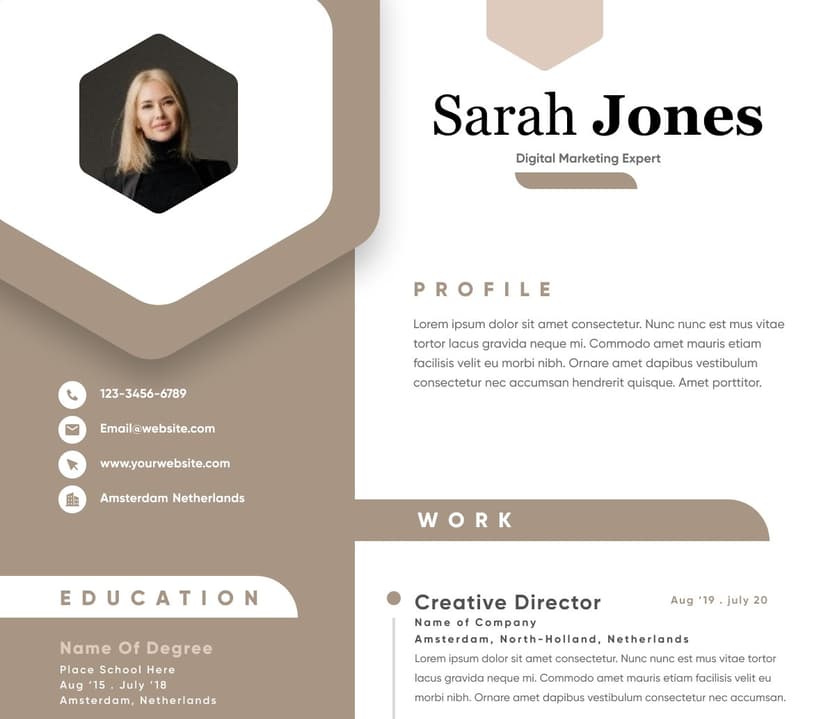
Use professional field-tested resume templates that follow the exact Resume rules employers look for.
Create Resume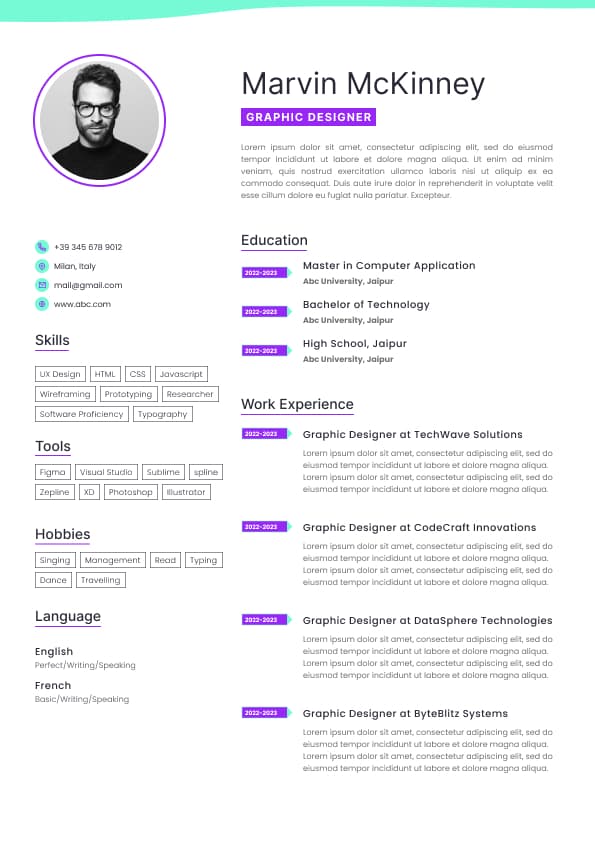
Use professional field-tested resume templates that follow the exact Resume rules employers look for.
Create ResumeThe biggest mistake applicants make with APS selection criteria is writing generic statements instead of evidence-based responses aligned to APS capability expectations. In Australian Public Service recruitment, hiring panels are not looking for broad claims like “excellent communication skills” or “strong stakeholder management”. They assess whether your examples demonstrate the behaviours, judgement, outcomes, and complexity expected at the APS level you are applying for.
Strong APS selection criteria responses are structured, specific, outcome-focused, and written against the capability being assessed. Weak responses are vague, responsibility-based, and fail to show measurable impact.
This guide explains exactly how APS hiring panels evaluate selection criteria, what high-scoring examples look like, common mistakes that cost candidates interviews, and how to write responses that align with modern APS recruitment standards across APS4, APS5, APS6 and EL roles.
APS selection criteria are assessment questions used by Australian Public Service employers to evaluate whether candidates meet the capabilities required for a role.
They are commonly based on:
APS Integrated Leadership System (ILS) capabilities
Behavioural competencies
Technical skills
APS Work Level Standards
Role-specific capabilities
Government stakeholder requirements
Selection criteria may appear as:
Individual capability questions
Most applicants misunderstand what APS assessors are scoring.
Panels are not assessing whether you “have experience”. They are assessing whether your example demonstrates the required capability at the correct APS level.
For example:
An APS4 response may demonstrate:
Administrative coordination
Following procedures
Managing straightforward stakeholder interactions
Delivering operational support
An APS6 response may need to demonstrate:
Strategic judgement
Influencing senior stakeholders
Pitch statements
Behavioural examples
Statement of claims
Targeted questions
Suitability statements
While formats vary across departments, the evaluation logic is largely the same.
Recruiters and hiring panels assess:
Evidence of capability
Complexity of work handled
Decision-making ability
Communication effectiveness
Stakeholder management
Outcomes achieved
Judgement and professionalism
Alignment to APS expectations
The strongest applicants understand that APS recruitment is evidence-based, not personality-based.
Managing competing priorities
Leading process improvements
Risk management
Policy interpretation
This is where many applications fail.
Candidates often submit strong examples that are pitched at the wrong level.
The STAR method is still the most effective structure for APS applications when used properly.
However, most people use STAR badly.
Weak STAR responses spend too much time on background and not enough on decisions, actions, and outcomes.
APS assessors care most about:
Your judgement
Your actions
Your communication approach
Your decision-making process
The measurable outcome
A strong APS STAR structure looks like this:
Brief context only.
Keep this concise.
Explain:
Where you worked
The challenge or issue
Why it mattered
The complexity involved
Clarify your responsibility.
Panels want to know:
What you personally owned
Your level of accountability
What outcome was required
This is the highest scoring section.
Strong candidates explain:
Why they chose certain actions
How they managed stakeholders
How they solved problems
What judgement they used
How they prioritised
How they communicated
Weak applicants simply list duties.
This section is massively underdone in APS applications.
Strong results include:
Quantifiable outcomes
Efficiency improvements
Stakeholder feedback
Risk reduction
Process improvements
Compliance improvements
Time savings
Policy outcomes
Panels want evidence that your actions created value.
“I have excellent communication skills developed through working with different stakeholders and preparing reports.”
This fails because:
No evidence
No complexity
No outcome
No demonstration of capability
Sounds generic and AI-generated
“While working as a Compliance Officer within a state government department, I managed communication between internal investigators, legal teams, and external stakeholders during a high-volume audit process.
A recurring issue was inconsistent information being provided to stakeholders, resulting in delays and complaints. I reviewed existing communication templates and identified gaps in how technical information was being explained.
I developed simplified communication guides, introduced a structured response framework for staff, and coordinated briefing sessions to improve consistency across the team.
As a result, stakeholder complaints reduced by 35% over a three-month period, response times improved, and the audit team met all reporting deadlines during a critical compliance review.”
Why this works:
Specific scenario
Clear ownership
Strong communication evidence
Demonstrates initiative
Includes measurable outcomes
Shows judgement and improvement
Stakeholder management is one of the most assessed APS capabilities.
Most candidates fail because they describe stakeholder contact instead of stakeholder management.
Panels want to see:
Influence
Relationship management
Conflict handling
Negotiation
Communication strategy
Professional judgement
“In my role as a Project Coordinator, I managed stakeholder engagement during the rollout of a new internal reporting system affecting multiple business units.
Several senior stakeholders were resistant to the proposed changes due to concerns around reporting delays and additional workload requirements.
I organised consultation sessions to identify operational concerns, mapped stakeholder priorities, and worked with technical teams to adjust implementation timelines without affecting project milestones.
I also developed tailored communication updates for different stakeholder groups to improve transparency throughout the rollout process.
The system was implemented successfully with minimal disruption, user adoption targets were exceeded, and post-implementation feedback from business units showed improved confidence in reporting accuracy.”
Why this scores highly:
Demonstrates strategic communication
Shows stakeholder analysis
Includes conflict management
Demonstrates influence
Shows practical outcomes
This capability is heavily assessed across APS4 to EL1 roles.
Panels want proof you can operate under pressure while maintaining accuracy and professionalism.
“During a peak funding assessment period, I managed a caseload exceeding standard allocation levels while supporting urgent ministerial briefing requests.
Competing deadlines created risks around processing delays and data accuracy. I reviewed workload priorities daily, implemented a triage system for urgent assessments, and coordinated with team members to redistribute lower-risk tasks.
I also developed a tracking spreadsheet that improved visibility across outstanding assessments and escalation points.
Despite increased workload demands, all priority deadlines were met, processing errors were reduced, and the team maintained compliance with departmental service standards.”
Why this works:
Demonstrates prioritisation
Shows process improvement
Evidence of initiative
Outcome-focused
APS-relevant operational example
Panels already know the duties of the role.
They want proof of capability.
Weak:
“I was responsible for stakeholder engagement.”
Strong:
“I managed competing stakeholder expectations during a policy implementation project involving state agencies and internal executives.”
APS panels read hundreds of applications.
Generic phrases immediately weaken credibility.
Avoid:
“Excellent communication skills”
“Team player”
“Hardworking and motivated”
“Strong attention to detail”
Without evidence, these statements carry little value.
Many candidates recycle the same example across every criterion.
Panels notice immediately.
Strong applications use varied examples that demonstrate different competencies.
APS6 and EL applications often fail because responses are written at APS4 or APS5 operational level.
Higher-level APS roles require evidence of:
Leadership
Strategic thinking
Policy judgement
Stakeholder influence
Risk management
Decision-making complexity
Longer does not mean stronger.
Panels prefer:
Clear structure
Strong examples
Direct relevance
Concise writing
Evidence-based responses
A focused 500-word response is usually far stronger than an unfocused 1200-word response.
Most APS hiring panels use scoring matrices aligned to capability frameworks.
Strong responses score highly because they demonstrate:
Relevant complexity
Clear ownership
Behavioural evidence
Sound judgement
Strong outcomes
Alignment to APS standards
Low-scoring responses typically:
Stay too high-level
Lack measurable impact
Focus on team actions instead of individual contribution
Include vague language
Fail to answer the actual criterion
One major hidden factor is clarity.
Panels often review large application volumes under time pressure.
If your example is difficult to follow, unclear, or buried under unnecessary detail, scoring can drop significantly.
The best example is not always the biggest project.
Strong APS examples usually involve:
Clear problems
Measurable outcomes
Decision-making
Stakeholder interaction
Risk or complexity
Personal ownership
A smaller example with strong detail usually scores better than a large project described vaguely.
Candidates applying for APS6, EL1 and EL2 roles often struggle to sound senior enough.
Senior APS responses typically include:
Strategic decision-making
Cross-functional coordination
Policy interpretation
Governance considerations
Risk assessment
Executive communication
Influence without authority
Organisational impact
The language becomes more outcome-driven and strategic.
“I supported policy implementation activities.”
“I coordinated implementation planning across multiple business areas, identified operational risks affecting delivery timelines, and provided strategic recommendations to senior management to support compliance outcomes.”
The second example demonstrates:
Ownership
Risk management
Strategic input
Senior communication
Organisational impact
Panels assess impact more than effort.
Avoid:
“I worked very hard to complete the project.”
Better:
“I implemented a revised workflow that reduced processing delays by 22%.”
Metrics improve credibility immediately.
Useful APS metrics include:
Processing time reductions
Compliance improvements
Budget outcomes
Stakeholder satisfaction
Reduced complaints
Project delivery outcomes
Time savings
Audit results
APS recruitment strongly assesses judgement.
Explain:
Why you made decisions
How you assessed risks
How you handled competing priorities
How you adapted communication styles
Private sector examples can work well, but APS panels often respond better when examples demonstrate:
Governance awareness
Public accountability
Process compliance
Stakeholder sensitivity
Policy considerations
Many applicants write broad examples that only partially answer the criterion.
If the criterion is about stakeholder engagement, the majority of the response should focus on:
Relationship management
Communication strategy
Negotiation
Influence
Not technical work.
Increasingly, yes.
Many APS departments now request:
One-page pitches
Statement of claims
Suitability statements
Instead of traditional individual criteria responses.
However, the evaluation logic is still the same.
Panels still assess:
Capability evidence
Behavioural examples
Outcomes
Alignment to APS work levels
The candidates who succeed understand that the format may change, but the assessment principles remain consistent.
Across thousands of APS applications, the strongest candidates usually:
Use highly specific examples
Demonstrate clear personal contribution
Write clearly and directly
Show measurable outcomes
Match APS level expectations
Demonstrate judgement and professionalism
Tailor examples to the actual capability
Avoid generic corporate language
Most importantly, they make it easy for the panel to score them highly.
That is the real goal of APS selection criteria writing.
Not sounding impressive.
Not sounding formal.
Not using complex language.
Strong APS applications are clear, evidence-based, strategically written, and directly aligned to how government panels assess capability.


 Upload Resume
 Import from Linkedin