
Choose from a wide range of NEWCV resume templates and customize your NEWCV design with a single click.

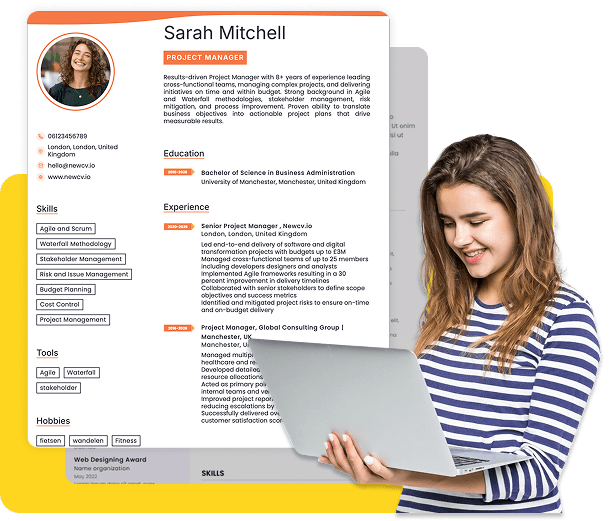
Use ATS-optimised Resume and resume templates that pass applicant tracking systems. Our Resume builder helps recruiters read, scan, and shortlist your Resume faster.

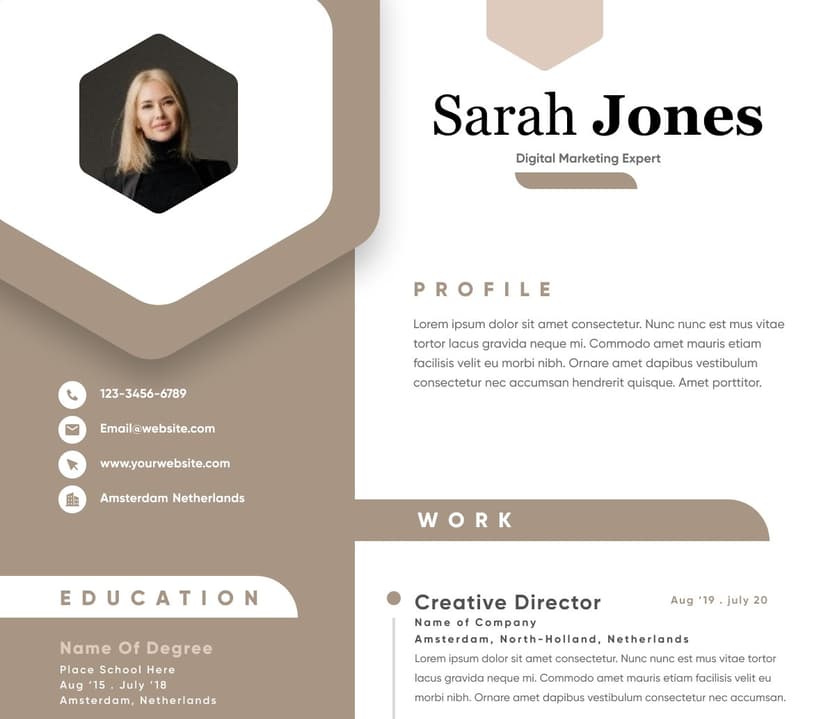
Use professional field-tested resume templates that follow the exact Resume rules employers look for.
Create Resume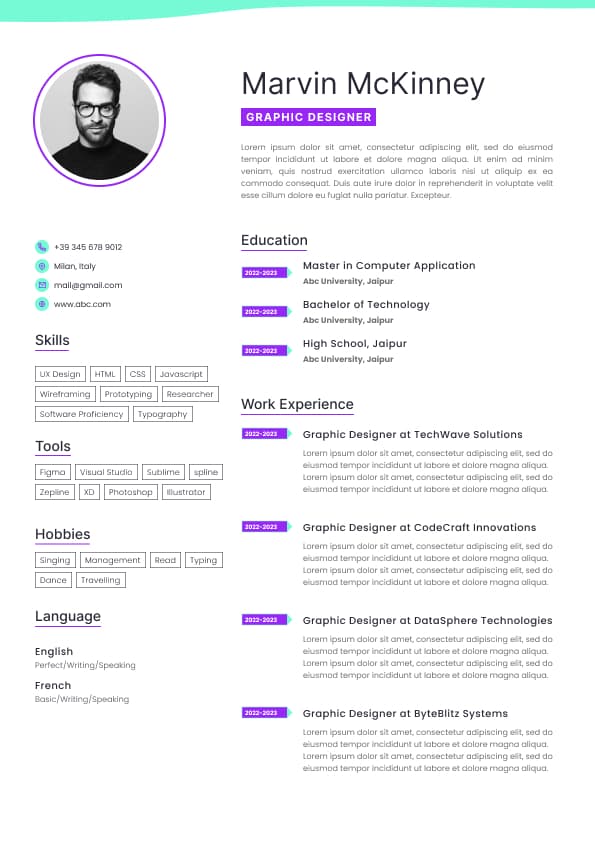
Use professional field-tested resume templates that follow the exact Resume rules employers look for.
Create ResumeThe best ATS resume in Australia is not the most creative resume. It is the resume that gets parsed correctly by Applicant Tracking Systems, matches the hiring criteria, and makes it easy for recruiters to shortlist you within seconds.
Most candidates fail ATS screening for one of three reasons:
Their resume is formatted poorly for ATS software
Their experience is not aligned to the job advertisement
Their resume lacks the exact keywords recruiters are searching for
In the Australian job market, ATS optimisation is now standard across corporate, government, mining, healthcare, technology, logistics, professional services, and large-scale recruitment environments. Recruiters are not manually reading every application from top to bottom. Most resumes are filtered, searched, ranked, or screened before a human properly reviews them.
A strong ATS resume for Australia must balance:
ATS readability
Clear recruiter scanning
An ATS resume is a resume designed to work properly with Applicant Tracking Systems used by Australian employers and recruiters.
ATS software scans resumes to:
Extract information
Categorise candidates
Match applications against job requirements
Search for keywords, qualifications, tools, industries, and experience
Help recruiters filter applicants faster
In Australia, common ATS platforms include:
Workday
PageUp
Relevant keyword targeting
Strong commercial positioning
Australian hiring expectations
The candidates getting interviews are not necessarily the most experienced. They are the candidates whose resumes are easiest to shortlist.
SAP SuccessFactors
Greenhouse
Lever
SmartRecruiters
JobAdder
Bullhorn
Taleo
The ATS itself does not “hire” candidates. Recruiters still make the final decision. However, if your resume is difficult to parse, poorly targeted, or missing critical search terms, it may never make it into the shortlist pool.
Most ATS advice online is outdated or written without real recruitment experience.
Australian recruiters are not impressed by:
Fancy graphics
Over-designed templates
Keyword stuffing
Generic career summaries
Long paragraphs with no measurable outcomes
What recruiters actually want is clarity.
A recruiter typically spends 5 to 15 seconds on first-pass screening. During that scan, they are assessing:
Job title alignment
Industry relevance
Years of experience
Technical capability
Commercial impact
Employment stability
Location and work rights
Seniority level
Relevance to the advertised role
If these signals are not immediately visible, the candidate often gets rejected regardless of capability.
The best ATS resume format in Australia is a clean reverse-chronological resume.
This format works because:
ATS systems parse it reliably
Recruiters scan it quickly
Career progression is clear
Recent experience is prioritised
Avoid:
Functional resumes
Infographic resumes
Multi-column layouts
Text boxes
Tables for core information
Icons and graphics
Headers containing important content
These elements often break ATS parsing.
A high-performing ATS resume in Australia should usually follow this structure:
Include:
Full name
Mobile number
Professional email
LinkedIn profile
Location
Work rights if relevant
Do not include:
Photo
Date of birth
Marital status
Nationality unless relevant
Full residential address
Australian hiring culture generally prefers concise and non-discriminatory resumes.
This section is critical for ATS and recruiter screening.
A strong summary should immediately establish:
Your profession
Years of experience
Industry expertise
Key strengths
Relevant achievements
Target positioning
Weak Example
“Hardworking professional seeking opportunities to grow my career.”
This says nothing meaningful.
Good Example
“Project Manager with 8+ years’ experience delivering large-scale infrastructure and civil construction projects across Australia. Strong background in stakeholder management, contractor coordination, budget control, and project delivery within Tier 1 environments.”
The second example instantly helps recruiters categorise the candidate.
Keywords matter because recruiters search ATS databases using specific terms.
However, most candidates misunderstand how keyword optimisation works.
The goal is not to “trick” ATS software.
The goal is alignment.
If the job advertisement repeatedly references:
Stakeholder engagement
Budget forecasting
Salesforce
WHS compliance
Agile delivery
Then your resume should naturally include those terms where genuinely relevant.
Strong ATS resumes place keywords in:
Professional summary
Job titles
Skills section
Work experience bullet points
Certifications
Technical tools section
Many candidates keyword stuff.
Recruiters spot this immediately.
Weak Example
“Experienced leader with leadership skills leading teams with strong leadership abilities.”
This damages credibility.
Instead, integrate keywords naturally into commercial outcomes.
Good Example
“Led a team of 14 consultants across national recruitment operations, improving time-to-fill by 28% and increasing client retention across enterprise accounts.”
This sounds human while still containing searchable terminology.
Resume length depends on seniority.
General Australian expectations are:
Graduate resume: 1 to 2 pages
Mid-level professional: 2 to 3 pages
Senior leadership: 3 to 4 pages maximum
Long resumes are not automatically bad.
Irrelevant resumes are bad.
Australian recruiters value relevance and clarity more than arbitrary page limits.
Australian hiring managers generally prefer:
Direct communication
Clear evidence of results
Practical capability
Industry-specific experience
Honest positioning
Overly inflated resumes often perform poorly in Australia.
Australian recruiters tend to reject candidates who:
Oversell excessively
Use vague corporate jargon
Lack measurable outcomes
Present generic globalised resumes with no localisation
Your bullet points determine whether recruiters believe your experience is commercially valuable.
Strong bullet points show:
Action
Scope
Outcome
Business impact
Use this structure:
Action + Responsibility + Result
Weak Example
“Responsible for customer service and administration.”
This is vague and low-impact.
Good Example
“Managed high-volume customer enquiries across retail banking operations, achieving 96% customer satisfaction scores while reducing response turnaround times by 22%.”
This creates measurable credibility.
The best ATS skills sections are highly targeted.
Avoid massive generic lists.
Recruiters do not shortlist candidates based on random buzzwords.
Instead, focus on:
Technical capabilities
Systems knowledge
Industry-specific skills
Certifications
Compliance knowledge
Tools and software relevant to the role
For a Business Analyst:
Agile delivery
Jira
Process mapping
Stakeholder engagement
UAT testing
Data analysis
SQL
Business requirements gathering
For a Construction Project Manager:
Contract administration
WHS compliance
Cost control
Procurement
Site coordination
Primavera P6
Risk management
Specificity improves ATS searchability and recruiter confidence.
Many online ATS templates are technically ATS compatible but strategically weak.
A resume can pass ATS parsing and still fail recruiter screening.
Common problems include:
Generic wording
Poor positioning
No commercial outcomes
Weak summaries
Over-designed formatting
Lack of relevance to Australian hiring expectations
The best ATS resume is not simply “ATS-friendly”.
It is:
ATS-readable
Recruiter-friendly
Strategically targeted
Commercially convincing
The safest file types are:
DOCX
PDF if formatting is simple and ATS-compatible
Many Australian recruiters still prefer DOCX because some ATS systems parse Word documents more consistently.
If the application instructions specify a format, always follow them exactly.
Recruiters search by recognised market terminology.
If your internal title was:
“Customer Happiness Ninja”
Change it to:
“Customer Service Specialist”
Optimise for market recognition, not branding creativity.
This is one of the biggest reasons candidates struggle.
Australian recruiters expect role alignment.
A resume for:
Government
Mining
Banking
SaaS sales
Healthcare
Construction
Should not look identical.
Tailoring matters.
Recruiters should not need to search for:
Qualifications
Systems
Industry expertise
Certifications
Security clearances
Technical capability
If it matters for the role, surface it clearly.
Recruiters skim first.
Large text blocks reduce readability and increase rejection risk.
Use concise, high-impact bullet points.
This is one of the biggest gaps in most ATS advice online.
Recruiters often search databases using combinations of:
Job titles
Industries
Systems
Certifications
Technical skills
Locations
Seniority levels
For example, a recruiter may search:
“Business Analyst” AND “Agile” AND “Jira” AND “Financial Services”
If your resume lacks those exact terms, you may not appear in results even if you are qualified.
This is why terminology alignment matters.
Career changers face a different challenge.
The ATS issue is often not formatting.
It is positioning.
If transitioning industries:
Translate transferable skills into the target market language
Reduce irrelevant emphasis
Align achievements with the new role requirements
Use target job terminology naturally
Recruiters shortlist relevance first.
Your resume must reduce perceived hiring risk.
Good ATS resumes are:
Clean
Minimal
Easy to scan
Commercially focused
Keyword aligned
Results driven
Use:
Standard fonts
Clear headings
Consistent spacing
Logical structure
Simple formatting
Avoid:
Graphics
Icons
Colour-heavy layouts
Multiple columns
Decorative elements
Simple resumes consistently outperform over-designed resumes in Australian recruitment environments.
The strongest ATS resumes consistently demonstrate:
Clear role alignment
Immediate relevance
Commercial value
Industry credibility
Measurable outcomes
Keyword alignment
Strong readability
Most resumes fail because they are written from the candidate’s perspective.
Strong resumes are written from the recruiter’s decision-making perspective.
Recruiters are asking:
Can this person do the job?
Is the experience relevant?
Is the candidate credible?
Are they worth interviewing?
Do they match the hiring brief quickly?
Your resume must answer these questions fast.
A strong ATS resume should:
Parse cleanly into online applications
Use standard headings
Include searchable keywords
Match the target role terminology
Read naturally to humans
Prioritise recent relevant experience
Show measurable achievements
Avoid formatting complexity
A simple test:
Copy your resume into a plain text document.
If the structure becomes unreadable, ATS systems may struggle too.
Before applying for roles in Australia, check whether your resume:
Matches the advertised role title
Includes relevant industry keywords
Uses measurable achievements
Has a clear professional summary
Uses reverse-chronological structure
Avoids ATS-breaking formatting
Includes relevant systems and tools
Aligns with Australian hiring terminology
Is tailored to the role
Is easy to scan within 10 seconds


 Upload Resume
 Import from Linkedin