
Choose from a wide range of NEWCV resume templates and customize your NEWCV design with a single click.

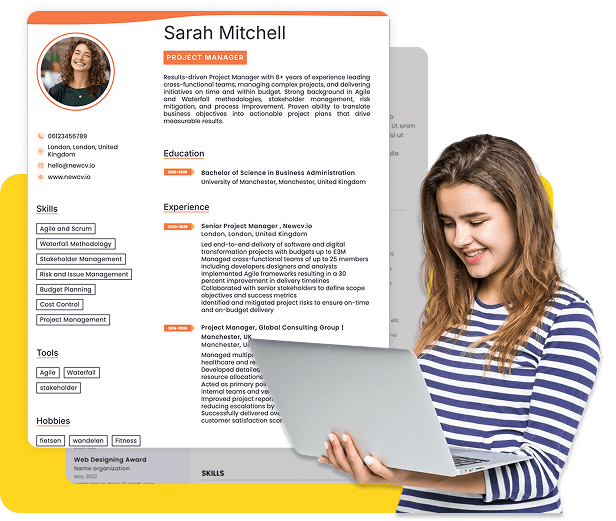
Use ATS-optimised Resume and resume templates that pass applicant tracking systems. Our Resume builder helps recruiters read, scan, and shortlist your Resume faster.

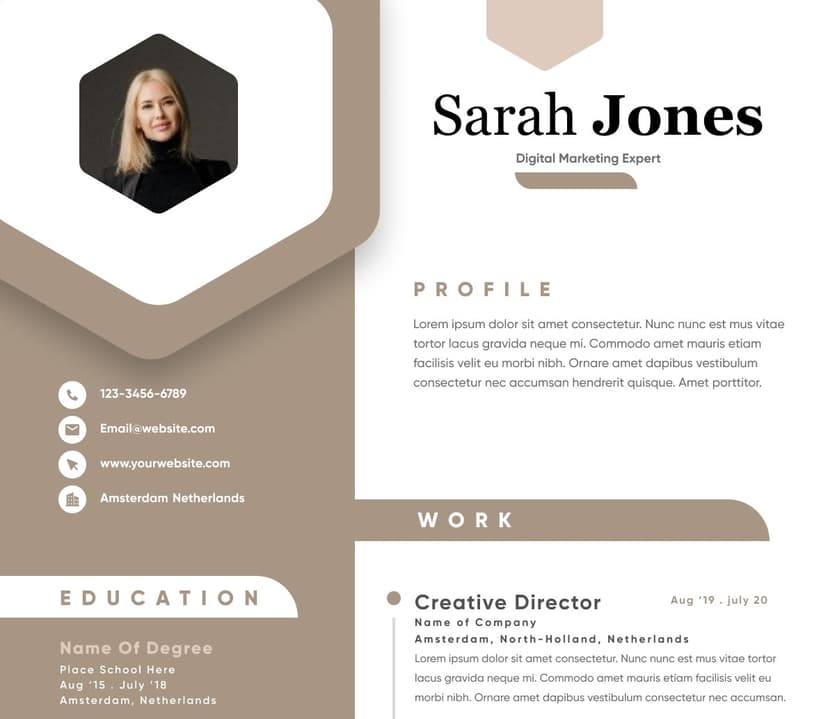
Use professional field-tested resume templates that follow the exact Resume rules employers look for.
Create Resume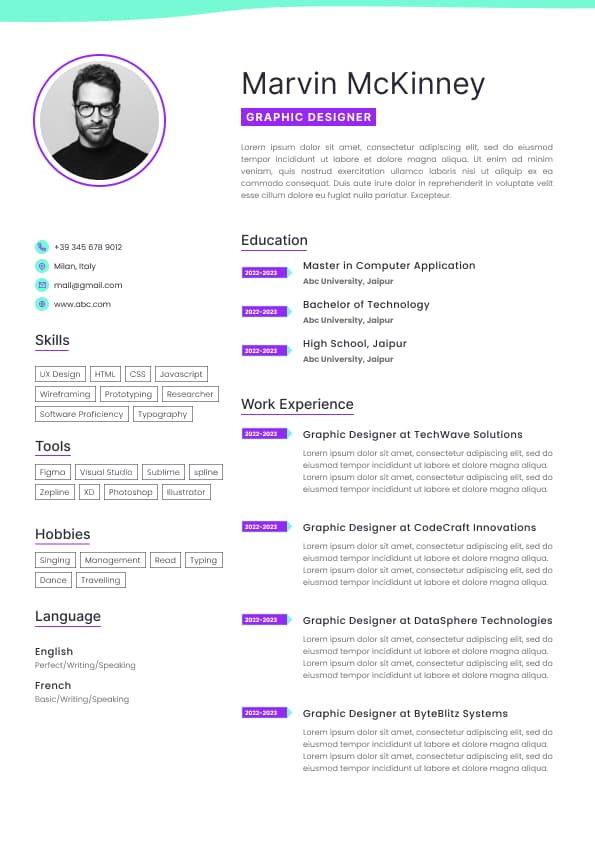
Use professional field-tested resume templates that follow the exact Resume rules employers look for.
Create ResumeA strong Australian resume template is clean, achievement-focused, ATS-friendly, and designed to help recruiters assess your suitability within seconds. The best resume templates in Australia are not the most visually complex. They are the ones that make your experience easy to scan, align with local hiring expectations, and position you clearly against the role requirements.
Most candidates fail because they choose templates based on appearance instead of hiring outcomes. Over-designed resumes, multi-column layouts, excessive graphics, and generic formatting often reduce readability and hurt ATS compatibility. In the Australian market, recruiters generally prefer resumes that are professional, direct, easy to navigate, and tailored to the role.
The best resume template for Australia depends on your industry, experience level, and career direction. A graduate applying for entry-level roles needs a very different structure from a senior project manager, healthcare professional, or mining executive. The goal is not to look “creative”. The goal is to make hiring managers immediately understand your value.
Australian recruiters typically spend less than 30 seconds on the initial scan of a resume. The template matters because it affects how quickly they can find evidence that you meet the role criteria.
The best Australian resume templates achieve four things exceptionally well:
They prioritise readability
They support ATS parsing
They highlight measurable achievements
They match Australian hiring expectations
A high-performing template should feel commercially professional, not decorative.
Recruiters and hiring managers are scanning for:
Current job title relevance
For most Australian job seekers, the reverse chronological resume format remains the strongest option.
This structure is preferred because it allows recruiters to immediately assess:
Your current level
Career progression
Industry relevance
Recent achievements
Employment continuity
The highest-performing Australian resumes usually follow this structure:
Name and contact details
Industry alignment
Career stability or progression
Evidence of impact and achievements
Relevant systems, tools, or certifications
Location and work rights
Communication clarity
Easy navigation
If the layout slows down that process, the template is working against you.
A large percentage of templates found online are designed for visual appeal rather than recruitment outcomes.
Common problems include:
Two-column layouts that break ATS parsing
Progress bars for skills
Photos and personal details unnecessary in Australia
Heavy graphics and icons
Tiny fonts
Dense text blocks
Generic “About Me” sections with no positioning strategy
Overuse of colour
These templates often perform poorly in real recruitment environments.
Professional summary
Core skills
Professional experience
Education
Certifications or licences
Technical skills
Optional additional sections relevant to the role
This structure works effectively across most industries including corporate, government, healthcare, trades, mining, construction, technology, education, and operations.
Different experience levels require different positioning strategies.
Graduate resumes should focus on employability indicators rather than trying to appear overly experienced.
Australian graduate recruiters usually look for:
Internship experience
Casual or part-time work reliability
Communication skills
Teamwork
Academic projects
Leadership activities
Technical capability
Cultural fit
Graduates should use a simple, single-column template with strong spacing and concise sections.
Avoid:
Long personal profiles
Overly designed templates
Generic objective statements
Listing every subject studied
Focus on:
Transferable skills
Practical outcomes
Internship achievements
Relevant software or systems
Volunteer leadership
Real examples of initiative
This is the most competitive segment of the Australian market.
Mid-level candidates are typically competing against applicants with similar years of experience. The template must therefore improve positioning clarity.
Employers want immediate evidence of:
Performance
Commercial contribution
Capability growth
Industry relevance
Stakeholder management
Problem-solving ability
The strongest templates for mid-level professionals include:
A highly targeted professional summary
Achievement-driven bullet points
Strong keyword alignment
Clean hierarchy between sections
Clear progression between roles
The template should support credibility, not distract from it.
Executive resumes require a very different strategy from standard professional resumes.
At senior level, hiring decisions are heavily influenced by:
Commercial impact
Leadership scope
Strategic delivery
Transformation capability
Revenue or operational outcomes
Board and stakeholder exposure
Executive resume templates should:
Use stronger whitespace
Prioritise leadership outcomes
Include organisational scale
Focus heavily on measurable impact
Remove low-value detail
Many senior candidates unintentionally weaken their positioning by:
Listing operational tasks instead of strategic achievements
Including excessive early-career detail
Using generic leadership language
Creating resumes that are too long without adding value
In Australia, executive resumes should generally feel commercially sharp and highly outcome-focused.
ATS compatibility matters, especially for corporate, government, healthcare, education, and enterprise recruitment.
An ATS-friendly resume is structured so recruitment software can accurately read and categorise your information.
This affects:
Keyword matching
Search visibility
Resume parsing
Recruiter filtering
The safest approach includes:
Single-column layout
Standard headings
Clear fonts
Minimal graphics
Word or PDF format depending on application instructions
Consistent spacing
Logical section hierarchy
Recruiters typically prefer highly readable fonts such as:
Calibri
Arial
Helvetica
Aptos
Cambria
Avoid decorative fonts entirely.
Industry expectations matter more than many candidates realise.
The best templates are:
Conservative
Clean
Achievement-focused
Highly readable
Large Australian employers usually favour professionalism over creativity.
Tech resumes can tolerate slightly more modern formatting, but clarity still wins.
Strong IT resumes usually include:
Technical stack visibility
Project outcomes
Systems exposure
Delivery metrics
Certifications
Common problems include:
Excessive jargon
No business impact explanation
Overloaded technical sections
Poor readability
Government recruitment often has stricter assessment processes.
Templates should prioritise:
Structure
Clarity
Alignment to selection criteria
Capability evidence
Policy or compliance exposure where relevant
Government resumes in Australia are often longer than private-sector resumes, particularly for APS and state government roles.
For trades and operational roles, employers prioritise practical suitability over polished design.
The best templates focus on:
Tickets and licences
Safety compliance
Machinery or equipment
Site experience
Reliability
Industry exposure
The layout should remain clean and highly scannable.
Healthcare resumes should quickly communicate:
Registration status
Clinical experience
Specialisations
Compliance certifications
Patient care capability
Systems familiarity
Healthcare hiring managers typically prioritise trust, competency, and compliance clarity over visual presentation.
High-performing Australian resumes follow predictable design principles.
The best resume templates are usually simpler than candidates expect.
A clean structure consistently outperforms visually overloaded designs because recruiters process information faster.
Clear section spacing
Logical hierarchy
Easy scanning
Consistent formatting
Controlled use of bold text
Professional appearance
Overdesigned graphics
Multiple colours
Inconsistent formatting
Dense paragraphs
Large skill charts
Decorative elements with no hiring value
Length depends on seniority and industry.
Graduates: 1 to 2 pages
Mid-level professionals: 2 to 3 pages
Senior professionals and executives: 3 to 4 pages where justified
The issue is not page count alone. It is value density.
Recruiters reject resumes that waste space with low-value content.
Certain formatting choices consistently create negative impressions.
Tables containing core information
Photos
Date of birth
Marital status
Excessive colour usage
Text-heavy profiles
Generic templates copied from Canva without tailoring
Poor spacing
Walls of text
Keyword stuffing
Recruiters can immediately identify when a candidate has used a template without strategic customisation.
The template itself does not secure interviews.
Positioning does.
Many candidates obsess over templates when the real issue is content quality.
A strong template cannot save weak positioning.
Recruiters respond to:
Relevance
Achievement quality
Commercial value
Clarity
Credibility
Alignment to the role
The template only supports those outcomes.
The best resumes in Australia usually share several characteristics.
Good summaries position the candidate strategically.
Weak Example
“Hardworking professional seeking opportunities to grow my career.”
Good Example
“Operations Manager with 8+ years’ experience leading warehouse and supply chain operations across high-volume FMCG environments, delivering cost reductions, inventory accuracy improvements, and national logistics optimisation.”
The second example immediately communicates value, context, and seniority.
Strong resumes focus on outcomes, not responsibilities.
Weak Example
“Responsible for managing customer service team.”
Good Example
“Led a 12-person customer service team, reducing complaint resolution time by 34% and improving customer satisfaction scores from 82% to 94% within 12 months.”
Australian recruiters strongly prefer measurable impact.
Most employers accept either Word or PDF.
PDF is usually best when:
Formatting consistency matters
Applying directly to hiring managers
Sending via email
Word format may be safer when:
ATS parsing is critical
Application systems specifically request DOC or DOCX
Government systems require editable formats
Always follow the application instructions first.
Canva templates are popular but often problematic.
Many Canva resumes:
Use multi-column layouts
Include graphic elements
Parse poorly in ATS systems
Prioritise design over readability
Some simple Canva templates can work, but many hurt hiring outcomes.
A professionally structured Word-based resume template is usually safer and more effective for Australian recruitment.
The best template is the one that aligns with recruiter expectations in your field.
Is this easy to scan in under 30 seconds?
Does this support ATS readability?
Does this position me at the correct seniority level?
Does this feel aligned with my industry?
Does the formatting improve clarity or create distraction?
Would a recruiter trust this presentation style?
If the answer is unclear, the template is probably not strong enough.
Most candidates think resume success comes from aesthetics.
Recruiters think differently.
The best-performing resumes create cognitive ease. They reduce friction during evaluation.
That means:
Fast readability
Clear positioning
Obvious relevance
Easy evidence discovery
Immediate credibility
A hiring manager should not have to “figure out” your value.
The template should help them see it instantly.


 Upload Resume
 Import from Linkedin