
Choose from a wide range of NEWCV resume templates and customize your NEWCV design with a single click.

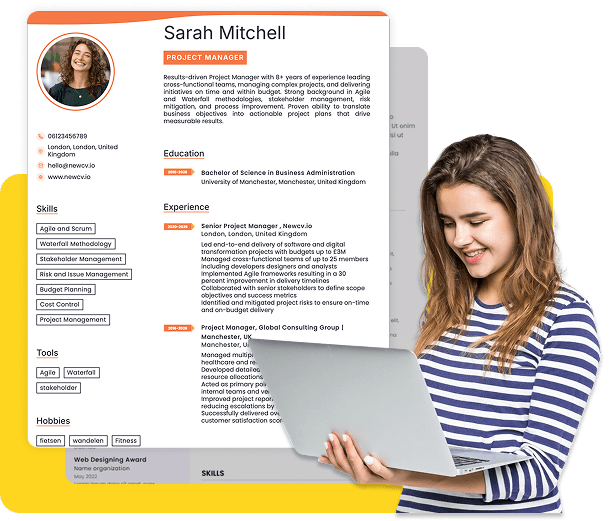
Use ATS-optimised Resume and resume templates that pass applicant tracking systems. Our Resume builder helps recruiters read, scan, and shortlist your Resume faster.

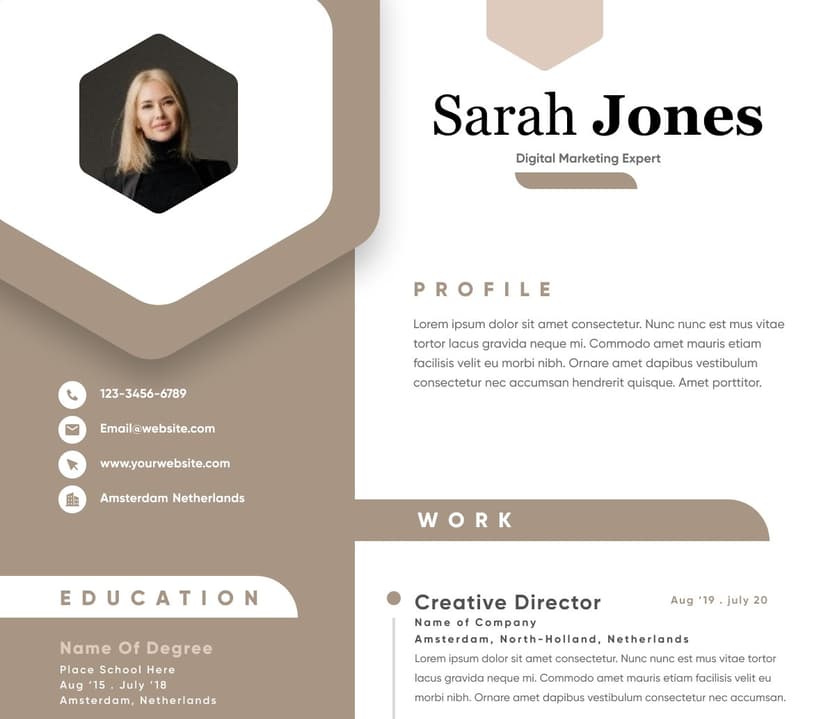
Use professional field-tested resume templates that follow the exact Resume rules employers look for.
Create Resume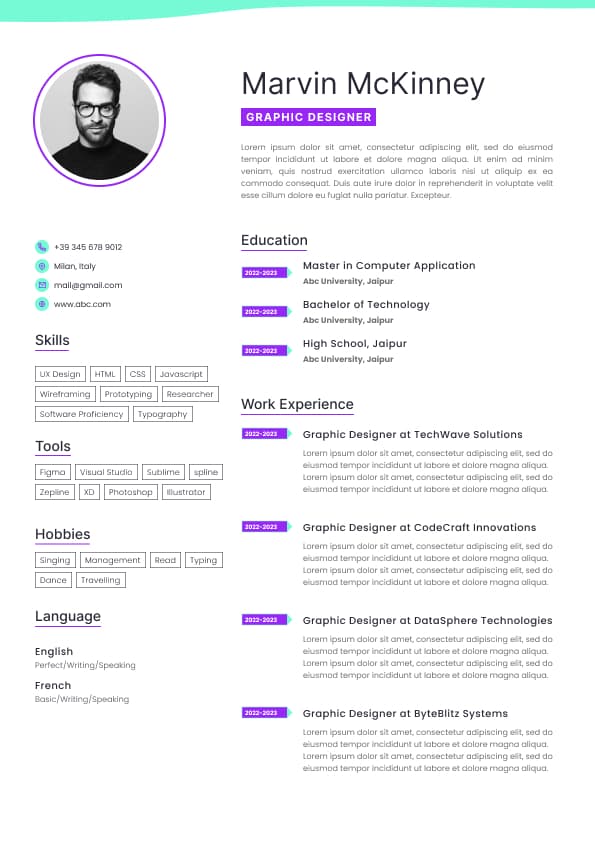
Use professional field-tested resume templates that follow the exact Resume rules employers look for.
Create ResumeAn ATS-friendly resume in Australia is not just about keywords. The best resumes for ATS are structured to pass applicant tracking systems while still convincing recruiters and hiring managers to shortlist the candidate. Most resumes fail because they optimise for software but ignore how Australian recruiters actually screen applications.
In the Australian market, recruiters typically spend less than 30 seconds on an initial resume review after the ATS surfaces potential matches. That means your resume must achieve two things at once:
Be machine-readable for ATS parsing
Immediately communicate relevance, credibility, and fit to a human reviewer
The strongest ATS resumes in Australia use clean formatting, targeted keywords, measurable achievements, role-specific positioning, and clear alignment with local hiring expectations. They avoid overdesigned templates, generic summaries, keyword stuffing, and vague responsibilities.
This guide breaks down exactly how ATS systems work in Australia, what recruiters actually look for, what causes resumes to fail, and how to structure a resume that performs in real hiring situations.
An ATS resume is a resume designed to be accurately processed and ranked by Applicant Tracking Systems used by employers and recruiters.
In Australia, ATS platforms are widely used across:
Corporate employers
Government departments
Healthcare organisations
Mining and engineering companies
Universities
Recruitment agencies
Large retail and hospitality groups
Common ATS platforms used in Australia include:
Most online advice about ATS is outdated or overly simplistic.
Modern ATS systems in Australia are more sophisticated than basic keyword counters, but they still rely heavily on structured relevance.
Here is the real screening flow used in many Australian hiring processes:
The system extracts information from your resume, including:
Name
Contact details
Employment history
Job titles
Skills
Education
:contentReference[oaicite:0]
:contentReference[oaicite:1]
:contentReference[oaicite:2]
:contentReference[oaicite:3]
:contentReference[oaicite:4]
:contentReference[oaicite:5]
These systems scan resumes to identify:
Relevant skills
Job title alignment
Industry experience
Qualifications
Certifications
Keywords from the job ad
Career consistency
Seniority level
But here is what many candidates misunderstand:
ATS systems do not “hire” people.
The ATS filters and organises applications. Human recruiters still make the real shortlist decisions.
That means the best ATS resume is not the one with the most keywords. It is the one that:
Parses correctly
Matches the role clearly
Looks credible instantly
Makes recruiter evaluation easy
Certifications
Poor formatting can break this process.
Common parsing problems include:
Text boxes
Columns
Graphics
Tables
Icons
Headers and footers
Overdesigned Canva templates
If the ATS cannot properly read your content, your application may rank poorly before a recruiter even sees it.
The system compares your resume against the job advertisement.
It looks for:
Matching skills
Relevant job titles
Industry terminology
Technical capabilities
Qualifications
Years of experience
This is where keyword relevance matters.
However, stuffing random keywords into your resume often backfires because recruiters can immediately spot unnatural content.
This is the stage most online ATS advice ignores.
Recruiters in Australia review resumes quickly using pattern recognition. They look for:
Immediate role fit
Clear career direction
Relevant achievements
Commercial impact
Stability and progression
Communication quality
Credibility
A resume that technically passes ATS but feels generic or weak to a recruiter still fails.
High-performing resumes consistently share several characteristics.
Recruiters mentally compare your current or recent title against the target role within seconds.
If your title alignment is unclear, your resume loses momentum immediately.
“Operations Professional”
“Operations Coordinator | Supply Chain & Logistics”
The second version gives both ATS systems and recruiters clearer relevance signals.
The summary should immediately position you for the role.
Most summaries fail because they are vague.
“Hardworking professional with excellent communication skills seeking opportunities for growth.”
This says nothing meaningful.
“Project Administrator with 6+ years’ experience supporting commercial construction projects across Australia, specialising in contract coordination, stakeholder communication, procurement support, and compliance documentation.”
This communicates:
Industry relevance
Experience level
Functional expertise
Hiring alignment
Strong ATS resumes naturally mirror the language used in the job ad.
If the advertisement mentions:
Stakeholder engagement
Financial reporting
WHS compliance
CRM management
Salesforce
Payroll processing
Then those exact terms should appear where genuinely relevant.
But forced keyword stuffing damages credibility.
Recruiters notice immediately when resumes contain unnatural repetition.
Australian recruiters strongly prefer evidence-based resumes.
Responsibilities alone are weak.
Achievements demonstrate value.
“Managed customer enquiries and handled complaints.”
“Resolved customer escalations with a 94% satisfaction rating while reducing average response time by 28%.”
The second version proves performance.
The best ATS resumes prioritise readability over design.
Use:
Standard headings
Clear spacing
Simple fonts
Reverse chronological order
Consistent formatting
Avoid:
Multi-column layouts
Graphics
Skill bars
Infographics
Icons
Photos
Fancy visual templates
In Australia, especially across corporate and professional sectors, clean resumes outperform heavily designed resumes far more often than candidates realise.
Include:
Full name
Mobile number
Professional email address
LinkedIn URL
Location (city and state only)
You do not need:
Full street address
Date of birth
Marital status
Photo
These are generally unnecessary in Australia.
Keep this concise and targeted.
Typically:
3 to 5 lines
Industry-specific
Achievement-oriented
Relevant to the target role
This section helps both ATS matching and recruiter scanning.
Include skills directly relevant to the role.
Supply chain coordination
Vendor management
Inventory control
ERP systems
Stakeholder engagement
Process improvement
WHS compliance
Reporting and analysis
Do not overload this section with generic soft skills.
Terms like:
Team player
Hardworking
Motivated
carry little value unless supported by achievements.
This is the most important section.
Each role should include:
Job title
Company name
Location
Employment dates
Brief role scope
Achievement-focused bullet points
The strongest bullet points combine:
Action
Context
Outcome
Led onboarding coordination for 120+ employees across three business units, reducing onboarding delays by 35%
Managed supplier relationships across national logistics operations valued at $4.2M annually
Improved payroll processing accuracy from 91% to 99.4% through workflow redesign
These bullets perform well because they include:
Relevant keywords
Business outcomes
Quantifiable impact
Clear ownership
List:
Qualification
Institution
Graduation year
If relevant, also include:
Certifications
Licences
Professional memberships
This section matters increasingly in Australian hiring.
Include platforms and tools relevant to the role.
Examples:
Microsoft Excel
Power BI
Salesforce
MYOB
Xero
SAP
AutoCAD
Jira
Recruiters often search ATS databases using software names directly.
Many Canva-style templates look impressive visually but fail ATS parsing.
Common issues include:
Hidden text layers
Graphic-based headings
Multi-column parsing errors
Inconsistent reading order
Simple formatting consistently performs better.
This is one of the biggest reasons strong candidates fail to secure interviews.
Australian recruiters expect resumes to align specifically with the advertised role.
A generic resume reduces:
ATS match relevance
Recruiter confidence
Perceived motivation
Tailoring matters significantly.
Recruiters do not shortlist candidates based purely on duties.
They shortlist based on demonstrated impact.
Compare:
“Responsible for scheduling meetings.”
“Coordinated executive scheduling across five departments, improving meeting turnaround efficiency by 40%.”
The second version creates credibility and competitive differentiation.
Buzzwords weaken resumes when unsupported.
Examples include:
Results-driven
Dynamic
Strategic thinker
Go-getter
Passionate professional
Recruiters trust evidence more than self-descriptions.
Australian resume culture tends to favour:
Clear communication
Practical achievements
Professional tone
Concise positioning
Evidence-based claims
Overly corporate or exaggerated language can reduce trust.
Understanding recruiter behaviour gives candidates a major advantage.
Recruiters usually scan resumes in this order:
Current title
Recent employer
Career relevance
Industry alignment
Key achievements
Stability and progression
Technical fit
This happens extremely quickly.
Your resume needs to answer these questions immediately:
Can this person do the job?
Are they relevant?
Are they credible?
Are they worth interviewing?
If recruiters must “figure out” your fit, the resume often loses.
PDF is usually the safest option when formatting is stable and readable.
However, some ATS platforms still process Word documents more accurately.
Best practice:
Use PDF unless the employer specifically requests Word
Ensure text is selectable
Avoid scanned PDFs
Test formatting before submission
Never upload image-based resumes.
AI tools can help with:
Drafting bullet points
Keyword alignment
Structure improvement
Clarity
But AI-generated resumes often fail because they sound generic and inflated.
Recruiters increasingly recognise AI-style writing patterns, including:
Excessive buzzwords
Repetitive phrasing
Artificial corporate tone
Vague achievements
The best resumes use AI as an assistant, not a replacement for real positioning strategy.
Many candidates misunderstand ATS keywords completely.
The goal is not volume.
The goal is relevance.
High-impact keyword categories include:
Exact job titles
Industry terminology
Technical platforms
Certifications
Compliance frameworks
Methodologies
Functional capabilities
For example, a project management role in Australia may prioritise terms like:
Agile
Scrum
Stakeholder engagement
Risk management
Budget forecasting
PMO
Change management
Jira
Prince2
But only include terms you genuinely understand and can discuss in interviews.
The highest-performing resumes mirror the language of the role naturally.
A strong tailoring process involves:
Look for repeated terms.
These usually indicate priority requirements.
Separate:
Essential requirements
Preferred skills
Industry-specific expectations
Do not simply copy keywords.
Translate your experience into the employer’s language.
This improves both ATS relevance and recruiter clarity.
For most Australian professionals:
2 pages is ideal
3 pages may work for senior or highly technical roles
Long resumes fail when they contain irrelevant detail.
Recruiters prefer focused relevance over excessive information.
Many resumes are rejected for reasons candidates never realise.
Common silent rejection triggers include:
Vague job titles
No measurable achievements
Career inconsistency without explanation
Poor formatting
Obvious keyword stuffing
Generic summaries
Unclear specialisation
Excessive jargon
Spelling mistakes
Weak recent experience
One of the biggest hidden issues is lack of positioning clarity.
If recruiters cannot quickly understand where you fit, they often move on.
In competitive markets, strong candidates usually do three things well:
Broad resumes perform poorly.
Focused positioning performs better.
Example:
Instead of:
“Experienced administration professional”
Use:
“Executive Assistant supporting C-suite leaders in financial services environments”
Specificity improves recruiter confidence.
Australian employers increasingly prioritise measurable business value.
Strong resumes demonstrate:
Revenue impact
Cost savings
Efficiency improvements
Compliance outcomes
Client retention
Process optimisation
Recruiters favour resumes that reduce cognitive effort.
Clear structure wins.
Confusing resumes lose.
The easier your resume is to assess quickly, the stronger your interview chances become.
Before submitting your resume, confirm:
The resume matches the specific role
Keywords align naturally with the job ad
Formatting is ATS-friendly
Achievements are measurable
Job titles are clear and relevant
The summary positions you strategically
Technical skills are visible
The resume is concise and focused
Spelling and grammar are accurate
The document looks professional and easy to scan


 Upload Resume
 Import from Linkedin