STILL APPLYING. STILL HEARING NOTHING?BUILD YOUR RESUME

STILL APPLYING. STILL HEARING NOTHING?BUILD YOUR RESUME
Choose from a wide range of NEWCV resume templates and customize your NEWCV design with a single click.
FAQ
If you have no professional experience as a JavaScript developer, your resume still needs to prove one thing quickly: you can build, debug, and ship working applications. Recruiters hiring entry-level JavaScript developers are not expecting years of experience. They are looking for evidence of technical fundamentals, problem-solving ability, modern tooling familiarity, and the ability to contribute to a development workflow.
The biggest mistake entry-level candidates make is treating their lack of experience as the main story. Strong junior JavaScript resumes do the opposite. They position projects, GitHub activity, internships, bootcamp work, coursework, freelance work, and technical skills as proof of capability.
A strong entry-level JavaScript developer resume should demonstrate:
Real JavaScript projects with deployment links
React or frontend framework familiarity
GitHub usage and version control workflow
Most junior developer resumes are rejected in under 30 seconds for one reason: they look academic instead of practical.
Recruiters and hiring managers want proof that you can contribute to real development work, even if you have never held a formal developer job.
At the entry level, hiring decisions are usually based on these signals:
Can this candidate build working applications?
Do they understand modern JavaScript workflows?
Can they explain their code clearly?
Have they worked with APIs, state management, or component-based architecture?
Do they understand Git and collaborative development basics?
Are they likely to learn quickly and require manageable onboarding?
Your resume should reduce hiring risk.
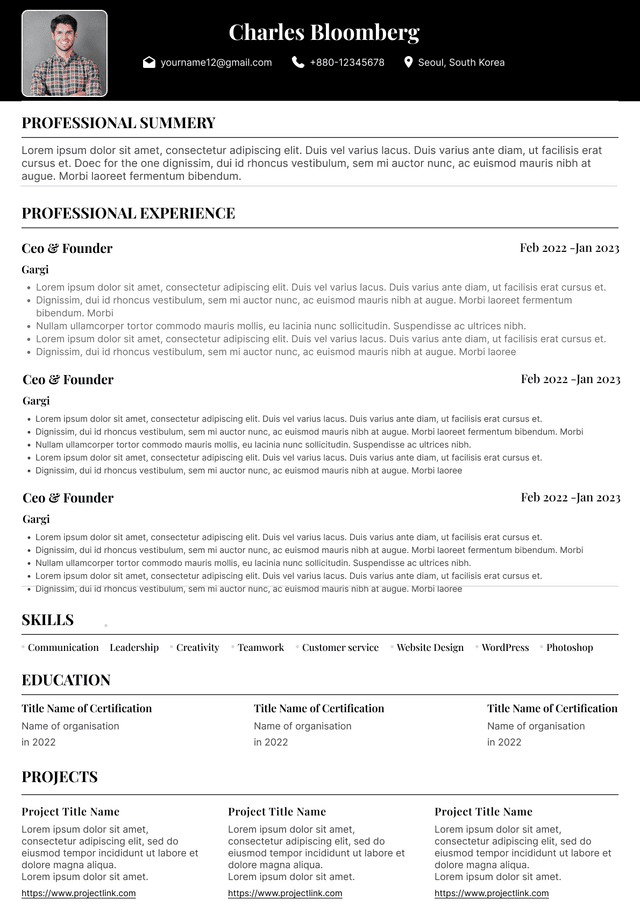
For entry-level JavaScript developers, the best format is usually a reverse-chronological resume with a strong technical projects section near the top.
Use this structure:
Contact Information
Professional Summary
Technical Skills
Projects
Education
Internship Experience or Freelance Work
Certifications
Michael Carter
Austin, Texas
michaelcarter.dev@gmail.com
github.com/michaelcarterdev
linkedin.com/in/michaelcarterdev
michaelcarter.dev
Entry-level JavaScript developer with hands-on experience building responsive full stack web applications using JavaScript, React, Node.js, Express, and MongoDB. Developed and deployed multiple portfolio projects with REST APIs, authentication, responsive UI components, and Git-based collaboration workflows. Strong understanding of modern frontend development, async JavaScript, debugging, and API integration. Passionate about clean code, accessibility, and scalable component architecture.
Languages: JavaScript, TypeScript, HTML5, CSS3, SQL, JSON
Frontend: React, Next.js, Vue.js, Tailwind CSS, Bootstrap, Vite
Backend: Node.js, Express.js, REST APIs, JWT Authentication
Databases: MongoDB, PostgreSQL, Firebase
Tools: Git, GitHub, npm, Webpack, Postman, VS Code
Deployment: Vercel, Netlify, Render, Firebase Hosting
Concepts: DOM Manipulation, Async/Await, Responsive Design, API Integration, Accessibility, Agile Basics, CI/CD Fundamentals
Your summary should immediately establish technical direction and practical capability.
A weak summary sounds generic.
Weak Example
“Recent graduate seeking an opportunity to grow my coding skills.”
This sounds passive and vague.
A strong summary demonstrates:
Technical stack
Project experience
Practical capabilities
Development focus
Contribution potential
Good summaries usually include:
For candidates with no experience, projects are the experience.
This is where most hiring decisions are made for junior JavaScript developers.
Recruiters look for:
Complexity level
Technical stack relevance
Real implementation details
Problem-solving evidence
Deployment proof
Code organization maturity
Strong JavaScript projects usually include:
Your skills section should align with actual junior JavaScript job descriptions.
Do not overload the section with technologies you barely understand.
Recruiters can usually identify keyword stuffing immediately during interviews.
Focus on tools you can confidently explain.
JavaScript
TypeScript
HTML5
CSS3
SQL
JSON
Applicant Tracking Systems primarily look for keyword relevance and structural readability.
ATS software does not “understand talent.” It matches resume content against job description terminology.
This matters heavily for entry-level developers because recruiters often search using exact technical terms.
Use the exact language from job descriptions naturally throughout your resume.
For example:
React
REST APIs
TypeScript
Node.js
Git
Bootcamp graduates often undersell themselves by framing projects as “student work.”
Do not minimize practical engineering work.
If you built applications collaboratively using Git workflows, pull requests, APIs, deployment platforms, and debugging processes, that counts as development experience.
Instead of:
“Completed coding bootcamp assignments.”
Use:
Built collaborative React applications using Agile-style sprint workflows
Worked with GitHub pull requests and peer code reviews
Developed and deployed full stack applications with authentication and REST APIs
Recruiters care about transferable development behavior.
Not whether the project was paid.
Self-taught developers often worry about lacking formal credentials.
In practice, many hiring managers care more about demonstrable skill than education at the junior level.
Self-taught candidates become highly competitive when they show:
Strong GitHub activity
Consistent projects
Technical depth
Problem-solving ability
Clean code structure
Strong documentation
Many self-taught developers:
Claiming 30 technologies with shallow understanding creates distrust.
Most recruiters would rather see:
than
Weak bullets:
Strong bullets:
Specificity creates credibility.
If recruiters cannot see your projects working live, your credibility drops.
Always include:
Entry-level hiring is fundamentally about reducing uncertainty.
Recruiters know junior developers need onboarding.
What they want to avoid is hiring someone who:
Cannot work independently
Cannot debug problems
Cannot explain their code
Cannot adapt to team workflows
Only completed tutorial projects
Your resume should signal:
Initiative
Technical curiosity
Yes, but strategically.
Coding challenge platforms help demonstrate:
Consistency
Algorithmic thinking
Problem-solving discipline
However, they should support your projects, not replace them.
Good placement:
Bad placement:
Most frontend and junior JavaScript hiring decisions still prioritize practical application development.
Not all JavaScript developer jobs prioritize the same skills.
Prioritize:
React
Responsive design
Accessibility
UI components
CSS frameworks
State management
Prioritize:
Before applying, confirm your resume includes:
At least 2 to 4 strong technical projects
GitHub profile link
Live deployment links
Modern JavaScript stack keywords
Clear project outcomes and implementation details
ATS-friendly formatting
Clean technical skills section
Evidence of debugging and problem-solving


Use ATS-optimised Resume and resume templates that pass applicant tracking systems. Our Resume builder helps recruiters read, scan, and shortlist your Resume faster.

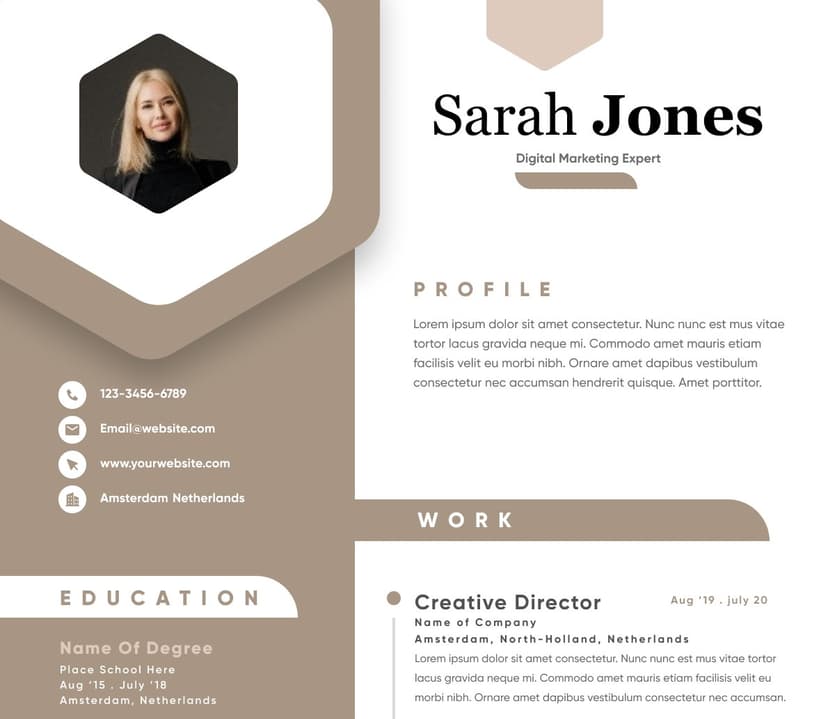
Use professional field-tested resume templates that follow the exact Resume rules employers look for.
Create Resume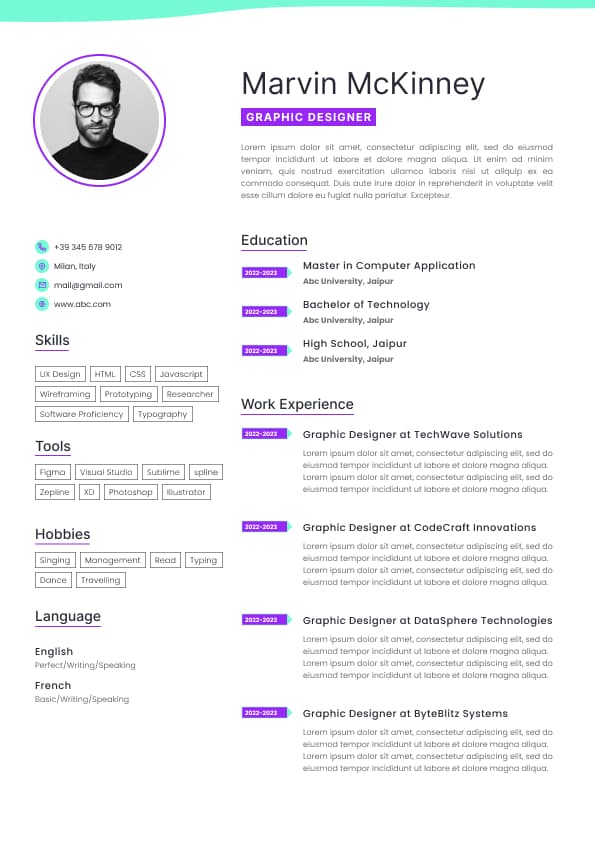
Use professional field-tested resume templates that follow the exact Resume rules employers look for.
Create ResumeAPI integration and async JavaScript skills
Problem-solving and debugging ability
Clean code structure and documentation habits
Modern development tools and deployment workflows
This guide shows exactly how to structure a JavaScript developer resume with no experience so recruiters take you seriously and interview you faster.
That means your projects matter more than generic statements like:
Weak Example
“Motivated self-starter passionate about coding.”
Recruiters ignore this because it proves nothing.
Good Example
“Built and deployed a React task management app with JWT authentication, REST APIs, protected routes, and responsive UI components.”
This immediately communicates technical capability.
Open Source Contributions or Hackathons
Avoid functional resume formats. Recruiters often associate them with candidates trying to hide weak qualifications.
Even without experience, your resume should feel structured around practical engineering capability.
React, Node.js, Express, MongoDB, JWT
Built a full stack task management application with secure JWT authentication and protected routes
Developed reusable React components and responsive layouts using Tailwind CSS
Created REST API endpoints for task creation, editing, filtering, and user authentication
Integrated MongoDB for persistent user and task data storage
Implemented error handling, form validation, and async loading states
Deployed frontend and backend applications using Vercel and Render
Documented setup instructions, API endpoints, and project architecture in GitHub README
JavaScript, React, Axios, TMDb API
Integrated third-party APIs using Axios and async JavaScript workflows
Implemented dynamic search functionality, filtering, and responsive UI behavior
Optimized component rendering and state updates for improved performance
Added accessibility improvements including semantic HTML and keyboard navigation support
Built reusable UI components and modular file structure for maintainability
Next.js, CSS, Netlify
Designed and deployed a responsive developer portfolio website showcasing technical projects and GitHub repositories
Implemented responsive design patterns for desktop, tablet, and mobile usability
Added SEO metadata, project screenshots, and deployment links
Improved Lighthouse performance and accessibility scores through frontend optimization
Bachelor of Science in Computer Science
University of Texas at Dallas
Richardson, Texas
Meta Front-End Developer Professional Certificate
JavaScript Algorithms and Data Structures Certification
Responsive Web Design Certification
Solved 200+ JavaScript coding challenges covering closures, recursion, arrays, promises, and data structures
Contributed bug fixes and documentation improvements to open-source JavaScript repositories on GitHub
Participated in hackathons focused on React application development and API integration
JavaScript frameworks
Full stack or frontend specialization
Deployment experience
API work
Problem-solving or debugging focus
GitHub or project-based proof
Avoid:
“Hard-working team player”
“Passionate coder” without proof
Generic soft skills
Objective statements focused on what you want
The summary should communicate what the employer gets.
Authentication
API integration
CRUD functionality
Responsive design
State management
Database integration
Deployment links
Error handling
Testing
GitHub documentation
Projects that only follow tutorials without customization are weaker.
Hiring managers can usually tell immediately when a project is copied.
A GitHub profile can dramatically improve an entry-level resume when it includes:
Clear README files
Screenshots or demos
Deployment links
Organized repositories
Consistent commits
Descriptive commit messages
Environment setup instructions
API documentation
Test coverage when possible
A messy GitHub profile hurts credibility.
Many candidates underestimate this.
Recruiters often check GitHub specifically to validate whether a junior developer can work independently.
React
Next.js
Vue.js
Tailwind CSS
Bootstrap
Redux
Vite
Webpack
Node.js
Express.js
REST APIs
Authentication
MongoDB
PostgreSQL
Firebase
Git
GitHub
npm
Postman
VS Code
CI/CD basics
Async JavaScript
DOM manipulation
Responsive design
Accessibility
Component architecture
State management
Debugging
Unit testing
Responsive design
Frontend development
API integration
Avoid:
Graphics-heavy resumes
Multi-column layouts
Icons replacing section labels
Skill bars or ratings
Excessive formatting
ATS readability matters more than design creativity.
Skip documentation
Build projects without deployment
Ignore accessibility
Avoid testing
Use inconsistent code organization
These gaps make projects look unfinished.
Strong project presentation matters almost as much as technical implementation.
GitHub repositories
Live demos
Portfolio links
Common formatting problems:
Dense paragraphs
Tiny fonts
Inconsistent spacing
Overdesigned templates
Technical clutter
Developer resumes should look clean, structured, and easy to scan.
Junior developers often overcompensate with phrases like:
Team player
Fast learner
Hard worker
These are weak without technical evidence.
Show learning ability through projects and technical progression instead.
Practical execution
Consistency
Ownership
The most persuasive signals usually include:
Multiple deployed applications
GitHub consistency
Strong project documentation
API integration experience
Full stack exposure
Problem-solving examples
Open-source contributions
Real debugging experience
Candidates who demonstrate these areas often outperform candidates with stronger academic backgrounds but weaker practical portfolios.
Node.js
Express.js
Databases
Authentication
API development
Deployment workflows
Emphasize:
Learning speed
Collaboration
Git workflows
Coursework
Coding projects
Technical foundations
Tailoring matters because recruiters scan resumes for role alignment in seconds.
Real development workflows like Git and pull requests
Consistent formatting and readability
Your goal is not to look senior.
Your goal is to look employable, trainable, technically capable, and ready to contribute.
That is what gets entry-level JavaScript developers interviews.




 Upload Resume
 Import from Linkedin