
Choose from a wide range of NEWCV resume templates and customize your NEWCV design with a single click.

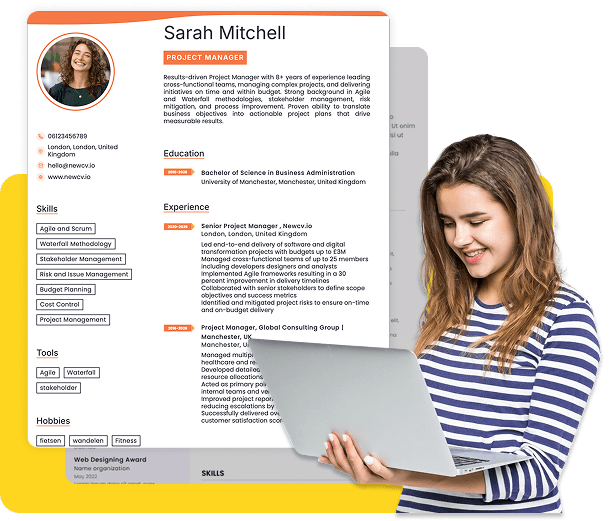
Use ATS-optimised Resume and resume templates that pass applicant tracking systems. Our Resume builder helps recruiters read, scan, and shortlist your Resume faster.

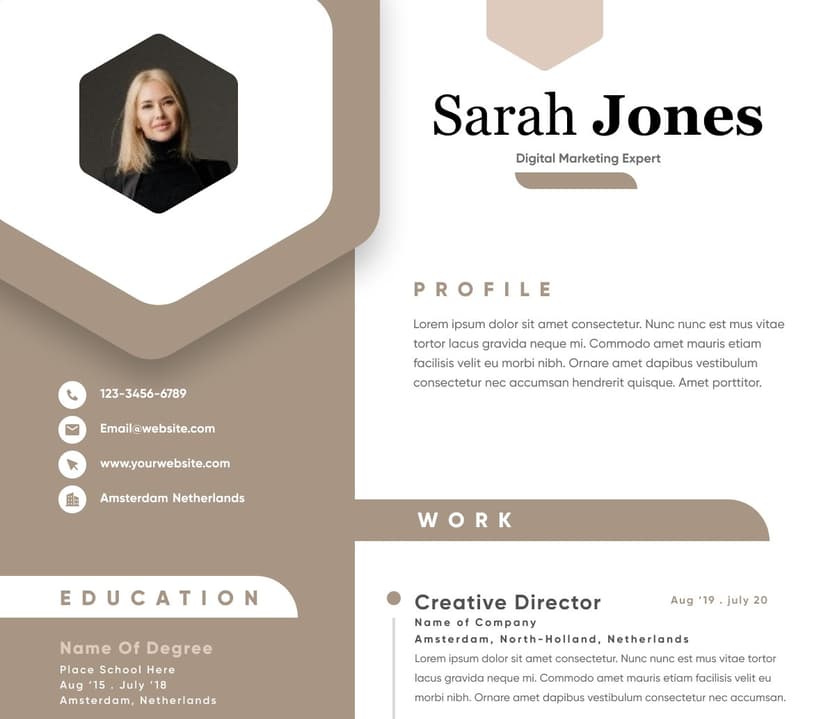
Use professional field-tested resume templates that follow the exact Resume rules employers look for.
Create Resume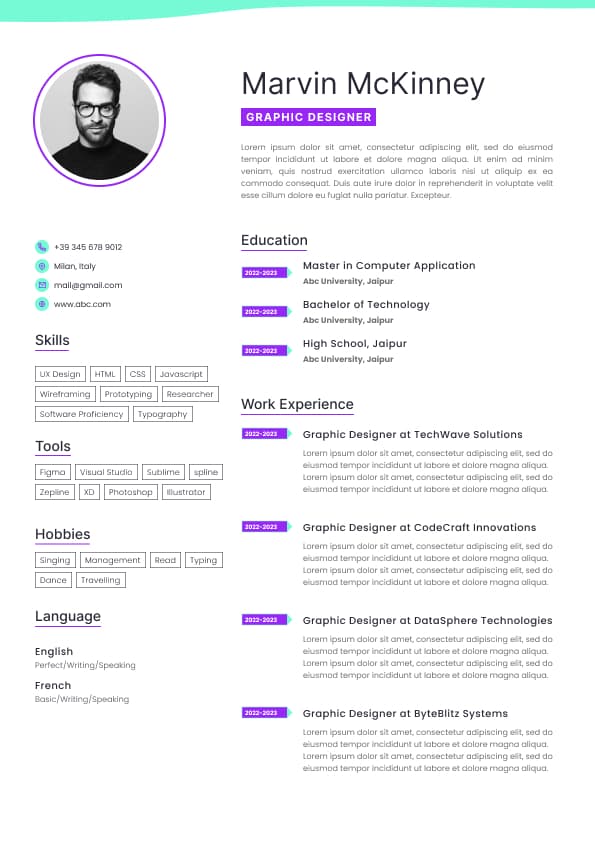
Use professional field-tested resume templates that follow the exact Resume rules employers look for.
Create ResumeA resume personal statement is a short introduction at the top of your resume that summarises your professional value, experience, strengths, and career focus. In the Australian job market, it usually sits directly below your name and contact details and is often called:
Resume profile
Professional summary
Career summary
Executive summary
Personal profile
For most Australian employers, this section is not optional anymore. Recruiters typically scan resumes for less than 10 seconds during the first review. Your personal statement helps them decide whether to continue reading or move to the next candidate.
A strong resume personal statement immediately answers four questions:
Who are you professionally?
The Australian hiring market has become significantly more competitive across both white collar and blue collar industries. Hiring managers are dealing with:
High application volumes
AI-generated resumes
Poorly targeted applications
Keyword-stuffed resumes with no clear positioning
Because of this, recruiters increasingly use the personal statement as a filtering shortcut.
When written properly, it helps establish:
Seniority level
Industry alignment
Communication skills
What level are you operating at?
What industries or functions do you specialise in?
Why are you relevant for this role?
The biggest mistake candidates make is writing generic summaries that could apply to anyone. Australian recruiters want specificity, relevance, and evidence of value quickly.
Commercial awareness
Cultural fit
Career direction
In Australia, recruiters generally prefer resumes that are direct, concise, and achievement-focused. Long personal bios or overly personal introductions tend to perform poorly.
Your personal statement should position you commercially, not personally.
Most advice online oversimplifies resume summaries. Recruiters are not looking for motivational language or personality traits. They are assessing risk and relevance.
Here is what hiring managers are actually evaluating.
Recruiters want immediate clarity.
A vague opening like this creates friction:
Weak Example
“Hardworking professional with strong communication skills seeking new opportunities.”
This says almost nothing.
A stronger version identifies role, experience, and market relevance immediately.
Good Example
“Project Coordinator with 5+ years’ experience delivering commercial construction projects across Queensland, specialising in subcontractor coordination, scheduling, and stakeholder management.”
This works because it instantly establishes:
Profession
Seniority
Industry
Core strengths
Australian recruiters heavily favour targeted resumes.
If the role is in healthcare administration, your statement should not read like a generic office administrator profile.
Your opening should reflect:
Industry terminology
Relevant systems
Scope of work
Market experience
Functional strengths
Recruiters often reject resumes that feel too broad because broad positioning usually signals weak alignment.
Hiring managers care about outcomes.
The best personal statements include indicators of contribution such as:
Revenue growth
Operational efficiency
Customer satisfaction
Project delivery
Team leadership
Compliance
Cost reduction
Even subtle commercial framing makes a candidate stronger.
Good Example
“Customer Service Team Leader with 7 years’ experience improving service delivery across retail banking environments, leading teams of up to 20 staff while consistently exceeding customer satisfaction KPIs.”
This sounds commercially valuable.
For most Australian resumes, the ideal length is:
50 to 120 words for mid-level professionals
Up to 150 words for senior leadership roles
Shorter for graduates or entry-level candidates
Long summaries reduce readability and weaken impact.
Recruiters prefer concise positioning statements over dense paragraphs.
A strong structure usually includes:
Current professional identity
Years of experience
Industry or functional expertise
Key strengths or achievements
Career focus or value proposition
A highly effective Australian-style resume personal statement generally follows this framework:
Start with your role and experience level.
Example
“Senior Financial Accountant with 8 years’ experience across ASX-listed and multinational organisations.”
Add your strongest relevant capabilities.
Example
“Specialising in statutory reporting, financial analysis, budgeting, and process improvement.”
Show measurable or practical contribution.
Example
“Known for improving reporting accuracy, streamlining month-end processes, and supporting strategic business decisions.”
Optional but useful when aligned to the role.
Example
“Seeking to contribute strong commercial finance capability within a high-growth organisation.”
Example
“Operations Manager with 10+ years’ experience leading warehousing and logistics functions across FMCG and retail supply chain environments. Strong background in inventory management, workforce leadership, WHS compliance, and operational efficiency. Proven success reducing delivery delays, improving productivity, and managing large-scale distribution operations across multi-site teams.”
Example
“Recent Bachelor of Marketing graduate with internship experience supporting digital campaigns, social media scheduling, and customer engagement initiatives. Strong communication and analytical skills with hands-on experience using Canva, Google Analytics, and Meta Ads Manager. Eager to build a career in digital marketing within a fast-paced Australian business environment.”
Example
“Customer-focused hospitality professional transitioning into office administration after 6 years managing front-of-house operations in high-volume venues. Brings strong stakeholder communication, scheduling, conflict resolution, and multitasking capability, with recent training in Microsoft Office and business administration systems.”
Example
“Commercially focused General Manager with 15+ years’ leadership experience across mining and industrial operations throughout Australia. Proven track record leading large operational teams, driving profitability, improving safety performance, and delivering strategic growth initiatives in complex environments.”
The strongest resume summaries share several characteristics.
Specificity creates credibility.
Compare these two statements:
Weak Example
“Experienced sales professional with strong people skills.”
Good Example
“B2B Sales Executive with 6 years’ experience managing enterprise accounts across the Australian technology sector, consistently exceeding quarterly revenue targets.”
The second sounds real because it contains identifiable professional context.
Recruiters scan for keywords naturally.
Strong personal statements include relevant terms like:
Project management
Stakeholder engagement
WHS compliance
CRM systems
Financial reporting
Case management
SAP
Salesforce
Business development
This helps with both ATS screening and human review.
Australian recruiters are particularly sceptical of vague corporate language.
Avoid phrases like:
Results-driven
Team player
Hardworking
Go-getter
Dynamic professional
Motivated individual
These phrases are overused and provide no evidence.
Many candidates still write statements focused on what they want.
Weak Example
“Seeking a challenging role where I can grow my skills.”
Recruiters do not prioritise candidate goals during initial screening. They prioritise employer needs.
Shift the focus toward value.
If your summary could apply to 500 other applicants, it is weak.
Generic summaries usually happen when candidates:
Use resume templates blindly
Copy LinkedIn summaries
Write without targeting a role
Avoid specifics
Specificity wins interviews.
Australian resumes generally avoid:
Marital status
Age
Religion
Nationality
Personal hobbies unless directly relevant
A resume personal statement is not a personal biography.
Keyword stuffing is obvious to recruiters.
This creates poor readability and weakens credibility.
Instead, integrate keywords naturally through:
Professional context
Industry terminology
Core expertise
Achievement language
Australian corporate hiring managers usually prefer:
Commercial language
Results orientation
Leadership indicators
Strategic capability
Keep tone polished and concise.
For trades roles, practical capability matters more than polished corporate language.
Focus on:
Licences
Site experience
Safety compliance
Machinery or equipment expertise
Reliability and productivity
Government hiring often values:
Policy understanding
Stakeholder management
Compliance
Communication
Process improvement
More formal language is acceptable here compared to private sector resumes.
Healthcare recruiters usually prioritise:
Patient care
Compliance
Documentation
Communication
Emotional intelligence
Relevant certifications
Avoid sounding overly corporate in these sectors.
AI can help structure ideas, but recruiters are increasingly spotting generic AI-generated summaries.
Common AI problems include:
Overly polished wording
Generic claims
Repetitive phrasing
Lack of specificity
Unrealistic achievements
The strongest approach is using AI for drafting while adding:
Real metrics
Industry context
Specific systems
Genuine achievements
Australian workplace terminology
Recruiters are becoming highly sensitive to resumes that feel templated or artificial.
Most candidates misunderstand how resumes are reviewed.
Recruiters are not reading line by line initially.
They are scanning for fast signals including:
Role alignment
Industry relevance
Seniority match
Career consistency
Communication quality
Commercial value
Your personal statement acts like a positioning summary.
A weak opening creates doubt immediately.
A strong opening increases the likelihood of deeper review.
In competitive Australian markets like Sydney, Melbourne, and Brisbane, that first impression matters heavily because recruiters are often screening hundreds of applicants quickly.
The highest-performing approach is not writing one generic summary.
Instead:
Review:
Job title
Key responsibilities
Required systems
Industry terminology
Core competencies
Focus on:
Years of experience
Technical capability
Industry exposure
Achievements
Leadership scope
Cut:
Fluff
Buzzwords
Soft claims without evidence
Irrelevant background
Ask yourself:
“Would this immediately make sense to someone hiring for this role?”
If not, rewrite it.
Use this framework as a starting point:
Template
“[Job Title] with [X years] experience in [industry/function]. Skilled in [core expertise areas]. Proven ability to [commercial or operational contribution]. Known for [relevant strength or outcome].”
Example:
“HR Advisor with 6 years’ experience across retail and logistics environments. Skilled in employee relations, recruitment, performance management, and HR compliance. Proven ability to support high-volume workforces while improving engagement and reducing staff turnover.”
A resume personal statement should never sound like a motivational speech.
In the Australian market, the best summaries are:
Clear
Relevant
Specific
Commercially focused
Easy to scan
Tailored to the role
Your goal is not to impress recruiters with fancy language.
Your goal is to reduce uncertainty quickly.
When recruiters can instantly understand:
What you do
Your level
Your relevance
Your value
You dramatically improve your chances of progressing to interview.


 Upload Resume
 Import from Linkedin