
Choose from a wide range of NEWCV resume templates and customize your NEWCV design with a single click.

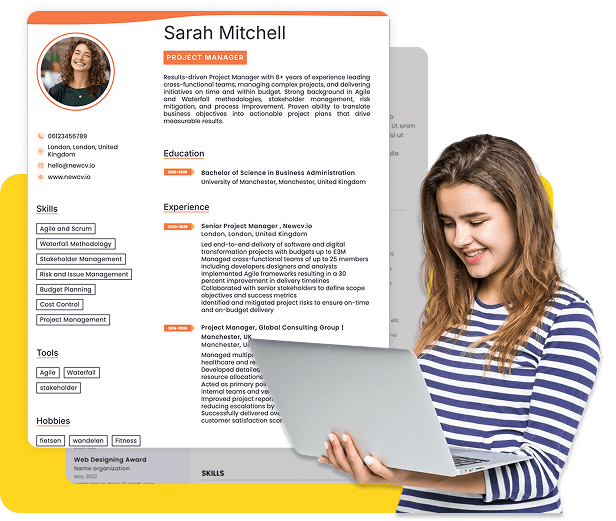
Use ATS-optimised Resume and resume templates that pass applicant tracking systems. Our Resume builder helps recruiters read, scan, and shortlist your Resume faster.

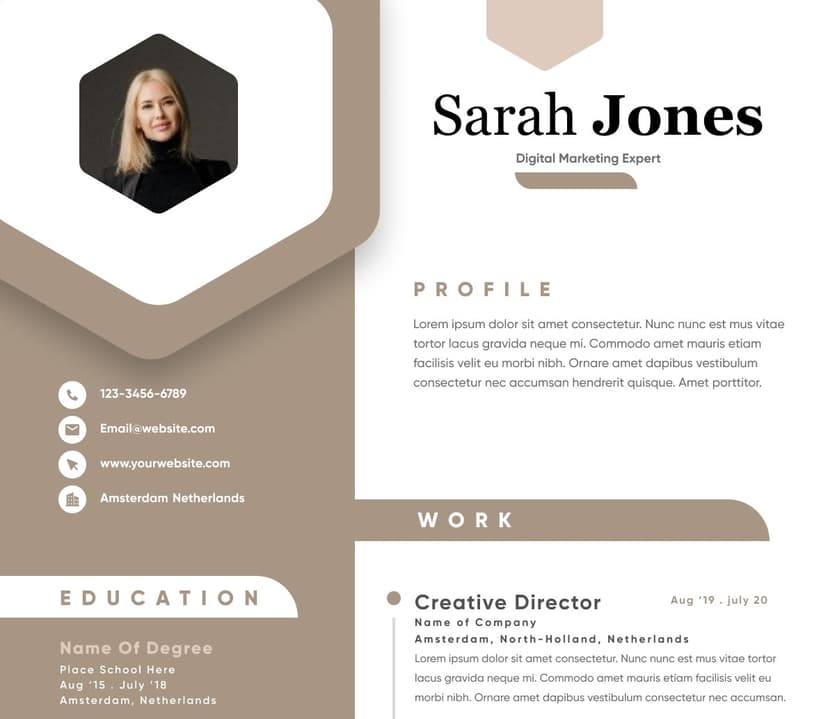
Use professional field-tested resume templates that follow the exact Resume rules employers look for.
Create Resume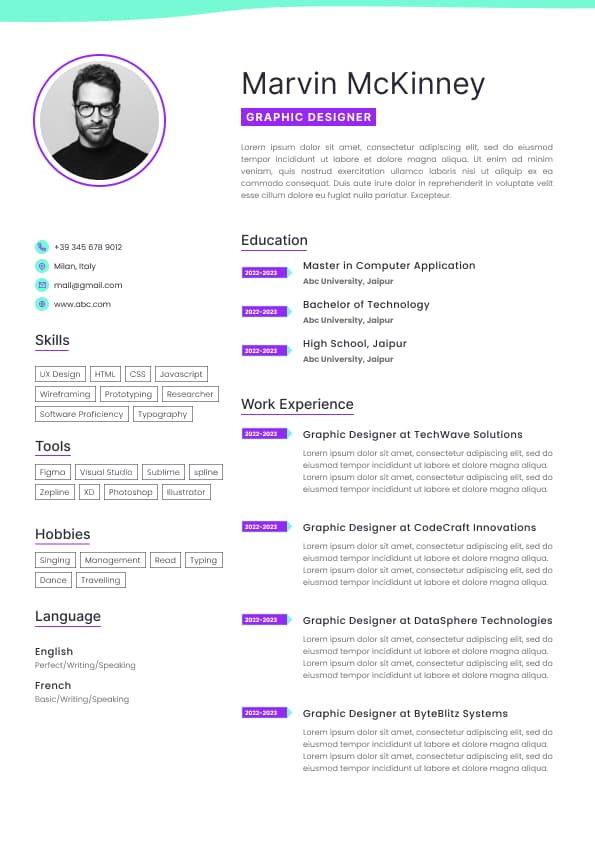
Use professional field-tested resume templates that follow the exact Resume rules employers look for.
Create ResumeA proper resume review in Australia is not just about fixing spelling mistakes or improving formatting. Recruiters and hiring managers assess resumes based on positioning, relevance, commercial value, and risk reduction. Most candidates are rejected because their resume fails to clearly communicate why they are a stronger hiring decision than competing applicants.
In the Australian market, recruiters often spend less than 30 seconds on the first screening pass. Your resume must immediately demonstrate alignment with the role, local hiring expectations, and measurable business impact. A strong resume review identifies what weakens your application, where recruiters lose confidence, how ATS systems interpret your resume, and what changes materially improve shortlist potential.
The difference between a resume that gets ignored and one that consistently secures interviews usually comes down to positioning, clarity, relevance, and evidence of outcomes.
Most resume reviews online are shallow. They focus on formatting, fonts, or generic tips like “add keywords”. That is not how real hiring decisions work.
An effective Australian resume review evaluates how your resume performs under real recruitment conditions.
A recruiter-quality review assesses:
Whether your resume aligns with the target role
Whether your achievements demonstrate commercial value
Whether your experience is positioned at the correct seniority level
Whether ATS systems can accurately parse your content
Whether hiring managers can quickly understand your strengths
Whether your resume communicates confidence and capability
Most resumes fail for predictable reasons.
The issue is rarely lack of experience. It is poor communication of value.
Candidates often describe responsibilities instead of demonstrating impact.
Weak Example
“Responsible for managing customer accounts and supporting sales activities.”
This tells recruiters almost nothing.
Good Example
“Managed a portfolio of 85 enterprise accounts across NSW and Victoria, increasing annual client retention by 18% and contributing to $1.2M in recurring revenue.”
The second version communicates scale, business value, and commercial relevance immediately.
Australian recruiters largely ignore generic summaries.
Statements like:
“Hardworking and motivated professional”
“Results-driven team player”
Whether your career narrative makes sense
Whether your resume reduces hiring risk
Recruiters are not looking for “nice resumes”. They are looking for evidence that you can solve problems, perform in the role, and integrate into the organisation with minimal risk.
That changes how resumes should be reviewed.
“Passionate about delivering outcomes”
do not help shortlist decisions.
A strong summary instead establishes:
Your professional identity
Your seniority level
Your specialisation
Your industry relevance
Your measurable strengths
ATS optimisation matters, but keyword stuffing damages readability and credibility.
Recruiters in Australia increasingly see resumes overloaded with repeated keywords copied from job ads.
This creates two problems:
The resume sounds artificial
Hiring managers lose trust quickly
Effective keyword optimisation is contextual and natural.
Many resumes make claims without proof.
Candidates say they are:
Strategic
Results-focused
Strong communicators
Excellent leaders
But the resume never demonstrates it.
Hiring managers trust evidence, not self-description.
Most candidates misunderstand how recruiters screen resumes.
Recruiters are not reading every line carefully from the start.
They scan for signals.
During initial screening, recruiters typically assess:
Current job title
Industry alignment
Seniority level
Stability and progression
Location and work rights
Commercial relevance
Clear achievements
Resume readability
If those signals are weak, the resume is often rejected before deeper review occurs.
Hiring managers think differently from candidates.
They ask:
Can this person perform quickly?
Have they solved similar problems before?
Are they credible at this level?
Will they fit our environment?
Is there evidence of measurable outcomes?
Your resume must answer those questions quickly.
A recruiter would rather see:
“Reduced warehouse dispatch errors by 32% during peak operational periods”
than:
“Warehouse operations professional with logistics management skills and operational excellence capabilities.”
One communicates outcomes.
The other communicates buzzwords.
ATS systems are important, but many candidates misunderstand them completely.
Modern ATS platforms used in Australia include systems like:
:contentReference[oaicite:0]
:contentReference[oaicite:1]
:contentReference[oaicite:2]
:contentReference[oaicite:3]
:contentReference[oaicite:4]
These systems do not “automatically reject” most resumes the way people assume.
The real issue is readability and data extraction.
Standard headings like “Experience”, “Education”, and “Skills”
Clean formatting
Logical structure
Proper keyword alignment
Clear job titles
Consistent dates
Text-based content rather than graphics
Tables used excessively
Graphics and icons
Multiple columns
Keyword stuffing
Unusual headings
Over-designed templates
Inconsistent formatting
ATS optimisation should support readability, not replace it.
A resume still needs to persuade humans.
Different career stages require different review strategies.
Graduate resumes are assessed heavily on:
Internship relevance
Transferable skills
Academic projects
Communication ability
Professional presentation
Potential rather than experience
The biggest graduate mistake is trying to sound “corporate” instead of credible.
Recruiters prefer clarity over inflated language.
Strong role alignment
Clear technical or transferable skills
Evidence of initiative
Professional structure
Tailored positioning
Mid-level candidates are evaluated on:
Progression
Ownership
Results
Commercial impact
Stakeholder management
Consistency of achievements
At this level, generic resumes fail badly.
Recruiters expect specificity.
Too task-focused
No measurable impact
Weak differentiation
Unclear career narrative
Lack of leadership indicators
Executive resumes are judged differently again.
Senior hiring managers assess:
Strategic impact
Scale
Leadership credibility
Commercial performance
Transformation capability
Board or executive stakeholder exposure
Executive resumes should focus less on operational detail and more on organisational outcomes.
This remains one of the biggest rejection triggers.
Australian employers expect clear alignment to the role.
A generic resume signals low effort and weak motivation.
Responsibilities do not differentiate candidates.
Achievements do.
Recruiters compare candidates based on impact.
Effective bullet points often include:
Scope
Action
Outcome
Metric
Business relevance
For example:
“Led implementation of a new rostering system across 6 retail locations, reducing overtime costs by 21% within 4 months.”
That communicates leadership, operational value, and measurable impact.
Long resumes are not automatically better.
Many resumes contain:
Irrelevant older roles
Excessive bullet points
Repeated information
Generic skill lists
Weak summaries
Strong resumes are selective.
International candidates often struggle because their resumes are not adapted for Australian hiring expectations.
Common issues include:
Overly formal language
Excessive personal information
Long paragraphs
Academic-style writing
Unclear job title equivalency
Australian resumes are generally:
Direct
Achievement-focused
Commercially oriented
Easy to scan
Less formal than some global markets
Strong resumes consistently demonstrate several characteristics.
The recruiter immediately understands:
What you do
Your level
Your industry relevance
Your strengths
Your target direction
Confusion kills shortlist potential.
High-performing resumes explain business contribution.
They show:
Revenue impact
Efficiency improvements
Cost reduction
Operational improvements
Team leadership
Project outcomes
Customer impact
Good resumes use outcome-oriented language.
Assisted with
Helped manage
Responsible for
Worked on
Delivered
Improved
Reduced
Increased
Led
Implemented
Streamlined
Negotiated
The language itself affects perceived seniority.
Strong resumes mirror the role requirements naturally.
Not through keyword stuffing.
Through strategic alignment.
Resume reviews should also identify risk signals.
Many candidates unknowingly create doubt.
Frequent movement is not automatically bad.
But unexplained movement creates recruiter concern.
Context matters.
Was the candidate terminated?
Are they difficult to retain?
Are they reactive rather than strategic?
Is there a performance issue?
Positioning and explanation matter enormously here.
If your resume jumps across industries or functions without explanation, recruiters may struggle to understand your positioning.
Strong resumes create a coherent narrative even when careers are non-linear.
Experienced recruiters detect exaggeration quickly.
Claims without evidence reduce credibility.
Confidence matters.
Inflation damages trust.
Most candidates compare themselves incorrectly.
They compare against their own experience instead of market competition.
A competitive resume usually demonstrates:
Clear positioning
Relevant achievements
Strong readability
ATS compatibility
Commercial value
Tailored alignment
Confidence without exaggeration
Outcome-focused language
The real question is not:
“Is my resume good?”
It is:
“Is my resume stronger than competing applicants targeting the same role?”
That is how recruiters assess resumes.
Many candidates do not actually need a complete rewrite.
They need strategic repositioning.
A good review identifies:
What already works
What weakens the application
Which sections underperform
What recruiters are missing
What needs reframing
Sometimes small changes dramatically improve response rates.
Often the biggest gains come from:
Rewriting the summary
Improving achievement bullet points
Clarifying positioning
Tightening structure
Strengthening keywords naturally
Reducing clutter
Improving readability
Australian resume length expectations vary by level.
Graduates: 1 to 2 pages
Mid-level professionals: 2 to 3 pages
Senior executives: 3 to 4 pages when justified
The real issue is not page count.
It is relevance density.
A concise, high-value 3-page resume will outperform a weak 1-page resume every time.
If you are reviewing your own resume, ask:
Would a recruiter understand my value within 30 seconds?
Does my resume show outcomes or just duties?
Am I positioned for the role I actually want?
Does my experience demonstrate progression?
Are my achievements measurable and credible?
Does the language reflect my seniority level?
Is the resume easy to scan quickly?
Does the resume reduce hiring risk?
Those questions are far more useful than obsessing over fonts or colours.
Many capable professionals get rejected because their resume undersells them.
Recruiters cannot assume capability.
They evaluate based on evidence presented on the page.
If your achievements are vague, buried, generic, or poorly positioned, stronger communicators will secure interviews ahead of you even when your actual experience is comparable.
That is why resume reviews matter.
Not because resumes need to look prettier.
Because positioning directly affects hiring outcomes.


 Upload Resume
 Import from Linkedin