
Choose from a wide range of NEWCV resume templates and customize your NEWCV design with a single click.

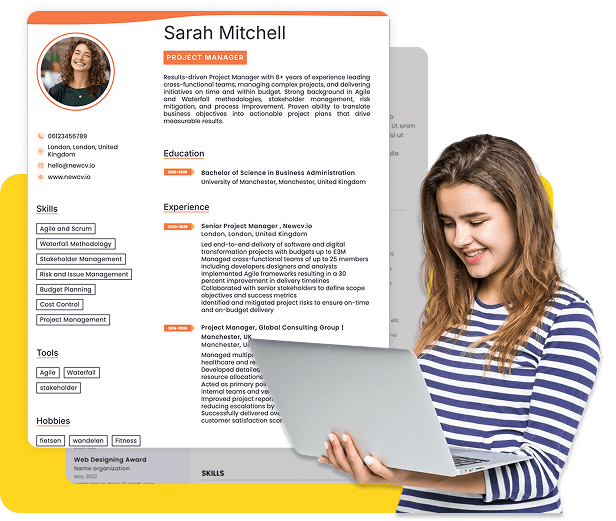
Use ATS-optimised Resume and resume templates that pass applicant tracking systems. Our Resume builder helps recruiters read, scan, and shortlist your Resume faster.

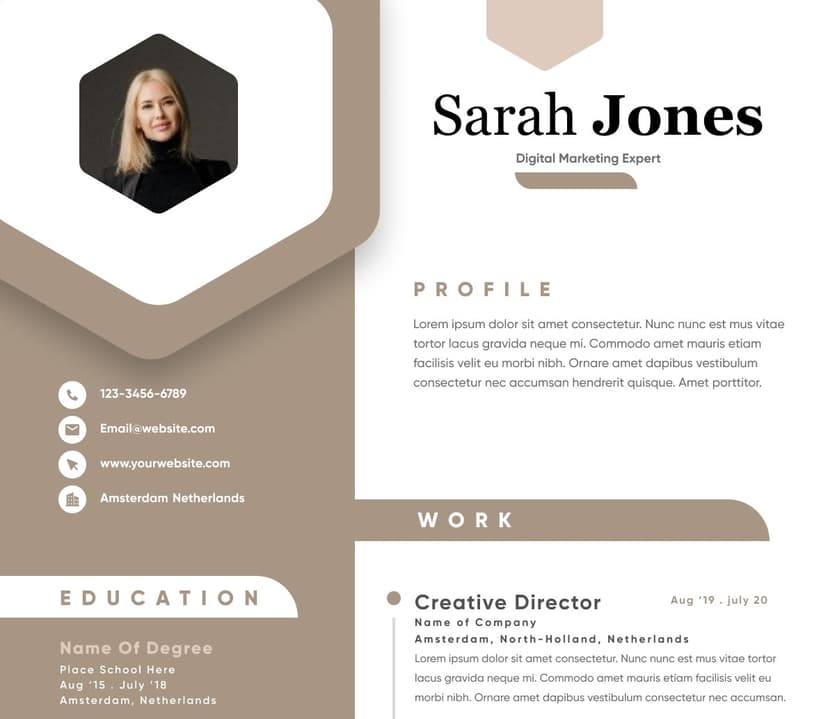
Use professional field-tested resume templates that follow the exact Resume rules employers look for.
Create Resume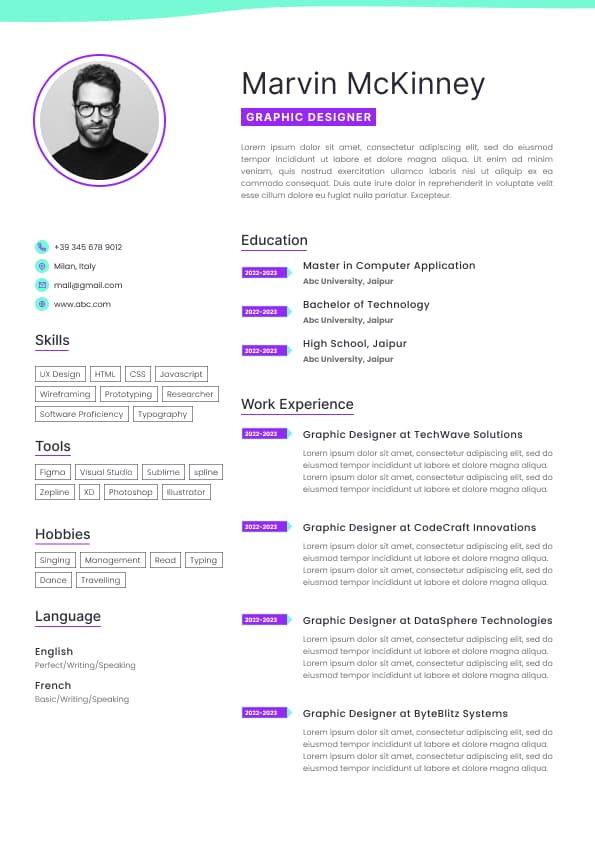
Use professional field-tested resume templates that follow the exact Resume rules employers look for.
Create ResumeA resume profile is one of the first things Australian recruiters read after your name and contact details. In most cases, it determines whether your resume gets properly reviewed or skimmed for 10 seconds before being rejected.
A strong resume profile immediately positions you as a relevant candidate. It quickly tells the hiring manager who you are, what level you operate at, what value you bring, and why you fit the role. A weak profile does the opposite. It wastes space with vague claims like “hard-working team player” or generic career objectives that say nothing meaningful.
In the Australian market, recruiters expect resume profiles to be concise, tailored, commercially relevant, and aligned with the role being applied for. Generic summaries copied from templates are easy to spot and often damage credibility rather than help it.
This guide breaks down exactly how to write an effective resume profile in Australia, what recruiters actually look for, and high-quality resume profile examples across different industries and experience levels.
A resume profile is a short professional summary placed near the top of your resume, usually directly under your contact details.
Its purpose is to give recruiters immediate context about:
Your experience level
Your industry background
Your core strengths
Your specialisation
Your value proposition
The type of roles you target
In Australia, resume profiles are standard across most industries, particularly for:
Corporate roles
Most resume advice online misses how resumes are genuinely screened in Australian hiring environments.
Recruiters are not reading profiles to be inspired. They are scanning for alignment, credibility, relevance, and risk reduction.
A strong profile answers five silent recruiter questions fast:
The recruiter wants immediate alignment between your background and the advertised position.
If you're applying for a Project Manager role, your profile should clearly position you as a Project Manager, not as a “results-driven professional”.
Your profile should indicate seniority quickly.
For example:
Graduate
Coordinator
Advisor
Professional services
Government applications
Management positions
Technical roles
Healthcare
Trades and operations
Mid to senior-level positions
For graduate or entry-level candidates, the profile often focuses more on education, transferable skills, internships, and career direction.
Specialist
Manager
Senior Manager
Executive
This helps recruiters determine whether you're appropriately levelled.
Australian hiring managers prefer specialists over vague generalists unless the role specifically requires broad capability.
Strong profiles communicate:
Industry expertise
Functional specialisation
Technical strengths
Sector knowledge
Leadership scope
Hiring decisions in Australia are heavily outcome-focused.
Good profiles mention:
Revenue impact
Operational improvements
Customer outcomes
Project delivery
Compliance
Process optimisation
Team leadership
Stakeholder management
Recruiters instantly detect inflated language.
Phrases like:
“Dynamic go-getter”
“Innovative thinker”
“Passionate self-starter”
“Guru”
“Ninja”
usually reduce credibility.
Australian hiring culture generally values:
Direct communication
Practicality
Authenticity
Measurable capability
Clear evidence over hype
A high-performing Australian resume profile typically follows this structure:
Start by clearly stating what you do.
Good Example
“Commercial Finance Manager with 8+ years’ experience across FMCG and retail environments.”
Highlight your strongest relevant capabilities.
Good Example
“Specialising in budgeting, forecasting, business partnering, and financial performance analysis.”
Demonstrate impact.
Good Example
“Known for improving reporting accuracy, streamlining forecasting processes, and supporting executive decision-making.”
Add relevant sector alignment where useful.
Good Example
“Experience working within ASX-listed organisations and high-growth Australian businesses.”
Example
Recent Bachelor of Business graduate with internship experience in administration, customer service, and data reporting. Strong communication and organisational skills with experience supporting fast-paced team environments. Confident using Microsoft Excel, CRM systems, and stakeholder coordination processes. Seeking an entry-level operations or administration role within a growth-focused Australian organisation.
Clearly identifies career stage
Shows transferable skills
Includes practical capability
Avoids sounding inexperienced
Targets specific role types
Example
Digital Marketing Specialist with 5 years’ experience managing multi-channel campaigns across retail and eCommerce sectors. Skilled in paid media, email marketing, SEO, campaign analytics, and customer acquisition strategies. Proven track record improving conversion performance, reducing acquisition costs, and delivering measurable ROI across national campaigns. Experienced collaborating with creative, sales, and executive stakeholders in fast-paced Australian businesses.
Strong functional clarity
Commercial outcomes included
ATS-friendly keyword alignment
Industry relevance
Professional without being overly corporate
Example
Operations Manager with 12+ years’ experience leading warehousing, logistics, and supply chain operations across national distribution environments. Strong background in workforce leadership, continuous improvement, WHS compliance, and operational cost control. Successfully led large teams across multi-site operations while improving delivery performance, inventory accuracy, and process efficiency. Experienced working within high-volume Australian logistics environments with a strong focus on safety and operational performance.
Seniority is obvious immediately
Industry alignment is strong
Leadership scope is clear
Operational value is demonstrated
Relevant Australian terminology included
Example
Administration professional with 6 years’ experience supporting executive teams across healthcare and professional services environments. Skilled in calendar management, stakeholder communication, document preparation, and office coordination. Recognised for maintaining efficient administrative processes, managing competing priorities, and supporting smooth day-to-day operations in fast-paced workplaces.
Example
Customer Service Representative with strong experience across retail and contact centre environments. Skilled in conflict resolution, customer retention, CRM systems, and high-volume customer support. Known for delivering positive customer experiences, resolving issues efficiently, and maintaining strong service standards in fast-paced team environments.
Example
AHPRA-registered Registered Nurse with experience across acute care and surgical ward settings. Skilled in patient assessment, medication administration, care planning, and multidisciplinary team collaboration. Strong commitment to patient-centred care, clinical compliance, and maintaining high safety standards within busy hospital environments.
Example
Project Manager with 9 years’ experience delivering technology and business transformation projects across financial services and government sectors. Strong background in stakeholder engagement, Agile delivery, risk management, and cross-functional leadership. Proven ability to manage complex projects from initiation through to implementation while maintaining delivery timelines and budget performance.
Example
HR Advisor with experience across recruitment, employee relations, performance management, and HR operations within medium and large Australian organisations. Skilled in supporting managers through workplace issues, policy implementation, onboarding, and workforce planning initiatives. Strong understanding of Fair Work compliance and contemporary HR practices.
Example
CPA-qualified Accountant with experience across financial reporting, reconciliations, month-end processes, budgeting, and compliance. Background supporting commercial finance operations within professional services and construction sectors. Strong analytical capability with a focus on accuracy, process improvement, and stakeholder reporting.
Example
Licensed Electrician with commercial and residential experience across maintenance, installations, fault finding, and compliance testing. Strong understanding of Australian electrical standards, workplace safety requirements, and client service delivery. Reliable trades professional known for high-quality workmanship and strong problem-solving capability.
Example
Software Engineer with experience developing scalable web applications using JavaScript, React, Node.js, and cloud-based technologies. Skilled in API integration, Agile delivery, and cross-functional collaboration. Strong focus on clean code practices, performance optimisation, and delivering user-focused digital solutions.
One of the most common mistakes is using outdated objective statements.
Weak Example
“Seeking a challenging opportunity where I can grow my skills.”
This says nothing about:
Your value
Your relevance
Your capability
Your suitability
Recruiters already know you want a job.
Profiles filled with vague descriptors lack credibility.
Weak Example
“Highly motivated team player with excellent communication skills.”
This is meaningless without context or proof.
A profile is not a biography.
Ideal length:
50 to 120 words for most professionals
Slightly longer for executives or technical specialists
Large text blocks reduce readability and hurt scanning performance.
Recruiters increasingly recognise low-quality AI-generated content because it sounds repetitive, vague, and impersonal.
Common signs include:
Overuse of buzzwords
No industry specificity
No measurable capability
Generic tone
No real positioning
The strongest profiles sound commercially aware and role-specific.
Australian recruiters expect tailoring, especially for:
Professional roles
Government applications
Competitive corporate positions
Your profile should reflect:
The target role
Relevant industry language
Priority skills from the job ad
Sector-specific terminology
Recruiters often screen resumes against:
Keywords
Core competencies
Industry terminology
ATS alignment
If the job ad repeatedly mentions:
Stakeholder engagement
WHS compliance
Business partnering
Customer retention
those phrases should appear naturally in your profile if genuinely relevant.
Do not try to summarise your entire career.
Focus on what matters most for the specific role.
For example:
A Finance Manager applying for commercial roles should prioritise commercial finance capability over payroll experience
A Project Manager applying for IT projects should emphasise technology delivery rather than construction experience
Australian hiring managers generally prefer resumes that feel:
Direct
Clear
Commercially relevant
Easy to scan
Professional without sounding overly formal
Overly aggressive self-promotion can backfire.
Confidence is good.
Inflated claims are not.
The best resumes often use both.
Provides strategic positioning.
Improves:
ATS matching
Scanability
Keyword coverage
A strong structure is:
Resume Profile
Key Skills
Professional Experience
This format works well across most Australian industries.
General Australian recruiter preference:
Graduate profiles: 40 to 70 words
Mid-level professionals: 70 to 120 words
Senior professionals: 80 to 150 words
Longer is not better.
The goal is rapid positioning and relevance.
Recruiters interpret everything after your profile through the positioning established at the top.
If your profile positions you poorly:
Your achievements lose impact
Your experience feels scattered
Your career direction feels unclear
A strong profile creates narrative consistency.
Many candidates accidentally describe themselves based only on past duties rather than future positioning.
For example:
“Administrative assistant with experience supporting office operations.”
“Operations Coordinator with experience supporting workflow management, stakeholder coordination, and business administration functions.”
The second version aligns better with career progression.
Specific candidates feel safer to hire.
Vague profiles create uncertainty.
Strong profiles often include:
Industry context
Role specialisation
Technical focus
Leadership scope
Business outcomes
Specificity improves recruiter confidence.
The best-performing resume profiles usually share these traits:
Clear role alignment
Strong relevance to the advertised position
Natural keyword integration
Commercial or operational value
Industry credibility
Concise writing
No fluff
Strong readability
Tailored positioning
Evidence of capability
Most rejected profiles fail because they are:
Generic
Overwritten
Too broad
Full of buzzwords
Poorly targeted
Lacking clear value


 Upload Resume
 Import from Linkedin