
Choose from a wide range of NEWCV resume templates and customize your NEWCV design with a single click.

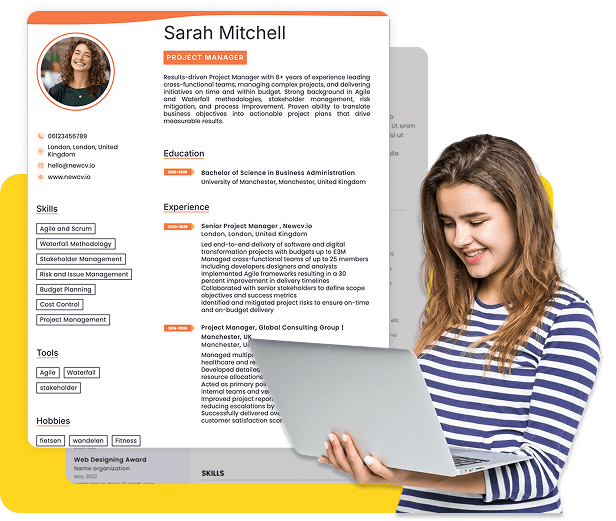
Use ATS-optimised Resume and resume templates that pass applicant tracking systems. Our Resume builder helps recruiters read, scan, and shortlist your Resume faster.

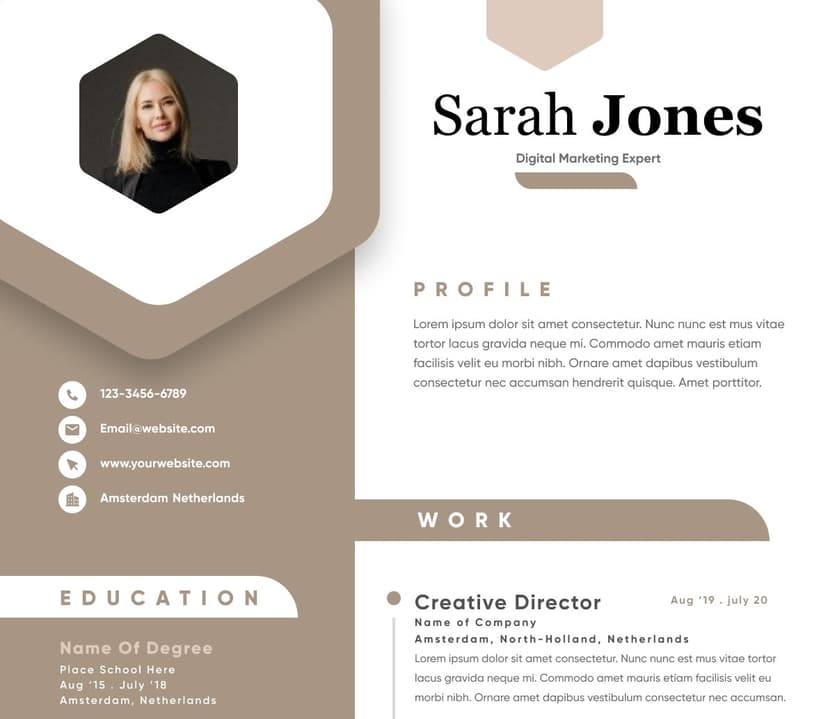
Use professional field-tested resume templates that follow the exact Resume rules employers look for.
Create Resume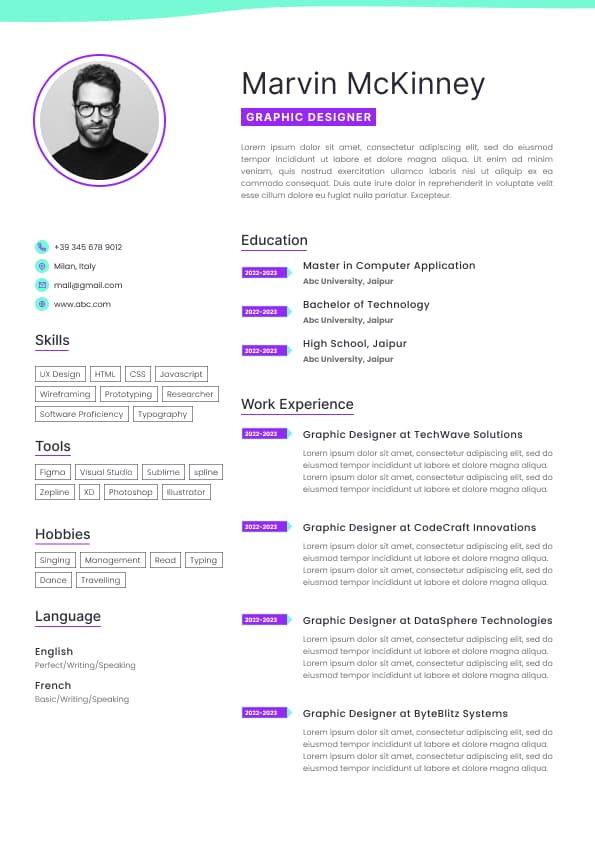
Use professional field-tested resume templates that follow the exact Resume rules employers look for.
Create ResumeMost resumes in Australia fail for the same reasons: they’re too generic, too task-focused, poorly targeted, or written without understanding how recruiters actually screen candidates. A strong Australian resume is not about listing everything you’ve done. It’s about making it immediately obvious why you fit the role, why you’re credible, and why a hiring manager should interview you over dozens of similar applicants.
In the current Australian hiring market, recruiters often spend less than 30 seconds on the first screen. Your resume needs to communicate relevance fast. That means tailored positioning, measurable outcomes, clear formatting, and alignment with Australian hiring expectations. It also means avoiding common mistakes candidates don’t realise are hurting them, including overused buzzwords, weak summaries, irrelevant experience, and poor ATS optimisation.
This guide breaks down the resume strategies that genuinely improve interview outcomes in Australia, based on real recruiter screening behaviour and modern hiring practices.
One of the biggest mistakes candidates make is writing resumes based on what they think matters instead of how hiring decisions are actually made.
In Australia, recruiters and hiring managers typically screen resumes in this order:
Job title relevance
Industry alignment
Recent experience
Evidence of results
Stability and career progression
Technical or role-specific capability
Communication quality and professionalism
Cultural and commercial fit
Most resumes fail before skills are even reviewed because the positioning is unclear.
If a recruiter cannot immediately answer these questions, your chances drop sharply:
What role does this person actually do?
Are they at the right level?
Do they match the industry?
Have they achieved meaningful results?
Are they worth shortlisting over similar applicants?
Australian recruiters tend to favour clarity over cleverness. A clean, direct, achievement-focused resume consistently performs better than overly designed or heavily branded resumes.
Generic resumes are one of the biggest reasons strong candidates get rejected.
Australian employers expect alignment between the role advertisement and your resume. This does not mean copying the job ad. It means strategically positioning your experience so the recruiter instantly sees relevance.
Effective tailoring involves:
Adjusting your professional summary
Prioritising the most relevant achievements
Reordering bullet points based on relevance
Including role-specific terminology
Aligning technical skills with the position
Reflecting the employer’s priorities
“Experienced professional with strong communication and teamwork skills seeking new opportunities.”
This says almost nothing meaningful.
“Project Coordinator with 5+ years’ experience delivering commercial construction projects across Queensland, specialising in contractor coordination, stakeholder management, and project scheduling for Tier 2 builders.”
The second version immediately establishes:
Role alignment
Industry relevance
Experience level
Geographic context
Specialisation
That clarity dramatically improves recruiter confidence.
This is where most resumes underperform.
Recruiters already know what a Sales Manager, HR Advisor, or Accountant generally does. Repeating standard duties adds very little value.
Hiring managers care far more about outcomes.
Responsible for managing customer accounts
Handled recruitment processes
Managed team operations
These bullets are vague and low-impact.
Grew an existing client portfolio by 28% within 12 months through strategic account expansion
Reduced average recruitment turnaround time from 41 to 24 days across corporate hiring
Led a team of 14 across multi-site retail operations while improving customer satisfaction scores by 18%
Strong achievement bullets demonstrate:
Commercial impact
Performance level
Scale
Credibility
Decision-making capability
This is what influences interview decisions.
Australian resume expectations are slightly different from other markets, particularly compared to the US and parts of Europe.
Professional summary
Key skills section
Employment history
Education
Certifications or licences where relevant
Photos
Date of birth
Marital status
Full residential address
Excessive graphics or design elements
For most professional roles in Australia, a resume between 2 and 4 pages is acceptable if the content is relevant and valuable.
Senior professionals can exceed this if the information supports strategic credibility.
Australian recruiters generally prefer substance over artificial brevity.
Applicant Tracking Systems are widely used across Australian organisations, especially in:
Government
Healthcare
Mining
Banking and finance
Enterprise corporate environments
Large recruitment agencies
However, ATS optimisation is widely misunderstood.
Stuffing keywords unnaturally into your resume does not improve results. In many cases, it damages readability and recruiter trust.
Using standard section headings
Including relevant keywords naturally
Matching terminology from the job ad where appropriate
Avoiding tables and graphics that break ATS parsing
Using clear formatting
Including technical skills explicitly
Recruiters do not shortlist candidates because a keyword appears 17 times.
They shortlist candidates because the resume demonstrates credible alignment with the role.
ATS helps identify potential matches. Humans still make hiring decisions.
The summary section is often the most influential part of the resume after your recent role.
Many recruiters use it to decide whether to continue reading.
Your profession
Years of experience
Industry background
Key specialisations
Commercial strengths
Career level
Who you are professionally
What industries or environments you’ve worked in
What you specialise in
What value you bring
“Senior Financial Accountant with 9 years’ experience across ASX-listed and multinational organisations. Strong background in statutory reporting, budgeting, compliance, and ERP optimisation. Known for improving reporting accuracy, streamlining month-end processes, and partnering effectively with senior stakeholders.”
This creates immediate credibility.
One of the most overlooked resume strategies is knowing what to remove.
Many candidates unintentionally dilute strong resumes by including low-value information.
Generic soft skills without evidence
Irrelevant old experience
Long paragraphs
Objective statements
Overused buzzwords
Excessive personal interests
Outdated software skills
Every job from 20 years ago
Hardworking
Team player
Go-getter
Results-driven
Dynamic professional
Self-starter
These phrases carry little weight unless supported by evidence.
Specific achievements are far more persuasive than self-descriptions.
A major hidden reason resumes fail is poor seniority positioning.
Candidates often unintentionally position themselves below the level they’re applying for.
Too much operational detail
No strategic achievements
Weak leadership language
No evidence of ownership
Task-heavy bullet points
No business outcomes
For example, a senior manager resume should demonstrate:
Leadership scope
Commercial contribution
Strategic decision-making
Stakeholder influence
Team management
Operational improvement
Not just daily responsibilities.
Hiring managers want confidence that you already operate at the level they need.
Context matters heavily in Australian recruitment.
Achievements without context often lose impact.
Instead of:
Use:
Instead of:
Use:
Context helps recruiters assess:
Complexity
Industry fit
Scale
Seniority
Transferability
This significantly improves credibility.
Many candidates over-focus on content while ignoring usability.
A recruiter should be able to scan your resume quickly without effort.
Clear section headings
Consistent spacing
Short paragraphs
Strong bullet structure
Logical hierarchy
Easy-to-scan achievements
Professional fonts
Minimal visual clutter
Dense text reduces engagement and increases rejection risk.
If a recruiter feels your resume requires too much effort, they often move on.
Career gaps are not automatically a problem in Australia anymore.
What matters is how they’re positioned.
Recruiters are generally understanding about:
Redundancies
Career breaks
Parenting leave
Study
Travel
Health-related time away
Industry downturns
Problems arise when gaps appear hidden or unexplained.
Be brief, direct, and professional.
Career Break | 2024
Completed professional development in data analytics while supporting family responsibilities.
Simple explanations reduce uncertainty.
Hiring managers are usually asking themselves four questions:
Can this person do the job?
Will they fit the team?
Can they solve problems?
Are they worth interviewing?
Your resume should answer these questions clearly.
Capability
Relevance
Commercial value
Communication quality
Professional maturity
Credibility
The best resumes are not necessarily the most impressive.
They are the clearest and most strategically positioned.
Some resume mistakes do not seem serious but consistently reduce interview conversion rates.
Applying with a generic resume
Using poor formatting
Including irrelevant experience
Writing long blocks of text
No measurable achievements
Inconsistent employment dates
Spelling mistakes
Overdesigned templates
Unclear career direction
Weak summaries
No industry alignment
Even highly qualified candidates lose opportunities because their resume creates friction during screening.
The strongest candidates do not just describe experience.
They strategically shape perception.
Business impact
Leadership credibility
Specialisation
Industry alignment
Career progression
Problem-solving capability
Stakeholder management
Revenue influence
Operational improvement
Recruiters are constantly comparing candidates.
Small differences in positioning significantly influence who gets shortlisted.
Two candidates with similar experience can produce completely different hiring outcomes based on resume strategy alone.
A resume is competitive if it consistently generates:
Recruiter calls
Interview requests
LinkedIn outreach
Positive recruiter feedback
Progression beyond first-stage screening
If you are applying repeatedly and hearing nothing back, the issue is often one of these:
Poor targeting
Weak positioning
Generic content
Lack of achievements
Industry mismatch
ATS issues
Unclear value proposition
Strong candidates often underestimate how much resume quality influences market response.
A strong Australian resume is not about fancy wording or complicated formatting. It is about strategic positioning, relevance, clarity, and evidence of value.
The candidates who consistently secure interviews understand how recruiters assess resumes in real hiring environments. They tailor applications properly, focus on measurable impact, communicate seniority clearly, and make screening easy for hiring managers.
Most resumes fail because they describe work.
The best resumes prove value.
That distinction matters far more than most candidates realise.


 Upload Resume
 Import from Linkedin