
Choose from a wide range of NEWCV resume templates and customize your NEWCV design with a single click.

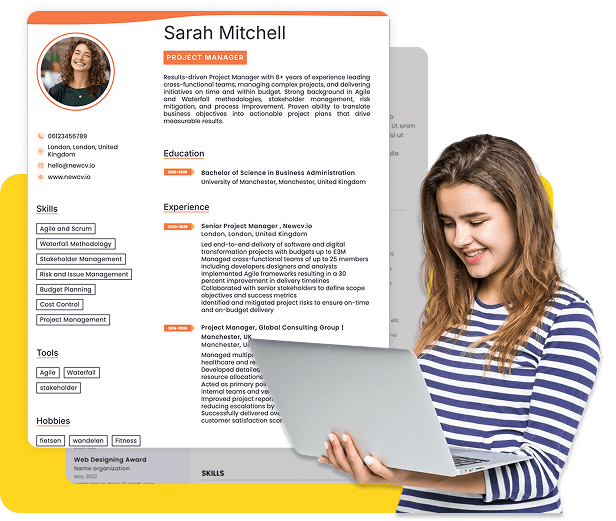
Use ATS-optimised Resume and resume templates that pass applicant tracking systems. Our Resume builder helps recruiters read, scan, and shortlist your Resume faster.

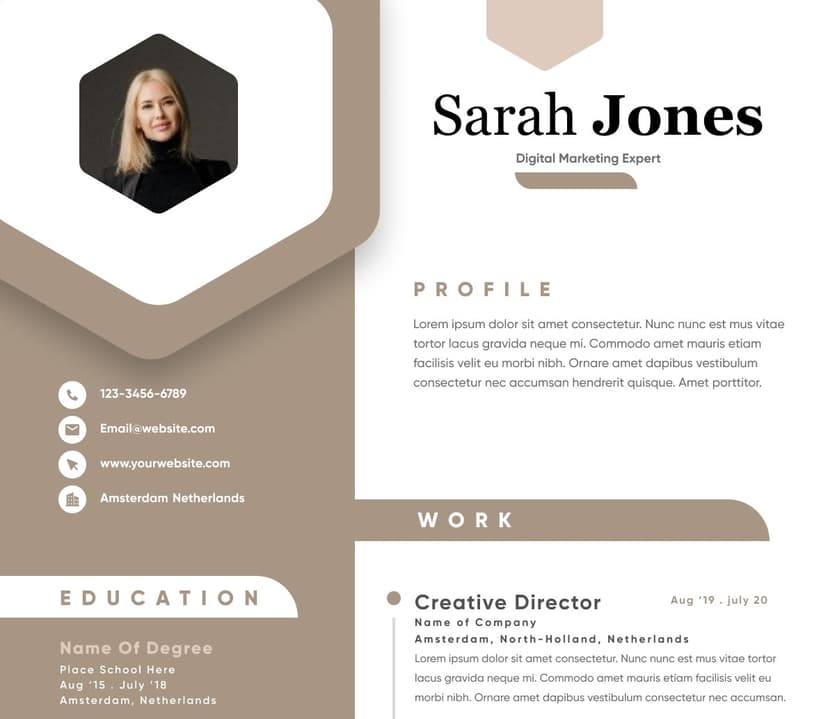
Use professional field-tested resume templates that follow the exact Resume rules employers look for.
Create Resume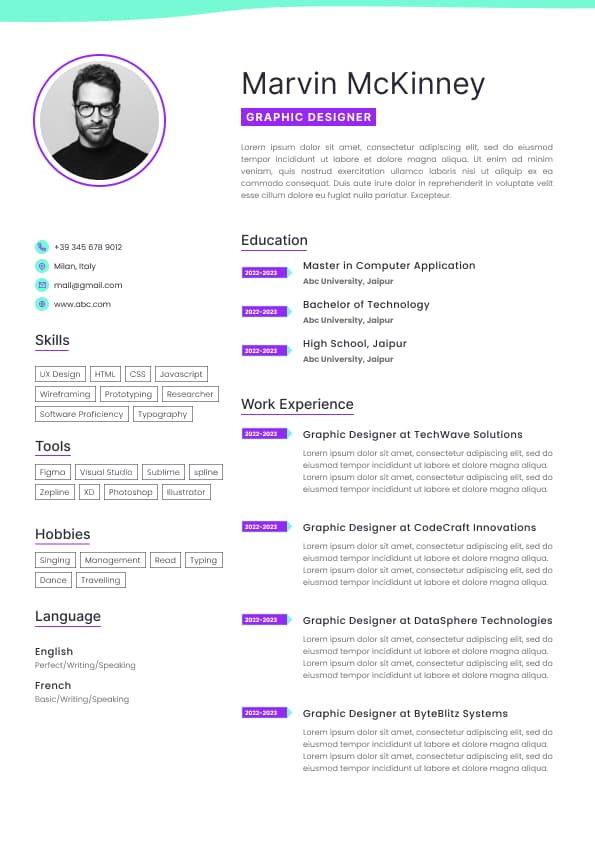
Use professional field-tested resume templates that follow the exact Resume rules employers look for.
Create ResumeA resume that works in Australia is not identical to resumes used in the US, Europe, or Asia. One of the biggest reasons strong candidates get rejected is because they use formatting or content styles that don’t align with Australian recruiter expectations.
Australian hiring managers generally prefer resumes that are:
Clear and practical
Achievement-focused rather than responsibility-heavy
Tailored to the specific role
Professional but not overly formal
Easy to scan quickly
ATS-compatible
Supported by measurable outcomes
Australian recruiters also value relevance over length. A four-page resume can perform well if every section adds value. A one-page resume often fails for mid-level and senior candidates because it lacks enough evidence.
The highest-performing Australian resume templates usually follow this structure:
Include:
Full name
Mobile number
Professional email address
LinkedIn profile
Location (suburb and state is enough)
Do not include:
Date of birth
Marital status
Nationality
Passport details
Photo
Full residential address
Photos are uncommon in Australian resumes outside certain industries such as modelling or acting. Including one can sometimes hurt professionalism.
Your professional summary is one of the most important sections on the page because recruiters often decide within seconds whether they’ll continue reading.
A strong summary should quickly answer:
Who are you professionally?
What level are you operating at?
What industries or specialisations do you have?
What results do you consistently deliver?
Why are you commercially valuable?
“Hardworking professional seeking new opportunities where I can grow my skills and contribute to a team.”
This says almost nothing useful to a recruiter.
“Results-driven Project Manager with 9+ years’ experience delivering large-scale infrastructure and commercial construction projects across Australia. Proven track record managing $20M+ projects, leading cross-functional teams, and improving delivery timelines while maintaining strict compliance and safety standards.”
The second example immediately positions the candidate properly.
Australian recruiters often scan the skills section before reading work history in detail.
Your skills should align directly with the job ad and ATS keywords.
Stakeholder Management
Project Delivery
Budget Management
Team Leadership
Client Relationship Management
Business Development
Risk Management
Contract Negotiation
CRM Systems
Process Improvement
Strategic Planning
WHS Compliance
Avoid vague skills like:
Hardworking
Team player
Motivated
Fast learner
These do not differentiate candidates anymore.
This is the section hiring managers care about most.
Australian recruiters are heavily outcome-focused. They want evidence of impact, not just task lists.
The best-performing resumes show:
Scope
Scale
Commercial outcomes
Leadership
Measurable results
Industry relevance
Job Title
Company Name | Location
Month Year – Present
Brief overview of the role and scope.
Increased sales revenue by 28% within 12 months through targeted client acquisition strategies
Managed a portfolio worth $4.5M across enterprise-level accounts
Reduced operational processing time by 35% through workflow optimisation initiatives
Led a team of 14 staff across multiple business functions
Delivered projects consistently within budget and ahead of schedule
This structure works because recruiters skim for impact quickly.
Most resume advice online misses how real screening decisions happen.
Recruiters are usually asking themselves five questions:
Your resume must clearly show relevant experience, not just transferable skills.
Scope matters. Managing a team of 3 is different from managing 80 staff nationally.
Results reduce hiring risk.
Generic resumes are one of the biggest rejection triggers in Australia.
If recruiters need to “figure out” your value, you usually lose.
The strongest resumes reduce mental effort for recruiters.
Your education section should be concise unless you are a graduate or early-career candidate.
Bachelor of Business
University of Sydney
2018
You can also include:
Certifications
Licences
Professional memberships
Industry accreditations
Especially relevant for:
Construction
Engineering
Healthcare
Finance
Government
Mining
Trades
JESSICA TAYLOR
Sydney, NSW
0400 000 000
jessicataylor@email.com
linkedin.com/in/jessicataylor
Commercially focused Operations Manager with 11+ years’ experience leading large-scale logistics, supply chain, and operational improvement initiatives across Australia. Proven track record reducing operational costs, improving delivery performance, and leading high-performing teams within fast-paced environments.
Operations Management
Supply Chain Optimisation
Team Leadership
Budget Management
Continuous Improvement
Stakeholder Engagement
Process Optimisation
WHS Compliance
Performance Management
Strategic Planning
Operations Manager
National Logistics Group | Sydney, NSW
March 2020 – Present
Lead national operations across multiple warehouse and distribution functions with responsibility for 65+ staff and multimillion-dollar operational budgets.
Reduced operational costs by 18% through process automation initiatives
Improved delivery turnaround times by 26% nationally
Led workforce expansion during high-growth periods without operational disruption
Introduced new KPI frameworks that improved productivity and accountability
Managed vendor and supplier relationships across national operations
Senior Operations Supervisor
Express Freight Solutions | Sydney, NSW
June 2016 – February 2020
Increased warehouse efficiency by 22% through workflow redesign
Reduced staff turnover significantly through improved onboarding and leadership practices
Managed day-to-day operational performance across large distribution teams
Bachelor of Commerce
University of Technology Sydney
Lean Six Sigma Green Belt
Forklift Licence
First Aid Certification
Many resumes fail before a human even reads them because they break ATS systems.
Australian employers commonly use platforms such as:
Workday
PageUp
SuccessFactors
SmartRecruiters
Lever
Greenhouse
To remain ATS-friendly:
Use standard headings
Avoid tables for critical information
Avoid graphics and icons
Use clean fonts
Save as PDF unless otherwise requested
Match keywords naturally from the job ad
Use standard formatting
The most professional Australian resumes are visually simple.
Recommended fonts:
Calibri
Arial
Aptos
Helvetica
Cambria
Best formatting practices:
Font size 10–12
Consistent spacing
Clear section headings
Plenty of white space
Professional alignment
Over-designed resumes often perform worse in corporate Australian hiring.
One of the biggest resume mistakes in Australia is sending the same resume to every employer.
Tailoring matters because recruiters compare your resume directly against the advertised role.
High-performing candidates customise:
Professional summary
Key skills
Keywords
Achievement emphasis
Industry terminology
This does not mean rewriting the entire resume every time.
It means strategically aligning your positioning with the role.
Weak resumes explain duties.
Strong resumes explain impact.
“Responsible for customer service and administration.”
“Managed customer escalations while maintaining a 96% client satisfaction rating across high-volume service operations.”
Australian recruiters generally do not care about:
Hobbies unrelated to the role
Personal objectives
References listed directly on the resume
Excessive personal details
Many candidates undersell themselves because they describe tasks rather than commercial value.
Recruiters hire outcomes, not activity.
Long resumes are acceptable only when the content remains highly relevant.
Five pages of repetitive responsibilities usually weakens the application.
Australian hiring managers prefer candidates who look highly aligned to their specific sector.
A generic cross-industry resume usually reduces shortlist rates.
There is no perfect universal length.
Typical expectations:
Graduate resumes: 1–2 pages
Mid-level professionals: 2–3 pages
Senior leaders: 3–4 pages
The real question is not length.
It is relevance.
A concise resume with strong outcomes performs better than a short resume with weak detail.
In Australia, “resume” is the most common term in corporate and private-sector hiring.
“CV” is still commonly used in:
Academia
Healthcare
Government
Research
Some executive environments
For most Australian job seekers, the difference is minimal in practice.
Recruiters and hiring managers usually scan in this order:
Current job title
Recent employers
Professional summary
Career stability
Relevant achievements
Industry alignment
Resume presentation
This is why the top third of the first page matters so much.
If the positioning is weak early, the rest of the resume may never be read properly.
Most resumes fail because they describe experience without strategic positioning.
High-performing candidates intentionally shape perception.
Candidates often undersell leadership scope.
Instead of:
“Managed staff roster and scheduling.”
Use:
“Led workforce planning and operational coordination across a 35-person team.”
Australian employers value measurable business impact.
Focus on:
Revenue growth
Cost reduction
Efficiency gains
Compliance improvements
Customer retention
Delivery performance
Team leadership outcomes
Different sectors use different terminology.
For example:
Construction:
Project delivery
Site operations
WHS compliance
Corporate:
Stakeholder engagement
Strategic initiatives
Operational performance
Healthcare:
Clinical governance
Patient outcomes
Multidisciplinary collaboration
Using the correct language improves both ATS matching and recruiter confidence.
Templates can help structure your resume, but many downloadable templates create problems.
Poor templates often:
Prioritise design over readability
Break ATS compatibility
Waste space
Use outdated formatting
Make candidates look generic
The best Australian resume templates are usually simple, clean, and strategically written.
Structure matters more than visual decoration.
The best Australian resume template is not the most creative.
It is the one that makes a recruiter quickly think:
“This candidate clearly matches the role.”
That means your resume must:
Align with the role requirements
Demonstrate measurable value
Be easy to scan
Reflect Australian hiring expectations
Position you at the correct level
Reduce hiring risk for employers
Most candidates focus too heavily on formatting and not enough on positioning.
In the Australian market, positioning is what drives interviews.


 Upload Resume
 Import from Linkedin